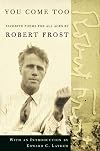
You Come Too
by Robert Frost
On This Page
Description
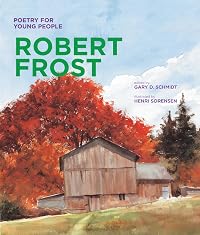
A collection of poems chosen by Frost to be read and enjoyed by children (and their elders), including "Acquainted with the Night," "A Patch of Old Snow," "Not of School Age," and "Mending Wall."Tags
Recommendations









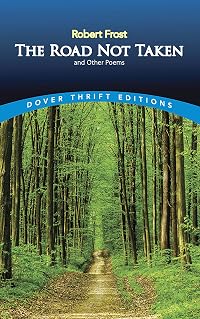

Member Reviews
A great collection of poems from Robert Frost, stated to be for younger readers but very enjoyable for this old man. Frost can sometimes be a little too pastoral (at least for me), but wow when he delivers it’s with such force because he’s so profound yet so simple at the same time.
There are images here which are ingrained in my mind years after having read the poems for the first time:
From “The Death of the Hired Man”, two definitions of Home: “Home is the place where, when you have to go there, / They have to take you in.” With the response: “I should have called it / Something you somehow haven’t to deserve.”
The feeling of brotherhood in “The Tuft of Flowers” as a worker spots flowers left unmown simply for show more their beauty: “’Men work together,’ I told him from the heart, / ‘Whether they work together or apart.’”
The feeling that individuality should be supported which comes from guilt at having shooed a bird away for its loud chirping in “A Minor Bird”: “And of course there must be something wrong / In wanting to silence any song.”
And lastly, the joy in small things that comes from seeing flowers out of a train window in “A Passing Glimpse”: “Heaven gives its glimpses only to those / Not in position to look too close.”
The collection also contains three of my favorite poems:
The Road Not Taken
----------------------------
Two roads diverged in a yellow wood,
And sorry I could not travel both
And be one traveler, long I stood
And looked down one as far as I could
To where it bent in the undergrowth;
Then took the other, as just as fair,
And having perhaps the better claim,
Because it was grassy and wanted wear;
Though as for that the passing there
Had worn them really about the same,
And both that morning equally lay
In leaves no step had trodden black.
Oh, I kept the first for another day!
Yet knowing how way leads on to way,
I doubted if I should ever come back.
I shall be telling this with a sigh
Somewhere ages and ages hence:
Two roads diverged in a wood, and I –
I took the one less traveled by,
And that has made all the difference.
Acquainted with the Night
-----------------------------------
I have been one acquainted with the night.
I have walked out in rain – and back in rain.
I have outwalked the furthest city light.
I have looked down the saddest city lane.
I have passed by the watchman on his beat
And dropped my eyes, unwilling to explain.
I have stood still and stopped the sound of feet
When far away an interrupted cry
Came over houses from another street,
But not to call me back or say good-by;
And further still at an unearthly height,
One luminary clock against the sky
Proclaimed the time was neither wrong nor right.
I have been one acquainted with the night.
Stopping by Woods on a Snowy Evening
-------------------------------------------------------
Whose woods these are I think I know.
His house is in the village though;
He will not see me stopping here
To watch his woods fill up with snow.
My little horse must think it queer
To stop without a farmhouse near
Between the woods and frozen lake
The darkest evening of the year.
He gives his harness bells a shake
To ask if there is some mistake.
The only other sound’s the sweep
Of easy wind and downy flake.
The woods are lovely, dark and deep,
But I have promises to keep,
And miles to go before I sleep,
And miles to go before I sleep. show less
There are images here which are ingrained in my mind years after having read the poems for the first time:
From “The Death of the Hired Man”, two definitions of Home: “Home is the place where, when you have to go there, / They have to take you in.” With the response: “I should have called it / Something you somehow haven’t to deserve.”
The feeling of brotherhood in “The Tuft of Flowers” as a worker spots flowers left unmown simply for show more their beauty: “’Men work together,’ I told him from the heart, / ‘Whether they work together or apart.’”
The feeling that individuality should be supported which comes from guilt at having shooed a bird away for its loud chirping in “A Minor Bird”: “And of course there must be something wrong / In wanting to silence any song.”
And lastly, the joy in small things that comes from seeing flowers out of a train window in “A Passing Glimpse”: “Heaven gives its glimpses only to those / Not in position to look too close.”
The collection also contains three of my favorite poems:
The Road Not Taken
----------------------------
Two roads diverged in a yellow wood,
And sorry I could not travel both
And be one traveler, long I stood
And looked down one as far as I could
To where it bent in the undergrowth;
Then took the other, as just as fair,
And having perhaps the better claim,
Because it was grassy and wanted wear;
Though as for that the passing there
Had worn them really about the same,
And both that morning equally lay
In leaves no step had trodden black.
Oh, I kept the first for another day!
Yet knowing how way leads on to way,
I doubted if I should ever come back.
I shall be telling this with a sigh
Somewhere ages and ages hence:
Two roads diverged in a wood, and I –
I took the one less traveled by,
And that has made all the difference.
Acquainted with the Night
-----------------------------------
I have been one acquainted with the night.
I have walked out in rain – and back in rain.
I have outwalked the furthest city light.
I have looked down the saddest city lane.
I have passed by the watchman on his beat
And dropped my eyes, unwilling to explain.
I have stood still and stopped the sound of feet
When far away an interrupted cry
Came over houses from another street,
But not to call me back or say good-by;
And further still at an unearthly height,
One luminary clock against the sky
Proclaimed the time was neither wrong nor right.
I have been one acquainted with the night.
Stopping by Woods on a Snowy Evening
-------------------------------------------------------
Whose woods these are I think I know.
His house is in the village though;
He will not see me stopping here
To watch his woods fill up with snow.
My little horse must think it queer
To stop without a farmhouse near
Between the woods and frozen lake
The darkest evening of the year.
He gives his harness bells a shake
To ask if there is some mistake.
The only other sound’s the sweep
Of easy wind and downy flake.
The woods are lovely, dark and deep,
But I have promises to keep,
And miles to go before I sleep,
And miles to go before I sleep. show less
I love my favorites, but didn't find any new favorites this time around. There are plenty of poems in this volume which didn't resonate with me--but the ones that do resonate with me I love enough to give the collection as a whole 4 stars.
The best part about this collection was re-visiting poems I love which I had forgotten about (temporarily). It was fun to see how much I remembered of the poems I thought I had forgotten.
The best part about this collection was re-visiting poems I love which I had forgotten about (temporarily). It was fun to see how much I remembered of the poems I thought I had forgotten.
There's a part of me which believes I'm somehow missing out if I haven't read most of some "canon" and don't enjoy a lot of poetry. This part of me thinks that the more I expose myself to these things, the better rounded I'll be. That's all true enough, as far as it goes.
But somehow, there's this expectation that I should like everything I read from these supposed canons. And the plain truth is, that sometimes I don't like what I've read and, even more frequently, don't quite understand what the hullabaloo is about. And yet, I keep trying, because it does contribute to who I am and how my views are shaped.
I understand that Robert Frost is a big deal in American poetry. I grew up on "Stopping by Woods on a Snowy Eve" and "The Road Not show more Taken." I wanted to get beyond what's taught in every Intro to English and Lit class. I wanted to understand what in Frost's body of work made him a big deal.
You Come Too is a collection of Frost's favorite poetry for young readers and I wanted so much to read and connect, as I did with Howl. Sadly, aside from a few poems like ("Acquaintance with the Night"), the connection was tenuous.
Maybe the best I can say is that it's just not for me, and that's okay. I am better for the experience of having read this collection, and not at all sorry that I took the time. show less
But somehow, there's this expectation that I should like everything I read from these supposed canons. And the plain truth is, that sometimes I don't like what I've read and, even more frequently, don't quite understand what the hullabaloo is about. And yet, I keep trying, because it does contribute to who I am and how my views are shaped.
I understand that Robert Frost is a big deal in American poetry. I grew up on "Stopping by Woods on a Snowy Eve" and "The Road Not show more Taken." I wanted to get beyond what's taught in every Intro to English and Lit class. I wanted to understand what in Frost's body of work made him a big deal.
You Come Too is a collection of Frost's favorite poetry for young readers and I wanted so much to read and connect, as I did with Howl. Sadly, aside from a few poems like ("Acquaintance with the Night"), the connection was tenuous.
Maybe the best I can say is that it's just not for me, and that's okay. I am better for the experience of having read this collection, and not at all sorry that I took the time. show less
This collection features many of Frost's nature-themed poems such as 'The Last Mowing,' 'A Patch of Old Snow,' and 'Blue-Butterfly Day.' However, the poems usually have deeper messages and would make for excellent discussion and opportunity for interpretation among students. My favorite is 'The Rose Family.' 'The rose is a rose, / and was always a rose. / But the theory now goes / That the apple's a rose, / And the pear is, and so's / The plum, I suppose. / The dear only knows / What will next prove a rose. / You, of course, are a rose - / But were always a rose.' Frost seems to be saying that he doesn't settle for poor imitations. His love is the real thing. But there are so many deeper routes to go in discussion...Is this poem really show more directed at a lover? Is it really about roses? Or lose? Or something else entirely? How neat for students to see that they can delve into the poetry of someone that they have heard of but never thought that they would read until high school or college. show less
What's not to like? Robert Frost poems.....timeless. I struggle with poetry, but Robert Frost speaks to me. I can go back and read them again and come up with more meanings and tones.
Use for many grade levels. Younger children will enjoy hearing the rhyming of poetry. Older children can be introduced to the structure and types of poems. This book is a compilation of some of Robert Frost's timeless poetry. Addresses hardships, emotions, tales of reality, nature. Each poem addresses a number of issues. In younger classrooms, read aloud and have children draw pictures. In older classrooms, dissect and discuss the structure of poems. Also discuss content of poems and have students write their own poems.
A collection of Robert Frost poems for young readers.
Members
- Recently Added By
Lists

Honey For a Child's Heart
1,152 works; 25 members

al.vick-parents books
301 works; 1 member
Author Information

Robert Frost, the quintessential poet of New England, was born in San Francisco in 1874. He was educated at Dartmouth College and Harvard University. Although he managed to support himself working solely as a poet for most of his life and holding various posts with a number of universities, as a young man he was employed as a bobbin boy in a mill, show more a cobbler, a schoolteacher, and a farmer. Frost, whose poetry focuses on natural images of New England, received the Pulitzer Prize for Poetry four times for: New Hampshire, Collected Poems, A Further Range, and A Witness Tree. His works are noted for combining characteristics of both romanticism and modernism. He also wrote A Boy's Will, North of Boston, Mountain Interval, and The Gift Outright, among others. Frost married Elinor Miriam White in 1895, and they had six children--Elliott, Lesley, Carol, Irma, Marjorie, and Elinor Bettina. He died in Boston in 1963. (Bowker Author Biography) show less
Some Editions
Awards and Honors
Common Knowledge
- Canonical title
- You Come Too
- Original publication date
- 1959
Classifications
- Genres
- Poetry, Fiction and Literature, Children's Books
- DDC/MDS
- 811.52 — Literature & rhetoric American literature in English American poetry 20th Century 1900-1945
- LCC
- PZ8.3 .F937 .Y — Language and Literature Fiction and juvenile belles lettres Fiction and juvenile belles lettres Juvenile belles lettres
- BISAC
Statistics
- Members
- 934
- Popularity
- 28,459
- Reviews
- 8
- Rating
- (4.23)
- Languages
- Czech, English
- Media
- Paper
- ISBNs
- 14
- ASINs
- 17