On This Page
Description
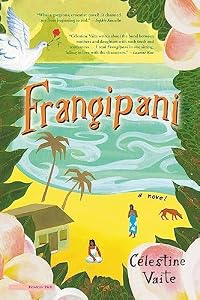
In Tahiti, it's a well-known fact that women are wisest, mothers know best, and Materena Mahi knows best of all -- or so everyone except for her own daughter thinks. Soon enough, mother and daughter are engaged in a tug-of-war that tests the bonds of their love.Tags
Recommendations



































Member Recommendations
jayne_charles Culturally illuminating with similar feelgood vibe
Member Reviews
Frangipani follows the life of a Tahitian woman, Materena, from her days as a young mother through to the years when her three children leave home, although the focus is on the tumultuous time when her daughter Leilani is a teenager. The novel often looks at Materena's fairly traditional Tahitian approach to life versus Leilani's modern and progressive outlook. Frangipani also highlights the strong bonds of the vast network of aunties, cousins, and grandmothers that Leilani and Materena can rely on for support.
There is little plot to this novel--it's told in vignettes that hop forward in chronological order. The third person narrator has a robust voice full of traditional Tahitian folk wisdom and island patois (both Tahitian and show more French), and this gave Frangipani a unique charm. I enjoyed spending time with these characters and getting a glimpse of Tahitian culture.
Frangipani was nominated for the Orange Prize. show less
There is little plot to this novel--it's told in vignettes that hop forward in chronological order. The third person narrator has a robust voice full of traditional Tahitian folk wisdom and island patois (both Tahitian and show more French), and this gave Frangipani a unique charm. I enjoyed spending time with these characters and getting a glimpse of Tahitian culture.
Frangipani was nominated for the Orange Prize. show less
Frangipani tracks the gradual evolution of Materena Mahi as she raises three children and realizes her own independence within a changing Tahitian society. It's a charming book, written in a gentle, engaging, even simplistic style. It would be easy to dismiss it as a sort of fun and whimsical summer read, but there are important issues at its center that, I think, bear further scrutiny.
When we first meet Materena, she has an infant son and is begging her boyfriend to let her pick up his paycheck so she has some money for household expenses. She is not alone in her predicament: "When a woman doesn't collect her man's pay," the story begins, "she gets zero francs because her man goes to the bar with his colleagues and you know how it is, show more eh?" Women in her world are solely responsible for the running of life--for keeping food in the cupboard and kerosene in the stove and all the washing and cleaning and maintenance--but they are given no resources to do it.
Materena, in the face of this conundrum and pregnant with her second child, eventually finds work as a house cleaner. It is a position that affords her a great deal of personal pride. Throughout the story, she emphasizes that she is a professional cleaner, even correcting people if they fail to include the "professional" part. It is the "professional" aspect that is important to her, and cleaning is more than just a job in her eyes. It is the first step toward gaining her independence, of having the ability to pursue her own goals on her own terms.
But what really catalyzes her transformation, what pushes her to examine Tahitian society and her role within it, is her relationship with her smart, stubborn daughter Leilani, who grows up constantly challenging her mother, questioning the status quo, accepting nothing at face value. Leilani is exasperating and unbending, but in seeing herself through her daughter's eyes, and in thinking about what she wants for Leilani as she grows up, Materena is forced to explore her own desires and examine her own goals in life.
Punctuating Materena's changing attitudes are several moments where traditional Tahitian wisdom is due to be passed on. When Leilani is born, Materena dutifully sticks to the rules for childbirth--including no crying, shouting, or cursing during labor because it will turn the baby into an angry, sad, or frightened person (as someone who is two months away from giving birth myself, I find it very hard to imagine following these proscriptions. I plan to do all three of those things in abundance). But by the time Leilani gets her first period at thirteen, the conventional "Welcome to Womanhood" talk seems outdated and ridiculous to both Materena and her no-nonsense daughter. Though Materena gamely starts on the traditional words ("Don't wash your hair during your period, otherwise your blood is going to turn into ice and you're going to be mad"), Leilani literally laughs her into silence, and Materena, realizing the ridiculousness of the advice, dissolves into laughter along with her. In the end, Materena waits until Leilani has gone to bed and then records a new talk for her daughter, a jumble of recipes, etiquette, and advice on everything from decorating to dating, which incorporates elements both traditional and modern.
The shift between these two seminal moments illustrates how Materena changes over the course of the story: at first she unquestioningly accepts the status quo, however difficult it makes her life, but gradually she comes to embrace the elements of tradition and modernity that work for her, and is able to cast aside the ones that don't. Her rebellion is a quiet one. Leilani is the one who embraces feminism as an ideology, who questions the prescribed role for women in Tahitian society. Materena doesn't think much about principles or equality; she just wants to be in charge of her own life, and to provide for her children, and these are the desires that prompt her gradual evolution. She wants Leilani to grow into a "woman who knows what she wants and makes it happen"; in pursuing this goal for her daughter, she must find her own agency as well.
This book is about relationships between women; part of the reason Materena's gentle version of feminism is successful is that she exists within a strongly matriarchal society, where she is supported by mothers, cousins, and female friends. Men are peripheral in the story and in Materena's life; they may be loved, but they can never be depended upon, and the bond between lovers is far less important than that between mother and daughter.
There are surprisingly challenging ideas buried in this apparent beach read. Like its protagonist, Frangipani is sweet and gentle with an unexpectedly steely core.
I have also published this review on my blog, Around the World in 2000 Books. show less
When we first meet Materena, she has an infant son and is begging her boyfriend to let her pick up his paycheck so she has some money for household expenses. She is not alone in her predicament: "When a woman doesn't collect her man's pay," the story begins, "she gets zero francs because her man goes to the bar with his colleagues and you know how it is, show more eh?" Women in her world are solely responsible for the running of life--for keeping food in the cupboard and kerosene in the stove and all the washing and cleaning and maintenance--but they are given no resources to do it.
Materena, in the face of this conundrum and pregnant with her second child, eventually finds work as a house cleaner. It is a position that affords her a great deal of personal pride. Throughout the story, she emphasizes that she is a professional cleaner, even correcting people if they fail to include the "professional" part. It is the "professional" aspect that is important to her, and cleaning is more than just a job in her eyes. It is the first step toward gaining her independence, of having the ability to pursue her own goals on her own terms.
But what really catalyzes her transformation, what pushes her to examine Tahitian society and her role within it, is her relationship with her smart, stubborn daughter Leilani, who grows up constantly challenging her mother, questioning the status quo, accepting nothing at face value. Leilani is exasperating and unbending, but in seeing herself through her daughter's eyes, and in thinking about what she wants for Leilani as she grows up, Materena is forced to explore her own desires and examine her own goals in life.
Punctuating Materena's changing attitudes are several moments where traditional Tahitian wisdom is due to be passed on. When Leilani is born, Materena dutifully sticks to the rules for childbirth--including no crying, shouting, or cursing during labor because it will turn the baby into an angry, sad, or frightened person (as someone who is two months away from giving birth myself, I find it very hard to imagine following these proscriptions. I plan to do all three of those things in abundance). But by the time Leilani gets her first period at thirteen, the conventional "Welcome to Womanhood" talk seems outdated and ridiculous to both Materena and her no-nonsense daughter. Though Materena gamely starts on the traditional words ("Don't wash your hair during your period, otherwise your blood is going to turn into ice and you're going to be mad"), Leilani literally laughs her into silence, and Materena, realizing the ridiculousness of the advice, dissolves into laughter along with her. In the end, Materena waits until Leilani has gone to bed and then records a new talk for her daughter, a jumble of recipes, etiquette, and advice on everything from decorating to dating, which incorporates elements both traditional and modern.
The shift between these two seminal moments illustrates how Materena changes over the course of the story: at first she unquestioningly accepts the status quo, however difficult it makes her life, but gradually she comes to embrace the elements of tradition and modernity that work for her, and is able to cast aside the ones that don't. Her rebellion is a quiet one. Leilani is the one who embraces feminism as an ideology, who questions the prescribed role for women in Tahitian society. Materena doesn't think much about principles or equality; she just wants to be in charge of her own life, and to provide for her children, and these are the desires that prompt her gradual evolution. She wants Leilani to grow into a "woman who knows what she wants and makes it happen"; in pursuing this goal for her daughter, she must find her own agency as well.
This book is about relationships between women; part of the reason Materena's gentle version of feminism is successful is that she exists within a strongly matriarchal society, where she is supported by mothers, cousins, and female friends. Men are peripheral in the story and in Materena's life; they may be loved, but they can never be depended upon, and the bond between lovers is far less important than that between mother and daughter.
There are surprisingly challenging ideas buried in this apparent beach read. Like its protagonist, Frangipani is sweet and gentle with an unexpectedly steely core.
I have also published this review on my blog, Around the World in 2000 Books. show less
Frangipani is the second book in a series by Célestine Hitiura Vaite, but could easily be read as a stand-alone story or out of sequence. The author was born and grew up in French Polynesia (Tahiti) but now lives in Australia. This book is very much a character-driven story which revolves around the endearing Materena and her daughter Leilani. It begins when Leilani is a baby, goes through the difficult teenage years when the generations come into conflict and traditional cultural values face off against modern sensibilities, and into adulthood. The book also does a wonderful job of creating a sense of place, using Tahitian words and expressions, and customs. It also gently touches on colonialism and the class and wealth disparity show more between the French and the Tahitians. I loved the gossipy yet supportive interactions between the Tahitian women, sadly most of the men seemed like a waste of space. This was a relaxing feel-good read that I really enjoyed. show less
Frangipani came out of left field for me. I wasn't 100% sure what to expect, and yet had picked it up on a whim, thinking that it might be interesting to read a book set in Tahiti. The bonus was that it is also written by a Tahitian writer who was born and raised there. At the risk of sounding cliche, Vaite's novel has that rich tone and style that is characteristic of contemporary ethnic fiction. The nuances in the story show the life of a Tahitian woman, Materena, who approaches her life with a selfish husband (that she loves) and demanding children with a bit of humor and philosophy. Although the story makes a few jumps in time that had me grasping for time frame, I felt centered through Materena.
Much of the story dealt with family show more relationships, and the complication that such a small island as Tahiti could throw into the mix. Living on such a small island often spells family members leaving to distant places, splitting up the family unit, and causing mothers to cry for their children. You get the sense that although Materena's relationship with the daughter she has is chaotic and often exhausting emotionally, that all she wants for her daughter is happiness. As with most mother, daughter stories, Materena sees her own life through her daughter's eyes, and tries to stop her before she makes any mistakes that she could sense were ahead.
Although the novel felt like a serious discussion of relationships and culture, there were so many funny scenes (some that probably weren't meant to be funny) that I couldn't help but be swept away by the story. Using potted plants to cover holes in the carpet, using terms like "sexy loving" for sex, and using arguments to forward the story had me charmed and invested in their lives. The island culture in the novel also felt very similar to what I've seen, read about, and experienced here in Hawaii, and therefore was sucked into the dialogue and large sense of family pretty quickly. I wasn't keen on the way the book ended, with what felt like simple platitudes about the grandness of women, but I now know there are two more books to follow this first one that have me eager to continue reading about Materena and her family. show less
Much of the story dealt with family show more relationships, and the complication that such a small island as Tahiti could throw into the mix. Living on such a small island often spells family members leaving to distant places, splitting up the family unit, and causing mothers to cry for their children. You get the sense that although Materena's relationship with the daughter she has is chaotic and often exhausting emotionally, that all she wants for her daughter is happiness. As with most mother, daughter stories, Materena sees her own life through her daughter's eyes, and tries to stop her before she makes any mistakes that she could sense were ahead.
Although the novel felt like a serious discussion of relationships and culture, there were so many funny scenes (some that probably weren't meant to be funny) that I couldn't help but be swept away by the story. Using potted plants to cover holes in the carpet, using terms like "sexy loving" for sex, and using arguments to forward the story had me charmed and invested in their lives. The island culture in the novel also felt very similar to what I've seen, read about, and experienced here in Hawaii, and therefore was sucked into the dialogue and large sense of family pretty quickly. I wasn't keen on the way the book ended, with what felt like simple platitudes about the grandness of women, but I now know there are two more books to follow this first one that have me eager to continue reading about Materena and her family. show less
Materena is a Tahitian woman and mother of two sons and a daughter. Frangipani focuses primarily on the mother-daughter relationship and how it plays out in Tahitian culture. The story opens with Materena's pregnancy and rather fractious marriage. Materena guides her daughter Leilani through life's stages, offering a mix of wisdom and outdated thinking. As Leilani matures, the relationship works both ways, and the daughter helps the mother become more self-actualized.
There were occasional poignant moments that resonated with my own experience as the mother of two daughters. But for the most part, I could not get "stuck in" to this novel. The characters surrounding Materena and Leilani became stock figures, repeatedly coming on stage to show more do their quirky thing, and then making an exit. This book was interesting as a glimpse into a culture that was not familiar to me, but other than that it was a bit flat. show less
There were occasional poignant moments that resonated with my own experience as the mother of two daughters. But for the most part, I could not get "stuck in" to this novel. The characters surrounding Materena and Leilani became stock figures, repeatedly coming on stage to show more do their quirky thing, and then making an exit. This book was interesting as a glimpse into a culture that was not familiar to me, but other than that it was a bit flat. show less
You don’t encounter many books set in Tahiti – certainly this is the only one I’ve ever read. It has the advantage of being written by someone who grew up there too – bringing with it the confidence of authenticity as opposed to the suspicion of second hand whimsy. It was fascinating to learn of the culture on that island – the modern trends and the traditional ideas, and the way the two sometimes clash.
Essentially it’s a story about women, about mothers and daughters, and touches on themes that are the same the world over, but the setting gives it a nice twist. It has a nice feelgood vibe about it, and though one can never rule out the possibility of a major tragedy, this is one to warm the heart generally. I thought in show more places – particularly the final third – the plot became a bit slack, but nevertheless a great book, one that brought some sunshine into my reading. I would certainly read more by this author. show less
Essentially it’s a story about women, about mothers and daughters, and touches on themes that are the same the world over, but the setting gives it a nice twist. It has a nice feelgood vibe about it, and though one can never rule out the possibility of a major tragedy, this is one to warm the heart generally. I thought in show more places – particularly the final third – the plot became a bit slack, but nevertheless a great book, one that brought some sunshine into my reading. I would certainly read more by this author. show less
Set in Tahiti, this quasi-autobiographical novel explores a mother-daughter relationship in the context of the Tahitian post-World War II culture. The central character, Materena, is a strong, clever, passionate, and compassionate mother of three, including a daughter named Leilani, and wife of a thoughtless, self-centered man, Pito. She dispenses advice regularly to her large extended family, but her main concerns are always with her daughter Leilani, part of the new breed of women of Tahiti who are modern and turning their backs on the old ways. Ms. Vaite does a good job of bringing to life the Tahitian culture.
Members
- Recently Added By
Published Reviews
ThingScore 100
Vaite uses words to paint a vivid Tahitian landscape worthy of a Gauguin painting and delivers a memorable story about big dreams on a small island.
added by Nickelini
In this whimsical, charming novel (her first to be published in the U.S.), Vaite introduces readers to proud "professional cleaner" Materena Mahi, one of the spunkiest, wisest, lovingest women on the island of Tahiti.
added by Nickelini
Author Information

6+ Works 651 Members
Awards and Honors
Awards
Series

Belongs to Publisher Series
Work Relationships
Common Knowledge
- Canonical title
- Frangipani
- Original title
- Breadfuit
- Original publication date
- 2000
- Important places
- Tahiti; Pacific Ocean
- Dedication*
- Für meine Mutter, Viola Vaite, die mich lehrte, dass die Liebe das beste aller Motive ist.
Und im liebenden Angedenken an meine Patentante Henriette Estall, die mir beibrachte, auf die Willensstärke zu vertrauen und nach... (show all) jedem Sturz wieder aufzustehen. - First words
- When a woman doesn't collect her man's pay she gets zero francs because her man goes to the bar with his colleagues to celebrate the end of the week and you know how it is, eh? A drink for _les copains!_ Then he comes home ... (show all)with empty pockets, but he's very happy. He tells this woman stories that don't stand straight to make her laugh, but she doesn't feel like laughing at all. She's cranky and she just wants her man to shut up.
- Last words
- (Click to show. Warning: May contain spoilers.)Bless the day you came into my life.
- Blurbers
- Kinsella, Sophie; Rice, Luanne
- Original language*
- Englisch
*Some information comes from Common Knowledge in other languages. Click "Edit" for more information.
Classifications
Statistics
- Members
- 356
- Popularity
- 88,066
- Reviews
- 16
- Rating
- (3.60)
- Languages
- 7 — Dutch, English, Finnish, French, German, Norwegian (Bokmål), Swedish
- Media
- Paper, Ebook
- ISBNs
- 19
- ASINs
- 4