On This Page
Description
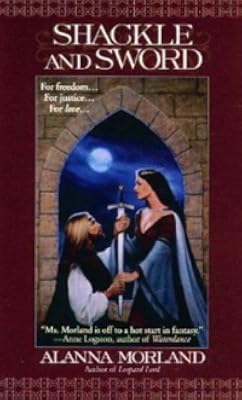
For freedom! For justice! For love...Years after being sold into slavery by his stepfather, Farris escapes with the help of his father's people--who teach him the magic that is his birthright.Now, as a mercenary for hire, Farris will confront the horrors of his past--and rescue the beautiful Queen with whom he is falling in love...Tags
Recommendations






Member Reviews
One Saturday I felt like something quick and cheap and cheesy, and I remembered this book I had picked up at Books & Co: Alanna Morland’s Shackle and Sword. The basic concept, as I understood it, was of a young man sold off into slavery who becomes a great hero; I figured it would be well-written enough for the undemanding mood I was in, and full of sex and fighting. And it was all of that – only moreso. I swear, I thought I had read something else by this author and wasn’t overly impressed: I need to try it again, because this was so much more than I expected. Well-written enough, yes – in fact, very nicely written. Full of sex and fighting, yes – but not explicit; for some reason – the romance-y cover, perhaps – I show more expected blow-by-blow scenes of both, and there was nary a one of either. The sex and violence was largely left to the imagination.
What’s particularly funny is that I’ve been reading an old blog of “fantasy rants” by someone called limyaael, in which long reading – and writing – of the genre lets loose on the classic blunders – some even worse than going up against a Sicilian when death is on the line. The rants I’ve read so far have involved use of language – English and constructed; treatment of horses; treatment of battles; basically, for the most part, all carrying the motto “don’t write it if you don’t know anything about it”. (Like, for example, don’t have a battalion of Elves loosing arrows in a rainstorm. Just sayin’.) I expected Shackle and Sword to ring every single one of the off-notes discussed in this blog …
It didn’t touch a single one, as far as I could see. The slavery of the main character, Farris, was handled realistically but not explicitly; a lot of the worst of the life he lives under the worst masters happens offstage, only hinted at – and what we are shown is sobering. He is, I grant you, a bit prodigious as a fighter and horseman – but the former can be put down to his half-blood heritage. I liked that aspect; the way he is treated by the fae to whom he is related through his long-vanished father was a very pleasant surprise. The latter above, the horsemanship, is also easily enough explained, and doesn’t insult willing suspension of disbelief. Best of all, Farris doesn’t magically turn into a shining hero at any point in the story. He’s bitter and vengeful, but sensible and loyal; he shows himself in several situations to be not as bad as he might have been, and not as good as he might be. He’s a pretty solid, believable character, in a pretty solid, believable setting.
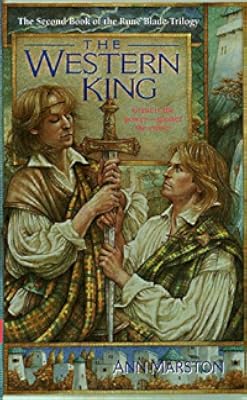
I liked it. I really liked it. I still dislike the cover, and I’m not fond of the title (which comes from a ballad referenced several times in the text), and wouldn’t have wanted to read it in public with those (I don’t on the whole do bodice-rippers) – but I did read it in one three-hour sitting on Saturday, and it raised a tear at the death of a character. It was a very, very pleasant surprise. show less
What’s particularly funny is that I’ve been reading an old blog of “fantasy rants” by someone called limyaael, in which long reading – and writing – of the genre lets loose on the classic blunders – some even worse than going up against a Sicilian when death is on the line. The rants I’ve read so far have involved use of language – English and constructed; treatment of horses; treatment of battles; basically, for the most part, all carrying the motto “don’t write it if you don’t know anything about it”. (Like, for example, don’t have a battalion of Elves loosing arrows in a rainstorm. Just sayin’.) I expected Shackle and Sword to ring every single one of the off-notes discussed in this blog …
It didn’t touch a single one, as far as I could see. The slavery of the main character, Farris, was handled realistically but not explicitly; a lot of the worst of the life he lives under the worst masters happens offstage, only hinted at – and what we are shown is sobering. He is, I grant you, a bit prodigious as a fighter and horseman – but the former can be put down to his half-blood heritage. I liked that aspect; the way he is treated by the fae to whom he is related through his long-vanished father was a very pleasant surprise. The latter above, the horsemanship, is also easily enough explained, and doesn’t insult willing suspension of disbelief. Best of all, Farris doesn’t magically turn into a shining hero at any point in the story. He’s bitter and vengeful, but sensible and loyal; he shows himself in several situations to be not as bad as he might have been, and not as good as he might be. He’s a pretty solid, believable character, in a pretty solid, believable setting.
I liked it. I really liked it. I still dislike the cover, and I’m not fond of the title (which comes from a ballad referenced several times in the text), and wouldn’t have wanted to read it in public with those (I don’t on the whole do bodice-rippers) – but I did read it in one three-hour sitting on Saturday, and it raised a tear at the death of a character. It was a very, very pleasant surprise. show less
Ratings
Members
- Recently Added By
Author Information
2+ Works 185 Members
Series

Classifications
Statistics
- Members
- 86
- Popularity
- 372,962
- Reviews
- 1
- Rating
- (3.70)
- Languages
- English
- Media
- Paper
- ISBNs
- 1