
Peg Kerr
Author of The Wild Swans
About the Author
Image credit: Publicity image
Works by Peg Kerr
Lethe {short story} 2 copies
Free Day [short story] 1 copy
Associated Works
2041: Twelve Short Stories About the Future by Top Science Fiction Writers (1991) — Contributor — 182 copies, 4 reviews
Tagged
Common Knowledge
- Canonical name
- Kerr, Peg
- Birthdate
- 4/28/19??
- Gender
- female
- Education
- St. Olaf College
Clarion Writers Workshop (1988) - Nationality
- USA
- Places of residence
- Minneapolis, Minnesota, USA
- Associated Place (for map)
- Minnesota, USA
Members
Reviews
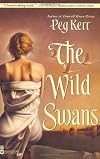
I first read this book in high school. It's now been over two decades. I've re-read it since that first time, but have not in a really long time. I was scared, most likely, with how it will hold up. I shouldn't have worried because I still loved it. Kerr weaves two very different stories together - one a retelling of The Wild Swans fairy tale; the story of a young gay man during the beginning of the 1980s AIDS epidemic.
Both have themes of finding your place in the world and your home. And show more also about the importance of one's voice. Eliza couldn't speak while she was weaving her brother's coats. Elias had to find his voice. There's the implication that Elias and others in his story are reincarnations of those in Eliza's. Which is at once both a subtle stretch, but also especially poignant when you realize who are connected to who.
Beautiful and heartbreaking. show less
Both have themes of finding your place in the world and your home. And show more also about the importance of one's voice. Eliza couldn't speak while she was weaving her brother's coats. Elias had to find his voice. There's the implication that Elias and others in his story are reincarnations of those in Eliza's. Which is at once both a subtle stretch, but also especially poignant when you realize who are connected to who.
Beautiful and heartbreaking. show less
The Wild Swans is a retelling of the fairy tale with the same name. It features a very practical "princess" (in this version, an earl's daughter), who is very religious, full of common sense, and a practical hardworker. She ends up being flown to the new world by her brothers, and the tail is a wonderful fleshing out of the original fairy tale. It is a great story, but I found myself initially more compelled by the second story that happened at the same time. At eighteen, a boy is kicked out show more of his home after his waspish family discovers he's gay. He ends up on the streets of New York City, but is saved by a man who goes on to become his lover. He finds his place in the gay community, but in the early 1980s the gay community suffered its own curse- AIDS. I've never felt connected to the fight against AIDS, but this book brought me that connection in a very powerful way. The two stories connect to one another and play off each other in their alternating chapters, and the character names meet in ways that pull the stories together and suggest reincarnation. It takes a lot of strength to fight a curse, and you are not always the one to find success. show less
Kerr tells two stories in alternating chapters, the story of Eliza, in the seventeenth century, whose stepmother has enchanted her eleven brothers so that they are swans by day and men only by night, and the story of Elias, in the early eighties in New York, whose parents have kicked him out. They're both interesting, compelling stories, and I enjoyed both them. I don't, though, see the close parallels between them that Kerr says in an afterword motivated her, beyond a rather tenuous theme show more of "what's family". The motivations of the parental units are different, their actions are different, the responses of Eliza and Elias are different, and the outcomes are different. One is severely let down by adopted family; every important member of the other's adopted family stands firm. One succeeds in defeating the evil that oppresses them; the other can only defeat it in spirit. One story is fantasy; the other is mainstream mimetic fiction.
On the other hand, each contains an obvious mistake about an easily checked background detail. (Witches were not burned alive in England; Catholic priests released from their vows retain the power to perform the sacraments.)
I have one additional complaint about Elias' story. There's someone at the beginning who helps him survive his first days on the streets, and tries to teach him survival skills for living in the streets. When Elias gets a chance to get off the streets, he quite rightly jumps at it. From the point of view of that first person to befriend him, though, he must have seemed to have dropped off the face of the earth, in circumstances where his having gotten killed would not be out of the question. When Eliza walks away from the people who know her, some of whom care about her, she has a compelling reason for not attempting any contact with them again, at least until after the end of the story. Elias, though, had some options for at least attempting to get word to his street friend that he didn't die bleeding in an alley, even if he didn't want to make direct contact--a personal ad, for instance. As far as the reader can tell from the text of the story, though, Elias never thinks about that person again, once his luck changes.
But I repeat that these are both good stories, and I enjoyed both of them. Kerr does a good job of making the reader care about each of her protagonists, and the problems that confront them. show less
On the other hand, each contains an obvious mistake about an easily checked background detail. (Witches were not burned alive in England; Catholic priests released from their vows retain the power to perform the sacraments.)
I have one additional complaint about Elias' story. There's someone at the beginning who helps him survive his first days on the streets, and tries to teach him survival skills for living in the streets. When Elias gets a chance to get off the streets, he quite rightly jumps at it. From the point of view of that first person to befriend him, though, he must have seemed to have dropped off the face of the earth, in circumstances where his having gotten killed would not be out of the question. When Eliza walks away from the people who know her, some of whom care about her, she has a compelling reason for not attempting any contact with them again, at least until after the end of the story. Elias, though, had some options for at least attempting to get word to his street friend that he didn't die bleeding in an alley, even if he didn't want to make direct contact--a personal ad, for instance. As far as the reader can tell from the text of the story, though, Elias never thinks about that person again, once his luck changes.
But I repeat that these are both good stories, and I enjoyed both of them. Kerr does a good job of making the reader care about each of her protagonists, and the problems that confront them. show less
It's been a while, but what I do remember about this book (which I think I read twice, once as a teen and once as a young adult) was that while I liked it, I was annoyed that the young gay male narrator ends up dealing with AIDS in his community. I remember thinking: why can't he just be gay without the AIDS subplot?
Lists
Awards


You May Also Like


Associated Authors
Statistics
- Works
- 5
- Also by
- 2
- Members
- 490
- Popularity
- #50,415
- Rating
- 3.7
- Reviews
- 9
- ISBNs
- 4
- Favorited
- 2