
Caroline Stevermer
Author of Sorcery and Cecelia or The Enchanted Chocolate Pot
About the Author
Series
Works by Caroline Stevermer
Rag [short fiction] 2 copies
A Matter of Magic 1 copy
The Glass Magicians Daughter 1 copy
Wizard's Row [short fiction] 1 copy
Associated Works
Queen Victoria's Book of Spells: An Anthology of Gaslamp Fantasy (2013) — Contributor — 399 copies, 18 reviews
The Armless Maiden and Other Tales for Childhood's Survivors (1995) — Contributor — 256 copies, 4 reviews
Willful Impropriety: 13 Tales of Society, Scandal, and Romance (2012) — Contributor — 88 copies, 4 reviews
Tagged
Common Knowledge
- Other names
- Stevermer, C. J.
- Birthdate
- 1955
- Gender
- female
- Education
- Bryn Mawr College (B.A.|History of Art)
- Occupations
- novelist
short story writer - Agent
- Frances Collin Literary Agency
- Nationality
- USA (birth)
- Places of residence
- Minnesota, USA
- Associated Place (for map)
- Minnesota, USA
Members
Reviews
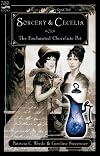
Utterly delightful; I do love an epistolary novel, especially one with some magic! Cousins Cecy (in the country) and Kate (in London) exchange frequent letters - at first simply to keep in touch and stave off boredom, but events in both places quickly grow more interesting.
It's England after the Napoleonic wars, and an England where magic is practiced (although Aunt Elizabeth doesn't approve). After Kate is briefly abducted by Miranda, Dorothea's (step)mama, Kate and Cecy begin to suspect show more that Miranda is in league with Sir Hilary Bedrick, working against the Marquis of Schofield (Thomas). Thomas proposes to Kate in order to protect himself from Dorothea/Miranda, while Cecy makes charm-bags, studies magic with Mr. Wrexton, and criticizes James Tarleton's attempts at sneaking and spying.
The authors' dedication - to Jane Austen, Georgette Heyer, JRR Tolkien, and Ellen Kushner - conveys with perfect accuracy the type of story they have written, and who will enjoy it. I requested The Grand Tour right away!
Recommended by Ella S.
Quotes
It seems there are a great many magicians who, in order to use their magic most effectively, must have an object through which to focus their power. This object must be kept nearby when casting spells. (I believe it works along the same lines as wearing spectacles - some people need them, others don't; every pair is different and it does no good to try to use someone else's; one can see without them, but not nearly so well; and they do one no good whatever if they are not in place when one requires them.) (161)
"...the enchantment merely animates the pieces. It doesn't instruct them on the finer points of play."
"How dreadful," I replied, "to be caught up in a game and have no idea of the rules."
"It's not a plight unique to this chess set," Lady Sylvia observed dryly. (276) show less
It's England after the Napoleonic wars, and an England where magic is practiced (although Aunt Elizabeth doesn't approve). After Kate is briefly abducted by Miranda, Dorothea's (step)mama, Kate and Cecy begin to suspect show more that Miranda is in league with Sir Hilary Bedrick, working against the Marquis of Schofield (Thomas). Thomas proposes to Kate in order to protect himself from Dorothea/Miranda, while Cecy makes charm-bags, studies magic with Mr. Wrexton, and criticizes James Tarleton's attempts at sneaking and spying.
The authors' dedication - to Jane Austen, Georgette Heyer, JRR Tolkien, and Ellen Kushner - conveys with perfect accuracy the type of story they have written, and who will enjoy it. I requested The Grand Tour right away!
Recommended by Ella S.
Quotes
It seems there are a great many magicians who, in order to use their magic most effectively, must have an object through which to focus their power. This object must be kept nearby when casting spells. (I believe it works along the same lines as wearing spectacles - some people need them, others don't; every pair is different and it does no good to try to use someone else's; one can see without them, but not nearly so well; and they do one no good whatever if they are not in place when one requires them.) (161)
"...the enchantment merely animates the pieces. It doesn't instruct them on the finer points of play."
"How dreadful," I replied, "to be caught up in a game and have no idea of the rules."
"It's not a plight unique to this chess set," Lady Sylvia observed dryly. (276) show less

I have wanted to read A College of Magics ever since I read the companion novel-sequel, A Scholar of Magics, but I couldn’t find it anywhere. In hindsight, taking so long to find A College of Magics was actually a good thing, because I couldn’t remember anything remotely spoiler-ish from A Scholar of Magics. My expectations of this as a story about a magic university had also lessened with the passage of time, and I didn’t feel the disappointment that I might have once felt upon show more discovering that a lot of A College of Magics is actually about Faris after she leaves the college.
This is a mystery about magic and a coming-of-age story about responsibility. This is vivid and poignant and there’s something really lovely about it. I enjoyed the parts about college life, and Faris’ friend Jane is an utter delight. I’m so pleased I finally got to read this.
Her fellow students at first had given Faris the impression of high intelligence and strange intensity. Even slight familiarity taught her that this impression was, if not entirely mistaken, sadly incomplete. In fact, her fellow students were simply exhausted. Fatigue took strange forms.
One day in the dining hall, Faris sat across the table from a first-year student who stared blankly at the single artichoke on the plate before her.
“That looks good,” said Faris. The artichokes had vanished before she’d arrived and she cherished a faint hope that her classmate disliked them, perhaps enough to barter for it.
“Extremely good,” agreed the first-year, dashing Faris’s hopes. Wearily, she added, “if only I could remember how to eat one.” show less
This is a mystery about magic and a coming-of-age story about responsibility. This is vivid and poignant and there’s something really lovely about it. I enjoyed the parts about college life, and Faris’ friend Jane is an utter delight. I’m so pleased I finally got to read this.
Her fellow students at first had given Faris the impression of high intelligence and strange intensity. Even slight familiarity taught her that this impression was, if not entirely mistaken, sadly incomplete. In fact, her fellow students were simply exhausted. Fatigue took strange forms.
One day in the dining hall, Faris sat across the table from a first-year student who stared blankly at the single artichoke on the plate before her.
“That looks good,” said Faris. The artichokes had vanished before she’d arrived and she cherished a faint hope that her classmate disliked them, perhaps enough to barter for it.
“Extremely good,” agreed the first-year, dashing Faris’s hopes. Wearily, she added, “if only I could remember how to eat one.” show less
A really fun epistolary novel, written by two authors who each took on a character without planning out a plot together (which itself sounds rather fun). Kate and Cecy are funny and arch, and the Regency-plus-magc setting is rendered in a familiar, breezy, enjoyable way. The magic is unconvincing and (worse) pretty uninteresting, though, and the ending falls quite flat, losing narrative momentum and fully embracing the obvious.
Sorcery and Cecelia or the Enchanted Chocolate Pot: Being the Correspondence of Two Young Ladies of Quality Regarding Va by Patricia C. Wrede

Absolutely splendid. This is just as delightful now as it was when I originally read it. Two spirited heroines, plenty of stirring adventures, and a believable system of magic, all add up to a wonderful trouncing of romantic conventions.
"...We are to return and take tea on Thursday. I am determined to have the headache Thursday, if I have to hit myself with a rock to do it."
"... he turned my hand over again and brushed a kiss across my knuckles. I experienced a nearly overpowering desire to show more hit him in the eye." show less
"...We are to return and take tea on Thursday. I am determined to have the headache Thursday, if I have to hit myself with a rock to do it."
"... he turned my hand over again and brushed a kiss across my knuckles. I experienced a nearly overpowering desire to show more hit him in the eye." show less
Lists
Magic schools (1)
Best Young Adult (1)
Espistolary (1)
Books to read (1)
Female Author (1)
Epistolary Books (1)
Gaslamp Fantasy (3)
Awards


You May Also Like


Associated Authors
Statistics
- Works
- 19
- Also by
- 9
- Members
- 10,102
- Popularity
- #2,351
- Rating
- 3.9
- Reviews
- 336
- ISBNs
- 83
- Languages
- 1
- Favorited
- 25