
Pamela Dean (1) (1953–)
Author of Tam Lin
For other authors named Pamela Dean, see the disambiguation page.
About the Author
Image credit: Photo by user Dd-b / Wikimedia Commons
Series
Works by Pamela Dean
Cousins [Short Story] 1 copy
Going North 1 copy
Associated Works
Firebirds Rising: An Original Anthology of Science Fiction and Fantasy (2006) — Contributor — 706 copies, 12 reviews
Tagged
Common Knowledge
- Legal name
- Dyer-Bennet, Pamela Collins Dean
- Other names
- Pamela C. Dean
- Birthdate
- 1953-01-18
- Gender
- female
- Education
- Carleton College (BA ∙ English)
State University of New York, Binghamton (MA ∙ English) - Occupations
- fantasy writer
- Organizations
- Scribblies
Pre-Joycean Fellowship - Awards and honors
- Mythopoeic Awards, Adult Fantasy category, finalist (1992)
- Relationships
- Dyer-Bennet, David (husband)
- Nationality
- USA
- Birthplace
- Illinois, USA
- Places of residence
- Illinois, USA
Missouri, USA
Nebraska, USA
Minneapolis, Minnesota, USA - Associated Place (for map)
- USA
Members
Reviews
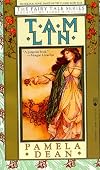
I have two bones to pick with this book; well, actually, two bones. One small one with the author and a much larger one with the current publisher's marketing department.
The smaller bone first: I was a faculty child for my undergraduate years, and an English major (along with a block of Classics). Janet's relative lack of knowledge of the university (specifically, the faculty) where her father teaches Romantics (mine taught Hegel) keeps breaking my WSOD.
Of my five professors in first year, I show more was acquainted with three, not because I chose courses based in whether I knew who taught them (though I did choose sections in two courses by what I knew of them: of the two professors, one I had known for eight years, and one I knew of only by name) but just because one becomes familiar with one's father's SCR and departmental colleagues, not to mention the number of faculty members whose children had gone to high school with one. And all my teachers, all the dons, my head of college, knew who I was.
Janet, by comparison, knows the campus, but not the people. I have a very hard time seeing her as a faculty child.
As for the bigger bone: this book was originally published as an adult fantasy book as part of Tor's Fairy Tale series. It has been republished, and marketed, as a YA/teen book.
This is a book whose full enjoyment depends on things like knowing who Robert Armin was, or what the actual sound of Shakespeare's English was like. It helps if one knows Le Roman de la Rose, The Lady's Not For Burning, Tourneur, Summer's Last Will and Testament, classical tragedy, and Stoppard, or at least about them. These are not things which any plausible typical teen is going to know. (I did, in fact, know these things by 19, by which time I was in second year university, but I'm pretty sure that's not the slot envisaged by "teen literature".) There is no reasonable sense in which this book can be considered as aimed at anything other than an adult audience, and a fairly well-educated adult audience at that.
Overall, though, it's a delightful book, and better (I think) than Diana Wynne Jones' Fire and Hemlock, although Jones has a better structure, starting in medias res. The disparity in ages in Jones' version works against the story, whereas the undergraduate atmosphere of Dean's story actively helps the flow of the story.
There are two complaints I see about it which I want to answer.
First is the pacing and structure. As Jo Walton said regarding her experience of writing her Barrayaran/Shakespearian Tam Lin, the structure of the ballad mirrors the structure of the book, and is an integral part of the tale: that is, there is a long secular lead-up with the fairy ride coming only at the very end. Not only that, but Dean succeeds in making this book two parallel and intertwined stories: one stands up well with no Fairy Queen at all: it's the story Molly refers to when she says, in response to Janet's "It's only been three weeks.", "If you mean you and Thomas, it's been three years": Just excise a chapter and a half and you have a lovely, Gaudy Night-level nostalgic tale of University and a slowly developing love. The second tale is that of those who have been taken under hill, filtered through naive perspective of Janet: Nick's and Robin's story, one of separation from the world even in interaction with it; and that story has its climax with the full revelation of the unhumanness of the Faerie Queen.
The compression and extension of time reflect subjective experience: the non-routine highlighted, the routine passed over.
There is also the complaint that people do not talk like that: i.e. quote extended (or even short) bits of Shakespeare, Nashe, or Homer in general conversation, To which I must respond: I know such people, and I have been one of them. All it takes is a decent memory, reasonably wide reading, and an appropriate context. (In the book, of course, these elements have a double role). show less
The smaller bone first: I was a faculty child for my undergraduate years, and an English major (along with a block of Classics). Janet's relative lack of knowledge of the university (specifically, the faculty) where her father teaches Romantics (mine taught Hegel) keeps breaking my WSOD.
Of my five professors in first year, I show more was acquainted with three, not because I chose courses based in whether I knew who taught them (though I did choose sections in two courses by what I knew of them: of the two professors, one I had known for eight years, and one I knew of only by name) but just because one becomes familiar with one's father's SCR and departmental colleagues, not to mention the number of faculty members whose children had gone to high school with one. And all my teachers, all the dons, my head of college, knew who I was.
Janet, by comparison, knows the campus, but not the people. I have a very hard time seeing her as a faculty child.
As for the bigger bone: this book was originally published as an adult fantasy book as part of Tor's Fairy Tale series. It has been republished, and marketed, as a YA/teen book.
This is a book whose full enjoyment depends on things like knowing who Robert Armin was, or what the actual sound of Shakespeare's English was like. It helps if one knows Le Roman de la Rose, The Lady's Not For Burning, Tourneur, Summer's Last Will and Testament, classical tragedy, and Stoppard, or at least about them. These are not things which any plausible typical teen is going to know. (I did, in fact, know these things by 19, by which time I was in second year university, but I'm pretty sure that's not the slot envisaged by "teen literature".) There is no reasonable sense in which this book can be considered as aimed at anything other than an adult audience, and a fairly well-educated adult audience at that.
Overall, though, it's a delightful book, and better (I think) than Diana Wynne Jones' Fire and Hemlock, although Jones has a better structure, starting in medias res. The disparity in ages in Jones' version works against the story, whereas the undergraduate atmosphere of Dean's story actively helps the flow of the story.
There are two complaints I see about it which I want to answer.
First is the pacing and structure. As Jo Walton said regarding her experience of writing her Barrayaran/Shakespearian Tam Lin, the structure of the ballad mirrors the structure of the book, and is an integral part of the tale: that is, there is a long secular lead-up with the fairy ride coming only at the very end. Not only that, but Dean succeeds in making this book two parallel and intertwined stories: one stands up well with no Fairy Queen at all: it's the story Molly refers to when she says, in response to Janet's "It's only been three weeks.", "If you mean you and Thomas, it's been three years": Just excise a chapter and a half and you have a lovely, Gaudy Night-level nostalgic tale of University and a slowly developing love. The second tale is that of those who have been taken under hill, filtered through naive perspective of Janet: Nick's and Robin's story, one of separation from the world even in interaction with it; and that story has its climax with the full revelation of the unhumanness of the Faerie Queen.
The compression and extension of time reflect subjective experience: the non-routine highlighted, the routine passed over.
There is also the complaint that people do not talk like that: i.e. quote extended (or even short) bits of Shakespeare, Nashe, or Homer in general conversation, To which I must respond: I know such people, and I have been one of them. All it takes is a decent memory, reasonably wide reading, and an appropriate context. (In the book, of course, these elements have a double role). show less

It is possible to read the third book in a trilogy without having ever read the previous two, and to still understand what's going on - but it turns out the resolution doesn't have the same emotional resonance. This is a good lesson for Past Me to not buy the third book in a trilogy just because it's in a remainders bin, or at least to pass it on at the point it becomes obvious I'm never going to come across the other two parts.
(Aka: third part in a portal trilogy, starting just after our show more heroes have determined to go home and forget the whole thing, and just before they realise that they actually really want to go back and see it all through.) show less
(Aka: third part in a portal trilogy, starting just after our show more heroes have determined to go home and forget the whole thing, and just before they realise that they actually really want to go back and see it all through.) show less
What a strange, wonderful book. Ostensibly a retelling of the Scottish ballad "Tam Lin," this is really a story about college. The "Tam Lin" stuff is only very subtly there (until it is not subtle at all), but the weird things going on because of the seepage of Elfland into the small liberal arts college of the story do not stand out as odd, and eventually everything comes together. I only know about Tam Lin because Jo Walton talked about it in her What Makes This Book So Great (and I might show more have made a quite undignified noise and a very greedy grab when I came across it in a used-bookstore trawl last week. Thankfully, only husbeast, who is sympathetic to such things, was within close earshot). Walton says Dean "is doing college as magic garden. The whole experience of going to university is magical, in a sense, is a time away from other time, a time that influences people's whole lives but is and isn't part of the real world."* Agreed, and I thought throughout reading Tam Lin that Dean had captured that time perfectly: the world of reading and learning and of the subjects you're studying can (and persistently do, especially for a particular brand of student) seem far, far more real than anything outside the sphere the college throws up, and you often live in your friends' pockets in ways that will never again be not unhealthy. It is a world I sometimes suspect the 21st century is killing; I was struck with the notion while reading that I might have been part of the last group of students who could experience college in quite this way, who would see their college experience in the book.
Tam Lin takes place in the early seventies: there were no computers and no internet, each dorm floor had one telephone in the hall, and each dorm building had one TV in the lounge. Signing up for classes involved a paper form and tramping around campus to gather signatures and hand in that form in person. If one wanted to stay completely isolated from the outside world, one hardly needed to try. When I attended college in the early aughts, technology had already made avoiding anything beyond the insular, scholarly world of campus much harder (nearly everyone brought a computer to campus; we had (wired, omg) internet connections in our dorm rooms; every room had a phone; you were hard-pressed to find a room without a dizzying array of other distracting, worldly technologies: televisions, VCRs, DVD players, stereos, game consoles). But hardly anyone had a cellphone (and if they did, they were cell phones, which did little your room phone couldn't do), and social media, for all intents and purposes, did not exist (Facebook had not yet hit the 'net and neither had Twitter, Tumblr, Flickr, or Instagram. Even Myspace hadn't popped up yet). The easiest way to contact someone on campus was still to go knock on their door (and leave them a handwritten note if they weren't in). The registrar's office was computerized, but we still signed up for classes by filling out a form and tramping around campus after signatures. Not everyone then lived primarily within the world of campus (even to the extent they could) because not everyone wanted to. I'm sure this has always been true (campuses which became hotbeds of political dissent surely had thousands of students doing everything they could to avoid succumbing to an insular "college as magic garden") and I imagine small liberal arts colleges (especially those is small, semi-rural towns) have always been "better"** at creating this sort of environment than large universities, especially those in big cities.
I wonder, though, if college students today, who all carry (by 1970's standards) unfathomably powerful computers in their pockets and need never be more than a finger-swipe away from any and every aspect of the "outside" world they care to see, can ever really get to the "magic garden" of college that Dean describes, even if they want to. I suspect they cannot, and that strikes me as a bit of a tragedy. Not that our new technologies can't and don't do for us many wonderful things, but they, of course, leave some old ways of being tattered in their wake. This particular experience of college may be one of them, and that makes me doubly, triply, thrilled that there's a book like Tam Lin out there that captures so nicely what that purposely, delightedly isolated four-year-long sojourn into a kind of other world felt like. The retelling of "Tam Lin" gives the story something to hang itself on, something for it to do, but the book is really a snapshot of a piece of 20th-century life I suspect is largely gone.
*Page 64, for those of you following along. :-p
**Scare quotes because I suspect that only a small number of students at any school at any time actually think this kind of world is better. show less
Tam Lin takes place in the early seventies: there were no computers and no internet, each dorm floor had one telephone in the hall, and each dorm building had one TV in the lounge. Signing up for classes involved a paper form and tramping around campus to gather signatures and hand in that form in person. If one wanted to stay completely isolated from the outside world, one hardly needed to try. When I attended college in the early aughts, technology had already made avoiding anything beyond the insular, scholarly world of campus much harder (nearly everyone brought a computer to campus; we had (wired, omg) internet connections in our dorm rooms; every room had a phone; you were hard-pressed to find a room without a dizzying array of other distracting, worldly technologies: televisions, VCRs, DVD players, stereos, game consoles). But hardly anyone had a cellphone (and if they did, they were cell phones, which did little your room phone couldn't do), and social media, for all intents and purposes, did not exist (Facebook had not yet hit the 'net and neither had Twitter, Tumblr, Flickr, or Instagram. Even Myspace hadn't popped up yet). The easiest way to contact someone on campus was still to go knock on their door (and leave them a handwritten note if they weren't in). The registrar's office was computerized, but we still signed up for classes by filling out a form and tramping around campus after signatures. Not everyone then lived primarily within the world of campus (even to the extent they could) because not everyone wanted to. I'm sure this has always been true (campuses which became hotbeds of political dissent surely had thousands of students doing everything they could to avoid succumbing to an insular "college as magic garden") and I imagine small liberal arts colleges (especially those is small, semi-rural towns) have always been "better"** at creating this sort of environment than large universities, especially those in big cities.
I wonder, though, if college students today, who all carry (by 1970's standards) unfathomably powerful computers in their pockets and need never be more than a finger-swipe away from any and every aspect of the "outside" world they care to see, can ever really get to the "magic garden" of college that Dean describes, even if they want to. I suspect they cannot, and that strikes me as a bit of a tragedy. Not that our new technologies can't and don't do for us many wonderful things, but they, of course, leave some old ways of being tattered in their wake. This particular experience of college may be one of them, and that makes me doubly, triply, thrilled that there's a book like Tam Lin out there that captures so nicely what that purposely, delightedly isolated four-year-long sojourn into a kind of other world felt like. The retelling of "Tam Lin" gives the story something to hang itself on, something for it to do, but the book is really a snapshot of a piece of 20th-century life I suspect is largely gone.
*Page 64, for those of you following along. :-p
**Scare quotes because I suspect that only a small number of students at any school at any time actually think this kind of world is better. show less
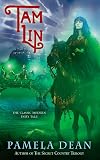
I have been somewhat roundly and gleefully ravished by this book over the last couple days- I took it with me to a New Years' party and this morning, at around 4am, I cheerfully relinquished the last remaining pretense of sleep and went to make a plate of pasta in my underwear so I could finish it. I have actually had the sneaking suspicion it would have this effect on me for several years now, I think, and thusly put it off- look, everyone's got a thing, alright, and for whatever unknowable show more reason, mine's Tam Lin adaptations. Every time I think I've escaped them I find another one and they stick to my brain like treacle. Anyway, this was an easy and immediate five star, everything Pamela Dean's written is now on my kindle, I already want to reread it (but I'll hold off for a little). It made me work to piece everything together, always good with a ballad retelling, and it was Bisexual As Hell. show less
Lists
Autumn books (1)
Faerie Mythology (1)
Comfort Reads (1)
Awards


You May Also Like


Associated Authors
Statistics
- Works
- 11
- Also by
- 10
- Members
- 4,885
- Popularity
- #5,145
- Rating
- 3.9
- Reviews
- 140
- ISBNs
- 34
- Favorited
- 5