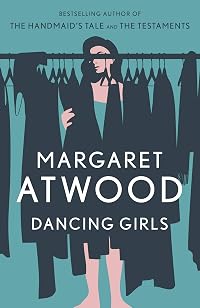
Dancing Girls and Other Stories
by Margaret Atwood
On This Page
Description
"This splendid volume of short fiction testifies to Margaret Atwood's startlingly original voice, full of a rare intensity and exceptional intelligence. Her men and women still miscommunicate, still remain separate in different rooms, different houses, or even different worlds. With brilliant flashes of fantasy, humor, and unexpected violence, the stories reveal the complexities of human relationships and bring to life characters who touch us deeply, evoking terror and laughter, compassion show more and recognition--and dramatically demonstrate why Margaret Atwood is one of the most important writers in English today. Book jacket."--Jacket. show lessTags
Recommendations

















Member Reviews
Writing effective short stories is probably more difficult than writing effective novels. You have very little space; you have to create viable, breathing characters in paragraphs instead of chapters; you have to weigh every word and know that it is essential or it must go; and you must convey something important, an idea, a thought, that lasts or has impact. Margaret Atwood does that like it is a science.
I’m not generally a fan of short stories. They seem too often to leave me feeling as if there is more to the story if only the author had had the time and pages to flesh it out. Atwood seldom left me with that feeling in this collection, although I admit to loving some of the stories and feeling a little confused about others.
The show more ones I loved:
Betty Almost a coming of age tale, with the adolescent narrator who doesn’t quite understand the world of the grown-ups that she observes. Betty is part of “Betty and Fred” the couple who live next door at the cottages where her family is spending the summer, and the girl and her sister are a bit taken with Fred, but it is Betty who makes them welcomed and treats them well. Fred seems so ideal to their young minds. About half way through the tale, our narrator observes, “I began to think that I might not want to be married to Fred after all. He unrolled from Betty’s mouth like a long ribbon of soggy newspaper printed from end to end with nothing but the weather.” That simile said all.
Under Glass I wanted to scream at this narrator who is involved in a relationship with a man who has just committed an infidelity and shrugs it off in a “boys will be boys” style. I wanted to tell him what no one’s ever taught him, how two people who love each other behave, how they avoid damaging each other, but I’m not sure I know.” and “He won’t come near me, touch me, doesn’t he that’s all he needs to do? He’ll wait for me to cool off, as he puts it. But if I go away like this I won’t be back.” She wishes she didn’t love him, but my question would be, why does she?
The Grave of the Famous Poet A tale of alienation and breakup that felt perfectly heartbreaking to me. The setting is right for romance, but the narrator knows the romance is over. ”I pull him into me, wanting him to be with me, but for the first time I feel it’s just flesh, a body, a beautiful machine, an animated corpse, he isn’t in it any more, I want him so much and he isn’t here.” If you have ever experienced the end of love, you will recognize its shadow, whispering your name.
The Sin Eater Joseph is an unorthodox shrink, who we meet through his "client" (because he doesn't call them patients or believe they are sick). "This world is all we have, says Joseph. It's all you have to work with. It is not too much for you. You will not be rescued."
I could turn that last one into a mantra and share it with everyone who is young and struggling, middle-aged and feeling unsure of the path they have taken, old and feeling their time run out. You will not be rescued, but then Joseph and Atwood would probably tell you that if you pay close attention you will discover you can rescue yourself. show less
I’m not generally a fan of short stories. They seem too often to leave me feeling as if there is more to the story if only the author had had the time and pages to flesh it out. Atwood seldom left me with that feeling in this collection, although I admit to loving some of the stories and feeling a little confused about others.
The show more ones I loved:
Betty Almost a coming of age tale, with the adolescent narrator who doesn’t quite understand the world of the grown-ups that she observes. Betty is part of “Betty and Fred” the couple who live next door at the cottages where her family is spending the summer, and the girl and her sister are a bit taken with Fred, but it is Betty who makes them welcomed and treats them well. Fred seems so ideal to their young minds. About half way through the tale, our narrator observes, “I began to think that I might not want to be married to Fred after all. He unrolled from Betty’s mouth like a long ribbon of soggy newspaper printed from end to end with nothing but the weather.” That simile said all.
Under Glass I wanted to scream at this narrator who is involved in a relationship with a man who has just committed an infidelity and shrugs it off in a “boys will be boys” style. I wanted to tell him what no one’s ever taught him, how two people who love each other behave, how they avoid damaging each other, but I’m not sure I know.” and “He won’t come near me, touch me, doesn’t he that’s all he needs to do? He’ll wait for me to cool off, as he puts it. But if I go away like this I won’t be back.” She wishes she didn’t love him, but my question would be, why does she?
The Grave of the Famous Poet A tale of alienation and breakup that felt perfectly heartbreaking to me. The setting is right for romance, but the narrator knows the romance is over. ”I pull him into me, wanting him to be with me, but for the first time I feel it’s just flesh, a body, a beautiful machine, an animated corpse, he isn’t in it any more, I want him so much and he isn’t here.” If you have ever experienced the end of love, you will recognize its shadow, whispering your name.
The Sin Eater Joseph is an unorthodox shrink, who we meet through his "client" (because he doesn't call them patients or believe they are sick). "This world is all we have, says Joseph. It's all you have to work with. It is not too much for you. You will not be rescued."
I could turn that last one into a mantra and share it with everyone who is young and struggling, middle-aged and feeling unsure of the path they have taken, old and feeling their time run out. You will not be rescued, but then Joseph and Atwood would probably tell you that if you pay close attention you will discover you can rescue yourself. show less
Dancing Girls is a collection of short stories by renowned writer Margaret Atwood, who I have wanted to read for quite some time. Although I'm more interested in her novels, I have read a couple of her short stories in anthologies and really enjoyed them, so I was looking forward to this Virago. However, It started out a bit slow for me, as my interest in the first two or three stories was only moderately engaged. I wondered if this wasn't the Atwood book to start with, but then the stories started to gather power, and I was very invested by the end.
These stories are of the slice-of-life variety, with a focus on relationships and the mental landscape, especially when it comes to people who are marginalized. Several of the stories show more revolve around insanity or disability. One story, "Training", is narrated by a man volunteering at a summer camp for children with disabilities. He develops a close relationship with a young epileptic girl who must remain strapped in her wheelchair, nothing perverse although others are suspicious, but he can't relate to the teenage boys who mock him and other "normos" for just not getting them. Another story shows an efficient young woman's descent into madness, seen through the eyes of the man who didn't love her until she lost her edge, her sanity. He realizes that he only wants women who are sloppy, messed up, and weaker than him. Other stories approach the marginalized by looking at people that are on the outskirts of society. In"Dancing Girls", a college student, Ann, shares an apartment with several people from other countries, as her landlady seems to only invite ethnic people to rent the room next to hers. Ann herself is from another country, but somehow it seems fake to her to be from Canada when others are from China, India, or Africa. Her newest roommate is a tall and silent African boy, who her landlady tries to exploit by asking him to wear his native costume to a special dinner, but when the landlady catches him playing drums with dancing girls in his room, she acts like he is a depraved delinquent and chases him down the street with her broom. Ann regrets losing her chance to talk to the man.
My favorite stories involved unusual mental distractions, like the woman in "When It Happens", who constantly imagines the apocalyptic future that she imagines is certain to overtake her sometime soon, seeing the coming destruction so vividly that she feels like she is actually observing it. Another great one was "Travel Piece", narrated by a travel writer who is on her way home from another job. After being a perpetual tourist for so many years, she feels like everything she sees is just an act, a screen shielding out reality, and she wonders if she will ever see behind it. When her plane crashes into the ocean, she feels like she is finally seeing under the mask, but she might not like what she sees. I also liked "Sin Eater", ostensibly about the death of a psychiatrist, but really about the myth he shares about a sin eater, a person that literally ate a dying person's "sins" by consuming a meal while the person is passing away.
Each story could probably be analyzed on its own terms. They are subtle renditions of people and relationships, revealing a masterful touch in writing, and indicate a depth in meaning that extends well below the surface. I'm not sure why I disliked the first few stories - maybe I just hadn't warmed up to her style, maybe I was too involved in the other books I was reading, or maybe this collection just happened to start with my least favorite stories of the set. Despite the rough beginning, by the end of the collection I was won over, and quite impressed with the quality of storytelling. I am still eager to read some of Atwood's novels, but this was a nice solid introduction to her writing. show less
These stories are of the slice-of-life variety, with a focus on relationships and the mental landscape, especially when it comes to people who are marginalized. Several of the stories show more revolve around insanity or disability. One story, "Training", is narrated by a man volunteering at a summer camp for children with disabilities. He develops a close relationship with a young epileptic girl who must remain strapped in her wheelchair, nothing perverse although others are suspicious, but he can't relate to the teenage boys who mock him and other "normos" for just not getting them. Another story shows an efficient young woman's descent into madness, seen through the eyes of the man who didn't love her until she lost her edge, her sanity. He realizes that he only wants women who are sloppy, messed up, and weaker than him. Other stories approach the marginalized by looking at people that are on the outskirts of society. In"Dancing Girls", a college student, Ann, shares an apartment with several people from other countries, as her landlady seems to only invite ethnic people to rent the room next to hers. Ann herself is from another country, but somehow it seems fake to her to be from Canada when others are from China, India, or Africa. Her newest roommate is a tall and silent African boy, who her landlady tries to exploit by asking him to wear his native costume to a special dinner, but when the landlady catches him playing drums with dancing girls in his room, she acts like he is a depraved delinquent and chases him down the street with her broom. Ann regrets losing her chance to talk to the man.
My favorite stories involved unusual mental distractions, like the woman in "When It Happens", who constantly imagines the apocalyptic future that she imagines is certain to overtake her sometime soon, seeing the coming destruction so vividly that she feels like she is actually observing it. Another great one was "Travel Piece", narrated by a travel writer who is on her way home from another job. After being a perpetual tourist for so many years, she feels like everything she sees is just an act, a screen shielding out reality, and she wonders if she will ever see behind it. When her plane crashes into the ocean, she feels like she is finally seeing under the mask, but she might not like what she sees. I also liked "Sin Eater", ostensibly about the death of a psychiatrist, but really about the myth he shares about a sin eater, a person that literally ate a dying person's "sins" by consuming a meal while the person is passing away.
Each story could probably be analyzed on its own terms. They are subtle renditions of people and relationships, revealing a masterful touch in writing, and indicate a depth in meaning that extends well below the surface. I'm not sure why I disliked the first few stories - maybe I just hadn't warmed up to her style, maybe I was too involved in the other books I was reading, or maybe this collection just happened to start with my least favorite stories of the set. Despite the rough beginning, by the end of the collection I was won over, and quite impressed with the quality of storytelling. I am still eager to read some of Atwood's novels, but this was a nice solid introduction to her writing. show less
An Atwood collection but my not favorite among her works. There are too many protagonists that seem powerless and let the world act upon them instead of trying to make their life better. I realize it's a reflection on the time, and I am very lucky to be born when I was, where I was, and raised by the people who raised me, that my default is always to push for a good life - but that doesn't mean I really enjoy reading about women are maybe not at that place in their lives, for whatever reason. (I'm a lot more about action to change situations.) So ... yeah. There was a lot of me going "but come ON!" and trying to encourage the protagonists to take action as I read these stories.
"Giving Birth" was the big hit for me, as a student show more nurse-midwife and a nurse just about to start on the L&D floor. I loved this story in particular and will probably re-read it many times. show less
"Giving Birth" was the big hit for me, as a student show more nurse-midwife and a nurse just about to start on the L&D floor. I loved this story in particular and will probably re-read it many times. show less
Atwood's first short story collection is made up of 14 stories that show an experimental period in her development as a writer. The Cambridge Introduction to Margaret Atwood notes that these stories "are characterized by a sense of miscommunication, or by the sense of an event happening slightly offstage. The heart of several of these stories is an inexplicable departure, a failure to connect events and disappearances, or a lock of communication about the importance of events."
I very much enjoyed the stories "Rape Fantasies" and "A Travel Piece," which seemed livelier than the others. "The War in the Bathroom," "The Grave of the Famous Poet, and "The Resplendent Quetzal" also had interesting things to say. The rest of the collection I show more did not care for at all. "The Man from Mars" is popular with many readers, but I was frustrated with how incredibly dated it was, and "Hair Jewellery" was such a word salad that I couldn't finish it. I'm afraid too many of these stories were overly-vague and lacking in context, which in turn made them pointless and dull.
Note that my 1998 edition has two different stories than the original Dancing Girls. Gone are "Betty" and "Sin Eaters," and they've been replaced by "Rape Fantasies" and "The War in the Bathroom."
Recommended for: Atwood completists. show less
I very much enjoyed the stories "Rape Fantasies" and "A Travel Piece," which seemed livelier than the others. "The War in the Bathroom," "The Grave of the Famous Poet, and "The Resplendent Quetzal" also had interesting things to say. The rest of the collection I show more did not care for at all. "The Man from Mars" is popular with many readers, but I was frustrated with how incredibly dated it was, and "Hair Jewellery" was such a word salad that I couldn't finish it. I'm afraid too many of these stories were overly-vague and lacking in context, which in turn made them pointless and dull.
Note that my 1998 edition has two different stories than the original Dancing Girls. Gone are "Betty" and "Sin Eaters," and they've been replaced by "Rape Fantasies" and "The War in the Bathroom."
Recommended for: Atwood completists. show less
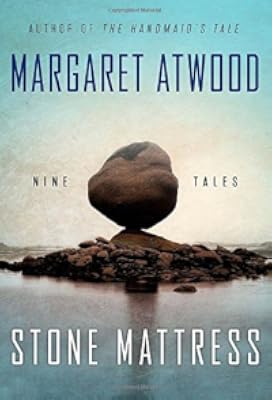
I have thoroughly enjoyed short story collections by Margaret Atwood before – many years ago reading Bluebeard’s Egg – very pre-blog and more recently Stone Mattress and Wilderness Tips. Several of these stories really do stand out and are every bit as excellent as I have come to expect – however some of the others didn’t work quite as well for me. Overall, I liked the collection but didn’t love it.
The men and women in these stories are frequently unable to communicate with one another – they are often separate themselves either physically or mentally. These stories explore the complicated relationships between men and women.
In the opening story; The man from Mars an awkward, slightly overweight student finds herself show more pursued by a foreign student from an unnamed Eastern country. Christine – living in the shadow of her more glamorous mother and sisters, is unused to such attention. So, when a short, bespectacled oriental looking man begins to follow her around after having once stopped her to ask directions she really doesn’t know what to think. The student is horribly persistent, but also rather pathetic. His attentions are perplexing, and irritating, but he doesn’t seem dangerous. Nevertheless, eventually the police are involved. It is a wonderful story to kick off the collection, there is a deliciously wry humour in the description of Christine’s faithful pursuer – and of a strained little tea party, Christine’s clueless mother insists she has for a man who might turn out to be boyfriend material.
“As the weekdays passed and he showed no signs of letting up, she began to jog-trot between classes, finally to run. He was tireless, and had an amazing wind for one who smoked so heavily: he would speed along behind her, keeping the distance between them the same, as though he were a pull-toy attached to her by a string. She was aware of the ridiculous spectacle they must make, galloping across campus, something out of a cartoon short, a lumbering elephant stampeded by a smiling, emaciated mouse, both of them locked in the classic pattern of comic pursuit and flight.”
(The man from Mars)
Betty – one of those two stories added to this collection in place of others – is the second story in the collection. The story narrator looks back to a time when she was growing up – remembering the neighbours Betty and her husband Fred who she met when her family rented a small cottage for the summer between house moves. Betty hadn’t interested her young neighbour when she was a child – instead it was Fred who absorbed all her interest and fantasies.
“It seemed as if we had lived in the cottage for a long time, though it was only one summer. By August I could hardly remember the apartment in Ottawa and the man who used to beat his wife. That had happened in a remote life, and, despite the sunshine, the water and the open space, a happier one. Before our frequent moves and the insecurities of new schools had forced my sister to value me.”
(Betty)
Now, as an adult looking back on that time, she realises she can no longer remember Fred’s face – though she remembers Betty with great clarity. She remembers how Betty changed after Fred betrayed her – how over the years Betty kept in touch, and the family watched as she re-invented herself yet remained much more of a mystery than Fred ever was.
That foreign ‘otherness’ that is explored in the opening story is present again in the title story Dancing Girls. Set in a boarding house, where Ann and her landlady – wonder about the new man – who has what the landlady calls a native costume in which she politely asks him to appear from time to time. We witness the clash of cultures again, although I felt the story petered out a bit at the end.
Other stories which grabbed me were: When it happens; in which we see a woman who remembers well living through the Second World War is preparing for what she thinks is the end of the world – or some kind of cataclysmic event that will bring almost everything to an end. The Resplendent Quetzal is another superb story – in which the broken relationship of a married couple on a bird watching holiday is beautifully explored. In Hair Jewellery we meet a woman who loves someone who never really returns her feelings. She has romanticised their future break up – which when it comes is nothing like her fantasy – eventually she finds she can never quite leave him behind.
I enjoy Margaret Atwood’s writing – and there is certainly a lot to enjoy in this collection, those stories which I was less keen on stop short of actually being disappointing – they just didn’t grab me. show less
The men and women in these stories are frequently unable to communicate with one another – they are often separate themselves either physically or mentally. These stories explore the complicated relationships between men and women.
In the opening story; The man from Mars an awkward, slightly overweight student finds herself show more pursued by a foreign student from an unnamed Eastern country. Christine – living in the shadow of her more glamorous mother and sisters, is unused to such attention. So, when a short, bespectacled oriental looking man begins to follow her around after having once stopped her to ask directions she really doesn’t know what to think. The student is horribly persistent, but also rather pathetic. His attentions are perplexing, and irritating, but he doesn’t seem dangerous. Nevertheless, eventually the police are involved. It is a wonderful story to kick off the collection, there is a deliciously wry humour in the description of Christine’s faithful pursuer – and of a strained little tea party, Christine’s clueless mother insists she has for a man who might turn out to be boyfriend material.
“As the weekdays passed and he showed no signs of letting up, she began to jog-trot between classes, finally to run. He was tireless, and had an amazing wind for one who smoked so heavily: he would speed along behind her, keeping the distance between them the same, as though he were a pull-toy attached to her by a string. She was aware of the ridiculous spectacle they must make, galloping across campus, something out of a cartoon short, a lumbering elephant stampeded by a smiling, emaciated mouse, both of them locked in the classic pattern of comic pursuit and flight.”
(The man from Mars)
Betty – one of those two stories added to this collection in place of others – is the second story in the collection. The story narrator looks back to a time when she was growing up – remembering the neighbours Betty and her husband Fred who she met when her family rented a small cottage for the summer between house moves. Betty hadn’t interested her young neighbour when she was a child – instead it was Fred who absorbed all her interest and fantasies.
“It seemed as if we had lived in the cottage for a long time, though it was only one summer. By August I could hardly remember the apartment in Ottawa and the man who used to beat his wife. That had happened in a remote life, and, despite the sunshine, the water and the open space, a happier one. Before our frequent moves and the insecurities of new schools had forced my sister to value me.”
(Betty)
Now, as an adult looking back on that time, she realises she can no longer remember Fred’s face – though she remembers Betty with great clarity. She remembers how Betty changed after Fred betrayed her – how over the years Betty kept in touch, and the family watched as she re-invented herself yet remained much more of a mystery than Fred ever was.
That foreign ‘otherness’ that is explored in the opening story is present again in the title story Dancing Girls. Set in a boarding house, where Ann and her landlady – wonder about the new man – who has what the landlady calls a native costume in which she politely asks him to appear from time to time. We witness the clash of cultures again, although I felt the story petered out a bit at the end.
Other stories which grabbed me were: When it happens; in which we see a woman who remembers well living through the Second World War is preparing for what she thinks is the end of the world – or some kind of cataclysmic event that will bring almost everything to an end. The Resplendent Quetzal is another superb story – in which the broken relationship of a married couple on a bird watching holiday is beautifully explored. In Hair Jewellery we meet a woman who loves someone who never really returns her feelings. She has romanticised their future break up – which when it comes is nothing like her fantasy – eventually she finds she can never quite leave him behind.
I enjoy Margaret Atwood’s writing – and there is certainly a lot to enjoy in this collection, those stories which I was less keen on stop short of actually being disappointing – they just didn’t grab me. show less
I was nervous to read this book. I LOVE Atwood's novels, and was terrified that I would not adore her short stories as much. Of course, I should have had faith: It's Margarat Atwood, I don't think she knows how to not write well.
What was interesting about these stories, most of which had female narrators, was how haunting and truthful they are. Even in these short stories Atwood is able to develop characters who are so ordinary that their faults are so truthful--and you can't help but to know that these things could happen.
What was interesting about these stories, most of which had female narrators, was how haunting and truthful they are. Even in these short stories Atwood is able to develop characters who are so ordinary that their faults are so truthful--and you can't help but to know that these things could happen.
I was nervous to read this book. I LOVE Atwood's novels, and was terrified that I would not adore her short stories as much. Of course, I should have had faith: It's Margarat Atwood, I don't think she knows how to not write well.
What was interesting about these stories, most of which had female narrators, was how haunting and truthful they are. Even in these short stories Atwood is able to develop characters who are so ordinary that their faults are so truthful--and you can't help but to know that these things could happen.
What was interesting about these stories, most of which had female narrators, was how haunting and truthful they are. Even in these short stories Atwood is able to develop characters who are so ordinary that their faults are so truthful--and you can't help but to know that these things could happen.
Members
- Recently Added By
Lists

Books Set in Canada
80 works; 16 members
Author Information

289+ Works 199,665 Members
Margaret Atwood was born on November 18, 1939 in Ottawa, Canada. She received a B.A. from Victoria College, University of Toronto in 1961 and an M.A. from Radcliff College in 1962. Her first book of verse, Double Persephone, was published in 1961 and was awarded the E. J. Pratt Medal. She has published numerous books of poetry, novels, story show more collections, critical work, juvenile work, and radio and teleplays. Her works include The Journals of Susanna Moodie, Power Politics, Cat's Eye, The Robber Bride, Morning in the Buried House, the MaddAdam trilogy, and The Heart Goes Last. She has won numerous awards including the Prince of Asturias Award for Literature, the Booker Prize in 2000 for The Blind Assassin, the Giller Prize and the Premio Mondello for Alias Grace, and the Governor General's Award in 1966 for The Circle Game and in 1986 for The Handmaid's Tale, which also won the very first Arthur C. Clarke Award in 1987. She won the PEN Pinter prize in 2016 for her political activism. She was awarded the 2016 PEN Pinter Prize for the outstanding literary merit of her body of work. (Bowker Author Biography) show less
Some Editions
Series
Belongs to Publisher Series
Work Relationships
Contains
Common Knowledge
- Canonical title
- Dancing Girls and Other Stories
- Original title
- Dancing Girls and Other Stories
- Original publication date
- 1977
- Related movies
- The Sin Eater (2004/I | IMDb)
- First words
- A long time ago Christine was walking through the park.
- Last words
- (Click to show. Warning: May contain spoilers.)After that the baby is carried in, solid, substantial, packed together like an apple, Jeanie examines her, she is complete, and in the days that follow Jeanie herself becomes drifted over with new words, her hair slowly darkens, she ceases to be what she was and is replaced, gradually, by someone else.
- Blurbers
- Taylor, Robert; Adams, Alice
- Original language
- English
Classifications
Statistics
- Members
- 1,562
- Popularity
- 14,680
- Reviews
- 18
- Rating
- (3.61)
- Languages
- 7 — Dutch, English, Estonian, German, Italian, Portuguese, Spanish
- Media
- Paper, Audiobook, Ebook
- ISBNs
- 49
- ASINs
- 18