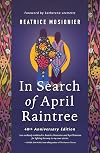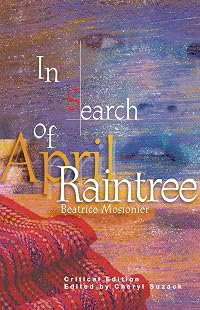
In Search of April Raintree
by Beatrice Culleton Mosionier
On This Page
Description
Two young sisters are taken from their home and family. Powerless to change their fortunes, they are separated, and each put into different foster homes. Yet over the years, the bond between them grows. As they each make their way in a society that is, at times, indifferent, hostile, and violent, one embraces her Métis identity, while the other tries to leave it behind. In the end, out of tragedy, comes an unexpected legacy of triumph and reclamation.Bespeak Audio Editions brings Canadian show more voices to the world with audiobook editions of some of the country's greatest works of literature, performed by Canadian actors.
. show less
Tags
Recommendations
































Member Reviews
Gut wrenchingly hard but a worthwhile read. Two young girls lives as they live through the foster card system in Manitoba and the pieces they are left to pick up from their life before, during, and after. Set starting in the 1950s and ending in the mid-70s, not much has changed in 2024 other than there finally being a voice for First Nations in our history classes and schools. But I read the other day that yes, Canada no longer has residential schools where First nations and metis children are stripped of culture, family, and love and forced to assimilate to white society; however, they they have not closed, just evolved into the lopsided, amount of First Nations and Metis children in Foster care. Just as First Nations make up a higher show more percentage in prisons, they also make up the vast majority of foster care placements. Especially in Saskatchewan but other Canadian provinces as well. show less
I downloaded this book on Hoopla simply because it was fiction read by Michaela Washburn. I really enjoyed her reading of [book:The Break|29220494].
It turns out that this book is from 1983, and is very well known in Canada--I am in the US and had never heard of it. Even though this book reads at a very YA level, the content is very much adult--and there is an edited YA version.
This novel follows two Metis sisters, April and Cheryl Raintree, from their early childhood with their parents, through being split up and put into different foster homes (good and bad, 1 Metis), family meetings with their parents, schools, and then their experiences as young adults. These different experiences--and their different ages, Cheryl being younger has show more fewer memories of their parents than April--lead them to very different attitudes. April can pass as white if she chooses, and is ashamed of her Metis heritage. Cheryl could never pass as white and embraces her Metis heritage and plans to be a social worker. Both attitudes fail them as adults; just as April struggles to appreciate her culture, Cheryl cannot accept the problems her people have.
Mosionier is herself Metis and grew up in foster care. I wonder if any of the foster families depicted represent ones she lived with? How is this book viewed in the Metis community today, almost 40 years after it was first written?
Lots of trigger warnings on this one (the unedited version). show less
It turns out that this book is from 1983, and is very well known in Canada--I am in the US and had never heard of it. Even though this book reads at a very YA level, the content is very much adult--and there is an edited YA version.
This novel follows two Metis sisters, April and Cheryl Raintree, from their early childhood with their parents, through being split up and put into different foster homes (good and bad, 1 Metis), family meetings with their parents, schools, and then their experiences as young adults. These different experiences--and their different ages, Cheryl being younger has show more fewer memories of their parents than April--lead them to very different attitudes. April can pass as white if she chooses, and is ashamed of her Metis heritage. Cheryl could never pass as white and embraces her Metis heritage and plans to be a social worker. Both attitudes fail them as adults; just as April struggles to appreciate her culture, Cheryl cannot accept the problems her people have.
Mosionier is herself Metis and grew up in foster care. I wonder if any of the foster families depicted represent ones she lived with? How is this book viewed in the Metis community today, almost 40 years after it was first written?
Lots of trigger warnings on this one (the unedited version). show less
I thought this was a powerful book and a very good choice for the reading challenge. It is written in quite a simple style so it is easy to read but the issues are complex and important. April Raintree and her sister Cheryl were removed from their parents by Children's Aid Society. The girls were put into separate foster homes. They are Metis but April looks white and always looked down on natives. Cheryl, on the other hand, looked Indian and was very proud of being Metis. The book follows April and Cheryl as they grow up.
The foster home system was one theme that was explored fully. I found it very realistic and this realism was explained when I read at the end of the book that the author grew up in foster homes. I was glad to read show more that her experiences with foster homes were mainly positive but I know that many children were placed in less positive homes.
The problems of urban natives was also very thoroughly explored. I'm afraid that not much has changed on that front since this book was written. One thing that has changed in my observation is how many people are proud to say they are Metis. At work a few years ago I was in a training session where everyone was asked to introduce themselves and say something about their ancestral background. In a room of about 30 people at least 5 mentioned that they had some Metis heritage and they were proud of it. Maybe the vision Louis Riel had all those years ago is finally coming to fruition. show less
The foster home system was one theme that was explored fully. I found it very realistic and this realism was explained when I read at the end of the book that the author grew up in foster homes. I was glad to read show more that her experiences with foster homes were mainly positive but I know that many children were placed in less positive homes.
The problems of urban natives was also very thoroughly explored. I'm afraid that not much has changed on that front since this book was written. One thing that has changed in my observation is how many people are proud to say they are Metis. At work a few years ago I was in a training session where everyone was asked to introduce themselves and say something about their ancestral background. In a room of about 30 people at least 5 mentioned that they had some Metis heritage and they were proud of it. Maybe the vision Louis Riel had all those years ago is finally coming to fruition. show less
Metis sisters April and Cheryl Raintree are just kids (in the 1950s?) when they are taken from their “sick” (alcoholic, but the girls are too young to understand) parents to live in foster homes. They are together for part of their growing up years, but mostly separate, though they do get visits (also with their parents). April appears white whereas Cheryl looks Indigenous. The story continues as they reach adulthood and go their own ways, while (mostly) staying in touch.
Audio. This was very good. It did move quickly through their lives. Have to admit, although I liked her as a child, I sure didn’t like Cheryl much as an adult. The author’s note was interesting to learn that not only is she Metis, she also grew up in foster show more homes. Warning that there is a graphic rape scene in the book. The audio was done well, and I rarely lost focus. show less
Audio. This was very good. It did move quickly through their lives. Have to admit, although I liked her as a child, I sure didn’t like Cheryl much as an adult. The author’s note was interesting to learn that not only is she Metis, she also grew up in foster show more homes. Warning that there is a graphic rape scene in the book. The audio was done well, and I rarely lost focus. show less
I chose this book in order to gain a better understanding of indigenous history, in particular the treatment given indigenous children placed in foster care and the resulting ramifications of such treatment. To those ends, the book served me well. Through the story of two sisters taken from their families and placed in a variety of foster homes, I felt I better understood the social and personal issues they faced as children, then later as adults. The story itself was a little slow moving at times, but there was enough there to hold my attention and force me to ask hard questions of myself. All this came about a month before the discovery of unmarked graves at residential schools in BC and Saskatchewan. Shocking though that was, I think show more this book and its portrayal of treatment given the main characters, helped to prepare me for the awful news. show less
"In Search of April Raintree" was a brilliant story due to character development, mystery, and pacing. Beatrice Mosionier had many opportunities to preach or fully explain situations, but instead, let the consequences become the explanations. The message became more powerful that way.
I read that "In Search of April Raintree" --published 1983 --is based on Beatrice Mosionier's life. In 2009, she published an autobiography called "Come Walk With Me: A Memoir." I want to read it.
I read that "In Search of April Raintree" --published 1983 --is based on Beatrice Mosionier's life. In 2009, she published an autobiography called "Come Walk With Me: A Memoir." I want to read it.
One of my favorite books. It personalises the problem of problems within the aboriginal and métis cultures.
Members
- Recently Added By
Lists

Native American / Indigenous Literature
172 works; 100 members

Best Books set in Manitoba
85 works; 2 members

CBC's 100 Young Adult Books
100 works; 4 members

Books recommended by Calgary Public Library staff
1,588 works; 4 members

Canadian Historical Fiction 🇨🇦
157 works; 8 members
Author Information
6+ Works 461 Members
Some Editions
Awards and Honors
Common Knowledge
- Canonical title
- In Search of April Raintree
- Alternate titles
- April Raintree
- People/Characters
- April Raintree; Cheryl Raintree
- Important places
- Canada
Classifications
Statistics
- Members
- 385
- Popularity
- 81,314
- Reviews
- 10
- Rating
- (3.65)
- Languages
- Danish, English, French, German
- Media
- Paper, Audiobook, Ebook
- ISBNs
- 26
- ASINs
- 3