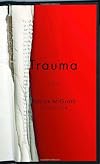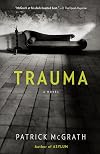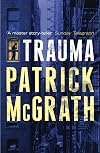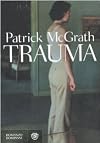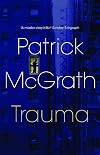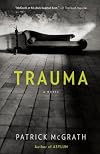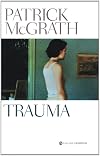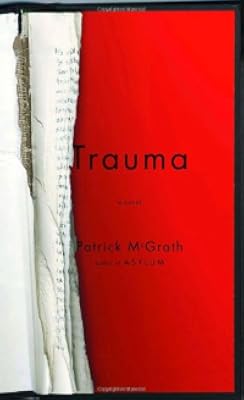
Trauma
by Patrick McGrath
On This Page
Description
Charlie Weir is a man who tackles other people's demons for a living. He has seen every kind of trauma during his years as a psychiatrist in New York City, and yet hasn't found a way to resolve the conflicts within his own family - his bitter rivalry with his brother Walt, a successful painter, his estrangement from his shiftless father and his stifling relationship with his dying mother. And he has never overcome the terrible blunder, seven years before, that lost him his wife and daughter, show more leaving him prone to corrosive loneliness and restless anger. When Walt introduces Charlie to Nora Chiara, he is drawn as much to her air of suffering as he is to her striking beauty. They fall for each other quickly, hungrily, but their bliss is short-lived. Her vulnerability, once so irresistible, begins to sour their life together, and Charlie realises that she is now patient first, lover second. And as he probes at the source of her distress, a half-memory from deep in his own unconscious mind begins to arouse a horrifying suspicion? show lessTags
Recommendations




















Member Recommendations

by clairecc
Member Reviews
Don’t you hate it when a book by a favorite author just evaporates in your memory? It’s not that Trauma is a bad book, it’s just less intense than McGrath’s usual stories and my rereading wasn't a waste of time. There were a lot of things that kept me at arm’s length though; the time frame (1970s), Vietnam, Charlie’s understated reactions, the time switching. Was the total better than the sum of its parts? Hard to say. I think part of why I felt faintly disappointed is due to the copy on the flap. It talks of Charlie’s slipping hold on sanity. What? Where? He takes a reasonable stand in the face of Nora’s episodes and refusal of help. His desperate yearning/imprinting on Agnes seems totally in the main for a man of his show more age and type. And what else is a man to do about a weirdo brother in his present and a depressive, hurtful mother in his past? Cope as best he can and it seemed to me Charlie was.
I did like the slow reveal, as I do all of McGrath’s books. Things build, but you don’t get answers right away, not to every question. Like why does Walter seem to hate Charlie so much? What’s the deal with him and Nora? Why has Leon disappeared? Are Charlie’s recollections as faulty as hinted at? He was constantly giving himself an out by saying “at least this is how I remember things…”. The shadow of suicide was always upon him and that created a nice sense of dread. Who would be next?
If you’re new to McGrath, this might not make you an instant fan, but if you appreciate an understated story of psychological trauma and the ripple effects of secrets, you can do a lot worse. show less
I did like the slow reveal, as I do all of McGrath’s books. Things build, but you don’t get answers right away, not to every question. Like why does Walter seem to hate Charlie so much? What’s the deal with him and Nora? Why has Leon disappeared? Are Charlie’s recollections as faulty as hinted at? He was constantly giving himself an out by saying “at least this is how I remember things…”. The shadow of suicide was always upon him and that created a nice sense of dread. Who would be next?
If you’re new to McGrath, this might not make you an instant fan, but if you appreciate an understated story of psychological trauma and the ripple effects of secrets, you can do a lot worse. show less
McGrath might be standing on familiar ground with Trauma but its no less brilliant for that. A psychiatrist who specialises in treating trauma cases finds his work coming too close to home. Seven years on, living with the remnants of a broken marriage, he finds himself in a fragile relationship which gradually begins to open old wounds. As far as McGrath's fiction goes its up there with Spider, Asylum or Dr. Haggard's Disease.
Trauma tells the story of Charlie, a divorced psychiatrist who specializes in Post-Traumatic Stress Disorder (PTSD). Charlie has spent his life taking care of his mentally ill mother and a brother-in-law who suffered from PTSD as a result of his tours of duty in Vietnam. After his brother-in-law dies, he ends his marriage, unable to cope with his guilt. After his mother dies, Charlie finds himself emotionally orphaned and without someone in his personal life to fix. What’s a psychiatrist to do living like that?
This novel takes place in New York City during the 70s and perhaps 80s. The Twin Towers are being built and viewed from many angles throughout the novel and are almost a character themselves, symbolizing stability in a city full show more of disillusioned Americans struggling to deal with the aftermath of the Vietnam War. I found this to be the best, most subtle, and thought-provoking commentary on our current war. The reader is free to draw one’s own conclusions or even not notice it at all because there is no break in the narrative to make a political statement. In the end, the novel is more timeless this way. While the story itself will always have a specific time and place in history, there is no blatant political commentary targeted at a 2008 audience that will interfere with readers 100 years from now.
I have always enjoyed Patrick McGrath, the more Gothic the better. This novel isn’t his most Gothic, but he is in great form. It reads quickly and is entertaining and interesting. I prefer Asylum to this and all of his other novels, still I found the tension to be perfect. Even after mulling Charlie over for the past few days, I’m still not sure if he is a reliable narrator. To me, this is a good thing. This way I am able to look back on a novel both with trust and full of questions. Each view provides an interesting twist. Of course, the mother is always to blame which ever way you slice it, but that’s another story.
http://literatehousewife.wordpress.com/2008/05/23/72-trauma/ show less
This novel takes place in New York City during the 70s and perhaps 80s. The Twin Towers are being built and viewed from many angles throughout the novel and are almost a character themselves, symbolizing stability in a city full show more of disillusioned Americans struggling to deal with the aftermath of the Vietnam War. I found this to be the best, most subtle, and thought-provoking commentary on our current war. The reader is free to draw one’s own conclusions or even not notice it at all because there is no break in the narrative to make a political statement. In the end, the novel is more timeless this way. While the story itself will always have a specific time and place in history, there is no blatant political commentary targeted at a 2008 audience that will interfere with readers 100 years from now.
I have always enjoyed Patrick McGrath, the more Gothic the better. This novel isn’t his most Gothic, but he is in great form. It reads quickly and is entertaining and interesting. I prefer Asylum to this and all of his other novels, still I found the tension to be perfect. Even after mulling Charlie over for the past few days, I’m still not sure if he is a reliable narrator. To me, this is a good thing. This way I am able to look back on a novel both with trust and full of questions. Each view provides an interesting twist. Of course, the mother is always to blame which ever way you slice it, but that’s another story.
http://literatehousewife.wordpress.com/2008/05/23/72-trauma/ show less
I admit to being a little disappointed in this book. I've grown accustomed to some superb gothic-like, creepy books among this author's works. In this novel, I found the story of a troubled psychiatrist who lives in New York city. Where did the dark and wet nights of England go? Not the same! The setting may be equally as bleak for someone in despair, but this was not what I was hoping for.
That aside, I couldn't quite get into this story of an aging man, Charlie Weir, who divorced his wife Agnes after feeling responsibe for her brother Danny's suicide. He hooks up with Nora, another troubled individual but cannot give up his hope to return to his previous life with his ex-wife and their daughter Cassie, to whom he was very devoted.
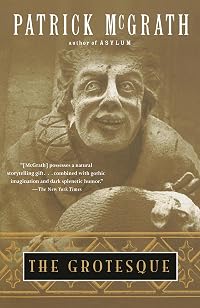
The show more ending of the story was there to explain more in detail about Charlie Weir. For me, though, I'd just like to catch the next plane to England to look for more of the characters found in this authors's other books such as Spider, Grotesque, and Dr. Haggard's Disease. show less
That aside, I couldn't quite get into this story of an aging man, Charlie Weir, who divorced his wife Agnes after feeling responsibe for her brother Danny's suicide. He hooks up with Nora, another troubled individual but cannot give up his hope to return to his previous life with his ex-wife and their daughter Cassie, to whom he was very devoted.
The show more ending of the story was there to explain more in detail about Charlie Weir. For me, though, I'd just like to catch the next plane to England to look for more of the characters found in this authors's other books such as Spider, Grotesque, and Dr. Haggard's Disease. show less
To me, this is not an optimistic or uplifting book, although I didn't entirely understand the ending - maybe there's meant to be an optimism there that I didn't pick up on. It's essentially a story about a man who fails to connect with people around him, both in a professional sense (as a psychiatrist) and in a personal sense (as a lover, father, son, brother). What makes him like that, and the stories of all his dysfunctional relationships, makes interesting reading, perhaps more so if you're a person who is similarly deficient in the relationship department.
Intense psychological portrait, a quick read about a psychiatrist and his trauma and the trauma of his loved ones. Set in the 70's before PTSD was an accepted condition, Charlie Weir is one of the first shrinks to coin the term, and he has plenty of subjects, including himself, to study. A close up look at how the mind and relationships work. This was a dark work packed with feeling and awe.
Taught prose, creating a genuine sense of foreboding as central character uncovers the 'trauma' that he carries into every part of his life. Style resonant of Paul Auster. Haunting, unsettling.
Members
- Recently Added By
Lists

Books Read in 2015
3,299 works; 129 members

Llibres que he llegit el 2009
35 works; 1 member
Author Information

32+ Works 5,242 Members
Patrick McGrath was born in London in 1950 and grew up near Broadmoor Hospital where his father was the medical superintendent for many years. He attended Stonyhurst College and received his BA in English from the University of London. Among other jobs, he worked as an orderly in a mental hospital and as a teacher before becoming a writer. He is show more seen as a leader of the neo-Gothic writers; his books include Spider, The Grotesque, Port Mungo, Trauma and Asylum. His novel Martha Peake won the Premio Flaiano Prize in Italy. McGrath resides in New York City and London. (Bowker Author Biography) Patrick McGrath is the author of Asylum and The Grotesque, among other novels. He lives in New York City and London and is married to the actress Maria Aitken. (Publisher Provided) show less
Awards and Honors
Awards
Common Knowledge
- Canonical title*
- Trauma
- Original title
- Trauma
- Original publication date
- 2008
- People/Characters
- Charlie Weir; Agnes Magill; Danny Magill; Walt Weir; Leon O'Connor; Nora Chiara
- Important places
- New York, New York, USA
- Dedication
- For Maria
- First words
- My mother's first depressive illness occurred when I was seven years old, and I felt it was my fault.
- Last words
- (Click to show. Warning: May contain spoilers.)I was going home.
*Some information comes from Common Knowledge in other languages. Click "Edit" for more information.
Classifications
Statistics
- Members
- 306
- Popularity
- 104,382
- Reviews
- 14
- Rating
- (3.32)
- Languages
- 5 — Dutch, English, French, Italian, Spanish
- Media
- Paper, Audiobook, Ebook
- ISBNs
- 19
- ASINs
- 6