
The Fiction of Julian Barnes (Readers' Guides to Essential Criticism)
by Vanessa Guignery
9 Members (3.50)
On This Page
Description
Julian Barnes's work has been marked by great variety, ranging not only from conventional fiction to postmodernist experimentation in such well-known novels as Flaubert's Parrot (1984) and A History of the World in 10 ½ Chapters (1989), but also from witty essays to deeply touching short stories. The responses of readers and critics have likewise varied, from enthusiasm to scepticism, as the substantial volume of critical analysis demonstrates. This Readers' Guide provides a comprehensive show more and accessible overview of the essential criticism on Barnes's work, drawing from a selection of reviews, interviews, essays and books. Through the presentation and assessment of key critical interpretations, Vanessa Guignery provides the most wide-ranging examination of his fiction and non-fiction so far, considering key issues such as his use of language, his treatment of history, obsession, love, and the relationship between fact and fiction. Covering all of the novels to date, from Metroland (1981) to Arthur and George (2005), this is an invaluable introduction to the work of one of Britain's most exciting and popular contemporary writers. show lessTags
Recommendations
Member Recommendations
Member Reviews
Members
- Recently Added By
Author Information

12+ Works 36 Members
Vanessa Guignery is Professor of Contemporary English Literature at the cole Normale Suprieure in Lyon and a member of the Institut Universataire de France. In 2009, she published a monograph on B. S. Johnson entitled Ceci n'est pas une fiction, and in 2010, translated Jonathan Coe's biography of B, S. Johnson into French.
Series
Belongs to Publisher Series
Common Knowledge
- People/Characters
- Julian Barnes
- First words
- Julian Barnes is the author of ten novels, two volumes of short stories, three collections of essays, and four detective novels published under a pseudonym.
- Quotations
- The volume ends with a very detailed and sometimes incongruous and highly humorous index. Hazel Bell takes a few examples to show "how cleverly - and selectively - Barnes has contrived his index entries from passages of text"... (show all).
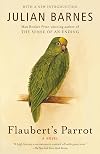
The main rhetorical figure he uses [in Flaubert's Parrot] is aposiopesis, i.e. a sudden break in writing which suggests unwillingness or inability to proceed.
... Braithwaite's role seems limited to that of a compiler, or a parrot, Flaubert's parrot.... the Braithwaites' story seems to parrot that of Charles and Emma Bovary.
In a public meeting, Barnes referred to `the pleasure of indexing' and added: `Everything to me is a narration. Even when I write an index, I try to put narratives in it.'[28] In April 2005, the Society of Indexers asked Barn... (show all)es to become their next President, an offer he declined, however.
28 Hermione Lee, "Julian Barnes: an English Frenchman?" Hampstead Town Hall, London (24 January 2002)
Classifications
Statistics
- Members
- 9
- Popularity
- 2,302,872
- Rating
- (3.50)
- Languages
- English
- Media
- Paper, Ebook
- ISBNs
- 4