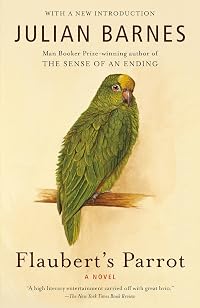
Flaubert's Parrot
by Julian Barnes
On This Page
Description
A kind of detective story, relating a cranky amateur scholar's search for the truth about Gustave Flaubert, and the obsession of this detective whose life seems to oddly mirror those of Flaubert's characters.Tags
Recommendations
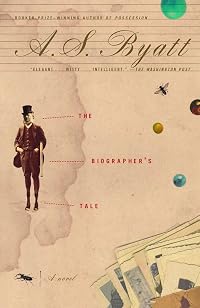

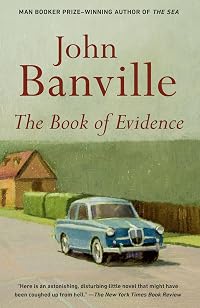


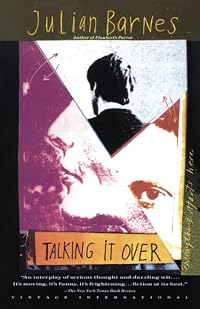
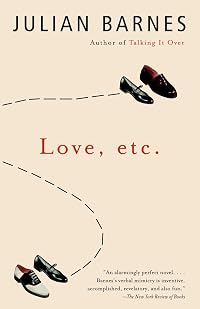
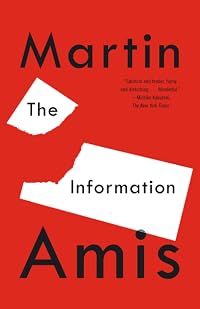
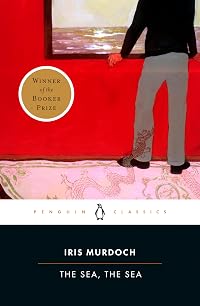
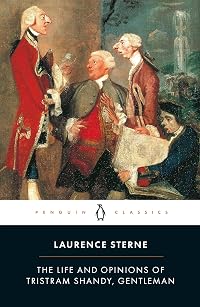
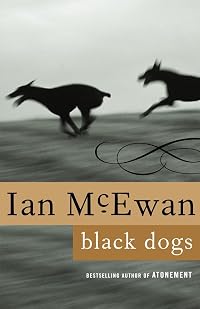
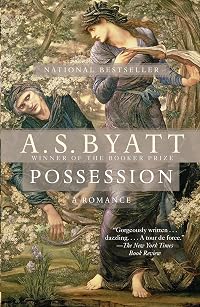
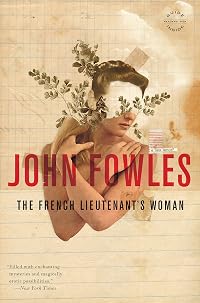


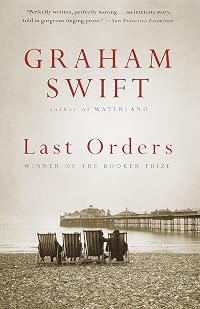




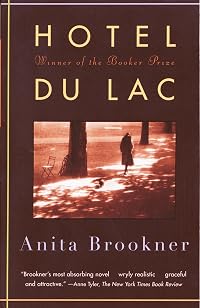
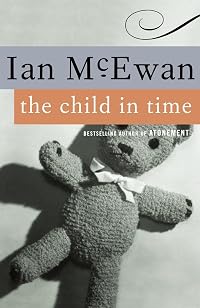
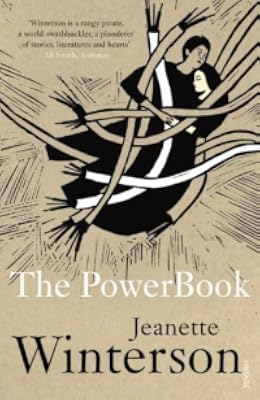
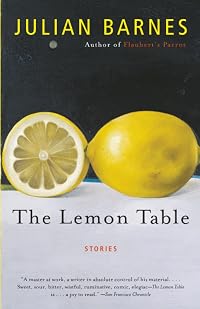



Member Recommendations
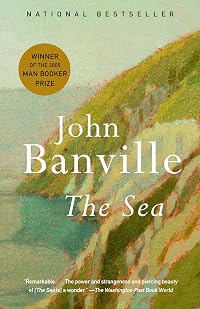
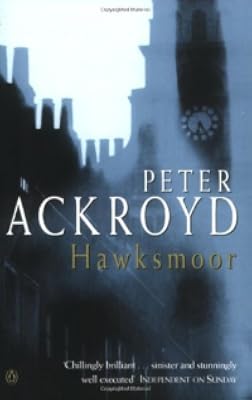
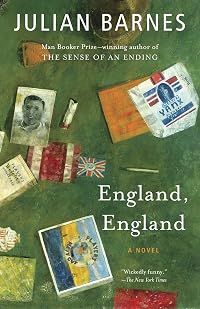
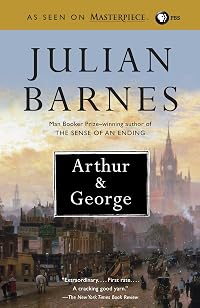
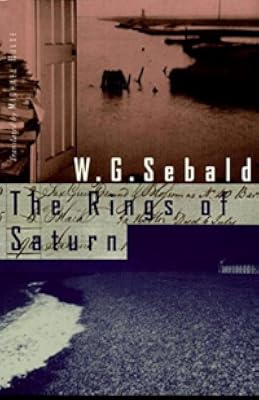
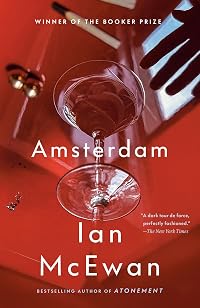
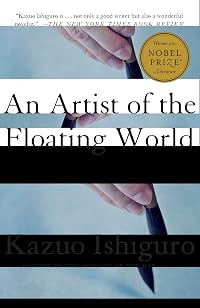
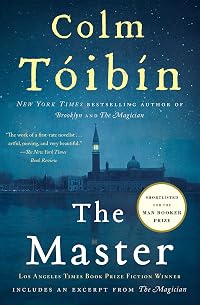
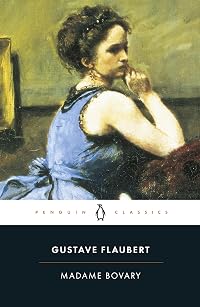
JuliaMaria "Madame Bovary, c'est moi": Wer also mehr über Flaubert erfahren möchte (und jeder und jede andere auch), sollte unbedingt diesen Klassiker lesen.
Also recommended by KayCliff
50

wrmjr66 If you like Three Tales, you might enjoy Flaubert's Parrot, but if you like Flaubert's Parrot, you must read Three Tales!
50


KayCliff Two inhibited, unreliable narrators
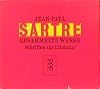
JuliaMaria Was können wir über Flaubert wissen, hat sich auch Sartre gefragt und in "Der Idiot der Familie" beantwortet. Es handelt sich um eine mehrbändige (!) Biografie vermischt mit philosophischen und psychoanalytischen Betrachtungen.


KayCliff Both novels have self-deluded narrators using strategies of deferral and digression.
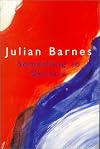
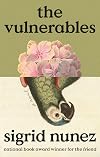
JuliaMaria In beiden Romanen geht es um das Schreiben und ein Papagei spielt eine wichtige Rolle.
Member Reviews
This is a wonderful book that defies categorization: it is a biography of Gustave Flaubert, an analysis of his thought and writing, a critique of literary criticism, an appreciation bordering on obsession of Flaubert the man and writer, a novel as the author-protagonist gradually reveals himself to be a man trying to fathom the suicide of his wife; throughout, it is a meditation on life and memory and identification and history and death and love and sex. It is a book that deserves re-reading because of the wealth of ideas that it raises without always pretending to have the answers, indeed for many things there are no “answers”, there are no “whys” because this is life.
Barnes is a writer who wrestles with the meaning of life show more and lives lived without reaching for the pat answers that so many search for. Meditating upon his wife’s suicide, the author says: “Books say: she did this because. Life says: she did this. Books are where things are explained to you; life is where things aren’t. I’m not surprised some people prefer books. Books make sense of life. The only problem is that the lives they make sense of are other people’s lives, never your own.”
What are history and memory and truth? And can “truth” be discerned when past events are interpreted by the players who have conscious and unconscious cares or desires in how they shape those memories; and what are the limitations of memory just due to the functioning of the brain? “How do we seize the past? How do we seize the foreign past? We read, we learn, we ask, we remember, we are humble; and then a casual detail shifts everything.” Barnes recounts an incident in Flaubert’s life for which Flaubert and a friend with him had quite different versions and he concludes: “What happened to the truth is not recorded.” Because it is the nature of things that it cannot be recorded unless a version is agreed immediately and set down and signed by the participants! The fallacy of memory is sometimes a protective mechanism: could an individual survive if he remembered perfectly and felt on his skin or in his mind every painful or evil thing that ever happened to him? Of course not: so “Memories come out of hiding, but not emotions; not even the memories of emotions.” What about History? Does it not guide us in assessing the past? Perhaps not: “we can study files for decades, but every so often we are tempted to throw up our hands and declare that history is merely another literary genre: the past is autobiographical fiction pretending to be a parliamentary report.” And then how do you factor-in that, “It is not just the life that we know. It is not just the life that has been successfully hidden. It is not just the lies about the life, some of which cannot now be disbelieved. It is also the life that was not led.” How can anyone hope to really construct a past?
And what about Flaubert as a writer? “He believed in style more than anyone. He worked doggedly for beauty, sonority, exactness: perfection—but never the monogrammed perfection of a writer like Wilde. Style is a function of theme. Style is not imposed on subject-matter, but arises from it. Style is truth to thought. The correct word, the true phrase, the perfect sentence are always ‘out there’ somewhere; the writer’s task to locate them by whatever means he can.” Barnes on Flaubert’s maxims: “Form isn’t an overcoat flung over the flesh of thought…; it’s the flesh of thought itself. You can no more imagine an Idea without a Form than a Form without an Idea. Everything in art depends of execution: the story of a louse can be as beautiful as the story of Alexander. You must write according to your feelings be sure those feelings are true, and let everything else go hang. When a line is good, it ceases to belong to any school. A line of prose must be as immutable as a line of poetry. If you happen to write well, you are accused of lacking ideas.” Writers today, according to Barnes: “Well they seem to do one thing well enough, but fail to realise that that literature depends on doing several things well at the same time.”
How does Flaubert approach writing and life? He, “teaches you to gaze upon the truth and not blink for its consequences; he teaches you, with Montaigne, to sleep on the pillow of doubt; he teaches you to dissect out the constituent parts of reality, and to observe that Nature is always a mixture of genres; he teaches you the most exact use of language; he teaches you not to approach a book in search of moral or social pills—literature is not a phramacopoeia; he teaches the pre-eminence of Truth, Beauty, Feeling and Style. And if you study his private life, he teaches courage, stoicism, friendship; the importance of intelligence, skepticism and wit; the folly of cheap patriotism; the virtue of being able to remain by yourself in your own room; the hatred of hypocrisy; distrust of the doctrinaire; the need for plain speaking.”
Barnes on patriotism: “The greatest patriotism is to tell your country when it is behaving dishonourably, foolishly, viciously. The writer must be universal in sympathy and an outcast by nature; only then can he see clearly.”
Barnes on life: “When you are young, you think that the old lament the deterioration of life because this makes it easier for them to die without regret. When you are old, you become impatient with the way in which the young applaud the most insignificant improvements—the invention of some new valve or sprocket—while remaining heedless of the world’s barbarism. I don’t say things have got worse; I merely say the young wouldn’t notice if they had. The old times were good because then we were young, and ignorant of how ignorant the young can be.”
Maxims for life: “You cannot change humanity, you can only know it. Happiness is a scarlet cloak whose lining is in tatters. Lovers are like Siamese twins, two bodies with a single soul; but if one dies before the other, the survivor has a corpse to lug around. Pride makes us long for a solution to things—a solution, a purpose, a final cause; but the better telescopes become, the more stars appear. You cannot change humanity, you can only know it….Truths about writing can be framed before you’ve published a word; truths about life can be framed only when it’s too late to make any difference.”
A wonderful book show less
Barnes is a writer who wrestles with the meaning of life show more and lives lived without reaching for the pat answers that so many search for. Meditating upon his wife’s suicide, the author says: “Books say: she did this because. Life says: she did this. Books are where things are explained to you; life is where things aren’t. I’m not surprised some people prefer books. Books make sense of life. The only problem is that the lives they make sense of are other people’s lives, never your own.”
What are history and memory and truth? And can “truth” be discerned when past events are interpreted by the players who have conscious and unconscious cares or desires in how they shape those memories; and what are the limitations of memory just due to the functioning of the brain? “How do we seize the past? How do we seize the foreign past? We read, we learn, we ask, we remember, we are humble; and then a casual detail shifts everything.” Barnes recounts an incident in Flaubert’s life for which Flaubert and a friend with him had quite different versions and he concludes: “What happened to the truth is not recorded.” Because it is the nature of things that it cannot be recorded unless a version is agreed immediately and set down and signed by the participants! The fallacy of memory is sometimes a protective mechanism: could an individual survive if he remembered perfectly and felt on his skin or in his mind every painful or evil thing that ever happened to him? Of course not: so “Memories come out of hiding, but not emotions; not even the memories of emotions.” What about History? Does it not guide us in assessing the past? Perhaps not: “we can study files for decades, but every so often we are tempted to throw up our hands and declare that history is merely another literary genre: the past is autobiographical fiction pretending to be a parliamentary report.” And then how do you factor-in that, “It is not just the life that we know. It is not just the life that has been successfully hidden. It is not just the lies about the life, some of which cannot now be disbelieved. It is also the life that was not led.” How can anyone hope to really construct a past?
And what about Flaubert as a writer? “He believed in style more than anyone. He worked doggedly for beauty, sonority, exactness: perfection—but never the monogrammed perfection of a writer like Wilde. Style is a function of theme. Style is not imposed on subject-matter, but arises from it. Style is truth to thought. The correct word, the true phrase, the perfect sentence are always ‘out there’ somewhere; the writer’s task to locate them by whatever means he can.” Barnes on Flaubert’s maxims: “Form isn’t an overcoat flung over the flesh of thought…; it’s the flesh of thought itself. You can no more imagine an Idea without a Form than a Form without an Idea. Everything in art depends of execution: the story of a louse can be as beautiful as the story of Alexander. You must write according to your feelings be sure those feelings are true, and let everything else go hang. When a line is good, it ceases to belong to any school. A line of prose must be as immutable as a line of poetry. If you happen to write well, you are accused of lacking ideas.” Writers today, according to Barnes: “Well they seem to do one thing well enough, but fail to realise that that literature depends on doing several things well at the same time.”
How does Flaubert approach writing and life? He, “teaches you to gaze upon the truth and not blink for its consequences; he teaches you, with Montaigne, to sleep on the pillow of doubt; he teaches you to dissect out the constituent parts of reality, and to observe that Nature is always a mixture of genres; he teaches you the most exact use of language; he teaches you not to approach a book in search of moral or social pills—literature is not a phramacopoeia; he teaches the pre-eminence of Truth, Beauty, Feeling and Style. And if you study his private life, he teaches courage, stoicism, friendship; the importance of intelligence, skepticism and wit; the folly of cheap patriotism; the virtue of being able to remain by yourself in your own room; the hatred of hypocrisy; distrust of the doctrinaire; the need for plain speaking.”
Barnes on patriotism: “The greatest patriotism is to tell your country when it is behaving dishonourably, foolishly, viciously. The writer must be universal in sympathy and an outcast by nature; only then can he see clearly.”
Barnes on life: “When you are young, you think that the old lament the deterioration of life because this makes it easier for them to die without regret. When you are old, you become impatient with the way in which the young applaud the most insignificant improvements—the invention of some new valve or sprocket—while remaining heedless of the world’s barbarism. I don’t say things have got worse; I merely say the young wouldn’t notice if they had. The old times were good because then we were young, and ignorant of how ignorant the young can be.”
Maxims for life: “You cannot change humanity, you can only know it. Happiness is a scarlet cloak whose lining is in tatters. Lovers are like Siamese twins, two bodies with a single soul; but if one dies before the other, the survivor has a corpse to lug around. Pride makes us long for a solution to things—a solution, a purpose, a final cause; but the better telescopes become, the more stars appear. You cannot change humanity, you can only know it….Truths about writing can be framed before you’ve published a word; truths about life can be framed only when it’s too late to make any difference.”
A wonderful book show less
This book supports my increasing belief that I am most likely to enjoy those books about which I know the least. Of course, I do need to know enough about a book or its author to choose it in the first place. Otherwise, I'm likely to stumble into one unappealing literary relationship after another. There has to be a vetting process of some kind.
In this case, there was a well-respected literary author with a long-in-print postmodern novel. It made reference to a long-dead author whom I've never read. And that was enough to allow me to fall into the book and not to question its unusual structure, its overall intent, or its specific critical reception. I just flat-out enjoyed it. It was unusual, yes, and it defied my narrative show more expectations. It flirted with the notion of uncovering a few minor historical mysteries of no more than academic consequence. But it amused and intrigued me. It seemed possessed of a mature point of view. It didn't fret and agitate and strive the way many contemporary books of my recent acquaintance have done. It did not come floating into my life on a tide of giddy adulation that made me think, by God, I'd better love the hell out of this if I'm going to make conversation about it amongst the very few readers I know.
None of that tells you very much, which is probably a good thing if you think you might read the book as well. Maybe you will like it a lot. Or maybe it will annoy you with its refusal to shovel ready answers at you or to make a full-throated declaration about its seriousness and its relevance and its undeniable claim to your rapt attention. For me, the lack of those things made the book all the more welcome. Revelations needn't be earth-shattering and ambiguity needn't be dispelled. Leave that to movies and television.
I will definitely return to read this book again, which is a rare thing for me to declare. If I'd read it when it was first published, who knows if I'd have said the same thing. Books can be that way. When you read them can be as important as what they contain. If you adore FLAUBERT'S PARROT a bit less than I did, perhaps you can chalk it up to a problem of timing. Or perhaps I've oversold it, and now it can't fail to disappoint. In that case, I'm sorry I mentioned it, but something needed to be said. show less
In this case, there was a well-respected literary author with a long-in-print postmodern novel. It made reference to a long-dead author whom I've never read. And that was enough to allow me to fall into the book and not to question its unusual structure, its overall intent, or its specific critical reception. I just flat-out enjoyed it. It was unusual, yes, and it defied my narrative show more expectations. It flirted with the notion of uncovering a few minor historical mysteries of no more than academic consequence. But it amused and intrigued me. It seemed possessed of a mature point of view. It didn't fret and agitate and strive the way many contemporary books of my recent acquaintance have done. It did not come floating into my life on a tide of giddy adulation that made me think, by God, I'd better love the hell out of this if I'm going to make conversation about it amongst the very few readers I know.
None of that tells you very much, which is probably a good thing if you think you might read the book as well. Maybe you will like it a lot. Or maybe it will annoy you with its refusal to shovel ready answers at you or to make a full-throated declaration about its seriousness and its relevance and its undeniable claim to your rapt attention. For me, the lack of those things made the book all the more welcome. Revelations needn't be earth-shattering and ambiguity needn't be dispelled. Leave that to movies and television.
I will definitely return to read this book again, which is a rare thing for me to declare. If I'd read it when it was first published, who knows if I'd have said the same thing. Books can be that way. When you read them can be as important as what they contain. If you adore FLAUBERT'S PARROT a bit less than I did, perhaps you can chalk it up to a problem of timing. Or perhaps I've oversold it, and now it can't fail to disappoint. In that case, I'm sorry I mentioned it, but something needed to be said. show less
Why is our age so preoccupied with mixing fiction and history, particularly literary history? Are we so cowed by the originality of the great artists and works of the last few centuries that we cannot overcome them, so that instead of blazing a new trail we revise existing ones, writing alternative turns, differing perspectives, analytic meditations? Here we have Barnes, clearly a wit with a flare for the written word, passing off a few choice essays on Flaubert as a novel. His ruminations on Flaubert are excellent, full of insight and peppered with an irony and humor that Flaubert himself would have appreciated. They make for enjoyable reading, hence my rating. If only Barnes would just play an honest hand and write about Flaubert! But show more no, Barnes chose to march in step with the legion of contemporary writers who coat biography and literary analysis with thin fiction. In this case, the “fiction” part is an anxious narrator with a Flaubert fixation who eventually reveals that his deceased wife was unfaithful. The narrator and his little asides are so anemic that they exasperated my patience. I burrowed through them to get to the bits on Flaubert, the way I once had to eat bitter greens in order to earn another bite of pie. But whereas vegetables actually provide nourishment, the only thing the fiction passages did was to point out, yet again, that the line between fiction and reality is itself a fiction. I found that sort of thinking stark brilliant in college; now it bores me to no end. I so tire of the cowardly writer who either cannot come up with original stories or, even more damning, believe that original stories are somehow naïve. Many such writers love literary history and the great works of the past. Wonderful, so do I. So why not just write about them? Or, if a personal angle is desired, why not write about the impact these works had on us? Why not, in other words, write brave, deeply personal, innovative combinations of biography, memoir, and essays in the manner of Richard Holmes? I wish they would. There are far to many clever “meta fictions” on the market right now, and far too few good books. show less
The storyline of this book centers on deciphering the mystery of which stuffed parrot actually sat on Flaubert’s desk while he wrote his books. Two museums claim to own this bird, which served as a muse to Flaubert. Narrator Geoffrey Braithwaite is a retired doctor with a passion for Flaubert’s writings. He would love to publish his own work about Flaubert, and fancies himself an amateur scholar.
A look below the surface is needed to fully appreciate this masterly crafted book. Dr. Braithwaite is searching for meaning in a recent significant event in the narrator’s life. This book is a combination of biography (of both Flaubert and the narrator), critique of literary criticism, and self-disclosure. It is about writing as an show more artform, and what a writer’s art reveals about the author, and similarly, what a critic’s viewpoint reveals about the critic.
It is a humorously written clever work of creative brilliance that deals with both obsession and the drive to gain meaning from tragedies in one’s life. I have only read a couple of Flaubert’s works so I do not think it is necessary to be well-versed in his writings to appreciate this book. It will not be for everyone, but I enjoyed every minute of it and will likely re-read it in the future. show less
A look below the surface is needed to fully appreciate this masterly crafted book. Dr. Braithwaite is searching for meaning in a recent significant event in the narrator’s life. This book is a combination of biography (of both Flaubert and the narrator), critique of literary criticism, and self-disclosure. It is about writing as an show more artform, and what a writer’s art reveals about the author, and similarly, what a critic’s viewpoint reveals about the critic.
It is a humorously written clever work of creative brilliance that deals with both obsession and the drive to gain meaning from tragedies in one’s life. I have only read a couple of Flaubert’s works so I do not think it is necessary to be well-versed in his writings to appreciate this book. It will not be for everyone, but I enjoyed every minute of it and will likely re-read it in the future. show less
Julian Barnes’s francophilia pulls him in two directions in this novel. In one direction, the fascination — bordering on obsession — with Gustave Flaubert, one of the great (perhaps the greatest) of the masters of the classic nineteenth-century novel. In the other, the postmodern assertion, proclaimed in particular by French writers, that the traditional novel is as dead as the traditional symphony and can no longer be written. The result of this tension is an enjoyable read.
The narrator is Geoffrey Braithwaite, a sixtyish retired surgeon and amateur Flaubert scholar. His quest for Flaubert is a refracted way of telling his own life story — a fine example of British reticence. The result is Braithwaite’s admission, toward the show more end of the tale: “Books make sense of life. The only problem is that the lives they make sense of are other people’s lives, never your own” (p. 168 in the edition I read).
Along the way, Barnes launches amusing jabs at the lit-crit industry. Another recurrent theme is the struggle to make sense of the past. The narrator’s pessimistic view of the possibilities of success in this doesn’t run so deep as to keep him from trying. The outcome of the endeavor is embodied by the parrot of the title. But I’ll leave that for you to find out. show less
The narrator is Geoffrey Braithwaite, a sixtyish retired surgeon and amateur Flaubert scholar. His quest for Flaubert is a refracted way of telling his own life story — a fine example of British reticence. The result is Braithwaite’s admission, toward the show more end of the tale: “Books make sense of life. The only problem is that the lives they make sense of are other people’s lives, never your own” (p. 168 in the edition I read).
Along the way, Barnes launches amusing jabs at the lit-crit industry. Another recurrent theme is the struggle to make sense of the past. The narrator’s pessimistic view of the possibilities of success in this doesn’t run so deep as to keep him from trying. The outcome of the endeavor is embodied by the parrot of the title. But I’ll leave that for you to find out. show less
The storyline of this book centers on deciphering the mystery of which stuffed parrot actually sat on Flaubert’s desk while he wrote his books. Two museums claim to own this bird, which served as a muse to Flaubert. Narrator Geoffrey Braithwaite is a retired doctor with a passion for Flaubert’s writings. He would love to publish his own work about Flaubert, and fancies himself an amateur scholar.
A look below the surface is needed to fully appreciate this masterly crafted book. Dr. Braithwaite is searching for meaning in a recent significant event in the narrator’s life. This book is a combination of biography (of both Flaubert and the narrator), critique of literary criticism, and self-disclosure. It is about writing as an show more artform, and what a writer’s art reveals about the author, and similarly, what a critic’s viewpoint reveals about the critic.
It is a humorously written clever work of creative brilliance that deals with both obsession and the drive to gain meaning from tragedies in one’s life. I have only read a couple of Flaubert’s works so I do not think it is necessary to be well-versed in his writings to appreciate this book. It will not be for everyone, but I enjoyed every minute of it and will likely re-read it in the future. show less
A look below the surface is needed to fully appreciate this masterly crafted book. Dr. Braithwaite is searching for meaning in a recent significant event in the narrator’s life. This book is a combination of biography (of both Flaubert and the narrator), critique of literary criticism, and self-disclosure. It is about writing as an show more artform, and what a writer’s art reveals about the author, and similarly, what a critic’s viewpoint reveals about the critic.
It is a humorously written clever work of creative brilliance that deals with both obsession and the drive to gain meaning from tragedies in one’s life. I have only read a couple of Flaubert’s works so I do not think it is necessary to be well-versed in his writings to appreciate this book. It will not be for everyone, but I enjoyed every minute of it and will likely re-read it in the future. show less
I thoroughly enjoyed this book and have been inspired to finally read Madame Bovary in the very near future. Julian Barnes writes magnificently, from pedantic historiographical prose to witty commentary. His conception of this novel is inventive and captivating. I loved the narrator— Geoffrey Braithwaite — his wit, his humanity, his world view. Quotes I’ve shared with others:
1. “What a smug moralizing bastard he was. He wore ethics the way tarts wear makeup.” Braithwaite referring to another character, not Flaubert
2. Braithwaite addressing us as readers — “… As for the hesitating narrator, look, I’m afraid you’ve run into one right now. It might be because I’m English. You guessed that at least, that I’m show more English? I…I…look at that seagull up there! I hadn’t spotted him before, slip-streaming away waiting for the bits of gristle from the sandwiches. Listen, I hope you won’t think this rude but I really must take a turn on deck. It’s becoming quite stuffy in the bar here. Why don’t we meet on the boat back instead? Two o’clock ferry? Thursday? I’m sure I’ll feel more like it then. All right? What? No, you can’t come on deck with me. For gods’ sakes! Besides I’m going to the lavatory first. I can’t have you following me in there, peering ‘round from the next stall. I apologize. I didn’t mean that. Two o’clock, in the bar, as the ferry sails. Oh! And one last word…the cheese shop in the Grand Rue…don’t miss it. …” show less
1. “What a smug moralizing bastard he was. He wore ethics the way tarts wear makeup.” Braithwaite referring to another character, not Flaubert
2. Braithwaite addressing us as readers — “… As for the hesitating narrator, look, I’m afraid you’ve run into one right now. It might be because I’m English. You guessed that at least, that I’m show more English? I…I…look at that seagull up there! I hadn’t spotted him before, slip-streaming away waiting for the bits of gristle from the sandwiches. Listen, I hope you won’t think this rude but I really must take a turn on deck. It’s becoming quite stuffy in the bar here. Why don’t we meet on the boat back instead? Two o’clock ferry? Thursday? I’m sure I’ll feel more like it then. All right? What? No, you can’t come on deck with me. For gods’ sakes! Besides I’m going to the lavatory first. I can’t have you following me in there, peering ‘round from the next stall. I apologize. I didn’t mean that. Two o’clock, in the bar, as the ferry sails. Oh! And one last word…the cheese shop in the Grand Rue…don’t miss it. …” show less
Members
- Recently Added By
Lists

The Guardian's 1000 Novels Everyone Must Read
1,005 works; 549 members

1001 Books You Must Read Before You Die
1,448 works; 1,136 members

David Bowie's Top 100
97 works; 23 members
Best of British Literature
226 works; 41 members
20th Century Literature
1,161 works; 55 members

Booker Prize
491 works; 62 members

Significant works of postmodern fiction
86 works; 25 members

Canon de la narrativa universal del siglo XX
254 works; 6 members

Top Five Books of 2014
1,064 works; 398 members
Booker Prize Shortlist: Titles Read
103 works; 10 members

BBC Radio 4 Bookclub
341 works; 13 members

Experimental Literature
141 works; 19 members
1980s
356 works; 23 members

Lives of the Poets (and Philosophers)
110 works; 5 members

TML 200 Best Books 1950-1999
202 works; 10 members

Writers as Characters in Fiction
120 works; 19 members
1,001 BYMRBYD Concensus
723 works; 27 members

Man Booker Prize Longlist 1984
6 works; 1 member

real people in fiction circumstances
74 works; 10 members
David Bowie's List of Top 100 Books
94 works; 6 members
Animals in the Title
498 works; 11 members

A Good Read (Radio 4)
287 works; 1 member

Books Read in 2016
4,666 works; 199 members

Books Read in 2022
5,226 works; 112 members

Michael Dirda's 100 Best Comic Novels
100 works; 1 member
Canon de la narrativa universal del s. XX (cicutadry)
499 works; 3 members

The Modern Library (The Two Hundred Best Novels....
202 works; 1 member
David Bowie’s Top 100 Favourite Reads
100 works; 3 members

Metafiction
86 works; 23 members

BBC World Book Club
267 works; 5 members

At the Library
217 works; 1 member

Mustich's 1000 Books to Read Before You Die: A Life Changing List
1,001 works; 20 members

My TBR
371 works; 3 members
Put a Bird On It
75 works; 12 members

World Book Club (BBC World Service)
212 works; 1 member
Talk Discussions
Past Discussions
Flaubert's Parrot by Julian Barnes (Bowie's Top 100 for August) in 75 Books Challenge for 2016 (August 2016)
Author Information

89+ Works 43,180 Members
Julian Barnes was born in Leicester, England, on January 19, 1946. He received a degree in modern languages from Magdalen College, Oxford University in 1968. He has held jobs as a lexicographer for the Oxford English Dictionary, a reviewer and literary editor for the New Statesmen and the New Review, and a television critic. He has written show more numerous works of fiction including Arthur and George, Pulse: Stories, The Noise of Time, and England, England. He received the Somerset Maugham Award in 1980 for Metroland, the Geoffrey Faber Memorial Prize in 1985 and a Prix Medicis in 1986 for Flaubert's Parrot, and the Man Booker Prize in 2011 for The Sense of an Ending. He also writes non-fiction works including Letters from London, The Pedant in the Kitchen, and Nothing to Be Frightened Of. He received the Shakespeare Prize by the FVS Foundation in 1993, the Austrian State Prize for European Literature in 2004, and the David Cohen Prize for Literature in 2011. He writes detective novels under the pseudonym Dan Kavanaugh. His works under this name include Duffy, Fiddle City, Putting the Boot In, and Going to the Dogs. (Bowker Author Biography) show less
Some Editions
Awards and Honors
Awards
Distinctions
Notable Lists
Series
Belongs to Publisher Series
Work Relationships
Common Knowledge
- Canonical title
- Flaubert's Parrot
- Original title
- Flaubert's Parrot
- Original publication date
- 1984
- People/Characters
- Gustave Flaubert; Geoffrey Braithwaite; Louise Colet
- Important places
- Museum of Rouen, Rouen, Normandy, France; Croisset, Normandy, France
- Epigraph
- When you write the biography of a friend, you must do
it as if you were taking revenge for him.
- Flaubert, letter to Ernest Feydeau, 1872 - Dedication
- To Pat
- First words
- Six North Africans were playing boules beneath Flaubert's statue.
- Quotations
- Books say: she did this because. Life says: she did this. Books are where things are explained to you; life is where they aren’t.
On the site there now stands a large paper-mill ... The vast paper factory was churning away on the site of Flaubert's house. I wandered inside; they were happy to show me round. I gazed at the pistons, the steam, the vats an... (show all)d the slopping trays: so much wetness to produce something so dry as paper. I asked my guide if they made any sort of paper that was used for books; she said they made every sort of paper. The tour, I realized, would not prove sentimental. Above our heads a huge drum of paper, some twenty feet wide, was slowly tracking along on a conveyor. It seemed out of proportion to its surroundings, like a piece of pop sculpture on a deliberately provoking scale. I remarked that it resembled a gigantic roll of lavatory paper; my guide confirmed that this was exactly what it was.
Literature includes politics, and not vice versa. Novelists who think their writing an instrument of politics seem to me to degrade writing and foolishly exalt politics. No, I'm not saying they should be forbidden from having... (show all) political opinions or from making political statements. It's just that they should call that part of their work journalism. The writer who imagines that the novel is the most effective way of taking part in politics is usually a bad novelist, a bad journalist, and a bad politician.
When she dies, you are not at first surprised. Part of love is preparing for death. ... Afterwards comes the madness. And then the loneliness. ... Other people think you want to talk ... you find the language of bereavement f... (show all)oolishly inadequate.
The greatest patriotism is to tell your country when it is behaving dishonourably, foolishly, viciously.
Whores: Necessary in the nineteenth century for the contraction of syphilis, without which no one could claim genius. - Last words
- (Click to show. Warning: May contain spoilers.)Perhaps it was one of them.
- Blurbers
- Irving, John ; Heller, Joseph ; Ellman, Richard ; Greene, Graham
- Original language
- English
Classifications
Statistics
- Members
- 4,325
- Popularity
- 3,498
- Reviews
- 82
- Rating
- (3.65)
- Languages
- 23 — Catalan, Czech, Danish, Dutch, English, Finnish, French, German, Greek, Hebrew, Hungarian, Italian, Lithuanian, Norwegian (Bokmål), Polish, Romanian, Russian, Croatian, Slovenian, Spanish, Swedish, Turkish, Portuguese (Portugal)
- Media
- Paper, Audiobook, Ebook
- ISBNs
- 98
- ASINs
- 29