
Three Tales
by Gustave Flaubert 
On This Page
Description
The three works in this book are each strikingly different. Death, Satan and Nero (the fifth Roman emperor) converse in a prose poem; a Medieval saint encounters trial and struggle before attaining divinity; the life of a selfless maid in 19th-century France shows the horror of true altruism.Tags
Recommendations


























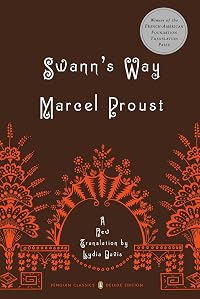





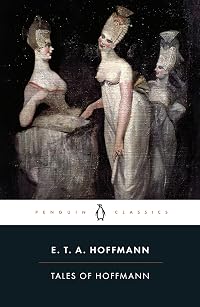
Member Recommendations
wrmjr66 If you like Three Tales, you might enjoy Flaubert's Parrot, but if you like Flaubert's Parrot, you must read Three Tales!
20

kmwndmldrs Both feature a parrot & death.
Member Reviews
This work, among Flaubert’s very last compositions, comprises three quite different stories, each impressive in its way. “A Simple Heart” was, perhaps unsurprisingly, the most popular of the three when it was first published and remains so today. Flaubert described it as an “account of an obscure life,” and said that he “want[ed] to move tender hearts to pity and tears.” The story—inspired in part by a window in the Rouen Cathedral and written for George Sand, one of his closest friends—recounts the life of serving woman in a tone of nostalgic melancholy. Relying heavily on personal memories, the story is nearly a roman à clef. In the words of the translator, Robert Baldick, “Every character, every place, every show more emotion in this tale corresponds to some person, some scene, some feeling in the author’s past.” Baldick also considered that it combined the “underlying tenderness of Sentimental Education with the style and setting of Madame Bovary.” And it is hard not to feel a great sympathy for the protagonist, Félicité, whose life is so beautifully evoked in the masterful writing. (For those interested, it is also the basis for Julian Barnes’s Flaubert’s Parrot.)
“The Legend of St. Julian Hospitator” is a completely different kettle of fish. A young man, predicted at birth to do great things, learns to hunt with murderous cruelty, taking great joy in killing merely because he can. In a mystical encounter following his wholesale destruction of an entire valley filled with deer, a stag prophesies that he will kill his parents, a prophecy that causes him to abandon hunting altogether. After a stunning scene in which this prophecy is fulfilled, he devotes his life to servitude. At length, Julian encounters Jesus Christ in the form of a leper. The pace of the story is quite swift and Flaubert wonderfully evokes the world of the Middle Ages. Notwithstanding essentially two-dimensional characters, Flaubert’s masterful descriptive powers make this an unexpectedly moving piece. (Parenthetically, I would note that this story in particular reminded me of both Anatole France and Pierre Michon (especially his Winter Mythologies).)
“Herodias” is a tale about Herod Antipas, his wife Herodias, and her daughter Salome. Or to explain it another way, it is the story of the beheading of John the Baptist. I thought it far less successful than the first two stories (and it seems my reaction is the same as most readers, both critical and popular). Flaubert wrote that “The story of Herodias [note that he considers the story about her, not her husband]…has nothing to do with religion. What attracts me about it is the official attitude of Herod…and the ferocious figure of Herodias….” Notwithstanding beautiful writing, the story never engaged me and the powerful, evocative prose is ultimately in service of a story that simply falls flat. show less
“The Legend of St. Julian Hospitator” is a completely different kettle of fish. A young man, predicted at birth to do great things, learns to hunt with murderous cruelty, taking great joy in killing merely because he can. In a mystical encounter following his wholesale destruction of an entire valley filled with deer, a stag prophesies that he will kill his parents, a prophecy that causes him to abandon hunting altogether. After a stunning scene in which this prophecy is fulfilled, he devotes his life to servitude. At length, Julian encounters Jesus Christ in the form of a leper. The pace of the story is quite swift and Flaubert wonderfully evokes the world of the Middle Ages. Notwithstanding essentially two-dimensional characters, Flaubert’s masterful descriptive powers make this an unexpectedly moving piece. (Parenthetically, I would note that this story in particular reminded me of both Anatole France and Pierre Michon (especially his Winter Mythologies).)
“Herodias” is a tale about Herod Antipas, his wife Herodias, and her daughter Salome. Or to explain it another way, it is the story of the beheading of John the Baptist. I thought it far less successful than the first two stories (and it seems my reaction is the same as most readers, both critical and popular). Flaubert wrote that “The story of Herodias [note that he considers the story about her, not her husband]…has nothing to do with religion. What attracts me about it is the official attitude of Herod…and the ferocious figure of Herodias….” Notwithstanding beautiful writing, the story never engaged me and the powerful, evocative prose is ultimately in service of a story that simply falls flat. show less
Three stories written by Flaubert in the mid-1870s during a break in his work on "Bouvard et Pécuchet" and published in 1877, making them the last of his works to appear before he died.
"A Simple Heart" is great, the tale of an utterly selfless servant girl. Flaubert covers her life in the most straightforward way possible; he doesn't dwell on psychological speculations, but just says what happens and lets us draw our own conclusions. His method can seem artless, but of course this isn't such an easy trick, and the final effect is anything but simple. I'm reminded of a comment Robert Bresson made about film: "You must leave the spectator free. And at the same time you must make yourself loved by him. You must make him love the way in show more which you render things." As with Bresson's films, "A Simple Heart" ends with a transformation, something like a miracle, which you accept because what has gone before has made you love the storyteller's way of rendering things. The comparison shouldn't be taken too far, of course: unlike Bresson, Flaubert makes everything completely natural and believable. "A Simple Heart" recalls "Madame Bovary" in its style, setting and quality.
The other two stories were inspired by art in Rouen Cathedral. "The Legend of Saint Julian the Hospitaller" is myth-like; its vengeful animals and fairy tale-esque ending couldn't be called naturalistic. But the story has a clear and uncluttered trajectory, and the way of telling it is familiarly striaghtforward in style; I liked it very much. I'm not so sure about the last of the trio, "Herodias". Dealing with the beheading of John the Baptist (it was apparently an influence on Oscar Wilde's "Salome") I thought the biblical surface was somewhat over the top, a little King Vidor; I gather "Salammbô" (which I've not read) is similar in this respect but to my mind it doesn't show Flaubert at his best. Still, the other two stories - "A Simple Heart" especially - have something magical to them.
I haven't compared Howard Curtis's translation for this Hesperus edition with others, but it seems very good, unobtrusive and simple; nothing in it jars. Curtis also provides an introduction, and there's a foreword by Margaret Drabble. Physically the book is very pleasing, with nice paper, nice type, and a suitably unflashy cover. show less
"A Simple Heart" is great, the tale of an utterly selfless servant girl. Flaubert covers her life in the most straightforward way possible; he doesn't dwell on psychological speculations, but just says what happens and lets us draw our own conclusions. His method can seem artless, but of course this isn't such an easy trick, and the final effect is anything but simple. I'm reminded of a comment Robert Bresson made about film: "You must leave the spectator free. And at the same time you must make yourself loved by him. You must make him love the way in show more which you render things." As with Bresson's films, "A Simple Heart" ends with a transformation, something like a miracle, which you accept because what has gone before has made you love the storyteller's way of rendering things. The comparison shouldn't be taken too far, of course: unlike Bresson, Flaubert makes everything completely natural and believable. "A Simple Heart" recalls "Madame Bovary" in its style, setting and quality.
The other two stories were inspired by art in Rouen Cathedral. "The Legend of Saint Julian the Hospitaller" is myth-like; its vengeful animals and fairy tale-esque ending couldn't be called naturalistic. But the story has a clear and uncluttered trajectory, and the way of telling it is familiarly striaghtforward in style; I liked it very much. I'm not so sure about the last of the trio, "Herodias". Dealing with the beheading of John the Baptist (it was apparently an influence on Oscar Wilde's "Salome") I thought the biblical surface was somewhat over the top, a little King Vidor; I gather "Salammbô" (which I've not read) is similar in this respect but to my mind it doesn't show Flaubert at his best. Still, the other two stories - "A Simple Heart" especially - have something magical to them.
I haven't compared Howard Curtis's translation for this Hesperus edition with others, but it seems very good, unobtrusive and simple; nothing in it jars. Curtis also provides an introduction, and there's a foreword by Margaret Drabble. Physically the book is very pleasing, with nice paper, nice type, and a suitably unflashy cover. show less
 This review was written for LibraryThing Early Reviewers.
Flaubert's late era set of short stories is an interesting mix, all based around narratives of sainthood, transcendence and martyrdom. The gem of the bunch is without a doubt the most famous story here, "Un coeur simple", the story of a peasant girl named Felicite and her fruitless life, held back by a parochial rural life and narrow in her education yet a woman of great imagination and compassion for others in her own way. It's the most effective display of Flaubert's romanticist-realist style in action.
Unfortunately the other two stories don't quite match it - Saint Julien has an interesting ending and some vivid imagery though the sheer amount of animal cruelty can become a bit stomach-turning, while Herodias quickly becomes show more confusing and even outright tedious at points in what I hope isn't a harbinger for how I'm going to feel when I get to Salammbo. show less
Unfortunately the other two stories don't quite match it - Saint Julien has an interesting ending and some vivid imagery though the sheer amount of animal cruelty can become a bit stomach-turning, while Herodias quickly becomes show more confusing and even outright tedious at points in what I hope isn't a harbinger for how I'm going to feel when I get to Salammbo. show less
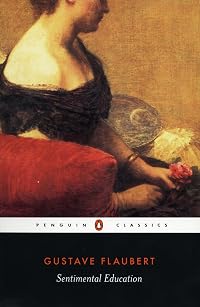
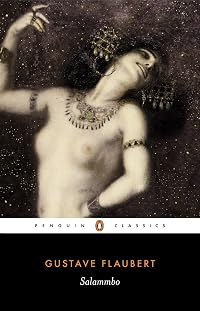
With his allegedly "immoral" first novel [b:Madame Bovary|2175|Madame Bovary|Gustave Flaubert|https://d.gr-assets.com/books/1335676143s/2175.jpg|2766347] Flaubert established himself as a leading exponent of the budding realist approach to literature with its emphasis on the sometimes sordid details of everyday life. The same elements recur in [b:Sentimental Education|2183|Sentimental Education|Gustave Flaubert|https://d.gr-assets.com/books/1327788473s/2183.jpg|314156] but, in contrast, the historical novel [b:Salammbô|221597|Salammbô|Gustave Flaubert|https://d.gr-assets.com/books/1387717681s/221597.jpg|47789734] , is an exercise in over-the-top exotic Orientalism.
This edition of Flaubert's late "Three Tales" features a high-profile show more guest foreword by Margaret Drabble, as well as an introduction by translator Howard Curtis. Both emphasize the fact that these short stories are a distillation of Flaubert's craft and reflect the two extremes of his literary style.
The collection opens with "A Simple Heart", a blow-by-blow description of the life and hardships of humble Normandy servant Felicite. The detached, sphinx-like third person narration is tantalisingly ambiguous - are we meant to feel sorry for the protagonist? Contemptuous at her ignorance? Angry at her too easy resignation in the face of adversity? Or should we admire her humility and loyalty? Much is made of Felicite's quasi-blasphemous mental association between the Holy Ghost and her stuffed parrot. Said parrot makes a final appearance in the final pages, when Flaubert abandons the matter-of-fact storytelling in favour of a glimpse of the dying protagonist's ecstatic visions. What are we make of this? It is unlikely that the secularist Flaubert wanted us to take these mystic passages at face value - on the other hand, the heightened language suggests that rather than being demented ravings of a gullible old woman, these "visions" give Felicite a hard-earned dignity at the moment of death.
Certainly, for an anti-clerical agnostic, Flaubert's tales show a strange fascination with religion. "Saint Julian the Hospitaller" is a retelling of the medieval legend of the patron saint of hunters in which Flaubert resorts to Gothic tropes for heightened effect - dark forests, rambling castles, talking animals and last but not least a curse which haunts Julian. "Herodias" is an account of the beheading of St John. An excuse to indulge in Salammbô-style exoticism, the colourfully-described orgies would influence later writers including Oscar Wilde.
This Hesperus classics edition is highly recommended, particularly for Howard Curtis's idiomatic translation, which was nominated for the Oxford-Weidenfeld Translation Prize. show less
This edition of Flaubert's late "Three Tales" features a high-profile show more guest foreword by Margaret Drabble, as well as an introduction by translator Howard Curtis. Both emphasize the fact that these short stories are a distillation of Flaubert's craft and reflect the two extremes of his literary style.
The collection opens with "A Simple Heart", a blow-by-blow description of the life and hardships of humble Normandy servant Felicite. The detached, sphinx-like third person narration is tantalisingly ambiguous - are we meant to feel sorry for the protagonist? Contemptuous at her ignorance? Angry at her too easy resignation in the face of adversity? Or should we admire her humility and loyalty? Much is made of Felicite's quasi-blasphemous mental association between the Holy Ghost and her stuffed parrot. Said parrot makes a final appearance in the final pages, when Flaubert abandons the matter-of-fact storytelling in favour of a glimpse of the dying protagonist's ecstatic visions. What are we make of this? It is unlikely that the secularist Flaubert wanted us to take these mystic passages at face value - on the other hand, the heightened language suggests that rather than being demented ravings of a gullible old woman, these "visions" give Felicite a hard-earned dignity at the moment of death.
Certainly, for an anti-clerical agnostic, Flaubert's tales show a strange fascination with religion. "Saint Julian the Hospitaller" is a retelling of the medieval legend of the patron saint of hunters in which Flaubert resorts to Gothic tropes for heightened effect - dark forests, rambling castles, talking animals and last but not least a curse which haunts Julian. "Herodias" is an account of the beheading of St John. An excuse to indulge in Salammbô-style exoticism, the colourfully-described orgies would influence later writers including Oscar Wilde.
This Hesperus classics edition is highly recommended, particularly for Howard Curtis's idiomatic translation, which was nominated for the Oxford-Weidenfeld Translation Prize. show less
With his allegedly "immoral" first novel [b:Madame Bovary|2175|Madame Bovary|Gustave Flaubert|https://d.gr-assets.com/books/1335676143s/2175.jpg|2766347] Flaubert established himself as a leading exponent of the budding realist approach to literature with its emphasis on the sometimes sordid details of everyday life. The same elements recur in [b:Sentimental Education|2183|Sentimental Education|Gustave Flaubert|https://d.gr-assets.com/books/1327788473s/2183.jpg|314156] but, in contrast, the historical novel [b:Salammbô|221597|Salammbô|Gustave Flaubert|https://d.gr-assets.com/books/1387717681s/221597.jpg|47789734] , is an exercise in over-the-top exotic Orientalism.
This edition of Flaubert's late "Three Tales" features a high-profile show more guest foreword by Margaret Drabble, as well as an introduction by translator Howard Curtis. Both emphasize the fact that these short stories are a distillation of Flaubert's craft and reflect the two extremes of his literary style.
The collection opens with "A Simple Heart", a blow-by-blow description of the life and hardships of humble Normandy servant Felicite. The detached, sphinx-like third person narration is tantalisingly ambiguous - are we meant to feel sorry for the protagonist? Contemptuous at her ignorance? Angry at her too easy resignation in the face of adversity? Or should we admire her humility and loyalty? Much is made of Felicite's quasi-blasphemous mental association between the Holy Ghost and her stuffed parrot. Said parrot makes a final appearance in the final pages, when Flaubert abandons the matter-of-fact storytelling in favour of a glimpse of the dying protagonist's ecstatic visions. What are we make of this? It is unlikely that the secularist Flaubert wanted us to take these mystic passages at face value - on the other hand, the heightened language suggests that rather than being demented ravings of a gullible old woman, these "visions" give Felicite a hard-earned dignity at the moment of death.
Certainly, for an anti-clerical agnostic, Flaubert's tales show a strange fascination with religion. "Saint Julian the Hospitaller" is a retelling of the medieval legend of the patron saint of hunters in which Flaubert resorts to Gothic tropes for heightened effect - dark forests, rambling castles, talking animals and last but not least a curse which haunts Julian. "Herodias" is an account of the beheading of St John. An excuse to indulge in Salammbô-style exoticism, the colourfully-described orgies would influence later writers including Oscar Wilde.
This Hesperus classics edition is highly recommended, particularly for Howard Curtis's idiomatic translation, which was nominated for the Oxford-Weidenfeld Translation Prize. show less
This edition of Flaubert's late "Three Tales" features a high-profile show more guest foreword by Margaret Drabble, as well as an introduction by translator Howard Curtis. Both emphasize the fact that these short stories are a distillation of Flaubert's craft and reflect the two extremes of his literary style.
The collection opens with "A Simple Heart", a blow-by-blow description of the life and hardships of humble Normandy servant Felicite. The detached, sphinx-like third person narration is tantalisingly ambiguous - are we meant to feel sorry for the protagonist? Contemptuous at her ignorance? Angry at her too easy resignation in the face of adversity? Or should we admire her humility and loyalty? Much is made of Felicite's quasi-blasphemous mental association between the Holy Ghost and her stuffed parrot. Said parrot makes a final appearance in the final pages, when Flaubert abandons the matter-of-fact storytelling in favour of a glimpse of the dying protagonist's ecstatic visions. What are we make of this? It is unlikely that the secularist Flaubert wanted us to take these mystic passages at face value - on the other hand, the heightened language suggests that rather than being demented ravings of a gullible old woman, these "visions" give Felicite a hard-earned dignity at the moment of death.
Certainly, for an anti-clerical agnostic, Flaubert's tales show a strange fascination with religion. "Saint Julian the Hospitaller" is a retelling of the medieval legend of the patron saint of hunters in which Flaubert resorts to Gothic tropes for heightened effect - dark forests, rambling castles, talking animals and last but not least a curse which haunts Julian. "Herodias" is an account of the beheading of St John. An excuse to indulge in Salammbô-style exoticism, the colourfully-described orgies would influence later writers including Oscar Wilde.
This Hesperus classics edition is highly recommended, particularly for Howard Curtis's idiomatic translation, which was nominated for the Oxford-Weidenfeld Translation Prize. show less
Three short stories by Flaubert, each with very different themes, were a very good introduction to the scope of this giant of French literature. Un cœur simple or Le perroquet, known as A Simple Heart in English, narrates the life story of a servant called Félicité, who, having experienced a great romantic deception in her youth, devotes her life to her employer Mme Aubain and her children. When she inherits a live parrot, the animal becomes the recipient of all Félicité's love and passion, even once it passes away, when Félicité has him sent to a taxidermist so she can keep the bird by her side until her dying days. An interesting story about selfless love and devotion. ★★★★
The Legend of Saint Julian the Hospitalier show more tells the story of how a young man who loved to kill animals for pleasure eventually became a saint. After having killed a mouse as a child, Julian, the son of noble parents develops a taste for killing and takes to hunting with a vengeance. He loves to massacre large quantities of animals without a shadow of remorse. One day, after an especially bloody carnage wherein he massacres an entire valley of deer, he starts having qualms about his favourite hobby, but his reservations dissipate instantly when he spies a family of deer and can't resist killing off the fawn and his mother. When he fails to kill the stag, the animal curses him with the promise that Julian will end up killing both his mother and father. Terrorized that the curse might come true, Julian flees from the parental home, but will he manage to escape his destiny? A great story about redemption, but for animal lovers like me, the scenes of carnage were difficult to stomach, though in retrospect, necessary to tell the story. ★★★★
Hérodias is the retelling of the beheading of St-John the Baptist. I wasn't particularly fond of the religious aspects of the story, but as a historical piece is was interesting, especially with the description of the party Hérodias holds for her new husband Herod Antipas, when guests make themselves vomit between courses so they can continue stuffing their faces; leave it to the Romans to benefit from all the advantages of bulimia without the guilt. Then Salomé arrives on the scene and uses her charms to have John's head served on a platter. Lovely. Very well told, but not my favourite story. ★★★ show less
The Legend of Saint Julian the Hospitalier show more tells the story of how a young man who loved to kill animals for pleasure eventually became a saint. After having killed a mouse as a child, Julian, the son of noble parents develops a taste for killing and takes to hunting with a vengeance. He loves to massacre large quantities of animals without a shadow of remorse. One day, after an especially bloody carnage wherein he massacres an entire valley of deer, he starts having qualms about his favourite hobby, but his reservations dissipate instantly when he spies a family of deer and can't resist killing off the fawn and his mother. When he fails to kill the stag, the animal curses him with the promise that Julian will end up killing both his mother and father. Terrorized that the curse might come true, Julian flees from the parental home, but will he manage to escape his destiny? A great story about redemption, but for animal lovers like me, the scenes of carnage were difficult to stomach, though in retrospect, necessary to tell the story. ★★★★
Hérodias is the retelling of the beheading of St-John the Baptist. I wasn't particularly fond of the religious aspects of the story, but as a historical piece is was interesting, especially with the description of the party Hérodias holds for her new husband Herod Antipas, when guests make themselves vomit between courses so they can continue stuffing their faces; leave it to the Romans to benefit from all the advantages of bulimia without the guilt. Then Salomé arrives on the scene and uses her charms to have John's head served on a platter. Lovely. Very well told, but not my favourite story. ★★★ show less
Having read [A Simple Heart] for the Great Courses series, I was going to toss the book itself, very old, very foxed, the spine just barely holding. But there were two more stories in the volume, shorter than the first, so I tried them out.
The second, "The Legend of St. Julian Hospitator" reads like a legend, about a man born with conflicting prophesies and an overwhelming penchant for hunting and killing as many animals as he can. When he is told yet another prophesy, that he will kill his parents, he flees the country and wanders, marries a princess, continues his slaughter, until eventually, by accident, he does kill his parents. This horror turns him humble, a mendicant who eventually becomes a boatman on a rough crossing. accepting show more all. He is eventually saved by Jesus.
The third, "Herodias", is the story of Herod and Jokanaan. The women as assigned all the blame, it seems to me.
It is curious that Flaubert wrote "A Simple Heart" about a very ordinary woman, and two stories about anything but ordinary people. The writing is beautiful, in a translation by Robert Baldick. show less
The second, "The Legend of St. Julian Hospitator" reads like a legend, about a man born with conflicting prophesies and an overwhelming penchant for hunting and killing as many animals as he can. When he is told yet another prophesy, that he will kill his parents, he flees the country and wanders, marries a princess, continues his slaughter, until eventually, by accident, he does kill his parents. This horror turns him humble, a mendicant who eventually becomes a boatman on a rough crossing. accepting show more all. He is eventually saved by Jesus.
The third, "Herodias", is the story of Herod and Jokanaan. The women as assigned all the blame, it seems to me.
It is curious that Flaubert wrote "A Simple Heart" about a very ordinary woman, and two stories about anything but ordinary people. The writing is beautiful, in a translation by Robert Baldick. show less
Members
- Recently Added By
Lists

Best of French Literature
138 works; 27 members

Short Story Collections and Anthologies
261 works; 42 members

Short and Sweet
246 works; 24 members

Rory Gilmore Book Club
193 works; 5 members

Short Stories, Tales and Novellas
31 works; 1 member

Bibliografia essenziale
86 works; 2 members

How to Read a Book's Recommended Reading List
309 works; 10 members

Recommended Reading : 600 Classics Reviewed, Editors of Salem Press, 2015
634 works; 6 members
Author Information

Born in the town of Rouen, in northern France, in 1821, Gustave Flaubert was sent to study law in Paris at the age of 18. After only three years, his career was interrupted and he retired to live with his widowed mother in their family home at Croisset, on the banks of the Seine River. Supported by a private income, he devoted himself to his show more writing. Flaubert traveled with writer Maxime du Camp from November 1849 to April 1851 to North Africa, Syria, Turkey, Greece, and Italy. When he returned he began Madame Bovary, which appeared first in the Revue in 1856 and in book form the next year. The realistic depiction of adultery was condemned as immoral and Flaubert was prosecuted, but escaped conviction. Other major works include Salammbo (1862), Sentimental Education (1869), and The Temptation of Saint Antony (1874). His long novel Bouvard et Pecuchet was unfinished at his death in 1880. After his death, Flaubert's fame and reputation grew steadily, strengthened by the publication of his unfinished novel in 1881 and the many volumes of his correspondence. (Bowker Author Biography) show less
Gustave Flaubert has a Legacy Library. Legacy libraries are the personal libraries of famous readers, entered by LibraryThing members from the Legacy Libraries group.
Some Editions
Awards and Honors
Series
Belongs to Publisher Series
New Directions Classics (NC7)
Prisma Klassieken (12)
Clube de Literatura Clássica (CLC) (43.1 [November 2023])
Gallimard, Folio Classique (3245)
GF Flammarion (1427)
Medallion Penguin Classics (L106)
Centopaginemillelire (198)
Penguin Classics (L106)
Reclams Universal-Bibliothek (8972)
Gallimard, Folio (424)
Work Relationships
Is contained in
Contains
Has as a student's study guide
Common Knowledge
- Canonical title
- Three Tales
- Original title
- Trois contes
- Original publication date
- 1877
- Important places*
- Rouen, Normandie, France; France
- Related movies
- Un coeur simple (2008 | IMDb); Herodiade (1985 | IMDb); Hérodiade (1910 | IMDb); Un cuore semplice (1977 | IMDb)
- First words
- For half a century the women of Pont-l'Eveque envied Mme Aubain her maidservant Felicite. (A Simple Heart)
Julian's father and mother lived in a castle in the middle of a forest, on the slope of a hill. (The Legend of St Julian Hospitator)
The citadel of Machaerus stood to the east of the Dead Sea, on the cone-shaped basalt peak. (Herodias) - Last words
- (Click to show. Warning: May contain spoilers.)And as she breathed her last, she thought she could see, in the opening heavens, a gigantic parrot hovering above her head. (A Simple Heart)
(Click to show. Warning: May contain spoilers.)And that is the story of St. Julian Hospitator, more or less as it is depicted on a stained-glass window in a church in my part of the world. (The Legend of St. John Hospitator)
(Click to show. Warning: May contain spoilers.)And as it was very heavy, they each carried it in turn. (Herodias) - Original language
- French
- Disambiguation notice
- This work refers to the collection that includes 'A Simple Heart', 'Saint Julian the Hospitalier', and 'Hérodias', published with the English titles of 'Three Tales'. Please don't combine with the work that is published und... (show all)er the English title of 'Three Short Works', which contains 'A Simple Heart', 'Saint Julian the Hospitalier' and 'Dance of Death'.
*Some information comes from Common Knowledge in other languages. Click "Edit" for more information.
Classifications
Statistics
- Members
- 2,609
- Popularity
- 7,297
- Reviews
- 42
- Rating
- (3.66)
- Languages
- 19 — Catalan, Danish, Dutch, English, Finnish, French, German, Galician, Greek, Hebrew, Italian, Japanese, Multiple languages, Norwegian (Bokmål), Polish, Spanish, Swedish, Turkish, Portuguese (Portugal)
- Media
- Paper, Audiobook, Ebook
- ISBNs
- 193
- UPCs
- 1
- ASINs
- 88
