
On This Page
Description
In Monterey, on the California coast, Sweet Thursday is what they call the day after Lousy Wednesday, which is one of those days that are just naturally bad. Returning to the scene of Cannery Row, the weedy lots and junk heaps and flophouses of Monterey, John Steinbeck once more brings to life the denizens of a netherworld of laughter and tears, from Fauna, new headmistress of the local brothel, to Hazel, a bum whose mother must have wanted a daughter.Tags
Recommendations




























Member Recommendations

jlelliott In the appendix to The Log of the Sea of Cortez Steinbeck tells the stories of the real denizens of Cannery Row, inspiration for the characters in Sweet Thursday.
30
Member Reviews
from Todd:
Sweet Thursday by John Steinbeck is the sequel to Cannery Row. There is a mistaken notion handed down by literary snobs that the reader "need not bother with the sequel". Nothing could be further from the truth! This is a true fulfillment and resolution of the previous novel. Moreover it contains the same wonderful characterizations, masterful dialogue, prose poetry, social hilarity and affecting vignettes found in the first novel. He also engages us with wonderful psychological tension in the romantic plot line. Steinbeck is fully on his game with this one, and it is a powerful reminder that he can write comedic novels as moving as his tragic novels.
Sweet Thursday by John Steinbeck is the sequel to Cannery Row. There is a mistaken notion handed down by literary snobs that the reader "need not bother with the sequel". Nothing could be further from the truth! This is a true fulfillment and resolution of the previous novel. Moreover it contains the same wonderful characterizations, masterful dialogue, prose poetry, social hilarity and affecting vignettes found in the first novel. He also engages us with wonderful psychological tension in the romantic plot line. Steinbeck is fully on his game with this one, and it is a powerful reminder that he can write comedic novels as moving as his tragic novels.
A fun sequel to Cannery Row, John Steinbeck's Sweet Thursday succeeds by discarding that earlier novel's experimental chaos but retaining the warmth of its characters. Thursday's plotline is thin – the closest thing to a through-line is Doc's lonesomeness and courtship of Suzy – but nevertheless has a bit more discipline than Cannery Row. The more experienced Steinbeck is better at keeping hold of the reins of storytelling amid the schemes and haphazardry of his characters. The book emerges as light and congenial, a well-balanced piece with some astute literary flourishes (the drawing of Doc's depression in Chapter 3 is fantastic) and some stand-out scenes (such as Fauna's pep-talk to Suzy (pg. 137)). A good show all round; show more Steinbeck did the Row proud. show less
I hate to say it, but this was a little bit boring. It was as beautifully written as you'd expect from Steinbeck, but honestly that was just about the only thing going for it. Characters who were gripping in Cannery Row were dull in this, and the new characters weren't anything to write home about either. In fact Suzy, the main female character, was downright irritating for most of the book. Which leads to the next problem - the plot. Cannery Row didn't have much of a plot, but it managed to a page turner anyway. Steinbeck gives Sweet Thursday a romance plot between the affable Doc and the half-hearted prostitute Suzy. And I just did not care at all. It was more fun reading about frogs in the first book.
Sweet Thursday by John Steinbeck is another charmer, a sequel of sorts to the wonderful Cannery Row. In this one, something's off with Doc, the folksy marine biologist who in this one is just back from the war. He's somewhat of a rumpled, absent-minded mayor of Cannery Row, and also at times its soul. "He had not the vanity which makes men try to be smart." But something's awry. His hobo pal Mack says, "Hell, Doc, you can't change. Why, what could we depend on! Doc, if you change a lot of people are going to cash in their chips. Why, we was all just waiting around for you to get back so we could go on being normal." "I don't feel the same, Mack, I'm restless."
Mack and the other denizens of Cannery Row want to help Doc somehow, including show more Fauna, owner of the local house of delights, and Hazel, a dimwitted (or maybe not) member of Mack's gang who has been known to worship Doc like a god. When hustler Suzy, pretty but salty and combative, blows into town, she throws Doc for a further loop. Doc feels like he's living a "gray half-life", and struggles with doing anything about it. There is no shortage of Cannery Row-ers trying to figure out how to help him, but we know from the previous book the havoc their "help" can wreak. With an almost Wodehouse-ian plot and an unlikely hero, Sweet Thursday brings all the satisfaction of Cannery Row, and may even exceed it. show less
Mack and the other denizens of Cannery Row want to help Doc somehow, including show more Fauna, owner of the local house of delights, and Hazel, a dimwitted (or maybe not) member of Mack's gang who has been known to worship Doc like a god. When hustler Suzy, pretty but salty and combative, blows into town, she throws Doc for a further loop. Doc feels like he's living a "gray half-life", and struggles with doing anything about it. There is no shortage of Cannery Row-ers trying to figure out how to help him, but we know from the previous book the havoc their "help" can wreak. With an almost Wodehouse-ian plot and an unlikely hero, Sweet Thursday brings all the satisfaction of Cannery Row, and may even exceed it. show less
After I fell in love with Steinbeck's Cannery Row about a year ago and actually went to visit Monterey shortly after finishing the book, it was a given for me to get to the sequel, which is Sweet Thursday. Set in the years after the second World War, the protagonist of Cannery Row, Doc, returns to his lab on Cannery Row in Monterey to find that he himself and Cannery Row have changed.
Western Biological Laboratories has not been run to Doc's liking and he finds it devoid of the life he had left it with. He tries to reestablish his lab and to get to work again, but somehow he is not satisfied anymore. Something in his life is missing and he cannot really put the finger on what it is. This is where Mack and the other boys from the Palace show more Flophouse come in. They are some of the many characters from the prequel to make a reappearance. The boys still want Doc to be happy since Doc is the glue that holds Cannery Row together. Now that he is back they believe the Row can be returned to its former glory. With the canneries closed the Row is just not the same anymore. Soon, Doc meets a new inhabitant of Cannery Row, Suzy. Their relationship, however, has its ups and downs. Both do not seem to get close enough to each other although they clearly like each other a lot. While Doc regards Suzy as the missing puzzle piece in his life at first, things soon change and he drowns himself in work. Doc wants to write and publish a paper but he never gets the work done as there is some internal barrier keeping him from doing the work he has once loved so much. So as not to spoil the ending I will leave it up to you to find out what happens to Suzy and Doc in the end.
What I liked most about this novel are Steinbeck's superb writing skills. The interplay of the characters and the depiction of life on Cannery Row are simply outstanding. Steinbeck has a perfect grasp of which elements of the story to reveal and which to leave up to the readers' imagination. In the prologue to the novel as in the novel itself Steinbeck lets characters muse about the art of writing and what an author should do so as to tell an interesting story. The criteria for a good book presented in the prologue are each addressed in the story itself, for example giving the chapters a headline, having more dialogue or not telling the readers everything in description. Steinbeck plays with narrative techniques and the relation of showing and telling, however, when he inserts himself into the story at some points in order to describe and interpret actions for the reader, the very thing that was criticized in the prologue. That is why the novel spoke to me on more than one level. While the interplay of the characters make for a fascinating picture of life on Cannery Row, the meta level of how to write a story is something that I enjoyed very much as well.
While it might be possible to read this novel without having read the prequel, I would advise to read Cannery Row first before turning to Sweet Thursday as it adds a lot of background to the story and the characters. 4.5 stars for an almost perfect novel. I probably just subtracted half a star because I loved Cannery Row even more. show less
Western Biological Laboratories has not been run to Doc's liking and he finds it devoid of the life he had left it with. He tries to reestablish his lab and to get to work again, but somehow he is not satisfied anymore. Something in his life is missing and he cannot really put the finger on what it is. This is where Mack and the other boys from the Palace show more Flophouse come in. They are some of the many characters from the prequel to make a reappearance. The boys still want Doc to be happy since Doc is the glue that holds Cannery Row together. Now that he is back they believe the Row can be returned to its former glory. With the canneries closed the Row is just not the same anymore. Soon, Doc meets a new inhabitant of Cannery Row, Suzy. Their relationship, however, has its ups and downs. Both do not seem to get close enough to each other although they clearly like each other a lot. While Doc regards Suzy as the missing puzzle piece in his life at first, things soon change and he drowns himself in work. Doc wants to write and publish a paper but he never gets the work done as there is some internal barrier keeping him from doing the work he has once loved so much. So as not to spoil the ending I will leave it up to you to find out what happens to Suzy and Doc in the end.
What I liked most about this novel are Steinbeck's superb writing skills. The interplay of the characters and the depiction of life on Cannery Row are simply outstanding. Steinbeck has a perfect grasp of which elements of the story to reveal and which to leave up to the readers' imagination. In the prologue to the novel as in the novel itself Steinbeck lets characters muse about the art of writing and what an author should do so as to tell an interesting story. The criteria for a good book presented in the prologue are each addressed in the story itself, for example giving the chapters a headline, having more dialogue or not telling the readers everything in description. Steinbeck plays with narrative techniques and the relation of showing and telling, however, when he inserts himself into the story at some points in order to describe and interpret actions for the reader, the very thing that was criticized in the prologue. That is why the novel spoke to me on more than one level. While the interplay of the characters make for a fascinating picture of life on Cannery Row, the meta level of how to write a story is something that I enjoyed very much as well.
While it might be possible to read this novel without having read the prequel, I would advise to read Cannery Row first before turning to Sweet Thursday as it adds a lot of background to the story and the characters. 4.5 stars for an almost perfect novel. I probably just subtracted half a star because I loved Cannery Row even more. show less
I've been waiting for the time to come that I don't flip over a Steinbeck novel. This wasn't his most creative, but damn if I don't fall in love every time. I've been trying to think of a word to describe Sweet Thursday, but all I can think of is, well, sweet. What struck me while reading this novel was why I think I love Steinbeck as much as I do. I've got a lot of favorite authors that are superb at what they do, that make me feel to my marrow, and I know they put their heart and soul into their work, but it's reading Steinbeck that I feel how much he intensely loves his characters. I can only imagine him burning late into the night, hovering over his typewriter, fighting off sleep and calls to come out or to come to bed just so he show more may stay with his people just a little bit longer...see what they're going to do next, what goofy and wondrous line they'll kick out. And it reminds me a little of teaching--if you've got enthusiasm for the subject, the kids are going to like it a lot more. Steinbeck's passion bleeds through for me to absorb.
This was also a therapeutic follow up from The Road although an entirely bizarre one...I'm surprised I'm not as jarred as I feel I should be. This was the most romantic I've seen Steinbeck...something of a golden, fish-stink California version of an Austen novel. How's that for a change? I think I put a Hank Williams song back-to-back with Frank Zappa on a mix tape for a friend years ago for sheer glee, and it felt a little like that.
This and Cannery Row provide perhaps the biggest blow to me that I won't be able to drive up 1 from LA to SF in a couple weeks. Although Meghan assures me there are few, if no remnants to be found in Monterey of such a time, I ache to just be in this place for at least a moment. It's akin to the joy I found finding the ducks had thankfully returned once again to Central Park and visiting the Natural History Museum in NYC for the first time, hoping I'd find a vision of Holden Caulfield stumbling around as well. And, as with Cannery Row, I'm still in love with Doc, but I'm sure he's moved up the coast. This book reminded me that I can be a soppy old romantic. Curses!! What can I read next?
******************************
Where does discontent start? You are warm enough, but you shiver. You are fed, yet hunger gnaws you. You have been loved, but your yearning wanders in new fields. And to prod all these there's time, the bastard Time. The end of life is now not so terribly far away--you can see it the way you see the finish line when you come into the stretch--and your mind says, "Have I worked enough? Have I eaten enough? Have I loved enough?" All of these, of course, are the foundation of man's greatest curse, and perhaps his greatest glory. "What has my life meant so far, and what can it mean in the time left to me?" And now we're coming to the wicked, poisoned dart: "What have I contributed to the Great Ledger? What am I worth?" And this isn't vanity or ambition. Men seem to be born with a debt they can never pay no matter how hard they try. It piles up ahead of them. Man owes something to man. If he ignores the debt it poisons him, and if he tries to make payments the debt only increases, and the quality of his gift is the measure of the man. (16) show less
This was also a therapeutic follow up from The Road although an entirely bizarre one...I'm surprised I'm not as jarred as I feel I should be. This was the most romantic I've seen Steinbeck...something of a golden, fish-stink California version of an Austen novel. How's that for a change? I think I put a Hank Williams song back-to-back with Frank Zappa on a mix tape for a friend years ago for sheer glee, and it felt a little like that.
This and Cannery Row provide perhaps the biggest blow to me that I won't be able to drive up 1 from LA to SF in a couple weeks. Although Meghan assures me there are few, if no remnants to be found in Monterey of such a time, I ache to just be in this place for at least a moment. It's akin to the joy I found finding the ducks had thankfully returned once again to Central Park and visiting the Natural History Museum in NYC for the first time, hoping I'd find a vision of Holden Caulfield stumbling around as well. And, as with Cannery Row, I'm still in love with Doc, but I'm sure he's moved up the coast. This book reminded me that I can be a soppy old romantic. Curses!! What can I read next?
******************************
Where does discontent start? You are warm enough, but you shiver. You are fed, yet hunger gnaws you. You have been loved, but your yearning wanders in new fields. And to prod all these there's time, the bastard Time. The end of life is now not so terribly far away--you can see it the way you see the finish line when you come into the stretch--and your mind says, "Have I worked enough? Have I eaten enough? Have I loved enough?" All of these, of course, are the foundation of man's greatest curse, and perhaps his greatest glory. "What has my life meant so far, and what can it mean in the time left to me?" And now we're coming to the wicked, poisoned dart: "What have I contributed to the Great Ledger? What am I worth?" And this isn't vanity or ambition. Men seem to be born with a debt they can never pay no matter how hard they try. It piles up ahead of them. Man owes something to man. If he ignores the debt it poisons him, and if he tries to make payments the debt only increases, and the quality of his gift is the measure of the man. (16) show less
Sweet Thursday is the sequel to Cannery Row, one of my favorite of Steinbeck’s books. I’ve read the epic masterpieces, like East of Eden and Grapes of Wrath. I’ve read the shorter morality tales, like Of Mice and Men and The Pearl. Yet after all of those brilliant works, my favorites remain his road trip memoir, Travels with Charley, and Cannery Row. I may get more depth and inner turmoil from his other works, but these are the ones I relate, the ones I want to return to.
Sweet Thursday quickly made its way to that top bracket as I read it. Steinbeck takes us back to Cannery Row and all of our favorite characters. We return shortly after the end of World War II and learn that Doc has been away, serving his country and Mack has show more been holding down the fort. The grocer, Lee Chong, is long gone and there are some new characters in the town.
Steinbeck gives us some of my favorite literary characters in this book. Doc, Mack and the others won a place in our hearts in Cannery Row, but the new additions are just as wonderful. There’s a selfish con artist named Old Jingleballicks and a Mexican man who runs the grocery store named Joseph and Mary (often referred to as J and M). Suzy, a young woman looking for guidance, provides a unique spark to the story. Her transformation throughout the book is one of the most rewarding I’ve read, because you can’t help but root for her.
**SPOILERS**
I loved that Steinbeck didn’t throw Doc and Suzy together immediately. It felt so right that Suzy had a chance to get her life together before ending up with him. She needed to find her own balance and believe in herself before committing to another person. Once she had a room of her own, she finally had pride in herself and once she had that, she had something to offer someone else.
**SPOILERS OVER**
Of course, you can’t forget Hazel, one of Steinbeck’s greatest creations. He’s naïve and sweet, and devoted to his friends. When he’s in trouble or being taken advantage of, his friends step up and we see the best in everyone around him as they protect their friend. Hazel becomes a key player in this novel. He’s put to the test as he tries to work out the best way to help Doc, the man he admires so much.
One of my favorite chapters is called “One Night of Love,” which chronicles Suzy and Doc’s first date. The two couldn’t be more different, but there’s an unexpected sweetness that we witness when they both let their guards down. That private moment is beautiful.
Sweet Thursday was everything I hoped it would be. It’s touching, funny and profound in an unexplainably simple way. It makes you wish you lived on Cannery Row and could share a beer with Doc and his friends. It reminds you of the goodness the lies within every person and the fact that sometimes you just need the right situation to bring it out.
“I love true things,” said Doc. “Even when they hurt. Isn’t it better to know the truth about oneself?”
“S-l-o-w-ness it gave meaning to everything. It made everything royal.”
“No one knows how greatness comes to a man. It may lie in his blackness, sleeping, or it may lance into him like those driven fiery particles from outer space. These things, however, are known about greatness: need gives it life and puts it in action; it never comes without pain; it leaves a man changed, chastened, and exalted at the same time – he can never return to simplicity.” show less
Sweet Thursday quickly made its way to that top bracket as I read it. Steinbeck takes us back to Cannery Row and all of our favorite characters. We return shortly after the end of World War II and learn that Doc has been away, serving his country and Mack has show more been holding down the fort. The grocer, Lee Chong, is long gone and there are some new characters in the town.
Steinbeck gives us some of my favorite literary characters in this book. Doc, Mack and the others won a place in our hearts in Cannery Row, but the new additions are just as wonderful. There’s a selfish con artist named Old Jingleballicks and a Mexican man who runs the grocery store named Joseph and Mary (often referred to as J and M). Suzy, a young woman looking for guidance, provides a unique spark to the story. Her transformation throughout the book is one of the most rewarding I’ve read, because you can’t help but root for her.
**SPOILERS**
I loved that Steinbeck didn’t throw Doc and Suzy together immediately. It felt so right that Suzy had a chance to get her life together before ending up with him. She needed to find her own balance and believe in herself before committing to another person. Once she had a room of her own, she finally had pride in herself and once she had that, she had something to offer someone else.
**SPOILERS OVER**
Of course, you can’t forget Hazel, one of Steinbeck’s greatest creations. He’s naïve and sweet, and devoted to his friends. When he’s in trouble or being taken advantage of, his friends step up and we see the best in everyone around him as they protect their friend. Hazel becomes a key player in this novel. He’s put to the test as he tries to work out the best way to help Doc, the man he admires so much.
One of my favorite chapters is called “One Night of Love,” which chronicles Suzy and Doc’s first date. The two couldn’t be more different, but there’s an unexpected sweetness that we witness when they both let their guards down. That private moment is beautiful.
Sweet Thursday was everything I hoped it would be. It’s touching, funny and profound in an unexplainably simple way. It makes you wish you lived on Cannery Row and could share a beer with Doc and his friends. It reminds you of the goodness the lies within every person and the fact that sometimes you just need the right situation to bring it out.
“I love true things,” said Doc. “Even when they hurt. Isn’t it better to know the truth about oneself?”
“S-l-o-w-ness it gave meaning to everything. It made everything royal.”
“No one knows how greatness comes to a man. It may lie in his blackness, sleeping, or it may lance into him like those driven fiery particles from outer space. These things, however, are known about greatness: need gives it life and puts it in action; it never comes without pain; it leaves a man changed, chastened, and exalted at the same time – he can never return to simplicity.” show less
Members
- Recently Added By
Lists

1950s
340 works; 22 members

20th Century Literature
1,161 works; 54 members

Best Beach Reads
99 works; 61 members

National Book Award Finalists - Fiction
377 works; 12 members

Publisher's Weekly Bestsellers - Part II - 1940 - 1979
355 works; 5 members

SHOULD Read Books!
354 works; 9 members

Discontinued
19 works; 4 members

Nifty Fifties
129 works; 14 members

American Lit for Eng 11 Research Project
368 works; 6 members

Books Read in 2011
684 works; 19 members

Hulk's Essential Reading List
38 works; 1 member

Reading LIst
648 works; 1 member
Author Information

479+ Works 206,929 Members
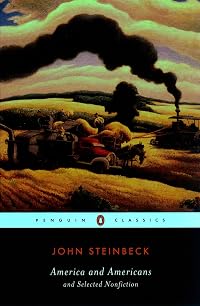
In recent years Steinbeck has been elevated to a more prominent status among American writers of his generation. If not quite at the world-class artistic level of a Hemingway or a Faulkner, he is nonetheless read very widely throughout the world by readers of all ages who consider him one of the most "American" of writers. Born in Salinas County, show more California on February 27, 1902, Steinbeck was of German-Irish parentage. After four years as a special student at Stanford University, he went to New York, where he worked as a reporter and as a hod carrier. Returning to California, he devoted himself to writing, with little success; his first three books sold fewer than 3,000 copies. Tortilla Flat (1935), dealing with the paisanos, California Mexicans whose ancestors settled in the country 200 years ago, established his reputation. In Dubious Battle (1936), a labor novel of a strike and strike-breaking, won the gold medal of the Commonwealth Club of California. Of Mice and Men (1937), a long short story that turns upon a melodramatic incident in the tragic friendship of two farm hands, written almost entirely in dialogue, was an experiment and was dramatized in the year of its publication, winning the New York Drama Critics Circle Award. It brought him fame. Out of a series of articles that he wrote about the transient labor camps in California came the inspiration for his greatest book, The Grapes of Wrath (1939), the odyssey of the Joad family, dispossessed of their farm in the Dust Bowl and seeking a new home, only to be driven on from camp to camp. The fiction is punctuated at intervals by the author's voice explaining this new sociological problem of homelessness, unemployment, and displacement. As the American novel "of the season, probably the year, possibly the decade," it won the Pulitzer Prize in 1940. It roused America and won a broad readership by the unusual simplicity and tenderness with which Steinbeck treated social questions. Even today, The Grapes of Wrath remains alive as a vivid account of believable human characters seen in symbolic and universal terms as well as in geographically and historically specific ones. Ma Joad is one of the most memorable characters in twentieth-century American fiction. It is her courage that sustains the family. Steinbeck's best and most ambitious novel after The Grapes of Wrath is East of Eden (1952), a saga of two American families in California from before the Civil War through World War I. Cannery Row (1945), The Wayward Bus (1947), and Sweet Thursday (1955) are lighter works that find Steinbeck returning to the lighthearted tone of Tortilla Flat as he recounts picaresque adventures of modern-day picaros. The Winter of Our Discontent (1961) struck some reviewers as being appropriately titled because of its despairing treatment of humanity's fall from grace in a wasteland world where money is king. Steinbeck also wrote important nonfiction, including Russian Journal (1948) in collaboration with the photographer Robert Capa; Once There Was a War (1958) and America and Americans (1966), which features pictures by 55 leading photographers and a 70-page essay by Steinbeck. His interest in marine biology led to two books primarily about sea life, Sea of Cortez (1941) (with Edward F. Ricketts) and The Log from the Sea of Cortez (1951). Travels with Charley (1962) is an engaging account of his journey of rediscovery of America, which took him through approximately 40 states. Steinbeck was married three times and died in New York City on December 20, 1968 of heart disease and congestive heart failure. He was 66, and had been a life-long smoker. (Bowker Author Biography) show less
Some Editions
Awards and Honors
Awards
Distinctions
Series

Belongs to Publisher Series
Work Relationships
Is contained in
Is a (non-series) sequel to
Has the adaptation
Common Knowledge
- Canonical title*
- Alle tiders torsdag
- Original title
- Sweet Thursday
- Original publication date
- 1954
- People/Characters
- Doc; Suzy; Joseph and Mary Rivas (one male character); Flora "Fauna" Flood; Eddie; Hazel (show all 21); Mack; Whitey No. 1; Whitey No. 2; Wide Ida; Seer; Joe Blaikey; Old Jingleballicks; Joe Elegant; Agnes; Becky; Cacahuete; Ella; Helen; Mabel; Wisteria
- Important places
- Monterrey, California; Monterey County, California, USA
- Dedication
- For Elizabeth with love
- First words
- One night Mack lay back on his bed in the Palace Flophouse and he said, "I ain't never been satisfied with that book Cannery Row. I would of went about it different."
- Quotations
- If only people would give the thought, the care, the judgment to international affairs, to politics, even to their jobs, that they lavish on what to wear to a masquerade, the world would run in greased grooves.
The canneries themselves fought the war by getting the limit taken off fish and catching them all. It was done for patriotic reasons, but that didn't bring the fish back. As with the oysters in Alice, 'They'd eaten every one.... (show all)' It was the same noble impulse that stripped the forests of the West and right now is pumping water out of California's earth faster than it can rain back in. When the desert comes, people will be sad; just as Cannery Row was sad when all the pilchards were caught and canned and eaten - Last words
- (Click to show. Warning: May contain spoilers.)"I think you'd of made a hell of a president," he said.
- Original language
- English
*Some information comes from Common Knowledge in other languages. Click "Edit" for more information.
Classifications
Statistics
- Members
- 3,257
- Popularity
- 5,256
- Reviews
- 56
- Rating
- (3.98)
- Languages
- 15 — Danish, Dutch, English, Finnish, French, German, Italian, Norwegian (Bokmål), Norwegian, Portuguese, Romanian, Slovak, Spanish, Swedish, Turkish
- Media
- Paper, Audiobook, Ebook
- ISBNs
- 69
- ASINs
- 83