
On This Page
Description
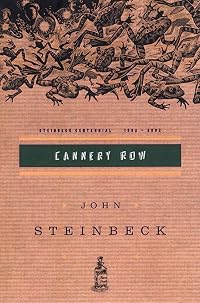
Vividly depicts the colorful, sometimes disreputable, inhabitants of a run-down area in Monterey, California.Tags
Recommendations










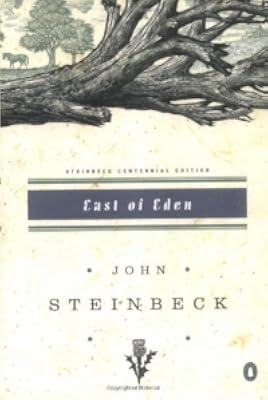





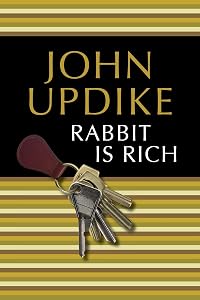
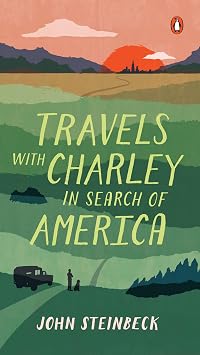



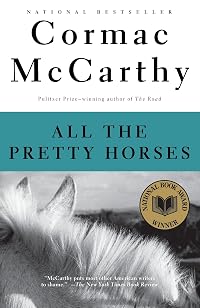



Member Recommendations


Member Reviews
How can the poem and the stink and the grating noise -- the quality of light, the tone, the habit and the dream -- be set down alive? When you collect marine animals there are certain flat worms so delicate that they are almost impossible to capture whole, for they break and tatter under the touch. You must let them ooze and crawl of their own will onto a knife blade and then lift them gently into your bottle of sea water. And perhaps that might be the way to write this book -- to open the page and to let the stories crawl in by themselves.
Steinbeck does just that in this collage of vignettes about down-and-outs living near the sardine canneries of Depression-era Monterey, California. The broad story is of a group of people who want to show more show appreciation to their friend, Doc, a sort of marine biologist and all-around good guy. It’s beautifully written, evocative of men and place and -- who knew! -- Steinbeck can write fun. And it’s all the more meaningful to learn that Doc is based on a friend of Steinbeck, to whom the book is dedicated and in what grows to feel like a meta-appreciation from author to friend. show less
Steinbeck does just that in this collage of vignettes about down-and-outs living near the sardine canneries of Depression-era Monterey, California. The broad story is of a group of people who want to show more show appreciation to their friend, Doc, a sort of marine biologist and all-around good guy. It’s beautifully written, evocative of men and place and -- who knew! -- Steinbeck can write fun. And it’s all the more meaningful to learn that Doc is based on a friend of Steinbeck, to whom the book is dedicated and in what grows to feel like a meta-appreciation from author to friend. show less
'Cannery Row in Monterey in California is a poem, a stink, a grating noise, a quality of light, a tone, a habit, a nostalgia, a dream.' So begins John Steinbeck's novel Cannery Row and this magnificent first sentence captures the mood of the book perfectly. In what follows, the author sets out to capture the atmosphere of the book's main character - Cannery Row. The novel is not so much about plot, but rather about a feeling. It is a vivid slice of life.
The inhabitants of Cannery Row want to do something good for Doc, a marine biologist, who helps out everyone in the area. That is why Mack and the boys living in the Palace Flophouse with him plan a party for Doc to show him how well he is liked and to pay him back for everything he has show more done for them. In the end, however, Doc ends up paying for the party anyway as the party is finished before he is home and his house is trashed in the process. Plotwise there is not much more to expect, but you want to read this novel for the atmosphere Steinbeck creates and the characters he portrays. Living with Mack are Hazel and Eddie, the former a rather uneducated young man who helps out Doc by doing odd jobs for him time and again. Eddie is a bartender who brings home alcohol by pouring leftovers in glasses into a jug under the bar. This mixture of beer, wine, whiskey and everything else his customers do not finish serves as the main drink of the boys at the Palace Flophouse. When one of them offers the idea to have several jugs under the bar so as not to be forced to mix all sorts of alcohol in one jug, the idea is readily dismissed as the punch would lose its distinct character. The actual owner of the Palace Flophouse is Lee Chong, who is also the proprietor of the local grocery store providing everything the town needs. However, he lets Mack and the boys live there as he fears they would burn the house down otherwise. And then there is Dora Flood, the owner of the Bear Flag Restaurant which also serves as a brothel frequented by the fishermen of Cannery Row.
Cannery Row provides a range of themes. Living a happy life despite circumstances is one of those. The novel is set during the Great Depression and while there is a lot to be sad about living in Cannery Row, the inhabitants seem to be rather content with their lives. For instance, Steinbeck describes the time between day and night as 'the hour of the pearl', a the time when everything is calm and time seems to stop. This 'hour of the pearl' seems to be a feeling that is deeply ingrained in the inhabitants of Cannery Row. Take a look at Doc, who lives in a very simple house where he also does his work as a marine biologist. He lives alone and his days consist of work and helping others. In the evening he drinks a beer or two, listens to records and reads before he crawls under a blanket that is almost falling apart as it so very old and worn. And the next day is just the same. While this loneliness and monotony would make many people very sad, Doc seems content and to enjoy what he has. His reflections on life show that he is well aware of his situation but does not want to change it. Doc's understanding of the human condition is thoughtful and very true, especially today:
"It has always seemed strange to me," said Doc. "The things we admire in men, kindness and generosity, openness, honesty, understanding and feeling are the concomitants of failure in our system. And those traits we detest, sharpness, greed, acquisitiveness, meanness, egotism and self-interest are the traits of success. And while men admire the quality of the first they love the produce of the second." (p. 107)
To my mind, Cannery Row is one of the great American novels. 5 stars. show less
The inhabitants of Cannery Row want to do something good for Doc, a marine biologist, who helps out everyone in the area. That is why Mack and the boys living in the Palace Flophouse with him plan a party for Doc to show him how well he is liked and to pay him back for everything he has show more done for them. In the end, however, Doc ends up paying for the party anyway as the party is finished before he is home and his house is trashed in the process. Plotwise there is not much more to expect, but you want to read this novel for the atmosphere Steinbeck creates and the characters he portrays. Living with Mack are Hazel and Eddie, the former a rather uneducated young man who helps out Doc by doing odd jobs for him time and again. Eddie is a bartender who brings home alcohol by pouring leftovers in glasses into a jug under the bar. This mixture of beer, wine, whiskey and everything else his customers do not finish serves as the main drink of the boys at the Palace Flophouse. When one of them offers the idea to have several jugs under the bar so as not to be forced to mix all sorts of alcohol in one jug, the idea is readily dismissed as the punch would lose its distinct character. The actual owner of the Palace Flophouse is Lee Chong, who is also the proprietor of the local grocery store providing everything the town needs. However, he lets Mack and the boys live there as he fears they would burn the house down otherwise. And then there is Dora Flood, the owner of the Bear Flag Restaurant which also serves as a brothel frequented by the fishermen of Cannery Row.
Cannery Row provides a range of themes. Living a happy life despite circumstances is one of those. The novel is set during the Great Depression and while there is a lot to be sad about living in Cannery Row, the inhabitants seem to be rather content with their lives. For instance, Steinbeck describes the time between day and night as 'the hour of the pearl', a the time when everything is calm and time seems to stop. This 'hour of the pearl' seems to be a feeling that is deeply ingrained in the inhabitants of Cannery Row. Take a look at Doc, who lives in a very simple house where he also does his work as a marine biologist. He lives alone and his days consist of work and helping others. In the evening he drinks a beer or two, listens to records and reads before he crawls under a blanket that is almost falling apart as it so very old and worn. And the next day is just the same. While this loneliness and monotony would make many people very sad, Doc seems content and to enjoy what he has. His reflections on life show that he is well aware of his situation but does not want to change it. Doc's understanding of the human condition is thoughtful and very true, especially today:
"It has always seemed strange to me," said Doc. "The things we admire in men, kindness and generosity, openness, honesty, understanding and feeling are the concomitants of failure in our system. And those traits we detest, sharpness, greed, acquisitiveness, meanness, egotism and self-interest are the traits of success. And while men admire the quality of the first they love the produce of the second." (p. 107)
To my mind, Cannery Row is one of the great American novels. 5 stars. show less
It would be fair to say that our group takes on the classics with a healthy amount of uncertainty. No one is widely read of the classics and in previous years have struggled through Austen, Hawthorne and Bronte with the best of intentions (and at times a glimmer of enjoyment). So it was quite a surprise to find that everyone thoroughly enjoyed Cannery Row and Steinbeck’s imagery and narrative style that brought his characters so plausibly to life.
The individual stories of each character tended to give the novel a ‘short stories’ feel, but some of us found some intriguing connections within the district and its inhabitants. Extremely well-written with poise and empathy, Steinbeck has a natural insight into the lives of the show more down-trodden and underprivileged and cast his magic over the humble dwellers of Monterey during the Great Depression.
For many of our group, this was their first foray into Steinbeck’s world and they were genuinely excited about venturing further. The humour and honesty was not lost on us and no one felt the story stilted or bogged down in any way.
We had a thought provoking discussion on the homeless and marginalised in our community and came to the conclusion that literature such as Steinbeck’s is still relevant and important today. show less
The individual stories of each character tended to give the novel a ‘short stories’ feel, but some of us found some intriguing connections within the district and its inhabitants. Extremely well-written with poise and empathy, Steinbeck has a natural insight into the lives of the show more down-trodden and underprivileged and cast his magic over the humble dwellers of Monterey during the Great Depression.
For many of our group, this was their first foray into Steinbeck’s world and they were genuinely excited about venturing further. The humour and honesty was not lost on us and no one felt the story stilted or bogged down in any way.
We had a thought provoking discussion on the homeless and marginalised in our community and came to the conclusion that literature such as Steinbeck’s is still relevant and important today. show less
Book on CD performed by Jerry Farden
Opening lines: Cannery Row in Monterey in California is a poem, a stink, a grating noise, a quality of light, a tone, a habit, a nostalgia, a dream. Cannery Row is the gathered and scattered, tin and iron and rust and splintered wood, chipped pavement and weedy lots and junk heaps, sardine canneries of corrugated iron, honky tonks, restaurants and whore houses, and little crowded groceries, and laboratories and flophouses. Its inhabitants are, as the man once said, “whores, pimps, gamblers, and sons of bitches,” by which he meant Everybody. Had the man looked through another peephole he might have said, “Saints and angels and martyrs and holy men,” and he would have meant the same thing.
Well, show more who am I to argue with Steinbeck. And Cannery Row, the novel, shines a light through both those peepholes, showing us the flotsam and jetsam and the jewels of humanity, the “sons of bitches” and the “saints.” The novel is written in a series of vignettes about the residents of the area. Lee Chong, who runs the grocery where you can get just about anything you need – IF you have the money. A churlish businessman, he nevertheless occasionally performs acts of charity and gives a glimpse of a generous and compassionate heart. Mack and the boys are down-on-their-luck vagrants, living in a former storage shed they have named the Palace Flophouse. Working odd jobs only long enough to collect their meager earnings, they quickly spend what little they have on liquor and enjoy life. Dora Flood runs the Bear Flag Restaurant, which is a whore house and not a place to get a sandwich. She accepts that the price she pays for continuing in business is being extraordinarily philanthropic when it comes to contributing to the local Police Benevolent Society or latest Chamber of Commerce beautification project. But she is also quietly generous to the down-and-out families who need extra groceries or shoes for their children.
And then we have Doc, the marine biologist who runs Western Biological Laboratory, and lives in a back room there. Doc makes a living collecting and selling all manner of life forms to schools and universities and research scientists across the globe. He is a man of culture and science, however. He enjoys a wide variety of music and the residents of Cannery Row frequently hear the strains of Beethoven or Benny Goodman emanating from his record player. His library is equally eclectic, including dictionaries, encyclopedias, poetry, plays and novels. He leads a rather solitary life, but he is not without companionship, and he is a great friend to all the nearby residents. In fact they all like him so much they frequently are hit with a strong urge to “do something nice for Doc.”
The efforts of Mack and the boys to arrange a surprise party (or two) for Doc are the major plot points in this character study. There are some hilarious moments of misadventure and some very poignant scenes (especially concerning the young waif Frankie) that tug at the heart strings. I wish Steinbeck had made the book longer and delved deeper into Doc’s story. Why was he such a loner? Why couldn’t he accept the love expressed by others? Why does he run from the unpleasant or horrific? The more I think about the book the more I like it, but I have to say that when I first finished, my reaction was: “Is that all?” In fact, I was going to rate the book much lower, but as I write my review I find myself liking the book more. Still, I think this work fell short of the genius I’ve seen in other Steinbeck works.
Jerry Farden does a very good job voicing the audio version. He has good pacing and I could easily distinguish the many characters thanks to his skill as a voice artist. show less
Opening lines: Cannery Row in Monterey in California is a poem, a stink, a grating noise, a quality of light, a tone, a habit, a nostalgia, a dream. Cannery Row is the gathered and scattered, tin and iron and rust and splintered wood, chipped pavement and weedy lots and junk heaps, sardine canneries of corrugated iron, honky tonks, restaurants and whore houses, and little crowded groceries, and laboratories and flophouses. Its inhabitants are, as the man once said, “whores, pimps, gamblers, and sons of bitches,” by which he meant Everybody. Had the man looked through another peephole he might have said, “Saints and angels and martyrs and holy men,” and he would have meant the same thing.
Well, show more who am I to argue with Steinbeck. And Cannery Row, the novel, shines a light through both those peepholes, showing us the flotsam and jetsam and the jewels of humanity, the “sons of bitches” and the “saints.” The novel is written in a series of vignettes about the residents of the area. Lee Chong, who runs the grocery where you can get just about anything you need – IF you have the money. A churlish businessman, he nevertheless occasionally performs acts of charity and gives a glimpse of a generous and compassionate heart. Mack and the boys are down-on-their-luck vagrants, living in a former storage shed they have named the Palace Flophouse. Working odd jobs only long enough to collect their meager earnings, they quickly spend what little they have on liquor and enjoy life. Dora Flood runs the Bear Flag Restaurant, which is a whore house and not a place to get a sandwich. She accepts that the price she pays for continuing in business is being extraordinarily philanthropic when it comes to contributing to the local Police Benevolent Society or latest Chamber of Commerce beautification project. But she is also quietly generous to the down-and-out families who need extra groceries or shoes for their children.
And then we have Doc, the marine biologist who runs Western Biological Laboratory, and lives in a back room there. Doc makes a living collecting and selling all manner of life forms to schools and universities and research scientists across the globe. He is a man of culture and science, however. He enjoys a wide variety of music and the residents of Cannery Row frequently hear the strains of Beethoven or Benny Goodman emanating from his record player. His library is equally eclectic, including dictionaries, encyclopedias, poetry, plays and novels. He leads a rather solitary life, but he is not without companionship, and he is a great friend to all the nearby residents. In fact they all like him so much they frequently are hit with a strong urge to “do something nice for Doc.”
The efforts of Mack and the boys to arrange a surprise party (or two) for Doc are the major plot points in this character study. There are some hilarious moments of misadventure and some very poignant scenes (especially concerning the young waif Frankie) that tug at the heart strings. I wish Steinbeck had made the book longer and delved deeper into Doc’s story. Why was he such a loner? Why couldn’t he accept the love expressed by others? Why does he run from the unpleasant or horrific? The more I think about the book the more I like it, but I have to say that when I first finished, my reaction was: “Is that all?” In fact, I was going to rate the book much lower, but as I write my review I find myself liking the book more. Still, I think this work fell short of the genius I’ve seen in other Steinbeck works.
Jerry Farden does a very good job voicing the audio version. He has good pacing and I could easily distinguish the many characters thanks to his skill as a voice artist. show less
A strange, odd-bodied book that somehow holds together. This, perhaps, is why it is so fascinating; the book always seems as though if the author's hand wavers then the whole thing will collapse, but it never does. The Introduction to my Penguin Modern Classics edition of Cannery Row suggested that the difficulty in reading the text was intentional on Steinbeck's part (pg. xviii), to mirror the mess of life and its invisible entanglements. Usually when someone says something like this, it sets alarm bells ringing, as though someone is getting their excuses in early, but it's the God's-honest truth when it comes to Cannery Row. The story has, in Steinbeck's near-paradoxical phrase, "all the best qualities of a riot" (pg. 143).
Steinbeck show more frequently uses the image of the coastal tide-pool, an isolated swirling mess of coastal sea-life that gets caught up in the wider sweep of the ocean, to conceptualize his lowlifes and no-hopers and dreamers – you know, all of us human beings, at some point in our lives – who are caught up in his pages. This is California, the end-point of the westward expansion, and like a marine biologist Steinbeck is looking at a sample to find out the results of the great American experiment. He opens up the book and lets "the stories crawl in by themselves" (pg. 6). Steinbeck's greatest strengths have always been his warm humour and his observance of character, and some of his familiars here – most notably Mack, "the stone dropped in the pool" (pg. 125), and Doc, who would be an eccentric in any other society but, among this crew, serves the role of the sensible one – grew on me when I least expected them to. Maybe that's how you end up in a place like Cannery Row. Because the people can be finer down there, when the place is right. show less
Steinbeck show more frequently uses the image of the coastal tide-pool, an isolated swirling mess of coastal sea-life that gets caught up in the wider sweep of the ocean, to conceptualize his lowlifes and no-hopers and dreamers – you know, all of us human beings, at some point in our lives – who are caught up in his pages. This is California, the end-point of the westward expansion, and like a marine biologist Steinbeck is looking at a sample to find out the results of the great American experiment. He opens up the book and lets "the stories crawl in by themselves" (pg. 6). Steinbeck's greatest strengths have always been his warm humour and his observance of character, and some of his familiars here – most notably Mack, "the stone dropped in the pool" (pg. 125), and Doc, who would be an eccentric in any other society but, among this crew, serves the role of the sensible one – grew on me when I least expected them to. Maybe that's how you end up in a place like Cannery Row. Because the people can be finer down there, when the place is right. show less
Mack and the boys try to throw a party for Doc. That's the gist of the plot, but this is a story that aims first to conjure a mood and atmosphere. Monterey is a quiet sleepy town where quiet sleepy people live, and there is a pleasant, quiet, sleepy happiness to be had there that Doc understands and appreciates better than anyone. I can't start reading Steinbeck without being immediately pleased by his writing, my fingers twitching to quote him. Cannery Row revisits the Monterey setting in California that I was familiar with from Tortilla Flat. It both is and is not the same place, populated by characters similar and dissimilar. Steinbeck throws in his interlude chapters, isolated segments for added flavour. The only disturbance in show more these calm waters are the mentions of wife beating, with the sad impression it was intended to be amusing fun-and-games background colour. Now it lends a bit of edge, a hint of illusion overlaying what I think Steinbeck meant to convey with blind sincerity. Modern fiction likes an edge and a hint of falseness so it still works, though perhaps in a different way than originally intended. show less
What I loved most about this book was that it didn't tell a big story, nothing huge happens really. It's a group of residents living in a poor area but living the way that makes them happy. Some squat in an old fish building and some squat in an old furnace that they have gutted and made into a home. They all could change their situation, but they are all content with the way things are
Cannery Row tells a lot about human nature, without preaching. It's a simple book where not much happens, but I found I didn't want to put it down anyway.
"It has always seemed strange to me...The things we admire in men, kindness and generosity, openness, honesty, understanding and feeling, are the concomitants of failure in our system. And those traits show more we detest, sharpness, greed, acquisitiveness, meanness, egotism and self-interest, are the traits of success. And while men admire the quality of the first they love the produce of the second." show less
Cannery Row tells a lot about human nature, without preaching. It's a simple book where not much happens, but I found I didn't want to put it down anyway.
"It has always seemed strange to me...The things we admire in men, kindness and generosity, openness, honesty, understanding and feeling, are the concomitants of failure in our system. And those traits show more we detest, sharpness, greed, acquisitiveness, meanness, egotism and self-interest, are the traits of success. And while men admire the quality of the first they love the produce of the second." show less
Members
- Recently Added By
Lists

1001 Books You Must Read Before You Die
1,448 works; 1,131 members

Best Historical Fiction
620 works; 261 members

20th Century Literature
1,161 works; 55 members

Literature About Social Class
134 works; 19 members

Novels from The Guardian's Great American Novelist Tournament
148 works; 24 members
BBC's 100 Novels That Shaped Our World
100 works; 22 members
1940s
221 works; 25 members

Sense of place
156 works; 13 members
Favourite Books
1,817 works; 316 members

Best Friendship Stories
205 works; 16 members

Books Set in California
112 works; 15 members

Pleasant Surprises: Books That Exceeded Our Expectations
418 works; 143 members

Nobel Price Winners
222 works; 20 members
Small Town Fiction
66 works; 13 members

Readable Classics
110 works; 15 members
Fiction For Men
142 works; 11 members

Blue Pyramid 1,276 Best Books of All Time
1,248 works; 32 members
The American Experience
173 works; 18 members

One Book, Many Authors
441 works; 40 members

A Novel Cure
742 works; 23 members

NPRs audience picks: 100 best beach reads
105 works; 12 members

Carole's List
445 works; 13 members
Best of American Literature
146 works; 9 members

Fiction about the Working Class
74 works; 10 members

Amanda's Guaranteed Books
110 works; 5 members

1970s
657 works; 23 members

SomethingAwful TBB BOTM
66 works; 2 members

Books Read in 2017
4,249 works; 130 members

Books Read in 2023
5,547 works; 145 members

Want to Read
4 works; 1 member
Books Set in Small Towns and Villages
278 works; 16 members

Favorite Books from the 1940s
38 works; 3 members
Best Books of the 20th Century
193 works; 5 members

Books Read in 2015
3,299 works; 127 members

Books I Own But Haven't Read
144 works; 2 members
American Lit for Eng 11 Research Project
368 works; 6 members

Books Read in 2026
1,845 works; 65 members
Reading LIst
648 works; 1 member
School Made Us Read It
380 works; 196 members

The Art of Manliness' 100+ Books Every Man Should Read
108 works; 2 members
Best books I read in 2013
152 works; 3 members

Best Books on Fisheries, Fishing Fleets and Fish
42 works; 3 members

Books Read in 2011
684 works; 20 members

Books Read in 2018
4,360 works; 110 members

Books With Place Names in the Title
215 works; 10 members

Alphabetical Books
211 works; 3 members

Classics
31 works; 1 member

Unread books
1,063 works; 84 members
Talk Discussions
Past Discussions
Steinbeckathon 2012: Cannery Row in 75 Books Challenge for 2012 (February 2012)
Author Information

472+ Works 206,545 Members
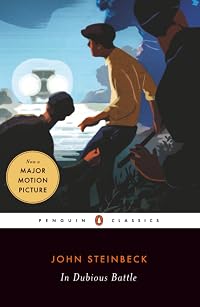
In recent years Steinbeck has been elevated to a more prominent status among American writers of his generation. If not quite at the world-class artistic level of a Hemingway or a Faulkner, he is nonetheless read very widely throughout the world by readers of all ages who consider him one of the most "American" of writers. Born in Salinas County, show more California on February 27, 1902, Steinbeck was of German-Irish parentage. After four years as a special student at Stanford University, he went to New York, where he worked as a reporter and as a hod carrier. Returning to California, he devoted himself to writing, with little success; his first three books sold fewer than 3,000 copies. Tortilla Flat (1935), dealing with the paisanos, California Mexicans whose ancestors settled in the country 200 years ago, established his reputation. In Dubious Battle (1936), a labor novel of a strike and strike-breaking, won the gold medal of the Commonwealth Club of California. Of Mice and Men (1937), a long short story that turns upon a melodramatic incident in the tragic friendship of two farm hands, written almost entirely in dialogue, was an experiment and was dramatized in the year of its publication, winning the New York Drama Critics Circle Award. It brought him fame. Out of a series of articles that he wrote about the transient labor camps in California came the inspiration for his greatest book, The Grapes of Wrath (1939), the odyssey of the Joad family, dispossessed of their farm in the Dust Bowl and seeking a new home, only to be driven on from camp to camp. The fiction is punctuated at intervals by the author's voice explaining this new sociological problem of homelessness, unemployment, and displacement. As the American novel "of the season, probably the year, possibly the decade," it won the Pulitzer Prize in 1940. It roused America and won a broad readership by the unusual simplicity and tenderness with which Steinbeck treated social questions. Even today, The Grapes of Wrath remains alive as a vivid account of believable human characters seen in symbolic and universal terms as well as in geographically and historically specific ones. Ma Joad is one of the most memorable characters in twentieth-century American fiction. It is her courage that sustains the family. Steinbeck's best and most ambitious novel after The Grapes of Wrath is East of Eden (1952), a saga of two American families in California from before the Civil War through World War I. Cannery Row (1945), The Wayward Bus (1947), and Sweet Thursday (1955) are lighter works that find Steinbeck returning to the lighthearted tone of Tortilla Flat as he recounts picaresque adventures of modern-day picaros. The Winter of Our Discontent (1961) struck some reviewers as being appropriately titled because of its despairing treatment of humanity's fall from grace in a wasteland world where money is king. Steinbeck also wrote important nonfiction, including Russian Journal (1948) in collaboration with the photographer Robert Capa; Once There Was a War (1958) and America and Americans (1966), which features pictures by 55 leading photographers and a 70-page essay by Steinbeck. His interest in marine biology led to two books primarily about sea life, Sea of Cortez (1941) (with Edward F. Ricketts) and The Log from the Sea of Cortez (1951). Travels with Charley (1962) is an engaging account of his journey of rediscovery of America, which took him through approximately 40 states. Steinbeck was married three times and died in New York City on December 20, 1968 of heart disease and congestive heart failure. He was 66, and had been a life-long smoker. (Bowker Author Biography) show less
Some Editions
Awards and Honors
Distinctions
Series

Belongs to Publisher Series
Work Relationships
Is contained in
The Grapes of Wrath / The Moon is Down / Cannery Row / East of Eden / Of Mice and Men by John Steinbeck
Cannery Row | East of Eden | Grapes of Wrath | Of Mice and Men | The Pearl | Travels with Charley by John Steinbeck
Has the (non-series) sequel
Has the adaptation
Is abridged in
Common Knowledge
- Canonical title
- Cannery Row
- Original title
- Cannery Row
- Alternate titles*
- Een blik in Cannery Row
- Original publication date
- 1945
- People/Characters
- Doc; Lee Chong; Mack; Hazel; Eddie; Jones (show all 20); Hughie; Whitey; Gay; Dora Flood; Henri (the Painter); Sam Malloy; Mrs. Malloy; Phyllis Mae; Alfred; Horace Abbeville; Mary Talbot; Eva Flanagan; Red Williams; Richard Frost
- Important places
- Monterey, California, USA; Monterey County, California, USA; California, USA
- Related movies
- Cannery Row (1982 | IMDb)
- Dedication
- For
ED RICKETTS
who knows why or should - First words
- Cannery Row in Monterey in California is a poem, a stink, a grating noise, a quality of light, a tone, a habit, a nostalgia, a dream.
- Quotations
- "It has always seemed strange to me," said Doc. "The things we admire in men, kindness and generosity, openness, honesty, understanding and feeling are the comcomitants of failure in our system. And those traits we detest, sh... (show all)arpness, greed, acquisitiveness, meanness, egotism and self-interest are the traits of success. And while men admire the quality of the first they love the produce of the second."
- Last words
- (Click to show. Warning: May contain spoilers.)And behind the glass the rattlesnakes lay still and stared into space with their dusty frowning eyes.
- Original language
- English
*Some information comes from Common Knowledge in other languages. Click "Edit" for more information.
Classifications
Statistics
- Members
- 11,160
- Popularity
- 819
- Reviews
- 214
- Rating
- (4.04)
- Languages
- 21 — Chinese, Czech, Danish, Dutch, English, Estonian, Finnish, French, German, Greek, Hungarian, Indonesian, Italian, Lithuanian, Norwegian (Bokmål), Polish, Portuguese, Spanish, Swedish, Thai, Turkish
- Media
- Paper, Audiobook, Ebook
- ISBNs
- 144
- ASINs
- 118