
On This Page
Description
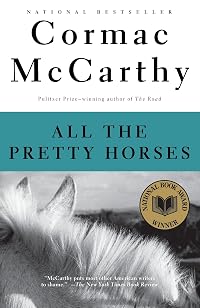
NATIONAL BOOK AWARD WINNER • NATIONAL BESTSELLER • The first volume in the Border Trilogy, from the Pulitzer Prize–winning author of The Road All the Pretty Horses is the tale of John Grady Cole, who at sixteen finds himself at the end of a long line of Texas ranchers, cut off from the only life he has ever imagined for himself. With two companions, he sets off for Mexico on a sometimes idyllic, sometimes comic journey to a place where dreams are paid for in blood.Tags
Recommendations


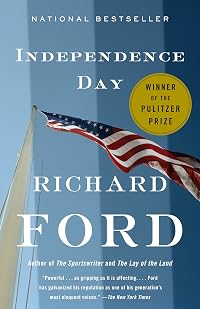
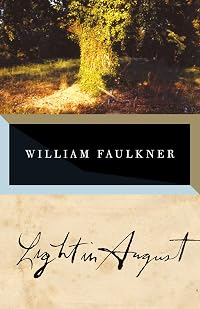
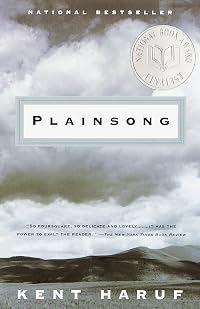
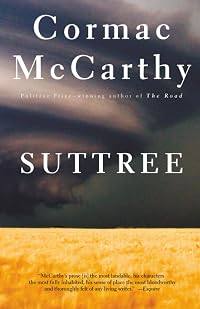


Member Recommendations
mabith McCarthy's border trilogy reminded me so heavily of Steinbeck. I think if you enjoy one author you'll enjoy the other as well.
40
Rob.Larson Much different from anything else, but his writing reminds me of McCarty's style.

Member Reviews
Years ago, I read another Cormac McCarthy novel and thereafter I vowed never again. That novel disgusted me with its dim view of humanity. How could I know All the Pretty Horses was out there? It is an ode to beauty and the greatness of humanity even when life/fate offers us no reward for decency, goodness, and honesty. We follow a young man coming into his own. His innate character makes him a joy to observe. Even his failings reveal his powerful honesty. The courage with which this young man confronts life when so many around him cower from the consequences of facing the truth in their lives. I especially admire the way the author reveals the true nature of his characters through the reactions of the other participants in the story. show more The book that turned me off supposedly has some of the most beautiful prose in English, Blood Meridian. Since I had heard so often the work was brilliant, I assumed I was incapable of appreciating it. I found the said novel shockingly dark even for my cynical worldview, and yet this novel captivated me in a positive and profound way that I can’t describe. There are word pictures of horses painted by an artist who truly loves these magnificent creatures. Specifically, what comes to mind is the passage about why, though horses have a soul, they have no need for heaven. The juxtaposition of horses and humans is fascinating. The novel calls us to live our lives with unflinching integrity. Though we make mistakes, the act of being true to ourselves gives us a nobility akin to the greatest horses. I submit the author tells us anything less and we aren’t living at all. Rather, we are surviving in some lesser state unworthy of our soul and, I submit, unworthy of our Creator. show less
Series: The Border Trilogy (Book 1)
Edition: Harper Audio (2004), Unabridged MP3; 9h46, Narrated by Frank Muller
Original publication date: 1992
I really loved revisiting this book after several years; the audio version worked very well too, with Frank Muller giving lots of colour to these characters. Not only that, but he gave such a sensitive reading that he made the gorgeous passages describing the cinematography, scenery, lighting and supporting characters and 'extras' (in movie-speak) very vivid. I use movie jargon quite on purpose because there's something about McCarthy's prose that brings up clear images in my mind of what he's describing, very much like a cinematic experience, and I say this as someone who has not seen the movie show more version, and also as someone who rarely can imagine the scenes described in books, which might be surprising given I'm a visual artist, but so it is. I also couldn't help but feel this story was closely connected with another beloved Western story, Brokeback Mountain, because of how attune we are to these young boys even though we are never told how they are feeling or processing events, and rather shown with, in the case of John Grady Cole, rather less than more dialogue. Though of course being shown rather than told is the mark of a good writer. The other connection to that other book was that I have seen the movie version of Brokeback Mountain and kept imagining our young hero John Grady as Heath Ledger and the way he portrayed Ennis del Mar, with a similar kind of reserve and perhaps similar looks as well, very attractive, but not in the last self-consciously so and a bit of a scamp.
For those who are not familiar with the story, it is about two boys, ostensibly cousins, both sixteen, sometime in the late 40s leaving home on horseback from their impoverished Texas lives, and in John Grady Cole's case, a broken home, to make their way to Mexico to find work. On their way there, he and Rawlins are joined by a young boy who claims his name is Jimmy Blevins (the name of a radio personality). He claims to be sixteen but is probably no more than thirteen and riding atop a huge bay horse which seems much too fine a specimen to belong to him, and they suspect the boy has stolen him and will probably bring nothing but trouble, so want nothing to do with him. But Blevins follows them doggedly until they are forced to accept him as a travel companion. Eventually the boys lose Blevins along the way (to reveal more would be a big spoiler) and find employment on a large ranch owned by a wealthy, old money, and therefore powerful family. He falls in love at first sight with the owner's daughter, and his love is very much requited so that the two quickly become lovers. The girl's great aunt holds the reins in the family and soon warns off John Grady, though in a most civilized way, by first inviting him to play a game of chess during which she tells him part of her life story, of having been educated in France and being a thinking woman, difficult to accept in society in her days. He doesn't heed her warning and soon enough the boys are arrested under a charge of horse theft and sent to the worst kind of Mexican penitentiary, where they are forced to rely on their survival skills.
I hadn't been as conscious of how much of the story rides on the aunt (pun intended—it is a story involving hoses after all) in the first reading, when I was concentrating on the story from the boy's point of view. Another thing I noticed this time is how almost unbelievably clever and accomplished John Grady is. He's skilled with hoses, which he has a great affinity for and knows how to 'break' in record time to the admiration of all the ranch workers and locals, which in itself is believable enough, but when comes time for him to defend himself and survive against the worst kind of odds, he almost turns into a Western version of James Bond, which is a slight exaggeration since there are no gadgets or tricks or explosions, but at the same time the feats he manages to accomplish against the direst of odds seem almost miraculous, though of course in the deft hands of McCarthy, very much in the realm of possibility, if one throws in that the boy is probably blessed by a good star and protected by the love of a young and beautiful woman.
I remember reading from a softcover edition the first time at first being a little bit daunted by McCarthy's stream of consciousness style, featuring very little punctuation as that style tends to do, but after the first couple of initial pages, which I read over more than once to get used to the tone and rhythm, it flowed very naturally and it was easy enough to let oneself float along in his stream and let the story take hold of the imagination. Does it sound like I loved this novel? That's because I did, and I'm very happy I revisited it before moving on to the next book in the [Border Trilogy], which I hope to do in near future. show less
Edition: Harper Audio (2004), Unabridged MP3; 9h46, Narrated by Frank Muller
Original publication date: 1992
I really loved revisiting this book after several years; the audio version worked very well too, with Frank Muller giving lots of colour to these characters. Not only that, but he gave such a sensitive reading that he made the gorgeous passages describing the cinematography, scenery, lighting and supporting characters and 'extras' (in movie-speak) very vivid. I use movie jargon quite on purpose because there's something about McCarthy's prose that brings up clear images in my mind of what he's describing, very much like a cinematic experience, and I say this as someone who has not seen the movie show more version, and also as someone who rarely can imagine the scenes described in books, which might be surprising given I'm a visual artist, but so it is. I also couldn't help but feel this story was closely connected with another beloved Western story, Brokeback Mountain, because of how attune we are to these young boys even though we are never told how they are feeling or processing events, and rather shown with, in the case of John Grady Cole, rather less than more dialogue. Though of course being shown rather than told is the mark of a good writer. The other connection to that other book was that I have seen the movie version of Brokeback Mountain and kept imagining our young hero John Grady as Heath Ledger and the way he portrayed Ennis del Mar, with a similar kind of reserve and perhaps similar looks as well, very attractive, but not in the last self-consciously so and a bit of a scamp.
For those who are not familiar with the story, it is about two boys, ostensibly cousins, both sixteen, sometime in the late 40s leaving home on horseback from their impoverished Texas lives, and in John Grady Cole's case, a broken home, to make their way to Mexico to find work. On their way there, he and Rawlins are joined by a young boy who claims his name is Jimmy Blevins (the name of a radio personality). He claims to be sixteen but is probably no more than thirteen and riding atop a huge bay horse which seems much too fine a specimen to belong to him, and they suspect the boy has stolen him and will probably bring nothing but trouble, so want nothing to do with him. But Blevins follows them doggedly until they are forced to accept him as a travel companion. Eventually the boys lose Blevins along the way (to reveal more would be a big spoiler) and find employment on a large ranch owned by a wealthy, old money, and therefore powerful family. He falls in love at first sight with the owner's daughter, and his love is very much requited so that the two quickly become lovers. The girl's great aunt holds the reins in the family and soon warns off John Grady, though in a most civilized way, by first inviting him to play a game of chess during which she tells him part of her life story, of having been educated in France and being a thinking woman, difficult to accept in society in her days. He doesn't heed her warning and soon enough the boys are arrested under a charge of horse theft and sent to the worst kind of Mexican penitentiary, where they are forced to rely on their survival skills.
I hadn't been as conscious of how much of the story rides on the aunt (pun intended—it is a story involving hoses after all) in the first reading, when I was concentrating on the story from the boy's point of view. Another thing I noticed this time is how almost unbelievably clever and accomplished John Grady is. He's skilled with hoses, which he has a great affinity for and knows how to 'break' in record time to the admiration of all the ranch workers and locals, which in itself is believable enough, but when comes time for him to defend himself and survive against the worst kind of odds, he almost turns into a Western version of James Bond, which is a slight exaggeration since there are no gadgets or tricks or explosions, but at the same time the feats he manages to accomplish against the direst of odds seem almost miraculous, though of course in the deft hands of McCarthy, very much in the realm of possibility, if one throws in that the boy is probably blessed by a good star and protected by the love of a young and beautiful woman.
I remember reading from a softcover edition the first time at first being a little bit daunted by McCarthy's stream of consciousness style, featuring very little punctuation as that style tends to do, but after the first couple of initial pages, which I read over more than once to get used to the tone and rhythm, it flowed very naturally and it was easy enough to let oneself float along in his stream and let the story take hold of the imagination. Does it sound like I loved this novel? That's because I did, and I'm very happy I revisited it before moving on to the next book in the [Border Trilogy], which I hope to do in near future. show less
I am now officially a member of the Church of Cormac McCarthy, just as I am of the Churches of Steinbeck, of Atwood, of Twain, of Nabokov. Writers who for me can do no wrong.
In this book we meet John Grady Cole, a cowboy of sixteen years. In 1949, his mother has sold off the family ranch, leaving John Grady to his own devices. He sets off from Texas to Mexico with his friend Rawlins, riding their horses through the now fenced and parceled land, carefully dismantling and reattaching fencing as they go. The two end up reluctantly taking on a companion, the younger Jimmy Blevins, a loose cannon, who'll cause them a lot of trouble. South of the border, the country is unfenced and wilder. John Grady and Rawlins end up working as ranch hands. show more Part of their responsibility is to capture and break wild horses. John Grady ends up in a dangerous love affair, before the two young men run afoul of corrupt officials.
I'd call this a coming of age novel, except John Grady is already as seasoned, decent, and mature as any adult you're likely to meet. It's more a story of how the world itself doesn't measure up to the best of us. How the world is harsh. How it tends to knock the good right out of us. Well, it doesn't knock the good out of John Grady. By the end of the story he's troubled by guilt, though, even though he's blameless. He takes on guilt for the way the world is, how it makes a good man feel uneasy and out of place.
John Grady doesn't talk much. But there are three characters who are given a soapbox to speak fascinatingly for several pages. One is a wealthy man who runs a crime cartel from his prison cell. One is an old woman, a free thinker whose revolutionary ideas about her nation have narrowed into preservation of those nearest to her. The other is a judge who, like John Grady, has taken on guilt for things he shouldn't have, and knows it, but still can't shake it.
Strange to say it, but the best among us are the most troubled. They're the ones that are always second guessing themselves. show less
In this book we meet John Grady Cole, a cowboy of sixteen years. In 1949, his mother has sold off the family ranch, leaving John Grady to his own devices. He sets off from Texas to Mexico with his friend Rawlins, riding their horses through the now fenced and parceled land, carefully dismantling and reattaching fencing as they go. The two end up reluctantly taking on a companion, the younger Jimmy Blevins, a loose cannon, who'll cause them a lot of trouble. South of the border, the country is unfenced and wilder. John Grady and Rawlins end up working as ranch hands. show more Part of their responsibility is to capture and break wild horses. John Grady ends up in a dangerous love affair, before the two young men run afoul of corrupt officials.
I'd call this a coming of age novel, except John Grady is already as seasoned, decent, and mature as any adult you're likely to meet. It's more a story of how the world itself doesn't measure up to the best of us. How the world is harsh. How it tends to knock the good right out of us. Well, it doesn't knock the good out of John Grady. By the end of the story he's troubled by guilt, though, even though he's blameless. He takes on guilt for the way the world is, how it makes a good man feel uneasy and out of place.
John Grady doesn't talk much. But there are three characters who are given a soapbox to speak fascinatingly for several pages. One is a wealthy man who runs a crime cartel from his prison cell. One is an old woman, a free thinker whose revolutionary ideas about her nation have narrowed into preservation of those nearest to her. The other is a judge who, like John Grady, has taken on guilt for things he shouldn't have, and knows it, but still can't shake it.
Strange to say it, but the best among us are the most troubled. They're the ones that are always second guessing themselves. show less
This is a story about John Grady, a teenaged boy from Texas who loves horses and the ranch life and when this way of life is threatened after his grandfather dies, together with his friend Rawlins, rides to Mexico. In this journey they have deadly adventures, face imprisonment, and John Grady falls in love and suffers heartbreak. A broad and long adventure.
There are books which when finished feel as though I have emerged from a wrestling match exhausted. It's never really clear who won, and it's not always that the book is bad or particularly difficult. And this book felt like that.
This is the fourth McCarthy book I've read and at this point there are certain things I expect when I open his books. Among them: a wonderful description of show more the landscapes the story is set in; periods and the few commas being all the punctuation there is; some adventure of some kind; and some violence. It's for these reasons that McCarthy's writing is often described as "masculine prose" by some critics. For me, habituation has made some of these things less interesting, especially the violence. There's only so many times knife fights and shootouts can excite me. In fact what maintains my interest in his books is his brilliant depiction of human connection and parts of the human experience, which of course isn't mentioned as much in the blurbs and on the covers of his books, maybe because it's less exciting than horse rides and shootouts and also because it might contradict the "masculine prose" statements.
But take this bit of dialogue I think is really good for instance:
"....That all courage was a form of constancy. That it was always himself that the coward abandoned first. After this all other betrayals came easily.
Parts like this, as well as the telling of the struggle to do what is right, and friendships and human connection is what I like best from McCarthy's work. Maybe it's just personal taste and if I liked horses and guns and fights and adventure I would have liked this even better. show less
There are books which when finished feel as though I have emerged from a wrestling match exhausted. It's never really clear who won, and it's not always that the book is bad or particularly difficult. And this book felt like that.
This is the fourth McCarthy book I've read and at this point there are certain things I expect when I open his books. Among them: a wonderful description of show more the landscapes the story is set in; periods and the few commas being all the punctuation there is; some adventure of some kind; and some violence. It's for these reasons that McCarthy's writing is often described as "masculine prose" by some critics. For me, habituation has made some of these things less interesting, especially the violence. There's only so many times knife fights and shootouts can excite me. In fact what maintains my interest in his books is his brilliant depiction of human connection and parts of the human experience, which of course isn't mentioned as much in the blurbs and on the covers of his books, maybe because it's less exciting than horse rides and shootouts and also because it might contradict the "masculine prose" statements.
But take this bit of dialogue I think is really good for instance:
"....That all courage was a form of constancy. That it was always himself that the coward abandoned first. After this all other betrayals came easily.
Parts like this, as well as the telling of the struggle to do what is right, and friendships and human connection is what I like best from McCarthy's work. Maybe it's just personal taste and if I liked horses and guns and fights and adventure I would have liked this even better. show less
The hardest books to review are those where my personal pleasure contrasts with my objective assessment. This is such a book. There is much to admire, but I never really enjoyed it, and after a while, it felt like an uncomfortable hack across a barren, albeit sometimes beautiful, landscape.
This is a Western, set mostly in Mexico, shortly after WW2. It has all the features you’d expect, told with McCarthy’s harshly poetic prose and minimalist punctuation. There’s also a lot of Spanish vocabulary and dialogue: I got the gist, and it was effective in making me feel like an outsider (like Texans in Mexico and how a couple of characters feel in their own land), but it was also rather frustrating.
Despite the careful, and sometimes show more surprisingly phrased imagery, I often struggled to picture the story, let alone believe the main protagonist was only sixteen. Perhaps I need to watch more vaqueros films.
Ultimately, reading this was akin to having a beautiful smashed plate, one that tells a tale, as Willow Pattern does: there were fragments of beauty, and I could see the overall shape of plate and story, but ultimately, I appreciated isolated pieces rather than the whole.
Image: Broken Willow Pattern china in an old rubbish dump in Sturt National Park, Australia (Source)
Story
John Grady Cole’s grandfather just died and now the family ranch will be sold. John Grady decides to leave Texas for Mexico, to find work on a ranch. He has a natural gift with horses, and persuades his best friend, Lacey Rawlins, to come with him. Before crossing the border, they’re joined by a boy they reckon is only thirteen, who rides a very fine horse, says he’s called Jimmy Blevins, and seems like trouble.
Things happen, but not much happens, except when things happen: breaking horses in, being wrongly accused, travelling long distances in unfamiliar lands, the kindness of strangers, bribes, bars, gun and knife fights, a wealthy ranch, escape, forbidden love, corrupt authority figures, survival, prison, betrayal, loyalty, and people being manipulated - not in that order. The only thing it doesn’t have is native Americans. However, this is not a Western-by-numbers: the varied pacing and crafted descriptions elevate this to the literary shelves.
The story is also layered. There are many occasions when a character tells someone their backstory, which lends a liturgical air of repetition, but 14 pages of Doña Alfonsa’s near monologue was too much: it felt like the printer had accidentally inserted an interesting short story.
Blood
The narrative is steeped in blood, yet it’s not especially gory or graphic. At first, it’s metaphorical; later real blood is added to the mix. These are just a few of those on the first four pages:
• “The wind was much abated and it was very cold and the sun sat blood red and elliptic under the reefs of bloodred cloud before him.”
• “The women and children and women with children at their breasts all of them pledged in blood and redeemable in blood only.”
• “What he loved in horses was what he loved in men, the blood and the heat of the blood that ran them.”
Image: Cowboy riding into a blood-red sunset (Source)
Judgement
Before leaving, John Grady goes to the theatre:
“He’d the notion that there would be something in the story itself to tell him about the way the world was or was becoming but there was not.”
Perhaps that disappointment cements his resolve to find meaning elsewhere, although it’s Rawlins who is the philosophical one:
“Judgement day, said Rawlins. You believe in all that?
I dont know. Yeah, I reckon. You?”
The story is marked by choices and conflicts: Mexicans and Americans, man and beast, rich and poor, male and female, powerful and subordinate, dreams and reality, duty and freedom, fate and chance. Mostly, John Grady acts more by instinct than design (he is only sixteen). However, this is a story of growing to adulthood, and he becomes more thoughtful:
“He contemplated the wildness about him, the wildness within.”
Towards the end, a discussion with an actual judge determines John Grady’s next choice.
Image: A pair of horses in Senora, Mexico, with mountains in the background (though Senora is nearer Arizona than Texas) (Source)
This is my last McCarthy
I was wowed by the sparse and agonising beauty of my first McCarthy, The Road, which I reviewed HERE in 2009.
A year later, I picked up Outer Dark, which I reviewed HERE. I really disliked it and decided McCarthy wasn’t for me.
In the decade since, several people on GR and elsewhere nudged me to try him again, specifically this one. When someone brought a copy to a “book chat and borrow” group, I decided now was the time. I’m glad I read it. It’s a good book. And I am now confident that there are other authors I prefer to devote my time to, The Road notwithstanding.
Another novel, loosely in the Western genre, and also a coming-of-age trip, that I really enjoyed, is John Williams’ Butcher’s Crossing, which I reviewed HERE (he’s most famous for Stoner).
Quotes
• “There was nothing along the road save the country it traversed and there was nothing in the country at all.”
• “Rawlins eyed balefully that cauterized terrain.”
• “He rode with the sun coppering his face and the red wind blowing out of the west.”
• “Shrouded in the black thunderheads the distant lightning glowed mutely like welding seen through foundry smoke.”
• “Those eyes had altered the world forever in the space of a heartbeat.”
• “She spoke an english learned largely from schoolbooks and he tested each phrase for the meanings he wished to hear.”
• “At sundown a troubled light. The dark jade shapes of the lagunilas below them lay in the floor of the desert savannah like piercings through another sky. The laminar bands of color to the west bleeding out under the hammered clouds. A sudden violetcolored hooding of the earth.”
• “Sweeter for the larceny of time and flesh, sweeter for the betrayal.” [stolen kisses]
• “There seemed insufficient substance to him to be the object of men’s wrath.”
• “The moon that was already risen raced among the high wires by the highway side like a single silver music note burning in the constant and lavish dark.”
• “She tells me I must be my own person and with every breath she tries to make me her person.” show less
This is a Western, set mostly in Mexico, shortly after WW2. It has all the features you’d expect, told with McCarthy’s harshly poetic prose and minimalist punctuation. There’s also a lot of Spanish vocabulary and dialogue: I got the gist, and it was effective in making me feel like an outsider (like Texans in Mexico and how a couple of characters feel in their own land), but it was also rather frustrating.
Despite the careful, and sometimes show more surprisingly phrased imagery, I often struggled to picture the story, let alone believe the main protagonist was only sixteen. Perhaps I need to watch more vaqueros films.
Ultimately, reading this was akin to having a beautiful smashed plate, one that tells a tale, as Willow Pattern does: there were fragments of beauty, and I could see the overall shape of plate and story, but ultimately, I appreciated isolated pieces rather than the whole.
Image: Broken Willow Pattern china in an old rubbish dump in Sturt National Park, Australia (Source)
Story
John Grady Cole’s grandfather just died and now the family ranch will be sold. John Grady decides to leave Texas for Mexico, to find work on a ranch. He has a natural gift with horses, and persuades his best friend, Lacey Rawlins, to come with him. Before crossing the border, they’re joined by a boy they reckon is only thirteen, who rides a very fine horse, says he’s called Jimmy Blevins, and seems like trouble.
Things happen, but not much happens, except when things happen: breaking horses in, being wrongly accused, travelling long distances in unfamiliar lands, the kindness of strangers, bribes, bars, gun and knife fights, a wealthy ranch, escape, forbidden love, corrupt authority figures, survival, prison, betrayal, loyalty, and people being manipulated - not in that order. The only thing it doesn’t have is native Americans. However, this is not a Western-by-numbers: the varied pacing and crafted descriptions elevate this to the literary shelves.
The story is also layered. There are many occasions when a character tells someone their backstory, which lends a liturgical air of repetition, but 14 pages of Doña Alfonsa’s near monologue was too much: it felt like the printer had accidentally inserted an interesting short story.
Blood
The narrative is steeped in blood, yet it’s not especially gory or graphic. At first, it’s metaphorical; later real blood is added to the mix. These are just a few of those on the first four pages:
• “The wind was much abated and it was very cold and the sun sat blood red and elliptic under the reefs of bloodred cloud before him.”
• “The women and children and women with children at their breasts all of them pledged in blood and redeemable in blood only.”
• “What he loved in horses was what he loved in men, the blood and the heat of the blood that ran them.”
Image: Cowboy riding into a blood-red sunset (Source)
Judgement
Before leaving, John Grady goes to the theatre:
“He’d the notion that there would be something in the story itself to tell him about the way the world was or was becoming but there was not.”
Perhaps that disappointment cements his resolve to find meaning elsewhere, although it’s Rawlins who is the philosophical one:
“Judgement day, said Rawlins. You believe in all that?
I dont know. Yeah, I reckon. You?”
The story is marked by choices and conflicts: Mexicans and Americans, man and beast, rich and poor, male and female, powerful and subordinate, dreams and reality, duty and freedom, fate and chance. Mostly, John Grady acts more by instinct than design (he is only sixteen). However, this is a story of growing to adulthood, and he becomes more thoughtful:
“He contemplated the wildness about him, the wildness within.”
Towards the end, a discussion with an actual judge determines John Grady’s next choice.
Image: A pair of horses in Senora, Mexico, with mountains in the background (though Senora is nearer Arizona than Texas) (Source)
This is my last McCarthy
I was wowed by the sparse and agonising beauty of my first McCarthy, The Road, which I reviewed HERE in 2009.
A year later, I picked up Outer Dark, which I reviewed HERE. I really disliked it and decided McCarthy wasn’t for me.
In the decade since, several people on GR and elsewhere nudged me to try him again, specifically this one. When someone brought a copy to a “book chat and borrow” group, I decided now was the time. I’m glad I read it. It’s a good book. And I am now confident that there are other authors I prefer to devote my time to, The Road notwithstanding.
Another novel, loosely in the Western genre, and also a coming-of-age trip, that I really enjoyed, is John Williams’ Butcher’s Crossing, which I reviewed HERE (he’s most famous for Stoner).
Quotes
• “There was nothing along the road save the country it traversed and there was nothing in the country at all.”
• “Rawlins eyed balefully that cauterized terrain.”
• “He rode with the sun coppering his face and the red wind blowing out of the west.”
• “Shrouded in the black thunderheads the distant lightning glowed mutely like welding seen through foundry smoke.”
• “Those eyes had altered the world forever in the space of a heartbeat.”
• “She spoke an english learned largely from schoolbooks and he tested each phrase for the meanings he wished to hear.”
• “At sundown a troubled light. The dark jade shapes of the lagunilas below them lay in the floor of the desert savannah like piercings through another sky. The laminar bands of color to the west bleeding out under the hammered clouds. A sudden violetcolored hooding of the earth.”
• “Sweeter for the larceny of time and flesh, sweeter for the betrayal.” [stolen kisses]
• “There seemed insufficient substance to him to be the object of men’s wrath.”
• “The moon that was already risen raced among the high wires by the highway side like a single silver music note burning in the constant and lavish dark.”
• “She tells me I must be my own person and with every breath she tries to make me her person.” show less
All the Pretty Horses opens with the death of John Grady Cole’s grandfather on his family’s ranch in San Angelo, Texas, in 1949. His parents are divorced. His mother owns the ranch and is selling it. Feeling a sense of loss, sixteen-year-old John Grady convinces his friend, Lacey Rawlins, to accompany him to Mexico to continue the ranching life. This novel is both a coming-of-age story and a quest of personal discovery. Two naïve young men travel on horseback into the desert wilderness of western Texas and northern Mexico. They encounter a runaway and find work. John Grady meets a young woman and interacts with her family members. They experience life in both its decency and violent ugliness, while maturing and learning hard show more lessons in the process. Themes include destiny, loyalty, integrity, friendship, freedom, courage, and powerlessness in the face of injustice.
John Grady is a likeable protagonist bordering on heroic. He operates from an internal code of honor and is a natural leader. He has a natural affinity with horses, and the writing contains moving descriptions of the bonds between humans and these intelligent animals. There are numerous references to the specific terminology of horsemanship. Horses become one of many recurring images throughout the novel. For example, “The horse had a good natural gait and as he rode he talked to it and told it things about the world that were true in his experience and he told it things he thought could be true to see how they would sound if they were said. He told the horse why he liked it and why he’d chosen it to be his horse and he said that he would allow no harm to come to it.”
The writing style is mostly spare but interspersed with lengthy stream-of-consciousness descriptions. The harsh beauty of the land is an essential component of the trials the characters must surmount. Dialogue is generally brief and direct. McCarthy does not employ apostrophes or quotation marks, and forms compound words out of those normally separated. He liberally inserts untranslated Spanish phrases, keeping with the bilingual nature of the protagonist and life along the U.S.-Mexican border. The story is told in four parts with no chapter breaks. The first three sections flow naturally. The fourth section interrupts this flow with several lengthy expository passages. The tone often veers toward the bleak and pessimistic, particularly regarding the exploration of fate, chance, and free will in life. The various characters express different perspectives about life, some hopeful, some deterministic. It is mostly character-based but interwoven with rapid action segments. The relationship between John Grady and the young woman that drives a good portion of the story could have been more fully developed.
McCarthy creates a particularly memorable character in John Grady. He encounters brutality, injustice, chaos, and emerges on the other side a changed person, stronger, wiser and aware of his own potential for violent action. McCarthy explores the enduring questions of personal identity each person must confront and provides many opportunities for introspection. Recommended to readers who appreciate “westerns” with philosophical overtones. show less
John Grady is a likeable protagonist bordering on heroic. He operates from an internal code of honor and is a natural leader. He has a natural affinity with horses, and the writing contains moving descriptions of the bonds between humans and these intelligent animals. There are numerous references to the specific terminology of horsemanship. Horses become one of many recurring images throughout the novel. For example, “The horse had a good natural gait and as he rode he talked to it and told it things about the world that were true in his experience and he told it things he thought could be true to see how they would sound if they were said. He told the horse why he liked it and why he’d chosen it to be his horse and he said that he would allow no harm to come to it.”
The writing style is mostly spare but interspersed with lengthy stream-of-consciousness descriptions. The harsh beauty of the land is an essential component of the trials the characters must surmount. Dialogue is generally brief and direct. McCarthy does not employ apostrophes or quotation marks, and forms compound words out of those normally separated. He liberally inserts untranslated Spanish phrases, keeping with the bilingual nature of the protagonist and life along the U.S.-Mexican border. The story is told in four parts with no chapter breaks. The first three sections flow naturally. The fourth section interrupts this flow with several lengthy expository passages. The tone often veers toward the bleak and pessimistic, particularly regarding the exploration of fate, chance, and free will in life. The various characters express different perspectives about life, some hopeful, some deterministic. It is mostly character-based but interwoven with rapid action segments. The relationship between John Grady and the young woman that drives a good portion of the story could have been more fully developed.
McCarthy creates a particularly memorable character in John Grady. He encounters brutality, injustice, chaos, and emerges on the other side a changed person, stronger, wiser and aware of his own potential for violent action. McCarthy explores the enduring questions of personal identity each person must confront and provides many opportunities for introspection. Recommended to readers who appreciate “westerns” with philosophical overtones. show less
All the Pretty Horses is not Cormac McCarthy as writer (Blood Meridian) or as storyteller (The Road) or as entertainer (No Country for Old Men, after a fashion) but as blacksmith. It feels as though it is something forged out of iron rather than written, and McCarthy does concern himself here with words like blood and stone and death and honour and country and all those sorts of things that male writers get grave and earnest about. And like iron, All the Pretty Horses is heavy and dark and useful and it has quality, but – and this is the important thing about iron – it is not a patch on steel.
For this wrought-iron novel does have plenty wrong with it. For one thing, it is overwrought. McCarthy has always been a good descriptive show more writer with a wide vocabulary but here he sometimes gets bogged down in his affectations. His infamous insistence on not using speech marks doesn't really hinder this book so much, but he does use a lot of untranslated Spanish in his dialogue. This would be fine for a line or two but sometimes whole conversations are in Spanish and you don't know what is happening (unless you speak Spanish, of course).
McCarthy also develops a little quirk in this book where he over-uses polysyndeton, which is the writing technique when you have long sentences that just keep going and they barrel into one another and there are no full stops and no punctuation to break it up and it goes on for a whole paragraph and it is good and it is fine and you wonder why they are not all like that sometimes and he stood his horse at the top of the canyon and looked down. (Like that, you see?) It seems like McCarthy is going for something Hemingway-esque but he doesn't reach it. He uses it too often and it seems clunky, whereas the technique is most effective when used sparingly (as Hemingway's body of work shows).
McCarthy's signature moves are also rather hit-and-miss. "He lay a long time listening to the others breathing in their sleep while he contemplated the wildness about him, the wildness within" (pg. 62) is rather clunky, and is far from alone in this, but then just a few pages later, McCarthy gives us something rich and darkly evocative: "Shrouded in the black thunderheads the distant lightning glowed mutely like welding seen through foundry smoke. As if repairs were under way at some flawed place in the iron dark of the world" (pg. 69). His blood-and-stone philosophizing does come good in the end, but I should emphasize that it is the end. For most of the book some of this sort of thing borders on sophistry and just sounds cool and looks cool on the page without meaning anything, and so the quality of the book is rather top-heavy (end-heavy?)
Looked at coldly, there are plenty of other things to be disappointed in. The motivations of the characters are often either contradictory or ignored altogether (not helped by the taciturn nature of our Western male archetype characters) and it's hard to get invested in the plot when you don't know why they are in a certain place or why they have decided to stay there. The action scenes towards the end are hard to follow (with the exception of the prison fight) and the love story with Alejandra – considered central to John Grady's arc – has no development to it whatsoever. (Honestly, I think they walked past each other once or twice on a road and made eye contact and all of a sudden they're doomed lovers who can't live without each other.) There were minor characters re-introduced in the later parts of the novel who I think McCarthy expected me to remember, when all I remember was that they might have handed our protagonist the reins to a horse or something back on page 80.
The book does have plenty that goes right with it too; its blood-and-stone philosophizing does provide a good dose of classic Cormac McCarthy, and the traditional Western tropes which he deploys are delivered well and perhaps remain timely today, not least the trope of honest, hard-working men trying to stay true to themselves and struggling to find a place in a world that is changing and leaving them behind. As an experience, it feels regal – or high-falutin', since we're talking about a Western – and this probably helps with its literary reputation among professional reviewers, and it also ends strongly, which I imagine does much to encourage favourable responses from the more casual reviewers. It has the occasional choice line, and these become a full meal by the final part, but All the Pretty Horses is one of the times where McCarthy's affectations hold him back rather than fire his prose. The book feels written rather than lived, if you take my meaning. There is a good, honest modern Western to be found in here, but only if the reader is prepared to self-edit. show less
For this wrought-iron novel does have plenty wrong with it. For one thing, it is overwrought. McCarthy has always been a good descriptive show more writer with a wide vocabulary but here he sometimes gets bogged down in his affectations. His infamous insistence on not using speech marks doesn't really hinder this book so much, but he does use a lot of untranslated Spanish in his dialogue. This would be fine for a line or two but sometimes whole conversations are in Spanish and you don't know what is happening (unless you speak Spanish, of course).
McCarthy also develops a little quirk in this book where he over-uses polysyndeton, which is the writing technique when you have long sentences that just keep going and they barrel into one another and there are no full stops and no punctuation to break it up and it goes on for a whole paragraph and it is good and it is fine and you wonder why they are not all like that sometimes and he stood his horse at the top of the canyon and looked down. (Like that, you see?) It seems like McCarthy is going for something Hemingway-esque but he doesn't reach it. He uses it too often and it seems clunky, whereas the technique is most effective when used sparingly (as Hemingway's body of work shows).
McCarthy's signature moves are also rather hit-and-miss. "He lay a long time listening to the others breathing in their sleep while he contemplated the wildness about him, the wildness within" (pg. 62) is rather clunky, and is far from alone in this, but then just a few pages later, McCarthy gives us something rich and darkly evocative: "Shrouded in the black thunderheads the distant lightning glowed mutely like welding seen through foundry smoke. As if repairs were under way at some flawed place in the iron dark of the world" (pg. 69). His blood-and-stone philosophizing does come good in the end, but I should emphasize that it is the end. For most of the book some of this sort of thing borders on sophistry and just sounds cool and looks cool on the page without meaning anything, and so the quality of the book is rather top-heavy (end-heavy?)
Looked at coldly, there are plenty of other things to be disappointed in. The motivations of the characters are often either contradictory or ignored altogether (not helped by the taciturn nature of our Western male archetype characters) and it's hard to get invested in the plot when you don't know why they are in a certain place or why they have decided to stay there. The action scenes towards the end are hard to follow (with the exception of the prison fight) and the love story with Alejandra – considered central to John Grady's arc – has no development to it whatsoever. (Honestly, I think they walked past each other once or twice on a road and made eye contact and all of a sudden they're doomed lovers who can't live without each other.) There were minor characters re-introduced in the later parts of the novel who I think McCarthy expected me to remember, when all I remember was that they might have handed our protagonist the reins to a horse or something back on page 80.
The book does have plenty that goes right with it too; its blood-and-stone philosophizing does provide a good dose of classic Cormac McCarthy, and the traditional Western tropes which he deploys are delivered well and perhaps remain timely today, not least the trope of honest, hard-working men trying to stay true to themselves and struggling to find a place in a world that is changing and leaving them behind. As an experience, it feels regal – or high-falutin', since we're talking about a Western – and this probably helps with its literary reputation among professional reviewers, and it also ends strongly, which I imagine does much to encourage favourable responses from the more casual reviewers. It has the occasional choice line, and these become a full meal by the final part, but All the Pretty Horses is one of the times where McCarthy's affectations hold him back rather than fire his prose. The book feels written rather than lived, if you take my meaning. There is a good, honest modern Western to be found in here, but only if the reader is prepared to self-edit. show less
Members
- Recently Added By
Published Reviews
ThingScore 75
You can’t just nip at darkness, so when you read this book, from page one you feel a threat following you, some animistic urging that keeps you going by the way McCarthy manipulates your demonic love of the sounds of speech.
added by Shortride
All the Pretty Horses may indicate McCarthy's desire to come in out of the cold of those Tennessee mountain winters, but his imagination is at its best there with Arthur Ownby or with the monstrous Judge of Blood Meridian drowning dogs. He is best with what nature gives or imposes, rather than with the observations of culture.
added by Shortride
The magnetic attraction of Mr. McCarthy's fiction comes first from the extraordinary quality of his prose; difficult as it may sometimes be, it is also overwhelmingly seductive. Powered by long, tumbling many-stranded sentences, his descriptive style is elaborate and elevated, but also used effectively to frame realistic dialogue, for which his ear is deadly accurate.
added by Shortride
Lists

The Guardian's 1000 Novels Everyone Must Read
1,005 works; 547 members

1001 Books You Must Read Before You Die
1,448 works; 1,131 members

Great American Novels
158 works; 42 members

Recommend the 20 best books you've read in the last five years
2,168 works; 601 members

Best Contemporary Literary Fiction (Around the Last 30 Years)
388 works; 123 members

Southern Fiction
212 works; 52 members

National Book Award - Fiction
78 works; 10 members

Best Westerns
20 works; 6 members

Unread books
1,063 works; 87 members

Novels from The Guardian's Great American Novelist Tournament
148 works; 24 members
Historical Fiction
889 works; 91 members

Top Five Books of 2014
1,064 works; 398 members
20th Century Literature
1,161 works; 54 members

Books Set in Texas
34 works; 8 members
Fiction For Men
142 works; 11 members

Top Five Books of 2015
811 works; 241 members

Watched the Movie, Probably Won't Read the Book
185 works; 34 members

Blue Pyramid 1,276 Best Books of All Time
1,248 works; 32 members

The American West
18 works; 2 members

Adult Books for YA Readers
194 works; 6 members

A Novel Cure
742 works; 23 members
SHOULD Read Books!
354 works; 9 members

Books Featured on Readers' Review of the Diane Rehm Show
161 works; 8 members

Julie Parson’s Old Books
52 works; 4 members
Literary Travelogue of the United States Challenge
133 works; 6 members
American Lit for Eng 11 Research Project
368 works; 6 members
The Complete Rory Gilmore Reading List
506 works; 5 members

Top Five Books of 2024
795 works; 264 members

Read with a Friend
17 works; 1 member
Books That Made Us Cry
278 works; 145 members

Top Five Books of 2023
767 works; 317 members

AP Lit
363 works; 6 members

Books We Love to Reread
688 works; 296 members
Rory Gilmore Reading Challenge
34 works; 2 members

National Book Award winners
65 works; 11 members
Rory Gilmore Challenge 1-100
27 works; 1 member

Adult Stories Involving Animals
76 works; 6 members

Books Read in 2011
684 works; 20 members

Books I Own But Haven't Read
144 works; 2 members

Best Horse Stories or "Back in the Saddle Again"
82 works; 17 members
The American Experience
173 works; 18 members

Nineties
43 works; 10 members

Cormac McCarthy books
13 works; 1 member

NPRs audience picks: 100 best beach reads
105 works; 12 members
Talk Discussions
Past Discussions
All the Pretty Horses likely coming in Folio Society Devotees (August 2024)
Author Information

36+ Works 104,620 Members
Some Editions
Awards and Honors
Awards
Distinctions
Notable Lists
Series

Belongs to Publisher Series
Work Relationships
Is contained in
Has the adaptation
Common Knowledge
- Canonical title
- All the Pretty Horses
- Original title
- All the Pretty Horses
- Alternate titles*
- Кони, кони...
- Original publication date
- 1992-05-11
- People/Characters
- John Grady Cole; Lacey Rawlins; Jimmy Blevins; Alejandra Rocha
- Important places
- San Angelo, Texas, USA; Coahuila, Mexico; Mexico; Texas, USA; Saltillo, Coahuila, Mexico; Zacatecas, Zacatecas, Mexico
- Related movies
- All the Pretty Horses (2000 | IMDb)
- First words
- The candleflame and the image of the candleflame caught in the pierglass twisted and righted when he entered the hall and again when he shut the door.
- Quotations
- There were storms to the south and masses of clouds that moved slowly along the horizon with their long dark tendrils trailing in the rain. That night they camped on a ledge of rock above the plains and watched the lightning ... (show all)all along the horizon provoke from the seamless dark the distant mountain ranges again and again. (p. 93 of original ed.)
The boy who rode on slightly before him sat a horse not only as if he'd been born to it which he was but as if he were begot by malice or mischance into some queer land where horses never were he would have found them anyway.
He thought that in the beauty of the world hid a secret. He thought the world’s heart beat at some terrible cost and that the world’s pain and its beauty moved in a relationship of diverging equity and that in this headlo... (show all)ng deficit the blood of multitudes might ultimately be exacted for the vision of a single flower.
Scars have a strange power to remind us of our past. - Last words
- (Click to show. Warning: May contain spoilers.)Passed and paled into the darkening land, the world to come.
- Publisher's editor
- Fisketjon, Gary
- Original language
- English
*Some information comes from Common Knowledge in other languages. Click "Edit" for more information.
Classifications
Statistics
- Members
- 12,300
- Popularity
- 689
- Reviews
- 273
- Rating
- (3.97)
- Languages
- 20 — Catalan, Czech, Danish, Dutch, English, Estonian, Finnish, French, German, Hebrew, Hungarian, Italian, Norwegian (Bokmål), Polish, Romanian, Russian, Spanish, Swedish, Turkish, Portuguese (Portugal)
- Media
- Paper, Audiobook, Ebook
- ISBNs
- 107
- UPCs
- 2
- ASINs
- 46