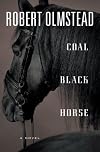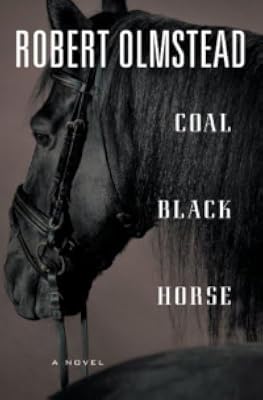
Coal Black Horse
by Robert Olmstead
On This Page
Description
Fiction. Literature. HTML:When Robey Childs's mother has a premonition about her husband, a soldier fighting in the Civil War, she does the unthinkable: she sends her only child to find his father on the battlefield and bring him home.At fourteen, wearing the coat his mother sewed to ensure his safety—blue on one side, gray on the other— Robey thinks he's off on a great adventure. But not far from home, his horse falters and he realizes the enormity of his task. It takes the gift of a show more powerful and noble coal black horse to show him how to undertake the most important journey of his life: with boldness, bravery, and self-posession.
Coal Black Horse joins the pantheon of great war novels—All Quiet on the Western Front, The Red Badge of Courage, The Naked and the Dead. show less
Tags
Recommendations

Member Reviews
Coming of age story of fourteen-year-old Robey Childs, whose mother sends him to find his father on the battlefields of the American Civil War. Robey rides the titular coal black horse to attempt to locate his father and bring him home. He travels with a reversible coat of blue and grey to blend in with either side. He faces incredible challenges and dangerous situations. His horse has a sense for upcoming threats, and the two travelers develop a close bond. As they journey through Virginia and Pennsylvania, Robey encounters both the best and worst of human nature. He sees horrible scenes of the outcome of battles, scavengers on the battlefield, and people out to profit from the misfortunes of others, but also finds helpfulness and show more kindness. Robey learns much about himself in the process. Olmstead employs lush descriptions of the landscape, as well as grisly scenes that depict the horrors of war. The historical context is realistically portrayed. Robey is a sympathetic character, and it is easy to root for him to succeed. I can’t say I “enjoyed” this book, but it is a worthy addition to the canon of fact-based fiction of the American Civil War. show less
A story about one young man during the US Civil War, this is a book that needs to be read twice in a row.
In the first reading, the story is gripping as Robey leaves his quiet, loving home to bring his father back from the war and then encounters all the dangers, horrors and evils that bred in war. Your chest gets so tight that it aches and you can hardly breathe as he begins to change in order to survive the dangers, both physical and mental, that he encounters along the way. He learns not to trust blindly, to steal and even to kill. He leaves home a young teen, not only in years but in understanding and returns home still a teen in years but a grown man in understanding. And even while you are in the grips of the story you are aware show more that you are reading a book of exceptional beauty.
And that is why you must reread. To savor, to inhale the exquisite prose of this book. I am sure that someone else could have taken this tale and written a 500 page novel that would not leave you as awe-struck as this thin book does. Each word is so carefully chosen, so perfectly placed that a masterpiece emerges and the book enters not only your mind, but also your heart.
The book is very graphic in describing the horrors of the aftermath of Gettysburg (in truth, any battle in any war). And well it should be, for the truth of the scene is horror and to tell it less is to take away the need for Robey's changes. It also makes war 'civilized' which it is not and takes away our need to understand that. show less
In the first reading, the story is gripping as Robey leaves his quiet, loving home to bring his father back from the war and then encounters all the dangers, horrors and evils that bred in war. Your chest gets so tight that it aches and you can hardly breathe as he begins to change in order to survive the dangers, both physical and mental, that he encounters along the way. He learns not to trust blindly, to steal and even to kill. He leaves home a young teen, not only in years but in understanding and returns home still a teen in years but a grown man in understanding. And even while you are in the grips of the story you are aware show more that you are reading a book of exceptional beauty.
And that is why you must reread. To savor, to inhale the exquisite prose of this book. I am sure that someone else could have taken this tale and written a 500 page novel that would not leave you as awe-struck as this thin book does. Each word is so carefully chosen, so perfectly placed that a masterpiece emerges and the book enters not only your mind, but also your heart.
The book is very graphic in describing the horrors of the aftermath of Gettysburg (in truth, any battle in any war). And well it should be, for the truth of the scene is horror and to tell it less is to take away the need for Robey's changes. It also makes war 'civilized' which it is not and takes away our need to understand that. show less
I wish I could say this was a great book. It almost gets there. Reading this I added some obscure words to my vocabulary and I could appreciate the skill and dexterity the author displays in telling the story set during the American Civil War. I also didn't add lots of words to my vocab since I preferred to read the novel rather than repeatedly going to the dictionary. End of very small silly rant. Oh, a familiarity with horse anatomy will help too.
The young boy Robey Childs that we meet at the beginning of this tale is sent by his mother Hettie to retrieve his father from war once she knows of the death of Thomas Jackson. The boy, 14 years of age, goes out from the hollow to a world he has never seen. The story is a powerful one with show more a variety of interesting and mostly unsavory characters. The story is not really about a "Coal Black Horse" ... It is about the timeless horrors of war and the timeless inhumanity of man.
As an aside, many years ago I visited the building and I saw the bed where TJ Jackson died, after being accidentally shot by his own soldiers. To Hettie Childs, the death of Jackson in May 1863 meant the mistake of war was evident and the war was lost and to be done with. The battle of Gettysburg would come less than 2 months later. Robey is told he must find his father and bring him home before that. Hettie, you see, has a gift of sight and magically knew that Jackson had just died and something bad was gonna happen in two months.
Overall I'd say this was a very good read on a par with great Civil War fiction like Cold Mountain. There is some graphic, ugly violence in here. There is also lyricical poetic imagery that lovers of such might not want to miss.
"He let float in the dark air his free hand and then raised it up and reached to the sky where his fingers enfolded a flickering red star. The star was warm in his hand and beat with the pulse of a frog or a songbird held in your palm. He caressed the star and let it ride in his palm and then he carried the star to his mouth where it tasted like sugar before he swallowed it."
Recommended show less
The young boy Robey Childs that we meet at the beginning of this tale is sent by his mother Hettie to retrieve his father from war once she knows of the death of Thomas Jackson. The boy, 14 years of age, goes out from the hollow to a world he has never seen. The story is a powerful one with show more a variety of interesting and mostly unsavory characters. The story is not really about a "Coal Black Horse" ... It is about the timeless horrors of war and the timeless inhumanity of man.
As an aside, many years ago I visited the building and I saw the bed where TJ Jackson died, after being accidentally shot by his own soldiers. To Hettie Childs, the death of Jackson in May 1863 meant the mistake of war was evident and the war was lost and to be done with. The battle of Gettysburg would come less than 2 months later. Robey is told he must find his father and bring him home before that. Hettie, you see, has a gift of sight and magically knew that Jackson had just died and something bad was gonna happen in two months.
Overall I'd say this was a very good read on a par with great Civil War fiction like Cold Mountain. There is some graphic, ugly violence in here. There is also lyricical poetic imagery that lovers of such might not want to miss.
"He let float in the dark air his free hand and then raised it up and reached to the sky where his fingers enfolded a flickering red star. The star was warm in his hand and beat with the pulse of a frog or a songbird held in your palm. He caressed the star and let it ride in his palm and then he carried the star to his mouth where it tasted like sugar before he swallowed it."
Recommended show less
A classic coming-of-age tale set in the horror of the American Civil War.
After hearing of the death of Stonewall Jackson, Hettie Childs sends her 14 year old son Robey off to find his father, who is fighting with Lee’s army. A neighbor gives him a magnificent coal black horse and a pistol, warning Robey that he will have to learn much—and by implication mature into adulthood—quickly if he is to survive his quest.
So equipped, Robey sets off from what is probably one of the Shenandoah Mountain ranges in West Virginia, heading vaguely east towards the Rappahanock, where he knows that there are armies fighting. Along the way, he witnesses horrors for which his isolation in his mountain home have not prepared him, among which is a rape show more he could but does not stop.
But always missing an encounter with the army, he goes ever northward—to the aftermath of the carnage of Gettysburg. There he finds his father but completes the loss of his faith in God and the trustworthiness of any member of the human race.
The first part of the book, Robey’s journey through the wilderness of West Virginia and the beginning of the lowlands, is utterly lyrical, Robey seeming to move through a dream landscape that represents the innocence of his childhood.
But as he meets up with the reality of the war, the language changes as Robey loses his naiveté and starts his rite of passage. No longer a beautiful dream, his surroundings take on the quality of a nightmare. As his journey ends, the narrative style becomes quiet, solid—and mature, in that Robey no longer allows events to run his life but makes the decisions and acts as he needs to in order to survive and protect those he loves.
This is an excellent book, beautifully written, on an age-old theme. Highly recommended. show less
After hearing of the death of Stonewall Jackson, Hettie Childs sends her 14 year old son Robey off to find his father, who is fighting with Lee’s army. A neighbor gives him a magnificent coal black horse and a pistol, warning Robey that he will have to learn much—and by implication mature into adulthood—quickly if he is to survive his quest.
So equipped, Robey sets off from what is probably one of the Shenandoah Mountain ranges in West Virginia, heading vaguely east towards the Rappahanock, where he knows that there are armies fighting. Along the way, he witnesses horrors for which his isolation in his mountain home have not prepared him, among which is a rape show more he could but does not stop.
But always missing an encounter with the army, he goes ever northward—to the aftermath of the carnage of Gettysburg. There he finds his father but completes the loss of his faith in God and the trustworthiness of any member of the human race.
The first part of the book, Robey’s journey through the wilderness of West Virginia and the beginning of the lowlands, is utterly lyrical, Robey seeming to move through a dream landscape that represents the innocence of his childhood.
But as he meets up with the reality of the war, the language changes as Robey loses his naiveté and starts his rite of passage. No longer a beautiful dream, his surroundings take on the quality of a nightmare. As his journey ends, the narrative style becomes quiet, solid—and mature, in that Robey no longer allows events to run his life but makes the decisions and acts as he needs to in order to survive and protect those he loves.
This is an excellent book, beautifully written, on an age-old theme. Highly recommended. show less
Robey Child's mother instructs him to find his father on the Civil War battlefield and bring him home. What follows is an extremely well-written historical novel and coming of age tale. During his journey, Robey is exposed to the best and worst of human nature, from the murderous deceptions of a wartime scavenger to the fatherly kindnesses of a Union officer, and he is forced to examine his own capacity for cruelty, cowardice, bravery, and tenacity in the wake of war's horror.
This book was a winner on four fronts:
1. The plot line was an engaging page-turner. I was totally caught up in the twists and turns of Robey's journey, and couldn't wait to find out what would happen to him and his beloved horse from chapter to chapter.
2. The show more language of the book is beautiful. The author's lush description of Robey's initial descent from his home high in the mountains into the river plain below was gorgeous -- it read like poetry.
3. For those interested in the historical aspects of the novel, Olmstead's prose conveys a sensory immediacy that is stunning. The reader will feel like he/she actually walked the fields of Gettysburg and experienced the tastes, smells, and hellish images of that battle's aftermath.
4. The book has a quality shared by all good literature -- it is "soul enlarging." You know a bit more about what it is to be human after you read it.
I highly recommend this book. show less
This book was a winner on four fronts:
1. The plot line was an engaging page-turner. I was totally caught up in the twists and turns of Robey's journey, and couldn't wait to find out what would happen to him and his beloved horse from chapter to chapter.
2. The show more language of the book is beautiful. The author's lush description of Robey's initial descent from his home high in the mountains into the river plain below was gorgeous -- it read like poetry.
3. For those interested in the historical aspects of the novel, Olmstead's prose conveys a sensory immediacy that is stunning. The reader will feel like he/she actually walked the fields of Gettysburg and experienced the tastes, smells, and hellish images of that battle's aftermath.
4. The book has a quality shared by all good literature -- it is "soul enlarging." You know a bit more about what it is to be human after you read it.
I highly recommend this book. show less
Coal Black Horse is a Civil War story centered around a teen boy named Robey. After Robey's mom has a spooky premonition, she sends Robey off to retrieve his soldier dad who is fighting with the Confederate army. Immediately Robey sets out on his busted old farm horse, but good fortune a la Red Dead Redemption allows him to upgrade to a coal black Hanoverian.
And how does a boy find his dad in the middle of a war without a cell phone or MapQuest? Does he grow from boy to man along the way? Where does his all-knowing steed get his mystical powers from? What was the Battle of Gettysburg like? This is the story Robert Olmstead tells in a creative and graphic way.
I thought there would be more focus on the relationship between the horse and show more the boy, but I still enjoyed the story and I appreciated the image of what it might have been like to live or fight in the South during the Civil War. show less
And how does a boy find his dad in the middle of a war without a cell phone or MapQuest? Does he grow from boy to man along the way? Where does his all-knowing steed get his mystical powers from? What was the Battle of Gettysburg like? This is the story Robert Olmstead tells in a creative and graphic way.
I thought there would be more focus on the relationship between the horse and show more the boy, but I still enjoyed the story and I appreciated the image of what it might have been like to live or fight in the South during the Civil War. show less
A compelling coming-of-age tale which uses the Civil War as life lessons. This book, in its descriptions of the area traversed by Robey, was reminiscent of Cold Mountain and, in violence and brutality, of Blood Meridian. Robey is a child who matures far beyond his chronological age by the circumstances he is thrust into by his mother's insistence that he go to find and bring back his father from the Civil War. She sacrifices his childhood (and nearly his life) for that of his father. I enjoyed the pacing, plot, and characters, but felt that occasionally Robey's conversation was too spare, leaving me in doubt as to his meaning.
There were several quotes that I thought were very evocative:
"It was then he realized just how sad and how show more futile his journey was to be. She was sending him in the direction of his own death and she could see it in no other way and she could do nothing else than send him off. Even if he was to return alive, she'd never forgive herself for risking her son's life for the sake of his father's life."
"He turned in his saddle and looked back to the place where he'd come from. He angered over the distance, the fastness and the resistance of the home place. How could a night be so long? How could a few miles suddenly be so far? How could a place be so singular and so selfish as to deny itself to your mind once you have left it?"
"For no apparent reason, men had been killed here, their souls set astray and their bodies left piled like rotting cord wood in ditches and behind files of sharpened stakes."
"At the end of that road, it was as if evil had descended and taken up inside man and caused man to flail and step before the bullet and receive the bullet and receive the blade and man could not help but put up flesh as shield against metal. For man to enter those fields had been to give up all will but the will to kill, or be killed, and to survive those fields was somehow to be cheated of death."
"They were a teaching father and a learning son, timeless in their existence, the father born into the son as is the grandfather and the father before him and all the way back to the first. The father's life is foreclosed and the son's life is continuing and as always, only the unknown privileging one state of being over the other."
"He would cut the pain from her if he could. It was as if when she ate she fed grief into her mouth and when she walked she took it into her legs and when she carried, she bore it in her arms and shoulders and slowly and imperceptibly she was altered."
Recommended to any fan of Civil War tales (so long as they can handle the violence and brutality). show less
There were several quotes that I thought were very evocative:
"It was then he realized just how sad and how show more futile his journey was to be. She was sending him in the direction of his own death and she could see it in no other way and she could do nothing else than send him off. Even if he was to return alive, she'd never forgive herself for risking her son's life for the sake of his father's life."
"He turned in his saddle and looked back to the place where he'd come from. He angered over the distance, the fastness and the resistance of the home place. How could a night be so long? How could a few miles suddenly be so far? How could a place be so singular and so selfish as to deny itself to your mind once you have left it?"
"For no apparent reason, men had been killed here, their souls set astray and their bodies left piled like rotting cord wood in ditches and behind files of sharpened stakes."
"At the end of that road, it was as if evil had descended and taken up inside man and caused man to flail and step before the bullet and receive the bullet and receive the blade and man could not help but put up flesh as shield against metal. For man to enter those fields had been to give up all will but the will to kill, or be killed, and to survive those fields was somehow to be cheated of death."
"They were a teaching father and a learning son, timeless in their existence, the father born into the son as is the grandfather and the father before him and all the way back to the first. The father's life is foreclosed and the son's life is continuing and as always, only the unknown privileging one state of being over the other."
"He would cut the pain from her if he could. It was as if when she ate she fed grief into her mouth and when she walked she took it into her legs and when she carried, she bore it in her arms and shoulders and slowly and imperceptibly she was altered."
Recommended to any fan of Civil War tales (so long as they can handle the violence and brutality). show less
Members
- Recently Added By
Lists

Recommend the 20 best books you've read in the last five years
2,168 works; 606 members

Top Five Books of 2017
757 works; 231 members

Die Andere Bibliothek
8 works; 1 member

Best Horse Stories or "Back in the Saddle Again"
82 works; 17 members
Talk Discussions
Past Discussions
Coal Black Horse in Algonquin Readers Round Table (October 2011)
Author Information

Some Editions
Awards and Honors
Awards
Distinctions
Series
Belongs to Publisher Series
Die Andere Bibliothek (283)
dtv (14032)
Common Knowledge
- Canonical title
- Coal Black Horse
- Original title
- Coal Black Horse
- Original publication date
- 2007
- People/Characters
- Robey Childs
- Important events
- American Civil War
- Epigraph
- Hast thou given the horse strength? Hast thou clothed his neck with thunder? He swalloweth the ground with fierceness and rage... - Book of Job
- First words
- The evening of Sunday May 10 in the year 1863, Hettie Childs called her son, Robey, to the house from the old fields where he walked the high meadow along the fence lines where the cattle grazed, licking shoots of new spring ... (show all)grass that grew in the mowing on the edge of the pasture.
- Last words
- (Click to show. Warning: May contain spoilers.)Sleep, he remembered thinking, sleep a little while longer.
- Blurbers
- Swofford, Anthony; Ford, Richard; Bell, Madison Smartt; Wolff, Tobias
- Original language
- English US
Classifications
Statistics
- Members
- 502
- Popularity
- 60,125
- Reviews
- 17
- Rating
- (3.82)
- Languages
- 6 — Chinese, English, French, German, Italian, Spanish
- Media
- Paper, Audiobook, Ebook
- ISBNs
- 23
- ASINs
- 7