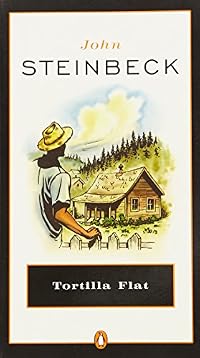
Tortilla Flat
by John Steinbeck
On This Page
Description
Classic Literature. Fiction. Literature. Historical Fiction. HTML:Adopting the structure and themes of the Arthurian legend, John Steinbeck created a “Camelot” on a shabby hillside above the town of Monterey, California, and peopled it with a colorful band of knights. At the center of the tale is Danny, whose house, like Arthur’s castle, becomes a gathering place for men looking for adventure, camaraderie, and a sense of belonging—men who fiercely resist the corrupting tide of honest show more toil and civil rectitude.As Nobel Prize winner Steinbeck chronicles their deeds—their multiple lovers, their wonderful brawls, their Rabelaisian wine-drinking—he spins a tale as compelling and ultimately as touched by sorrow as the famous legends of the Round Table, which inspired him. show less
Tags
Recommendations



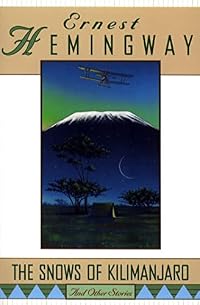
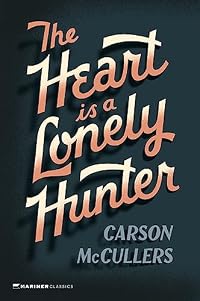
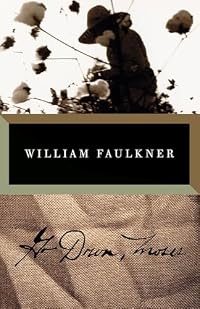
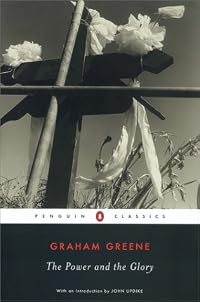










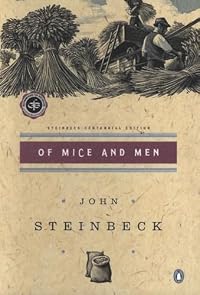
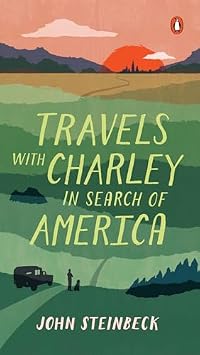
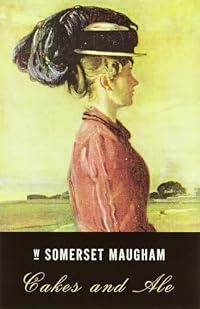

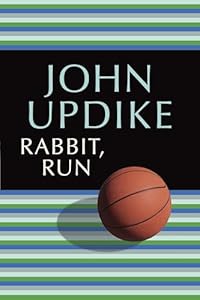




Member Recommendations


Member Reviews
Tortilla Flat is loosely drawn from the Arthurian Legend and features Danny as King Arthur and a group of his paisano friends as his court. As with the medieval legends, Danny and his friends are at times gallant, ornery, lazy, quirky, moody, foolish, and brilliant in their simple way. The characters are all lovable and comic even when they are doing horrible things that they shouldn't be loved for.
Likewise, the book itself was lovable and a joy to read even when there are parts that should have been uncomfortable. Steinbeck has a wonderful ability to take the grotesque sides of us and make them lovable. In this case, he took the poverty of people living on the outskirts of Monterey, California and all of the poor decisions and bad show more things that they might do in their circumstance and made them both heroic and comical. This is the brilliance of Steinbeck, and this is a very good book. show less
Likewise, the book itself was lovable and a joy to read even when there are parts that should have been uncomfortable. Steinbeck has a wonderful ability to take the grotesque sides of us and make them lovable. In this case, he took the poverty of people living on the outskirts of Monterey, California and all of the poor decisions and bad show more things that they might do in their circumstance and made them both heroic and comical. This is the brilliance of Steinbeck, and this is a very good book. show less
Probably my favorite Steinbeck, which requires some reflection. People often criticize the book because they say it contains harmful stereotypes of poverty, alcoholism, and race. It's obvious, though, that Steinbeck wrote about characters that he likes. They are funny and noble and to the point, flawed. It's true that the flawed nature of the characters gives us pause. I'd not be comfortable being friends with these men, not would I want my own children hanging out with them as friends. Nevertheless, Steinbeck uses the flaws to create a tension in the responsibility of friendship. It is precisely because relationships require effort and commitment that the flawed knights are delightfully conflicted. And although I don't struggle in the show more same ways as the characters, I have felt the weight of relationships, have experienced the nourishment of friendship, and have experienced the absurdity of life. The writing is fascinating to me. It is more immature than Steinbeck's later works, more optimistic and less filled out than one would like, but it is beautifully written and obviously the work of a verbal genius. show less
A group of California paisanos recreate their own version of the Round Table, following their deeply entertaining amoral exploits in the 1920's. As a lover of Arthurian myth and legends, this is delightful. I particularly loved the introduction of the Pirate, with his posse of dogs, to their brotherhood. Perhaps some of the most delightful storytelling I had the pleasure to experience myself this year. A deeply moving sequence, the consequences of a hare-brained scheme turn out to be lasting friendship.
I've read 6 works by Steinbeck this year, and I think he has turned out to be one of my favourites.
I've read 6 works by Steinbeck this year, and I think he has turned out to be one of my favourites.
This was Steinbeck's first big success, but it came saddled with misinterpretation. He wasn't pleased with critics who thought he was making fun of the lower class in Monterey, California. I fell into the same trap of viewing it as satire, but these characters receive too much narrative respect and the descriptive passages are too beautifully done not to grant there's something deeper. There's a nobility in their readinesss to take life as it comes, and in the care they take to justify their actions.
A parallel to the story of King Arthur's round table is clearly stated in the first chapter, and there's reminders of this when one character or another suddenly spouts dialogue in the fashion of "thees" and "thous", entirely unremarked show more upon, before lapsing back into normal language. There's also a parallel in the novel's plotting, where each chapter seems like another adventure of these 'knights' and often introduces a new member of the party. The conclusion is therefore apt and inevitable, but tragedy has its flip side and this novel is often just plain funny (the vaccuum cleaner; the plot for pirate treasure; the minor crime wave; etc). Pilon especially is entertaining, and even characters seen in passing can inspire a chuckle (the shopkeeper who puts out his 'Back in 5 minutes' sign and goes home for the day). It's funny because it's real, but all good things must inevitably reach their end. show less
A parallel to the story of King Arthur's round table is clearly stated in the first chapter, and there's reminders of this when one character or another suddenly spouts dialogue in the fashion of "thees" and "thous", entirely unremarked show more upon, before lapsing back into normal language. There's also a parallel in the novel's plotting, where each chapter seems like another adventure of these 'knights' and often introduces a new member of the party. The conclusion is therefore apt and inevitable, but tragedy has its flip side and this novel is often just plain funny (the vaccuum cleaner; the plot for pirate treasure; the minor crime wave; etc). Pilon especially is entertaining, and even characters seen in passing can inspire a chuckle (the shopkeeper who puts out his 'Back in 5 minutes' sign and goes home for the day). It's funny because it's real, but all good things must inevitably reach their end. show less
[Tortilla Flat] is another piece of irresistible [Steinbeck] writing. The odd part is I wanted to resist. It's a story about Danny and his friends and Danny's house. They're all paisanos, i.e. "a mixture of Spanish, Indian, Mexican, and assorted Caucasian bloods" whose "ancestors have lived in California for a hundred or two years." Danny inherits a house, two actually, from his viejo, and his friends gather there with him. What I didn't like: the paisanos on Tortilla Flat don't really seem real, and the portrayal is far from flattering. The story is more like a parody fairy tale. Possible Spoilers: Danny and his friends repeatedly steal from the inhabitants of Tortilla Flat, but nonetheless are viewed as harmless and charming. Really? show more Danny gets violent and is still found charming. Really? And I didn't like the racial epithets. Because they're spread around, they're, I'm sure, supposed to be considered acceptable. But does someone trying to make money always have to be called a "Jew"? Do the Sicilian fisherman really have no problem with Danny spewing racist insults at them? Would paisanos really appreciate being portrayed like this?
Danny and his friends drink all the time, and seem to live to find more wine. They steal all the time, and we hear virtually zero about the effect on their victims. When Danny inflates the status of a young woman with a gift and then later he tires of her and his friends steal it back, we hear nothing more about her. None of this sounds particularly appealing, does it?
So why are we charmed? Ah, that wizardly Steinbeck.
"Then Jesus Maria, in a frenzy of gratefulness, made a rash promise. It was the grappa that did it, and the night of the fire, and all the deviled eggs. He felt that he had received great gifts, and he wanted to distribute a gift. 'It shall be our burden and our duty to see that there is always food in the house for Danny', he declaimed. 'Never shall our friend go hungry.'
Pilon and Pablo looked up in alarm, but the thing was said; a beautiful and generous thing. No man could with impunity destroy it. Even Jesus Maria understood, after what was said, the magnitude of his statement. They could only hope that Danny would forget it."
The endearing descriptions of them, their lovely way of expressly themselves, their grand elevated emotions, and the practical hope that Danny will forget it, occur in different forms throughout the book. We find ourselves rooting for them despite their repeated reprehensible behavior. In part it's because we love rascals who live outside the 9 to 5 daily grinds that the rest of us have to live - wouldn't it be wonderful to get up at noon and then go out and sit on the porch near the rose bush and let the sun warm you? To burn pine cones in the fireplace at night and talk contently about the village gossip with your simpatico friends? In part it's the intrigue of how are they going to find food and the beloved wine day after day without gainful employment?
In part it's the hypnotizing effect of Steinbeck's writing, and the contrarian way of life that finds a silver lining everywhere. For example, when Danny briefly gets inspired to clean a begrimed window in the house, he is quickly persuaded not to do it:
"The window remained as it was; and as time passed, as fly after fly went to feed the spider family with his blood and left his huskish body in the webs against the glass, as dust adhered to dust, the bedroom took on a pleasant obscurity which made it possible to sleep in a dusky light even at noonday."
At times the grandiloquence in this fairy tale reminded me of Don Quixote, living a different reality than the rest of us, and at times of the simple but lofty statements in a Hemingway novel. But the paisanos' actions are rarely anything other than self-serving and detrimental to others. Possible Spoiler As in [Cannery Row], one of their noblest gestures is throwing a big party for Danny which, as in [Cannery Row], ends in disaster. A difference is the lovable mugs in [Cannery Row] were sensitive about hurting others, and tried to be harmless. The group in this one are charming rogues, but for me their one-for-all and all-for-one insularity left me uncomfortable and a bit resentful that Steinbeck uses his wizardry to exalt them. He doesn't seem like the kind of guy to thumb his nose at us, but throughout he seems to be saying, see, I can make you love even these reprobates. And he succeeds. Maybe there's a message somewhere in that, but it's a discomfiting one. show less
Danny and his friends drink all the time, and seem to live to find more wine. They steal all the time, and we hear virtually zero about the effect on their victims. When Danny inflates the status of a young woman with a gift and then later he tires of her and his friends steal it back, we hear nothing more about her. None of this sounds particularly appealing, does it?
So why are we charmed? Ah, that wizardly Steinbeck.
"Then Jesus Maria, in a frenzy of gratefulness, made a rash promise. It was the grappa that did it, and the night of the fire, and all the deviled eggs. He felt that he had received great gifts, and he wanted to distribute a gift. 'It shall be our burden and our duty to see that there is always food in the house for Danny', he declaimed. 'Never shall our friend go hungry.'
Pilon and Pablo looked up in alarm, but the thing was said; a beautiful and generous thing. No man could with impunity destroy it. Even Jesus Maria understood, after what was said, the magnitude of his statement. They could only hope that Danny would forget it."
The endearing descriptions of them, their lovely way of expressly themselves, their grand elevated emotions, and the practical hope that Danny will forget it, occur in different forms throughout the book. We find ourselves rooting for them despite their repeated reprehensible behavior. In part it's because we love rascals who live outside the 9 to 5 daily grinds that the rest of us have to live - wouldn't it be wonderful to get up at noon and then go out and sit on the porch near the rose bush and let the sun warm you? To burn pine cones in the fireplace at night and talk contently about the village gossip with your simpatico friends? In part it's the intrigue of how are they going to find food and the beloved wine day after day without gainful employment?
In part it's the hypnotizing effect of Steinbeck's writing, and the contrarian way of life that finds a silver lining everywhere. For example, when Danny briefly gets inspired to clean a begrimed window in the house, he is quickly persuaded not to do it:
"The window remained as it was; and as time passed, as fly after fly went to feed the spider family with his blood and left his huskish body in the webs against the glass, as dust adhered to dust, the bedroom took on a pleasant obscurity which made it possible to sleep in a dusky light even at noonday."
At times the grandiloquence in this fairy tale reminded me of Don Quixote, living a different reality than the rest of us, and at times of the simple but lofty statements in a Hemingway novel. But the paisanos' actions are rarely anything other than self-serving and detrimental to others. Possible Spoiler As in [Cannery Row], one of their noblest gestures is throwing a big party for Danny which, as in [Cannery Row], ends in disaster. A difference is the lovable mugs in [Cannery Row] were sensitive about hurting others, and tried to be harmless. The group in this one are charming rogues, but for me their one-for-all and all-for-one insularity left me uncomfortable and a bit resentful that Steinbeck uses his wizardry to exalt them. He doesn't seem like the kind of guy to thumb his nose at us, but throughout he seems to be saying, see, I can make you love even these reprobates. And he succeeds. Maybe there's a message somewhere in that, but it's a discomfiting one. show less
A creative spin on what would otherwise be a routine Steinbeck observation of the down-and-out characters of California, with Danny and his friends at Tortilla Flat being compared right from the off to King Arthur and his Knights of the Round Table. We follow these rough knights-errant with hearts of bronze on their quests, as they rescue maidens (weary housewives on the Flat), find treasure (life savings hidden in the forest by someone called 'the Pirate') and return to feast at their Camelot (get drunk on cheap wine at Danny's bedsit).
This is an interesting approach, but that interest is finite, and some of the darker moments seem out of place (a baby dies, and elsewhere a man is whipped bloody) in what is a series of charming show more quixotic adventures (though the dark ending works well). Steinbeck's more experimental stuff is not to everyone's taste, but Tortilla Flat is well-written, occasionally touching and short enough not to outstay its welcome. show less
This is an interesting approach, but that interest is finite, and some of the darker moments seem out of place (a baby dies, and elsewhere a man is whipped bloody) in what is a series of charming show more quixotic adventures (though the dark ending works well). Steinbeck's more experimental stuff is not to everyone's taste, but Tortilla Flat is well-written, occasionally touching and short enough not to outstay its welcome. show less
Steinbeck has created a world here that I have no direct experience of. Homeless alcoholic hobo males. When Danny inherits a house it becomes a hub for the local drifters who all share in its shelter. These guys are so much more than lonely drifters though, they have a camaraderie and sense of loyalty that is rock solid...if it is decided that someone needs wine then the money is found, loaned, stolen, obtained through the sale of stolen goods and it is provided. It is shared and it is enjoyed. The reason it is needed provides the rationalisation for the crimes committed to obtain it. And it is decided pretty much every day that wine is needed.
Sometimes, quite often, this rock solid loyalty is bent for the sake of one of the groups own show more personal need, but there is always a rock solid reason why this must be so. The excuses and reasoning that each character comes up with is pure comedy. But their situation, however happy they appear in it, is really quite dire. It is a sad story, presented in such a way that makes it seem so normal and so inevitable. show less
Sometimes, quite often, this rock solid loyalty is bent for the sake of one of the groups own show more personal need, but there is always a rock solid reason why this must be so. The excuses and reasoning that each character comes up with is pure comedy. But their situation, however happy they appear in it, is really quite dire. It is a sad story, presented in such a way that makes it seem so normal and so inevitable. show less
Members
- Recently Added By
Lists

1001 Books You Must Read Before You Die
1,448 works; 1,132 members

Pleasant Surprises: Books That Exceeded Our Expectations
418 works; 143 members

20th Century Literature
1,161 works; 55 members

Best Friendship Stories
205 works; 16 members

1930s
262 works; 5 members

SHOULD Read Books!
354 works; 9 members

Books Read in 2017
4,249 works; 129 members

Llibres que he llegit el 2009
35 works; 1 member

Books Read in 2022
5,164 works; 111 members

American Lit for Eng 11 Research Project
368 works; 6 members

Modern Arthurian Fiction
237 works; 16 members

Armed Services Editions
150 works; 1 member
Reading LIst
648 works; 1 member

Books whose title names an object usually found in the kitchen
171 works; 14 members
Talk Discussions
Past Discussions
Steinbeckathon 2012: Tortilla Flat in 75 Books Challenge for 2012 (November 2012)
Author Information

473+ Works 206,210 Members
In recent years Steinbeck has been elevated to a more prominent status among American writers of his generation. If not quite at the world-class artistic level of a Hemingway or a Faulkner, he is nonetheless read very widely throughout the world by readers of all ages who consider him one of the most "American" of writers. Born in Salinas County, show more California on February 27, 1902, Steinbeck was of German-Irish parentage. After four years as a special student at Stanford University, he went to New York, where he worked as a reporter and as a hod carrier. Returning to California, he devoted himself to writing, with little success; his first three books sold fewer than 3,000 copies. Tortilla Flat (1935), dealing with the paisanos, California Mexicans whose ancestors settled in the country 200 years ago, established his reputation. In Dubious Battle (1936), a labor novel of a strike and strike-breaking, won the gold medal of the Commonwealth Club of California. Of Mice and Men (1937), a long short story that turns upon a melodramatic incident in the tragic friendship of two farm hands, written almost entirely in dialogue, was an experiment and was dramatized in the year of its publication, winning the New York Drama Critics Circle Award. It brought him fame. Out of a series of articles that he wrote about the transient labor camps in California came the inspiration for his greatest book, The Grapes of Wrath (1939), the odyssey of the Joad family, dispossessed of their farm in the Dust Bowl and seeking a new home, only to be driven on from camp to camp. The fiction is punctuated at intervals by the author's voice explaining this new sociological problem of homelessness, unemployment, and displacement. As the American novel "of the season, probably the year, possibly the decade," it won the Pulitzer Prize in 1940. It roused America and won a broad readership by the unusual simplicity and tenderness with which Steinbeck treated social questions. Even today, The Grapes of Wrath remains alive as a vivid account of believable human characters seen in symbolic and universal terms as well as in geographically and historically specific ones. Ma Joad is one of the most memorable characters in twentieth-century American fiction. It is her courage that sustains the family. Steinbeck's best and most ambitious novel after The Grapes of Wrath is East of Eden (1952), a saga of two American families in California from before the Civil War through World War I. Cannery Row (1945), The Wayward Bus (1947), and Sweet Thursday (1955) are lighter works that find Steinbeck returning to the lighthearted tone of Tortilla Flat as he recounts picaresque adventures of modern-day picaros. The Winter of Our Discontent (1961) struck some reviewers as being appropriately titled because of its despairing treatment of humanity's fall from grace in a wasteland world where money is king. Steinbeck also wrote important nonfiction, including Russian Journal (1948) in collaboration with the photographer Robert Capa; Once There Was a War (1958) and America and Americans (1966), which features pictures by 55 leading photographers and a 70-page essay by Steinbeck. His interest in marine biology led to two books primarily about sea life, Sea of Cortez (1941) (with Edward F. Ricketts) and The Log from the Sea of Cortez (1951). Travels with Charley (1962) is an engaging account of his journey of rediscovery of America, which took him through approximately 40 states. Steinbeck was married three times and died in New York City on December 20, 1968 of heart disease and congestive heart failure. He was 66, and had been a life-long smoker. (Bowker Author Biography) show less
Some Editions
Awards and Honors
Notable Lists
Series
Belongs to Publisher Series
Ullstein (217)
Work Relationships
Is contained in
Has the adaptation
Is abridged in
Common Knowledge
- Canonical title
- Tortilla Flat
- Original title
- Tortilla Flat
- Alternate titles*
- Danny & compagnie; Danny en compagnie
- Original publication date
- 1935; 1947 (Nederlandse vertaling) (Nederlandse vertaling)
- People/Characters
- Danny; Pilon; Big Joe Portagee; Mrs. Morales; Pablo; Jesus Maria Corcoran (show all 14); The Pirate; Enrique; Pajarito; Rudolph; Fluff; Senor Alec Thompson; Torrelli; Sweets Ramirez
- Important places
- California, USA; Monterey, California, USA; Monterey County, California, USA; Salinas, California, USA; USA
- Related movies
- Tortilla Flat (1942 | IMDb)
- Dedication
- To Susan Gregory of Monterey
- First words
- This is the story of Danny and of Danny's friends and of Danny's house. (Preface)
When Danny came home from the army he learned that he was an heir and an owner of property. - Quotations
- Big Joe stole Mrs. Palochico's goat over and over again, and each time it went home.
- Last words
- (Click to show. Warning: May contain spoilers.)And after a while they turned and walked slowly away, and no two walked together.
- Original language
- English
- Canonical DDC/MDS
- 813.52
- Canonical LCC
- PS3537.T3234
*Some information comes from Common Knowledge in other languages. Click "Edit" for more information.
Classifications
Statistics
- Members
- 6,293
- Popularity
- 1,954
- Reviews
- 102
- Rating
- (3.76)
- Languages
- 22 — Catalan, Czech, Danish, Dutch, English, Estonian, Finnish, French, German, Hungarian, Indonesian, Italian, Lithuanian, Norwegian (Bokmål), Norwegian, Polish, Portuguese, Russian, Slovenian, Spanish, Swedish, Turkish
- Media
- Paper, Audiobook, Ebook
- ISBNs
- 122
- UPCs
- 1
- ASINs
- 109