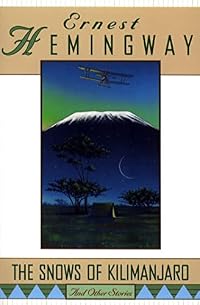
The Snows of Kilimanjaro and Other Stories
by Ernest Hemingway 
On This Page
Description
The ideal introduction to the genius of Ernest Hemingway, The Snows of Kilimanjaro and Other Stories contains ten of Hemingway's most acclaimed and popular works of short fiction.Selected from Winner Take Nothing, Men Without Women, and The Fifth Column and the First Forty-Nine Stories, this collection includes "The Killers," the first of Hemingway's mature stories to be accepted by an American periodical; the autobiographical "Fathers and Sons," which alludes, for the first time in show more Hemingway's career, to his father's suicide; "The Short Happy Life of Francis Macomber," a "brilliant fusion of personal observation, hearsay and invention," wrote Hemingway's biographer, Carlos Baker; and the title story itself, of which Hemingway said: "I put all the true stuff in," with enough material, he boasted, to fill four novels. Beautiful in their simplicity, startling in their originality, and unsurpassed in their craftsmanship, the stories in this volume highlight one of America's master storytellers at the top of his form. show less
Tags
Recommendations


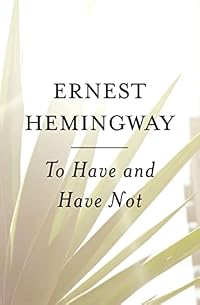

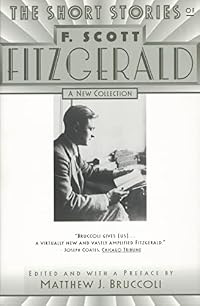
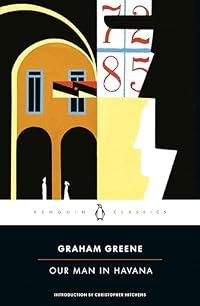

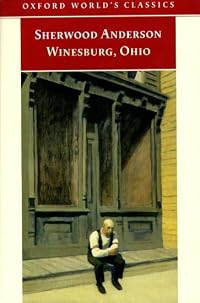



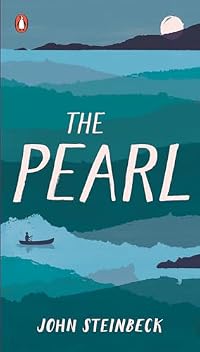
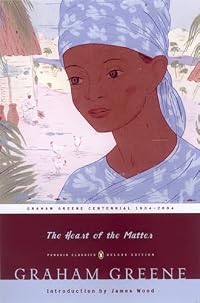
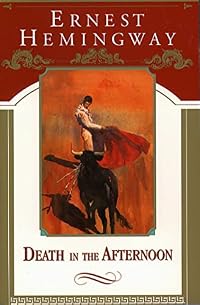
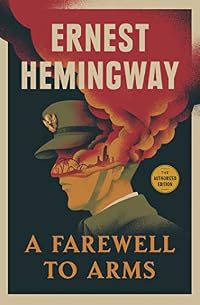
Member Recommendations
Member Reviews
I'd read these stories decades ago as a youth and something told me to go back to them once again. Oddly there were no real surprises. It remains a potent if grim collection of short, sharp stories.
"In the fall the war was always there, but we did not go to it any more."
Both "A Clean, Well-Lighted Place" and "In Another Country" are still among the strongest stories I think I've ever read. My life has shown me these people and these experiences, and Hemingway nailed it. Even "The Gambler, The Nun, and the Radio" plays very familiar and even ruefully funny.
Life takes its toll, and there are ways people find to deal with it. Or, as in "The Short Happy Life of Francis Macomber," not to deal with it.
The real clunker here is "The Killers." I show more thought it stupid when I read it at 18 and, lo, I still think it stupid. Sorry, Ernie. show less
"In the fall the war was always there, but we did not go to it any more."
Both "A Clean, Well-Lighted Place" and "In Another Country" are still among the strongest stories I think I've ever read. My life has shown me these people and these experiences, and Hemingway nailed it. Even "The Gambler, The Nun, and the Radio" plays very familiar and even ruefully funny.
Life takes its toll, and there are ways people find to deal with it. Or, as in "The Short Happy Life of Francis Macomber," not to deal with it.
The real clunker here is "The Killers." I show more thought it stupid when I read it at 18 and, lo, I still think it stupid. Sorry, Ernie. show less
I always smile when I read reviews criticizing Hemingway for cumbersome style. In fact, he was one of the most economical with words among the major American writers. This collection is a bit difficult to get around, sure, so maybe as a first sampling of Papa's writings this isn't the best, but go read The Sun Also Rises where he was at the height of his powers, then come back to this.
The title story is worth the price of admission - a tale told primarily from a first person perspective as a man lays dying from gangrene during a hunting expedition in Africa. But the perspective sometimes slips into the narrator's fever-fueled delusions and reminiscences. It's a technique to which Hemingway returns in the final story - The Short Happy Life of Francis Macomber, another set on an African hunting expedition - having the perspective slip into the supporting cast so that the narrator's self perception is weighed agains how others see him. The sliding perspectives make for much richer characters and story. In between, Hemingway revisits his alter-ego, Nick Adams. Nick Adams stories appear in other collection, and I found show more the ones in [In Our Time] superior to these. But a couple in this collection reveal the more doubtful and fearful Nick and, hence, Hemingway. In these, Nick/Hemingway are more vulnerable, more human - the Uber-masculine caricature abandoned for a truth. show less
A Clean, Well-Lighted Place was my favorite. I remember it from a grade school reader and think it was my first Hemmingway story. What crack-pot put it in an elementary school reader? It's about booze, suicide, and disaffection with work and life. Not something most kids can identify with, and if they can they need more help than Hemmingway.
Holy toxic masculinity Batman!
The last story, The Short Happy Life of Francis Macomber, is filled with BS. A rich man goes big game hunting in Africa with his wife. He wounds a lion and when his guide brow beats him into pursuing it into the bush he panics and runs as it charges him. He is unmanned as thoroughly as if he had been castrated on the spot. His wife promptly cuckholds him with the show more British guide. Things seem pretty grim. He/the narrator flashes over his good qualities: Rich, educated, able to wisely mange his money and grow even richer. All of these now amount to jack-shit as he can't hold his ground against a wounded lion.
The next day, following the cuckholding, the group drives out to shoot some buffalo. Francis is overcome by excitement and bloodlust and sprays bullets at the beasts, dropping three. This magically glues his balls back on. When one buffalo gets up and limps off into the bush, the manly Francis stalks it and stalwartly fires into its charge. His testosterone moment ends when his wife sends a bullet crashing into his skull. Was she trying to help, killing him for growing a pair, both? Who knows. This story is bad, but its get in your head bad rather than forget after reading bad. show less
Holy toxic masculinity Batman!
The last story, The Short Happy Life of Francis Macomber, is filled with BS. A rich man goes big game hunting in Africa with his wife. He wounds a lion and when his guide brow beats him into pursuing it into the bush he panics and runs as it charges him. He is unmanned as thoroughly as if he had been castrated on the spot. His wife promptly cuckholds him with the show more British guide. Things seem pretty grim. He/the narrator flashes over his good qualities: Rich, educated, able to wisely mange his money and grow even richer. All of these now amount to jack-shit as he can't hold his ground against a wounded lion.
The next day, following the cuckholding, the group drives out to shoot some buffalo. Francis is overcome by excitement and bloodlust and sprays bullets at the beasts, dropping three. This magically glues his balls back on. When one buffalo gets up and limps off into the bush, the manly Francis stalks it and stalwartly fires into its charge. His testosterone moment ends when his wife sends a bullet crashing into his skull. Was she trying to help, killing him for growing a pair, both? Who knows. This story is bad, but its get in your head bad rather than forget after reading bad. show less
The title story, The Snows of Kilimanjaro, is one of Hemingway’s most famous and no doubt garners such appeal because it deals with the essence of every man’s life...what he has accomplished before he dies. Some see it as a treatise on procrastination, but I do not. I believe it is every man’s lot to die with things undone, hopes unrealized, opportunities missed, and I think Hemingway is making that point as well. We are busy living our lives and these things slip by us, sometimes without a thought, but often with the idea that we will come back to them, do them later, and then life runs out, as life always does. We all die in the midst of living. A secondary, but important theme, would seem to me to be that of isolation. No show more matter who is there holding our hands, soothing our brows, we die alone. No one can take that journey with us, and those who will continue to live after we are gone do not truly understand our going as we understand it, as an end of second chances, a startling realization that whatever we might have done is lost to us now, forever.
A Day’s Wait is an amazing bit of literature, packed into three scant pages. It is about waiting for death, and the wonder of being spared. I found it very striking and all the more so because of the childish perspective from which it is told.
Fathers and Sons A Way You’ll Never Be and The Killers are Nick Adams stories. Nick is a recurring character for Hemingway, and every time I encounter him in Hemingway’s writing, I feel I have added a piece to a puzzle that I have been working on for decades. Someday I would like to read all the Nick Adams stories together and see if the entire puzzle comes into focus.
In the Fall the war was always there, but we did not go to it any more. Thus begins In Another Country, which is about the unexpected nature of death and the elusiveness of bravery, and this line seemed to set up the story so perfectly for me. Another line I loved, The three with the metals were like hunting-hawks; and I was not a hawk, although I might have seemed a hawk to those who had never hunted; they, the three, knew better, and so we drifted apart.
Fifty Grand registered nothing with me. I do not like prize fighting and I was surprised to find my mind wandering even in the midst of the story.
Finally, The Short Happy Life of Francis Macomber is an astounding story about cowardice, sex and marriage, set against the backdrop of a safari. The descriptions of the hunting were difficult to read, they were so stark and from my view senseless, but they served to draw pictures of Macomber, his wife and the Great White Hunter, Wilson. The end was a shocker for me, and I loved the uncertainty surrounding what had happened.
Hemingway is a deceptive storyteller. His stories seem so straightforward and simple, but they are extremely complex and he mines the depths of a man’s soul and often makes you grimace at what you find there. He sometimes seems to be saying that we are all the same...just carrion headed for death...but there in the details you find the devil, we are all exceedingly individual and unique and alone in the journey from cradle to grave. show less
A Day’s Wait is an amazing bit of literature, packed into three scant pages. It is about waiting for death, and the wonder of being spared. I found it very striking and all the more so because of the childish perspective from which it is told.
Fathers and Sons A Way You’ll Never Be and The Killers are Nick Adams stories. Nick is a recurring character for Hemingway, and every time I encounter him in Hemingway’s writing, I feel I have added a piece to a puzzle that I have been working on for decades. Someday I would like to read all the Nick Adams stories together and see if the entire puzzle comes into focus.
In the Fall the war was always there, but we did not go to it any more. Thus begins In Another Country, which is about the unexpected nature of death and the elusiveness of bravery, and this line seemed to set up the story so perfectly for me. Another line I loved, The three with the metals were like hunting-hawks; and I was not a hawk, although I might have seemed a hawk to those who had never hunted; they, the three, knew better, and so we drifted apart.
Fifty Grand registered nothing with me. I do not like prize fighting and I was surprised to find my mind wandering even in the midst of the story.
Finally, The Short Happy Life of Francis Macomber is an astounding story about cowardice, sex and marriage, set against the backdrop of a safari. The descriptions of the hunting were difficult to read, they were so stark and from my view senseless, but they served to draw pictures of Macomber, his wife and the Great White Hunter, Wilson. The end was a shocker for me, and I loved the uncertainty surrounding what had happened.
Hemingway is a deceptive storyteller. His stories seem so straightforward and simple, but they are extremely complex and he mines the depths of a man’s soul and often makes you grimace at what you find there. He sometimes seems to be saying that we are all the same...just carrion headed for death...but there in the details you find the devil, we are all exceedingly individual and unique and alone in the journey from cradle to grave. show less
It is no surprise that Hemingway took his life. It was a miserable mind to be in. Men are not men until they prove their invulnerability and lack of real interest in living. In Hemingwayland any sign of connection to others is read as weakness. Women filled with scorn are just waiting to (figuratively) castrate the men in their lives. But that man was the shit when it comes to crafting perfect elegant prose, telling the reader everything she needs to know with heart-stopping beauty and relentless economy. In the short stories the reader can engage in the situation with excitement and fascination and be done before the characters' vapidity and compulsiveness gets boring and vulgar. Reading Hemingway's novels is kind of like watching the show more Kardashians. For 10 minutes its amazing and you can't look away. Then, like a switch has been flipped, all the watcher feels is boredom and contempt and occasionally a sprinkling of sadness. "Kim Kardashian IS Jake Barnes in The Sun Also Rises!" But I digress. My point is that the short stories are filled with interest, and substance and beauty, and stunning craft where the books often feel to me like writing exercises. I had read most of these stories before in other collections, but this is well curated and a great way to return and remind myself why I used to really like Ernie. show less
An uneven collection of stories. The title story and The Short Life of Francis MacComber were very good, but most of the others were a chore to finish. Doesn't make me want to rush and read more Hemmingway just yet. A real sense of Machismo runs through the book. Men are Men when they fight in War...Against Men. Men like to hunt, in the company of men. Hmm, Does being a man also mean fostering a family value of suicide? I don't mean to be cruel but finding a man in this book who has a sensitive thought or an emotion that is not done in a shade of Red or Black is impossible. I feel like Hemmingway's prose hides behind a facade of pompous bravado. And even though we cannot expect to get the depth of character we would expect to fing in a show more novel, his characters, to me at least, often come off as insecure, knuckle dragging, Neanderthals who are afraid to express what they really might be feeling show less
Members
- Recently Added By
Published Reviews
ThingScore 75
"Las nieves del Kilimanjaro" es un relato corto del escritor estadounidense Ernest Hemingway, publicado por primera vez en 1936. La narración sigue a Harry, un escritor que se encuentra de safari en África con su esposa Helen. Al comienzo de la historia, Harry sufre una herida infectada en la pierna que pone en peligro su vida.
Mientras espera a ser rescatado, Harry reflexiona sobre sus show more experiencias pasadas, sus relaciones y las decisiones que han marcado su vida. Las nieves del Kilimanjaro sirven de telón de fondo simbólico y representan la pureza y la trascendencia. A lo largo de la historia, los pensamientos y recuerdos de Harry permiten vislumbrar sus luchas internas, sus arrepentimientos y el impacto de sus decisiones en su vida personal y creativa.
A medida que la infección empeora, Harry se enfrenta a la inevitabilidad de la muerte. La historia explora temas como la reflexión existencial, la mortalidad y la tensión entre vivir una vida auténtica y sucumbir a las expectativas de la sociedad. La prosa de Hemingway, caracterizada por la concisión y la sobriedad, contribuye a la profundidad emocional del relato.
"Las nieves del Kilimanjaro" está considerada una de las obras maestras de Hemingway, conocida por su exploración de la condición humana y su retrato de la compleja relación entre el arte y la vida. La historia capta la esencia de los temas de Hemingway sobre la gracia bajo presión y las consecuencias de las decisiones tomadas y las oportunidades perdidas. show less
Mientras espera a ser rescatado, Harry reflexiona sobre sus show more experiencias pasadas, sus relaciones y las decisiones que han marcado su vida. Las nieves del Kilimanjaro sirven de telón de fondo simbólico y representan la pureza y la trascendencia. A lo largo de la historia, los pensamientos y recuerdos de Harry permiten vislumbrar sus luchas internas, sus arrepentimientos y el impacto de sus decisiones en su vida personal y creativa.
A medida que la infección empeora, Harry se enfrenta a la inevitabilidad de la muerte. La historia explora temas como la reflexión existencial, la mortalidad y la tensión entre vivir una vida auténtica y sucumbir a las expectativas de la sociedad. La prosa de Hemingway, caracterizada por la concisión y la sobriedad, contribuye a la profundidad emocional del relato.
"Las nieves del Kilimanjaro" está considerada una de las obras maestras de Hemingway, conocida por su exploración de la condición humana y su retrato de la compleja relación entre el arte y la vida. La historia capta la esencia de los temas de Hemingway sobre la gracia bajo presión y las consecuencias de las decisiones tomadas y las oportunidades perdidas. show less
added by Peter_MacTroy
Lists

20th Century Literature
1,161 works; 55 members

Books Featured on Gilmore Girls
307 works; 21 members

Rory Gilmore Book Club
193 works; 5 members

Books Read in 2017
4,248 works; 130 members

Books Set In Africa
81 works; 4 members

American Lit for Eng 11 Research Project
368 works; 6 members

Forbes: The 25 Greatest Short Stories of All Time
25 works; 4 members

The Complete Rory Gilmore Reading List
506 works; 5 members
Author Information

652+ Works 173,071 Members
Ernest Miller Hemingway was born in the family home in Oak Park, Ill., on July 21, 1899. In high school, Hemingway enjoyed working on The Trapeze, his school newspaper, where he wrote his first articles. Upon graduation in the spring of 1917, Hemingway took a job as a cub reporter for the Kansas City Star. After a short stint in the U.S. Army as a show more volunteer Red Cross ambulance driver in Italy, Hemingway moved to Paris, and it was here that Hemingway began his well-documented career as a novelist. Hemingway's first collection of short stories and vignettes, entitled In Our Time, was published in 1925. His first major novel, The Sun Also Rises, the story of American and English expatriates in Paris and on excursion to Pamplona, immediately established him as one of the great prose stylists and preeminent writers of his time. In this book, Hemingway quotes Gertrude Stein, "You are all a lost generation," thereby labeling himself and other expatriate writers, including F. Scott Fitzgerald, T.S. Eliot, and Ford Madox Ford. Other novels written by Hemingway include: A Farewell To Arms, the story, based in part on Hemingway's life, of an American ambulance driver on the Italian front and his passion for a beautiful English nurse; For Whom the Bell Tolls, the story of an American who fought, loved, and died with the guerrillas in the mountains of Spain; and To Have and Have Not, about an honest man forced into running contraband between Cuba and Key West. Non-fiction includes Green Hills of Africa, Hemingway's lyrical journal of a month on safari in East Africa; and A Moveable Feast, his recollections of Paris in the Roaring 20s. In 1954, Hemingway won the Nobel Prize in Literature for his novella, The Old Man and the Sea. A year after being hospitalized for uncontrolled high blood pressure, liver disease, diabetes, and depression, Hemingway committed suicide on July 2, 1961, in Ketchum, Idaho. (Bowker Author Biography) show less
Ernest Hemingway has a Legacy Library. Legacy libraries are the personal libraries of famous readers, entered by LibraryThing members from the Legacy Libraries group.
Some Editions
Series
Belongs to Publisher Series
Work Relationships
Contains
Common Knowledge
- Canonical title
- The Snows of Kilimanjaro and Other Stories
- Original title
- The Snows of Kilimanjaro and Other Stories
- Original publication date
- 1936: The Snows of Kilimanjaro; 1923: Up in Michigan; 1930: On the Quai at Smyrna; 1925: Other stories from "In Our Time"; 1963: This selection
- People/Characters
- Francis Macomber; Julian
- Important places
- Mount Kilimanjaro, Tanzania; USA; Tanganyika
- Related movies
- The Snows of Kilimanjaro (1952 | IMDb)
- First words
- Kilimanjaro is a snow-covered mountain 19,710 feet high, and is said to be the highest mountain in Africa.
- Last words*
- (Click to show. Warning: May contain spoilers.)There were plenty of days coming when he could fish the swamp.
- Original language
- English
- Disambiguation notice
- The Finnish collection Kilimandšaron lumet contains 21 short stories from the collection First Forty-Nine Stories. Please do not combine.
*Some information comes from Common Knowledge in other languages. Click "Edit" for more information.
Classifications
Statistics
- Members
- 4,650
- Popularity
- 3,083
- Reviews
- 71
- Rating
- (3.68)
- Languages
- 17 — Dutch, English, Esperanto, Finnish, French, German, Hungarian, Indonesian, Italian, Lithuanian, Norwegian (Bokmål), Portuguese, Spanish, Swedish, Thai, Turkish, Ukrainian
- Media
- Paper, Audiobook, Ebook
- ISBNs
- 74
- ASINs
- 74