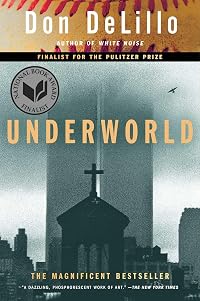
Underworld
by Don DeLillo
On This Page
Description
Don DeLillo crafts a magnificent tale laying bare 20th-century American culture as defined by the Cold War. Spanning 50 years, this is a story about human relationships and how they affect one another on global and local scales. Richard Poe's brilliant performance captures the essence of each character through five decades of change.Tags
Recommendations



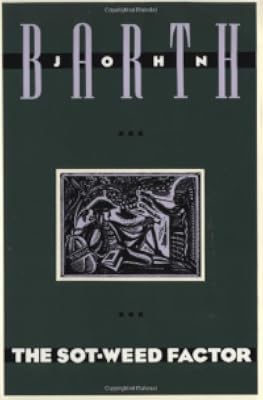
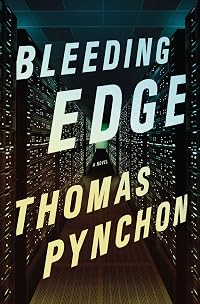
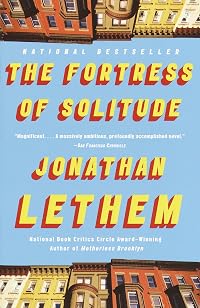
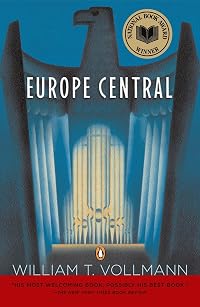

Member Recommendations
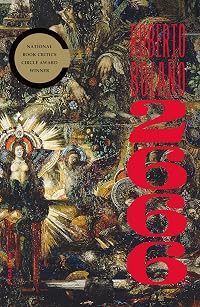
chrisharpe Bolaño's novel is set mostly In Mexico City, rather than the US. He uses some similar techniques to DeLillo to produce a much more accomplished and interesting work. It will probably appeal to those who enjoyed Underworld.
30

Member Reviews
There is an important reason why Underworld is written from future to past. The artist in the desert, painting a deactivated aircraft from the cold war times, is trying to process the past from a nation that is lost to time. Such an understanding must arise from the creation of meaning to fill in the gaps, as she does with the pin-up girl left as a souvenir in the B-52. What she tries to process is as much the story of a nation in the uncertain limbo between the ending of an era and the start of a new one, where things just do not seem real, as she remarks, as it is about herself, and a past that cannot be recalled, even if it made her as she is today, as well as the man who comes searching for it in her in 1992.
History can only be show more understood by walking backwards in time. What explains each scar is a story that is not told upright, but hidden in between every line. Underworld follows DeLillo's usual tropes of dialogue, where everything that's important is everything that is not mentioned. It's just not possible to understand the paranoia of nuclear threat, you have to live under it. Yet this is what we try, to make sense of everything that's happening. This is why the story is told backwards: the reason behind every event lies in something happening just before that. Underworld is a story about a nation just how it is about each one of its inhabitants.
That's why I find this book so incredibly dense and hard to read. Every part has enough content to be a standalone book, but every line is meaningless if not attached to a before and after. Such complex relationships are multisided, revealing something that does not concern only those immediately involved. That's why Nick Shay is allowed to hold the ball from the shot heard round the world, and to claim it is a symbol of defeat. show less
History can only be show more understood by walking backwards in time. What explains each scar is a story that is not told upright, but hidden in between every line. Underworld follows DeLillo's usual tropes of dialogue, where everything that's important is everything that is not mentioned. It's just not possible to understand the paranoia of nuclear threat, you have to live under it. Yet this is what we try, to make sense of everything that's happening. This is why the story is told backwards: the reason behind every event lies in something happening just before that. Underworld is a story about a nation just how it is about each one of its inhabitants.
That's why I find this book so incredibly dense and hard to read. Every part has enough content to be a standalone book, but every line is meaningless if not attached to a before and after. Such complex relationships are multisided, revealing something that does not concern only those immediately involved. That's why Nick Shay is allowed to hold the ball from the shot heard round the world, and to claim it is a symbol of defeat. show less
definitely too long but what else are you going to do with something that insanely ambitious? it takes stamina to even think about something like this, much less write it down. maybe cut the Lenny Bruce parts out because I cannot care about that guy ever. but holy moly. so much of it was so intense. Nick frightens me and I understand why this is Jughead's book. There is something also very known to me about this book? Or about Nick, that kind of drives me crazy. The writing was intense, as always, but it was such a different texture with Underworld than Libra, or White Noise. other people have described Underworld as being funny, but maybe because of what I'm living through right now, without the even pretend gloss of the end of the show more Cold War, America in the 90s, it's hard to find anything funny, and everything terrifying. I bet Jughead sees himself as Nick and thats scary because I see myself as Nick too. show less
This needs some explaining. After rating many hundreds of read books, this one had me the most perplexed as to how to rate it. I was thinking, either a 3 or a 5. A three>, or a five?! It was suggested I average it out as a 4, but that seemed to me to just misrepresent both ratings.
There is no question for me that the writing in this book is 5 star, all the way. Though the lengthy baseball stadium scene at the beginning, packed with American cliches and the slapstick team of Hoover and Gleason, started me off decisively thinking I was not at all going to like this book, it won me over with its amazing presentation and acute powers of observation. To my amazement I found myself eventually able to see the baseball game (and fans) from a show more whole other perspective than I thought possible. This is 5 star stuff. And it just keeps going, and going, and going...
And yet, honestly, the book is extremely American, and as much as I'm dazzled by the writing and observations, the characters and content just don't speak to me personally very much. Hence, for me, though the writing is top notch, I can't get much beyond "liked it" (3 stars).
So, seeking enlightenment, I naturally read a bunch of reviews here to get a sense of how others have evaluated this work. There's very little middle ground. There's a blanket of 4 and 5 stars, peppered with shotgun blasts of of 1 star holes.
The 1 star hits are, without a doubt, the more substantial (sadly) and fun to read. I guess the 5 star reviewers are just too in awe and humbled to attempt to write anything insightful after completing the masterpiece? What more is there to say?
I am in entire sympathy with most of the 1 star reviews I read. Yes, the book really feels long. Yes, what "plot" there is, there hardly is. Yes, Delillo is brutally long winded. Yes, it can't help but drag on probably even the most ardent fan in places. Yes, it's really hard to hang on to the thread, and not drift off into the aether of words.
I am in sympathy with those who "did not like", for these reasons. They are justified in this perspective. And yet I am also sad. They seem to have missed so much. I feel, when confronted with such a sweeping, complexly structured, and yet minutely detailed work as this, that the lack is in us the readers rather than in the text. This is a work we really do need to expand ourselves and apply ourselves to connect with, as lovers of literature, lovers of observation, and lovers of life.
And so, slightly ironically, it was the delightful and painful one star reviews that pushed me from the middle of the road into the extremely starry expanse. This book deserves the stars, even if I don't entirely feel them.
I still like White Noise more (the only other Delillo I've thus far read) -- though it has less stars from me.
I hope this explanation of my here aberrant rating is satisfactory (to me). show less
There is no question for me that the writing in this book is 5 star, all the way. Though the lengthy baseball stadium scene at the beginning, packed with American cliches and the slapstick team of Hoover and Gleason, started me off decisively thinking I was not at all going to like this book, it won me over with its amazing presentation and acute powers of observation. To my amazement I found myself eventually able to see the baseball game (and fans) from a show more whole other perspective than I thought possible. This is 5 star stuff. And it just keeps going, and going, and going...
And yet, honestly, the book is extremely American, and as much as I'm dazzled by the writing and observations, the characters and content just don't speak to me personally very much. Hence, for me, though the writing is top notch, I can't get much beyond "liked it" (3 stars).
So, seeking enlightenment, I naturally read a bunch of reviews here to get a sense of how others have evaluated this work. There's very little middle ground. There's a blanket of 4 and 5 stars, peppered with shotgun blasts of of 1 star holes.
The 1 star hits are, without a doubt, the more substantial (sadly) and fun to read. I guess the 5 star reviewers are just too in awe and humbled to attempt to write anything insightful after completing the masterpiece? What more is there to say?
I am in entire sympathy with most of the 1 star reviews I read. Yes, the book really feels long. Yes, what "plot" there is, there hardly is. Yes, Delillo is brutally long winded. Yes, it can't help but drag on probably even the most ardent fan in places. Yes, it's really hard to hang on to the thread, and not drift off into the aether of words.
I am in sympathy with those who "did not like", for these reasons. They are justified in this perspective. And yet I am also sad. They seem to have missed so much. I feel, when confronted with such a sweeping, complexly structured, and yet minutely detailed work as this, that the lack is in us the readers rather than in the text. This is a work we really do need to expand ourselves and apply ourselves to connect with, as lovers of literature, lovers of observation, and lovers of life.
And so, slightly ironically, it was the delightful and painful one star reviews that pushed me from the middle of the road into the extremely starry expanse. This book deserves the stars, even if I don't entirely feel them.
I still like White Noise more (the only other Delillo I've thus far read) -- though it has less stars from me.
I hope this explanation of my here aberrant rating is satisfactory (to me). show less
Disclaimer: It is entirely possible I did not understand this book at all and what follows is meaningless babble.
Of all the books I have ever read I believe Underworld might be the hardest to review. Not because of the star rating. That is a 5 without question. The writing here is dazzling. This is historical fiction deconstructed, reconstructed, and then thrown into a supercharged industrial blender and shot out into the cosmos. Our “hero” works in “waste management” and a recurring theme here is the creative ways we prettify the fact of our waste products, from actual shit to plutonium waste, helping us to ignore the fact that all this waste, submerged or made into building materials or buried, or whatever, is destroying the show more planet. The parallel between the way in which DeLillo treats historical fiction (and the way he treats history for that matter) and the waste management sleight of hand is a terrifying yet fun way to render evil genius. He turns the metaphors used by marketers to make the most pernicious toxic things seem like gifts to the world into a metaphor for humans creating a glossy version of the past and future they can live with. He uses a central metaphor as a second central metaphor. It is breathtaking.
DeLillo seems to repudiate nostalgia here (a concept I wholeheartedly embrace.) The past is special because we want it to be special. We create false memories and expunge anything problematic. The value of memory is no more than mass delusion. “Every memory we have is, finally, of ourselves. If the memory of an experience is flawed, there is a rift in the continuity of self.” We are fiddling with the past, creating a good-ol-days myth in order to get a hit of dopamine and forget we are inexorably moving toward an end we ourselves have ordained. The past is filled with as much or more evil than the present but people agree to apply and validate the nostalgia filter because mass delusion gives us succor and hope in a harsh and hopeless world. That nostalgia filter is no different from the delusions of people who see statues of the Virgin Mary weep or the face of Jesus in a water stain on a building, just a delusion born of privilege rather than want.
Despite Underworld's brilliance as a whole, and maybe because there is no plot (as there is no plot in life) sometimes the whole thing seems to kind of fall apart. There are lulls – long lulls that left me pretty disconnected from the rest of the story. But, though it wanders off frequently, the book comes charging back every time to this concept of life and memory as a euphemism, like Glenn Close popping up spring-loaded in Michael Douglas’ tub. When I was poking around trying to pump myself up to read this book, I came across a quote from Martin Amis’ review of this book that really sums things up: “Underworld may or may not be a great novel, but there is no doubt that it renders DeLillo a great novelist.” Those lulls are problematic, but they are the packaging for utter brilliance.
Lenny Bruce comes up a lot in this book. He is not simply mentioned. DeLillo recreates several Bruce performances while tunneling into Bruce’s brilliant, tragic, overfilled head. While this is well done I started wondering a bit past the halfway point why Don kept doing this and why he kept focusing on the way Bruce ping-ponged between funny traditionally structured bawdy insightful jokes and profound, decidedly unfunny, observations about human cruelty and idiocy and brilliance, and the inevitability that those things will drive us to destroy ourselves (Bruce’s tagline, “we’re all gonna diiiiiiiiiiiiie,” is the chorus here.) At first it was easy to connect Bruce’s routines to the specter of nuclear annihilation. After wondering about that for a while I realized that DeLillo had coopted Bruce’s structure for this book. He intersperses incredibly funny and traditionally structured scenes with profound, decidedly unfunny observations about human cruelty and idiocy, and brilliance, and the inevitability that those things will drive us to destroy ourselves. I think DeLillo uses some of the lulls the same way as the humor. All of it wraps up profound truth, Delillo is a modern-day Lenny who understands you can't keep an audience with a spare recitation of terrifying truth.
A couple of random notes on things that really impressed me. First, while parts of this book are firmly rooted in the language and thought processes of the 60’s. 70’s and 80’s DeLillo was disturbingly prescient, and much of this feels very current. He saw the danger of things that have now come to roost but which when this was written most just saw as progress. Second, the book launches with what could easily have been published as a free-standing novella set at one of the most famous baseball game moments ever (Bobby Thomson’s walk-off home run in the 1951 National League Dodgers- Giants pennant game a/k/a “the shot heard round the world.”) This opening novella stands as one of the finest pieces of writing I have ever read. Even if you decide not to invest in this giant book, 827 pages that require complete mental focus pretty much all the time, you should read the first part. You should bear in mind though that the epilogue is a response of sorts to that opening bit of nostalgia. The ending also, it gives us some closure on the baseball which is hit in the opening and sails through these pages. Never has a baseball worked this hard, but though dinged up it manages to knit the book together.
I will shut up now and hope at least a couple of people will be inspired to take on this boulder of a book.
*This book weighs about 10 pounds. It is not totable so I got the audio to listen to on the subway, and I read the hardcover at home. The audio was enjoyable so I don't not recommend it, but this is a book you want to read in print. When I listened on the train and got home and picked up the book it felt like I had never seen/heard the portions I listened too. I couldn't figure out where I was. Nearly every time I listened I ended up going back and reading the text. show less
Of all the books I have ever read I believe Underworld might be the hardest to review. Not because of the star rating. That is a 5 without question. The writing here is dazzling. This is historical fiction deconstructed, reconstructed, and then thrown into a supercharged industrial blender and shot out into the cosmos. Our “hero” works in “waste management” and a recurring theme here is the creative ways we prettify the fact of our waste products, from actual shit to plutonium waste, helping us to ignore the fact that all this waste, submerged or made into building materials or buried, or whatever, is destroying the show more planet. The parallel between the way in which DeLillo treats historical fiction (and the way he treats history for that matter) and the waste management sleight of hand is a terrifying yet fun way to render evil genius. He turns the metaphors used by marketers to make the most pernicious toxic things seem like gifts to the world into a metaphor for humans creating a glossy version of the past and future they can live with. He uses a central metaphor as a second central metaphor. It is breathtaking.
DeLillo seems to repudiate nostalgia here (a concept I wholeheartedly embrace.) The past is special because we want it to be special. We create false memories and expunge anything problematic. The value of memory is no more than mass delusion. “Every memory we have is, finally, of ourselves. If the memory of an experience is flawed, there is a rift in the continuity of self.” We are fiddling with the past, creating a good-ol-days myth in order to get a hit of dopamine and forget we are inexorably moving toward an end we ourselves have ordained. The past is filled with as much or more evil than the present but people agree to apply and validate the nostalgia filter because mass delusion gives us succor and hope in a harsh and hopeless world. That nostalgia filter is no different from the delusions of people who see statues of the Virgin Mary weep or the face of Jesus in a water stain on a building, just a delusion born of privilege rather than want.
Despite Underworld's brilliance as a whole, and maybe because there is no plot (as there is no plot in life) sometimes the whole thing seems to kind of fall apart. There are lulls – long lulls that left me pretty disconnected from the rest of the story. But, though it wanders off frequently, the book comes charging back every time to this concept of life and memory as a euphemism, like Glenn Close popping up spring-loaded in Michael Douglas’ tub. When I was poking around trying to pump myself up to read this book, I came across a quote from Martin Amis’ review of this book that really sums things up: “Underworld may or may not be a great novel, but there is no doubt that it renders DeLillo a great novelist.” Those lulls are problematic, but they are the packaging for utter brilliance.
Lenny Bruce comes up a lot in this book. He is not simply mentioned. DeLillo recreates several Bruce performances while tunneling into Bruce’s brilliant, tragic, overfilled head. While this is well done I started wondering a bit past the halfway point why Don kept doing this and why he kept focusing on the way Bruce ping-ponged between funny traditionally structured bawdy insightful jokes and profound, decidedly unfunny, observations about human cruelty and idiocy and brilliance, and the inevitability that those things will drive us to destroy ourselves (Bruce’s tagline, “we’re all gonna diiiiiiiiiiiiie,” is the chorus here.) At first it was easy to connect Bruce’s routines to the specter of nuclear annihilation. After wondering about that for a while I realized that DeLillo had coopted Bruce’s structure for this book. He intersperses incredibly funny and traditionally structured scenes with profound, decidedly unfunny observations about human cruelty and idiocy, and brilliance, and the inevitability that those things will drive us to destroy ourselves. I think DeLillo uses some of the lulls the same way as the humor. All of it wraps up profound truth, Delillo is a modern-day Lenny who understands you can't keep an audience with a spare recitation of terrifying truth.
A couple of random notes on things that really impressed me. First, while parts of this book are firmly rooted in the language and thought processes of the 60’s. 70’s and 80’s DeLillo was disturbingly prescient, and much of this feels very current. He saw the danger of things that have now come to roost but which when this was written most just saw as progress. Second, the book launches with what could easily have been published as a free-standing novella set at one of the most famous baseball game moments ever (Bobby Thomson’s walk-off home run in the 1951 National League Dodgers- Giants pennant game a/k/a “the shot heard round the world.”) This opening novella stands as one of the finest pieces of writing I have ever read. Even if you decide not to invest in this giant book, 827 pages that require complete mental focus pretty much all the time, you should read the first part. You should bear in mind though that the epilogue is a response of sorts to that opening bit of nostalgia. The ending also, it gives us some closure on the baseball which is hit in the opening and sails through these pages. Never has a baseball worked this hard, but though dinged up it manages to knit the book together.
I will shut up now and hope at least a couple of people will be inspired to take on this boulder of a book.
*This book weighs about 10 pounds. It is not totable so I got the audio to listen to on the subway, and I read the hardcover at home. The audio was enjoyable so I don't not recommend it, but this is a book you want to read in print. When I listened on the train and got home and picked up the book it felt like I had never seen/heard the portions I listened too. I couldn't figure out where I was. Nearly every time I listened I ended up going back and reading the text. show less
Ha la stessa valenza epica di Guerra e Pace, questo capolavoro assoluto di Don DeLillo, lo stesso respiro, la stesa profondità dei personaggi, solo meno speranza, un fine che non è lieto, nonostante si concluda con la parola Pace, e una violenza tesa, costante, sfolgorante anche quando è sotterranea.
Da inserire nei cicli periodici di rilettura, per esplorarne tutti i meandri.
Da inserire nei cicli periodici di rilettura, per esplorarne tutti i meandri.
Voltaire is best known today for a novella and being a bit of a prick (in an enlightening way), but he also wrote a number of epic poems, including the first (?) epic poem in French, the Henriade. This was reprinted dozens of times during his life. The epic was the great literary genre of the eighteenth century, in theory. Now, of course, nobody gives a shit, because that stuff is utterly unreadable. Our 'epics' are long novels, and, like the Henriade, they get laurels aplenty, despite being all too often unreadable. Authors continue to churn them out, because critics adore a behemoth.
Sometimes, it's best to just admit defeat. There are a few things worth critically adoring in Underworld:
i) The fact that DeLillo was ballsy enough to show more tell the story backwards.
ii) Any scene with the nuns and priests in it.
iii) A few patented DeLillo symbol-objects, here, the painted planes in the desert and the giant ship carrying garbage/heroin/nuclear waste/who knows what.
These are undermined, though, by, e.g.,
ia) The fact that he doesn't have any story to tell, so telling it backwards adds nothing.
iia) There are too few scenes with the nuns, and too many with the very boring Nick Shay. How many men who've blown off another man's head with a shotgun (accidentally, but still), and had an affair with a super-hot modern artist who attracts disciples like black clothes attract dog hair, could be *this* boring? Only one, Nick Shay, and Delillo writes about him for hundreds and hundreds and hundreds of pages.
iiia) Those symbol-objects can carry books the length of, say, White Noise. This book is 827 pages long. Not even the painted planes in the desert can carry a book for that long.
So we're breaking even (I'm being generous). How about the ideas?
By far the most intelligent, and humorous, scene in the book comes in chapter 3 of part 4. We get to watch people watch an apocryphal Eisenstein film, called 'Underworld.' Some characters' reactions:
a) "The plot was hard to follow. There was no plot. Just loneliness."
b) Esther said, "I want to be rewarded for this ordeal."
c) "Admit it, you're bored."
d) "It was remote and fragmentary and made on the cheap, supposedly personal, and it had a kind of suspense even as it crawled along. How and when would it reveal itself?"
e) "What about the politics? She thought this film might be a protest against socialist realism... what was this murky film, this strange dark draggy set of images if not a statement of outrage and independence?"
f) "Do we have to stay for the rest of it?" "I want to see what happens." "What could happen?"
g) "The camp elements of the program... now tended to resemble sneak attacks on the dominant culture."
h) "All Eisenstein wants you to see, in the end, are the contradictions of being."
This is transparently about the novel, *Underworld*. There is no plot, it is an ordeal, it is boring, it is remote and fragmentary, you do kind of want to know if/when it will reveal itself or something will happen, it could easily be nothing more than a statement about the supposed 'contradictions of being'. And you can, if you like, read all of that as a giant protest against realism.
So, given that our author is aware of the book's flaws (you can protest against realism and be entertaining, by the way),how can we justify its existence? In its intellectual content? That content is ambiguous, in a good way: DeLillo asks us to consider the relationship between nostalgia (for, e.g., baseball) and history (i.e., things that will matter to mentally sound people who didn't live through them). It would be nice to think that this book treats reverence for baseball and various other, even more cheesy, mass cultural ways of extracting money from people ironically: of course it's fun to go watch baseball, but it's not particularly important.
I fear, however, there is no irony, and that Underworld is just a depressing, postmodern affirmation of 'everyday life,' that looks back with longing (somewhat paradoxically, given the aforementioned pomoness) to the Cold War, back when the Giants and Dodgers were still New York teams. I fear that Underworld's main point is to show how Capital-H History disposes of all the glorious little knick-knacks we nostalgize about, like, say, baseballs, and how we have to hang onto them and make sure we get to stay individuals and live authentically even though The Man doesn't want us to. Consider that the most memorable scene in the book, according to the internet I read, is when the priest tells Nick 'Boring' Shay that he's tired of educating teenagers in "abstract ideas" and would be better off educating them as to the names of particular concrete things like, e.g., the names of shoe-parts, which he then proceeds to name for a few pages. How poetic it is that he knows what to call the cuff, counter and vamp. What a lesson in "the depth and reach of the commonplace".
If a book is going to argue for the depth and reach and importance of the quotidian, and eschew any attempt to connect its various chunks, those chunks had better be glorious. That is not the case here. I just don't care about the moments that DeLillo chooses not to connect to each other.
Now, of course, that wouldn't matter too much if the writing was good, but, as other reviewers have cataloged, it is not. Who let the following phrase slop into existence? Because it couldn't have been Don DeLillo: "Matt drove west, deeper into the white parts of the map, where he would try to find a clue to his future." I'd love to say I've made it look worse, but the preceding clause involves the phrase 'soft dawn.'
Underworld is not funny, as some DeLillo books are. It is not as well written as many of them are. It is not intellectually interesting as a couple of them are. It neither asks, nor answers, important questions, as DeLillo is capable of doing. It is, however, long; it is ambitious; and it was published before everything in the U.S.A. went to poop thanks to financial speculation, war and incompetence. So people call it a Great American Novel, and pine for the time before Osama, Bush and the Great Recession, just like they pine for the good ol' days in the ballpark.
It is the Henriade of a very talented man, not his Candide. show less
Sometimes, it's best to just admit defeat. There are a few things worth critically adoring in Underworld:
i) The fact that DeLillo was ballsy enough to show more tell the story backwards.
ii) Any scene with the nuns and priests in it.
iii) A few patented DeLillo symbol-objects, here, the painted planes in the desert and the giant ship carrying garbage/heroin/nuclear waste/who knows what.
These are undermined, though, by, e.g.,
ia) The fact that he doesn't have any story to tell, so telling it backwards adds nothing.
iia) There are too few scenes with the nuns, and too many with the very boring Nick Shay. How many men who've blown off another man's head with a shotgun (accidentally, but still), and had an affair with a super-hot modern artist who attracts disciples like black clothes attract dog hair, could be *this* boring? Only one, Nick Shay, and Delillo writes about him for hundreds and hundreds and hundreds of pages.
iiia) Those symbol-objects can carry books the length of, say, White Noise. This book is 827 pages long. Not even the painted planes in the desert can carry a book for that long.
So we're breaking even (I'm being generous). How about the ideas?
By far the most intelligent, and humorous, scene in the book comes in chapter 3 of part 4. We get to watch people watch an apocryphal Eisenstein film, called 'Underworld.' Some characters' reactions:
a) "The plot was hard to follow. There was no plot. Just loneliness."
b) Esther said, "I want to be rewarded for this ordeal."
c) "Admit it, you're bored."
d) "It was remote and fragmentary and made on the cheap, supposedly personal, and it had a kind of suspense even as it crawled along. How and when would it reveal itself?"
e) "What about the politics? She thought this film might be a protest against socialist realism... what was this murky film, this strange dark draggy set of images if not a statement of outrage and independence?"
f) "Do we have to stay for the rest of it?" "I want to see what happens." "What could happen?"
g) "The camp elements of the program... now tended to resemble sneak attacks on the dominant culture."
h) "All Eisenstein wants you to see, in the end, are the contradictions of being."
This is transparently about the novel, *Underworld*. There is no plot, it is an ordeal, it is boring, it is remote and fragmentary, you do kind of want to know if/when it will reveal itself or something will happen, it could easily be nothing more than a statement about the supposed 'contradictions of being'. And you can, if you like, read all of that as a giant protest against realism.
So, given that our author is aware of the book's flaws (you can protest against realism and be entertaining, by the way),how can we justify its existence? In its intellectual content? That content is ambiguous, in a good way: DeLillo asks us to consider the relationship between nostalgia (for, e.g., baseball) and history (i.e., things that will matter to mentally sound people who didn't live through them). It would be nice to think that this book treats reverence for baseball and various other, even more cheesy, mass cultural ways of extracting money from people ironically: of course it's fun to go watch baseball, but it's not particularly important.
I fear, however, there is no irony, and that Underworld is just a depressing, postmodern affirmation of 'everyday life,' that looks back with longing (somewhat paradoxically, given the aforementioned pomoness) to the Cold War, back when the Giants and Dodgers were still New York teams. I fear that Underworld's main point is to show how Capital-H History disposes of all the glorious little knick-knacks we nostalgize about, like, say, baseballs, and how we have to hang onto them and make sure we get to stay individuals and live authentically even though The Man doesn't want us to. Consider that the most memorable scene in the book, according to the internet I read, is when the priest tells Nick 'Boring' Shay that he's tired of educating teenagers in "abstract ideas" and would be better off educating them as to the names of particular concrete things like, e.g., the names of shoe-parts, which he then proceeds to name for a few pages. How poetic it is that he knows what to call the cuff, counter and vamp. What a lesson in "the depth and reach of the commonplace".
If a book is going to argue for the depth and reach and importance of the quotidian, and eschew any attempt to connect its various chunks, those chunks had better be glorious. That is not the case here. I just don't care about the moments that DeLillo chooses not to connect to each other.
Now, of course, that wouldn't matter too much if the writing was good, but, as other reviewers have cataloged, it is not. Who let the following phrase slop into existence? Because it couldn't have been Don DeLillo: "Matt drove west, deeper into the white parts of the map, where he would try to find a clue to his future." I'd love to say I've made it look worse, but the preceding clause involves the phrase 'soft dawn.'
Underworld is not funny, as some DeLillo books are. It is not as well written as many of them are. It is not intellectually interesting as a couple of them are. It neither asks, nor answers, important questions, as DeLillo is capable of doing. It is, however, long; it is ambitious; and it was published before everything in the U.S.A. went to poop thanks to financial speculation, war and incompetence. So people call it a Great American Novel, and pine for the time before Osama, Bush and the Great Recession, just like they pine for the good ol' days in the ballpark.
It is the Henriade of a very talented man, not his Candide. show less
Personalmente ho sempre odiato le classifiche, tipo quelle di Hornby in 'High fidelity' - che tra l'altro mi è piaciuto. Oppure quelle stronzate da 'libro nell'isola deserta' , che pochi hanno visto e pochi possono permettersi - a meno di naufragare in un serial tv americano, dove di libri ne appaiono comunque assai pochi...Ad ogni modo, nell'ipotesi ridicola di dover salvare un solo libro dal Diluvio Universale, imbarcandolo a fianco di Noè e dei suoi animali copulatori, penso che questo testo di narrativa potrebbe permettere di ricostruire da zero la civiltà statunitense dell'ultima metà del secolo scorso, nella sua materialità, immaterialità e religiosità, laica e non.
Ci sono frasi, paragrafi e intere pagine che, come le show more olive, possono essere spremute a freddo, a caldo, trasformate in pasta, e saranno sempre generose di senso e significato. La loro densità è così pregna da poter generare storie infinite negli occhi del lettore.
La potenza delle immagini, degli intercalari, dei dialoghi, è qualcosa che va oltre la narrativa finora conosciuta. Un prodotto dalla potenza di un diamante grezzo radioattivo, e uno schiaffo molisano ai mediocri scrittori che popolano le classifiche da spiaggia. show less
Members
- Recently Added By
Published Reviews
ThingScore 100
1999
Don DeLillo
Outremonde
traduit de l'américain par M. Véron, Actes Sud
«Ce qu'il interroge, avec entêtement, c'est la façon dont tout un peuple devenu paranoïaque réorganise sa vie dans un monde postatomique.» Catherine Argand (Lire, avril 1999)
Don DeLillo
Outremonde
traduit de l'américain par M. Véron, Actes Sud
«Ce qu'il interroge, avec entêtement, c'est la façon dont tout un peuple devenu paranoïaque réorganise sa vie dans un monde postatomique.» Catherine Argand (Lire, avril 1999)
added by Joop-le-philosophe
'"Underworld" is a victim of its own ambition: by trying to cover such a wide range of characters and situations, DeLillo loses track of some of them' ... 'Despite its faults DeLillo has created an ambitious and powerful novel...'
added by GYKM
This "is his best novel and perhaps that most elusive of creatures, a great American novel."
added by GYKM
Lists

The Guardian's 1000 Novels Everyone Must Read
1,005 works; 550 members

1001 Books You Must Read Before You Die
1,448 works; 1,134 members
501 Must-Read Books
529 works; 72 members

Best Contemporary Literary Fiction (Around the Last 30 Years)
388 works; 124 members

Great American Novels
158 works; 42 members

Favorite Long Books
330 works; 41 members

Novels from The Guardian's Great American Novelist Tournament
148 works; 24 members

Unread books
1,063 works; 87 members
20th Century Literature
1,161 works; 55 members
Larry McCaffery's 20th Century Greatest Hits: 100 English-Language Books
103 works; 12 members

The Top Ten: Writers Pick Their Favorite Books
240 works; 31 members

50 Tough Books for Extreme Readers
71 works; 40 members

Significant works of postmodern fiction
86 works; 25 members
Books Set in New York City
127 works; 21 members

1990s
309 works; 17 members

Best Psychological Fiction
81 works; 16 members

Top Five Books of 2020
982 works; 348 members
The American Experience
173 works; 18 members

National Book Award Finalists - Fiction
377 works; 12 members

Top Five Books of 2017
757 works; 231 members
LibraryThingers' 1001 Books You Must Read Before You Die
442 works; 30 members
Best of American Literature
146 works; 9 members

Love Triangles in Literature
108 works; 15 members

International IMPAC Dublin Literary Award
179 works; 6 members

BBC Radio 4 Bookclub
340 works; 13 members
1,001 BYMRBYD Concensus
723 works; 27 members

100 New Classics
101 works; 13 members

The Guardian's 100 Best Novels Written in English
105 works; 13 members
TML 200 Best Books 1950-1999
202 works; 10 members

hopes
34 works; 1 member
American Lit for Eng 11 Research Project
368 works; 6 members

Don DeLillo books
19 works; 1 member
Books in Riverdale
123 works; 3 members
Stephen King's 'On Writing' reading list
95 works; 4 members

living room bookshelf
150 works; 1 member

Simon & Schuster
136 works; 4 members

The Atlantic's The Great American Novel
136 works; 12 members

Pulitzer Prize for Fiction - Finalists
88 works; 9 members
My Favourite Books
86 works; 5 members

Books
85 works; 1 member

My TBR
371 works; 3 members

The Modern Library (The Two Hundred Best Novels....
202 works; 1 member
Talk Discussions
Past Discussions
Group Read, March 2018: Underworld in 1001 Books to read before you die (March 2018)
Author Information

53+ Works 48,980 Members
Don DeLillo was born in the Bronx, New York on November 20, 1936. He received a bachelor's degree in communication arts from Fordham University in 1958. After graduation, he was a copywriter for an advertising company and wrote short stories on the side. His first story, The River Jordan, was published two years later in Epoch, the literary show more magazine of Cornell University. His first novel, Americana, was published in 1971. His other works include Ratner's Star, The Names, Libra, Underworld, The Body Artist, Cosmopolis, Falling Man, Point Omega, and The Angel Esmeralda, a collection of short stories. He won several awards including the National Book Award for fiction in 1985 for White Noise, the PEN/Faulkner Award in 1992 for Mao II, the PEN/Saul Bellow Award for Achievement in American Fiction in 2010, and the inaugural Library of Congress Prize for American Fiction in 2013. (Bowker Author Biography) show less
Some Editions
Awards and Honors
Series
Belongs to Publisher Series
Work Relationships
Contains
Has as a reference guide/companion
Common Knowledge
- Canonical title*
- Outremonde
- Original title
- Underworld
- Original publication date
- 1997-10-03
- Important places
- New York, New York, USA
- Important events
- Cold War; Cuban Missile Crisis (1962); baseball
- Dedication
- To the memory of my mother and father.
- First words
- He speaks in your voice, American, and there's a shine in his eye that's halfway hopeful.
Parla la tua lingua, l'americano, e c'è una luce nel suo sguardo che è una mezza speranza. - Quotations
- "How is it we did so much laughing? How is it people came over with their empty pockets and bad backs and not so good marriages and twenty minutes later we're all laughing?"
"Sometimes faith needs a sign. There are times when you want to stop working at faith and just be washed in a blowing wind that tells you everything."
Tutto è collegato, alla fine.
Il ciberspazio è una cosa dentro il mondo, o il contrario? Quale contiene quale e come si può esserne sicuri? - Last words
- (Click to show. Warning: May contain spoilers.)Peace.
(Click to show. Warning: May contain spoilers.)Una parola appare nel luccichio lattiginoso e argenteo del flusso di dati. Lo vedi sul tuo monitor, al posto dei lanci e degli scoppi, delle detonazioni di ordigni potentissimi su barche o appesi a palloni, al posto delle schermate di dati che accompagnano le bombe. Un'unica serafica parola. Puoi esaminare la parola con un clic, rintracciare le sue origini, il suo sviluppo, il primo uso conosciuto, il suo passaggio da una lingua all'altra, e puoi chiamare la parola in sanscrito, greco, latino e arabo, in mille lingue e dialetti vivi e morti, e trovare citazioni letterarie, e seguire la parola attarverso i tunnel sotterranei delle sue radici ancestrali.
Attacca, fai combaciare, collega.
E puoi guardare fuori dalla finestra per un attimo, distratto dal rumore dei bambini che giocano un gioco inventato nel cortile di un vicino, una specie di kickball forse, e parlano la tua lingua, o corrono a cavallucio sul prato incolto, ed è la tua voce che senti, essenzialmente, sotto il cielo dallo splendore vitreo, e guardi gli oggetti nella stanza, fuori dallo schermo, fuori dalla rete, la grana del legno della scrivania viva nella luce, il tenore denso e vissuto delle cose, le cose che chiedono di essere viste e mangiate, il torsolo della mela che si scurisce a un color seppia sul vassoio del pranzo, e le dense misure dell'esperienza in una sola occhiata casuale, e la candela riflessa nella curva del telefono, le ore segnate in numeri romani, e la patina della cera, e le volute di vimini intrecciate, e l'orlo sbreccato del boccale che contiene le tue matite gialle, tutte di traverso, e le vite stratificate della più semplice delle superfici, il burro spalmato che si scioglie sul pane sbriciolato, e il giallo del giallo delle matite, e tenti di immaginare la parola sullo schermo materializzari nel mondo, assumere tutti i suoi significati, il suo senso di serenità e contentezza fuori nelle strade, in qualche modo, il suo sussurro di riconciliazione, una parola che si protende all'infinito, il significato di accordo o trattato, il significato di riposo, il senso di silenzio calmante, il significato di salve o addio, una parola che porta con sé la luce ardente di un oggetto nel mezzogiorno assolato, il valore del tocco che unisce, ma è solo una sequenza di impulsi su uno scherm un po' tetro, e la sola cosa che riesce a fare è renderti pensieroso - una parola che diffonde un desiderio attraverso la distesa viva della città e oltre i ruscelli sognanti e i frutteti, fino alle colline solitarie.
Pace. - Blurbers
- Ondaatje, Michael
- Original language
- English
*Some information comes from Common Knowledge in other languages. Click "Edit" for more information.
Classifications
Statistics
- Members
- 8,803
- Popularity
- 1,235
- Reviews
- 90
- Rating
- (3.89)
- Languages
- 17 — Catalan, Czech, Danish, Dutch, English, Finnish, French, German, Greek, Italian, Norwegian (Bokmål), Norwegian, Polish, Portuguese, Serbian, Spanish, Swedish
- Media
- Paper, Audiobook, Ebook
- ISBNs
- 74
- UPCs
- 1
- ASINs
- 41