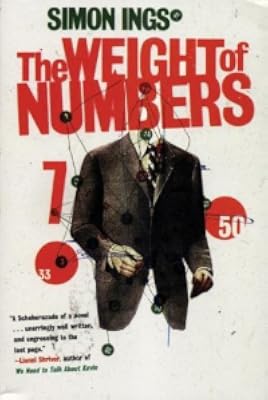
The Weight of Numbers
by Simon Ings
On This Page
Description
From millions of lives, spanning continents and generations, come three people. One of them must bury 58 illegal immigrants who have suffocated in a lorry thousands of miles from home. The opposite of fate is the weight of numbers.Tags
Recommendations



























Member Recommendations
Member Reviews
It can be a wonderful thing when a novelist sidesteps traditional literary boundaries, instead lunging heroically for something new and daring. It is a calamity when that novelist collapses without success.
English author Simon Ings has taken such a mighty leap, and his flight is laden with moments of sheer beauty. Like an overeager athlete, however, he has not trained fully for the event, stumbling and hitting the ground far short of a masterpiece.
The Weight of Numbers, Ings’ fifth novel, takes such a wondrous swipe at greatness that its ultimate foundering is all the more disappointing. Attempting to prove that “people are rhythms, reverberating along the strands of an all-encompassing web,” Ings weaves randomness, fate, and show more “the mathematics of creation” into a panoramic, virtually plotless, multi-character epic that dumbfounds with its audacity, yet deadens with its ultimate lack of purpose.
Running through Numbers’ tumultuous decades of loose-limbed narrative are dozens of remarkable individuals, proving Ings to be a fine chronicler of human foibles. Among the most memorable are Nick Jinks, an enigma who changes his past like others change their clothes; Stacey Chavez, a b-movie actress so emaciated her body is like “a delicate, alien hand with its unexpected points of articulation, its difficult, eloquent gestures;” and Saul Cogan, a well-intentioned man who somehow ends up a human trafficker.
Ings plays it fast and loose with his timeline, flowing back and forth from lifepath to lifepath with giddy aplomb. Intermingling the fictional with the factual, inserting famous events and personalities into imaginary scenarios—astronaut Jim Lovell, mathematician Alan Turing, and actor Ewan McGregor all make fleeting appearances—Numbers begins to resemble nothing so much as the convoluted storylines of late-era Robert Altman films.
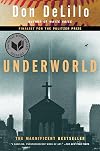
As in Don DeLillo’s Underworld, a seminal 1990s novel that Ings’ publisher takes pains to compare to Numbers, Ings is attempting to demonstrate the interconnectedness of the world through the prism of personal insights and shattering world events. Like DeLillo, Ings weaves his way down numerous paths to sometimes astonishing effect, illustrating the principle that people “are the patterns they make,” eventually creating a sparkling tapestry of human experience that never feels less than completely authentic.
Regrettably, The Weight of Numbers, while half Underworld’s length, is also half the accomplishment. For all its considerable, delicious messiness, Underworld created an undercurrent of significance that Numbers cannot equal.
Ings heaves his characters into every conceivable situation and locale, but the eventual effect is one of desperation, as if Ings lost sight of his goal, and hoped the pattern might emerge on its own. Ings strives to compensate through masterful sequences, but Numbers doesn’t add up to much beyond an exercise in form.
“Step into the world expecting magic; cause and effect will crush your every expectation,” muses one character. Sadly, The Weight of Numbers falls victim to its own axiom, expecting magic from its pages, eventually crushed by its own expectations. show less
English author Simon Ings has taken such a mighty leap, and his flight is laden with moments of sheer beauty. Like an overeager athlete, however, he has not trained fully for the event, stumbling and hitting the ground far short of a masterpiece.
The Weight of Numbers, Ings’ fifth novel, takes such a wondrous swipe at greatness that its ultimate foundering is all the more disappointing. Attempting to prove that “people are rhythms, reverberating along the strands of an all-encompassing web,” Ings weaves randomness, fate, and show more “the mathematics of creation” into a panoramic, virtually plotless, multi-character epic that dumbfounds with its audacity, yet deadens with its ultimate lack of purpose.
Running through Numbers’ tumultuous decades of loose-limbed narrative are dozens of remarkable individuals, proving Ings to be a fine chronicler of human foibles. Among the most memorable are Nick Jinks, an enigma who changes his past like others change their clothes; Stacey Chavez, a b-movie actress so emaciated her body is like “a delicate, alien hand with its unexpected points of articulation, its difficult, eloquent gestures;” and Saul Cogan, a well-intentioned man who somehow ends up a human trafficker.
Ings plays it fast and loose with his timeline, flowing back and forth from lifepath to lifepath with giddy aplomb. Intermingling the fictional with the factual, inserting famous events and personalities into imaginary scenarios—astronaut Jim Lovell, mathematician Alan Turing, and actor Ewan McGregor all make fleeting appearances—Numbers begins to resemble nothing so much as the convoluted storylines of late-era Robert Altman films.
As in Don DeLillo’s Underworld, a seminal 1990s novel that Ings’ publisher takes pains to compare to Numbers, Ings is attempting to demonstrate the interconnectedness of the world through the prism of personal insights and shattering world events. Like DeLillo, Ings weaves his way down numerous paths to sometimes astonishing effect, illustrating the principle that people “are the patterns they make,” eventually creating a sparkling tapestry of human experience that never feels less than completely authentic.
Regrettably, The Weight of Numbers, while half Underworld’s length, is also half the accomplishment. For all its considerable, delicious messiness, Underworld created an undercurrent of significance that Numbers cannot equal.
Ings heaves his characters into every conceivable situation and locale, but the eventual effect is one of desperation, as if Ings lost sight of his goal, and hoped the pattern might emerge on its own. Ings strives to compensate through masterful sequences, but Numbers doesn’t add up to much beyond an exercise in form.
“Step into the world expecting magic; cause and effect will crush your every expectation,” muses one character. Sadly, The Weight of Numbers falls victim to its own axiom, expecting magic from its pages, eventually crushed by its own expectations. show less
Wow...!
From London during the blitz to the bloody civil war in Mozambique. From 50's Kibbutz life to 60's Miami, from the moon to present day Portsmouth. Simon Ings prepares a twisted spaghetti of time, space and life, chopped and stirred and mixed up some more. Somehow this potentially confusing brew results in coherent and gripping page-turner peopled by characters real and fictitious, but all with depth and credibility.
Its an exhilliarating read, a book which sets your heart thumping and your mind spinning off in several directions at the same time. The historical fact which forms the backdrop (particular the chapters set in Mozambique) will have you wanting to know more. And if you are like me you may find yourself drawing little show more diagrams on pieces of paper to make sure you really did put this jigsaw of connected lives together properly in your head. show less
From London during the blitz to the bloody civil war in Mozambique. From 50's Kibbutz life to 60's Miami, from the moon to present day Portsmouth. Simon Ings prepares a twisted spaghetti of time, space and life, chopped and stirred and mixed up some more. Somehow this potentially confusing brew results in coherent and gripping page-turner peopled by characters real and fictitious, but all with depth and credibility.
Its an exhilliarating read, a book which sets your heart thumping and your mind spinning off in several directions at the same time. The historical fact which forms the backdrop (particular the chapters set in Mozambique) will have you wanting to know more. And if you are like me you may find yourself drawing little show more diagrams on pieces of paper to make sure you really did put this jigsaw of connected lives together properly in your head. show less
Given the numerical theme of this book I'm tempted to contribute a few numbers of my own. It's got 420 pages, of which about 400 left me baffled. I speed-read a good 50 towards the end, desperate to have the thing finished. It made me laugh precisely twice.
It's probably my fault. The whole thing is written with the confidence of someone who knows stuff, and who could probably teach you stuff if you could figure out what any of it meant. It's probably best enjoyed by people who read slowly and are comfortable puzzling over every last sentence. People who excel at cryptic crosswords. I am certain that had I read it in this way, the last section would have bloomed into three-dimensional technicolour clarity. But for for readers like me, show more perhaps lacking in the patience and I daresay intelligence needed, the experience was like chasing a bus, desperate to get on board before it disappears round the next corner, whilst not totally sure it's even the right bus. My mental notes were reduced to staccato non-sequiturs (Anthony loses his trousers...ends up on Kibbutz). Need to practice those cryptic crosswords. show less
It's probably my fault. The whole thing is written with the confidence of someone who knows stuff, and who could probably teach you stuff if you could figure out what any of it meant. It's probably best enjoyed by people who read slowly and are comfortable puzzling over every last sentence. People who excel at cryptic crosswords. I am certain that had I read it in this way, the last section would have bloomed into three-dimensional technicolour clarity. But for for readers like me, show more perhaps lacking in the patience and I daresay intelligence needed, the experience was like chasing a bus, desperate to get on board before it disappears round the next corner, whilst not totally sure it's even the right bus. My mental notes were reduced to staccato non-sequiturs (Anthony loses his trousers...ends up on Kibbutz). Need to practice those cryptic crosswords. show less
I don't know what to make of this book. It was lovely to read and I really wanted to learn about the stories of all the characters. But after reading through nearly three quarters of the book I was still being introduced to new characters and the plot was not yet linking up in any meaningful way. So I quit. But I still kind of wonder how it ended and it it all came together at the last minute? Each chapter seemed to start to new storyline, but the previous chapters remained unresolved. I understand that is a strategy to build tension, but I'd just had enough of the lack of resolution when I put the book down for the final time and sent it back to the library.
Really enjoyed reading this, although it's a bit rough in places, but one that I was keen to keep reading. In some ways it reminds me of Cloud Atlas, more the style than the subject matter. Having finished this and thought about it for a while, I do think it would benefit from a second reading as I am bound to have missed lots of the connections - I know I only figured one obvious one just before I finished it!
this book made no sense. I was sick most of the time I was reading it, but I don't think it would have made much more sense if my head was clear. I feel like it would be better the 2nd time through, but there are too many other books I'd rather read than read this twice.
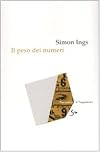
(CEDUTO) L'ho comprato per la copertina (forata di sghembo, un po' ruffiana, ed. Saggiatore). Per le prime 30/40 pag. non ho capito di cosa parlasse. Allora sono andato avanti, inutilmente. Ora l'ho riposto, saggiamente.
Members
- Recently Added By
Author Information

35+ Works 1,374 Members
Simon Ings, a science writer and novelist, is the author of A Natural History of Seeing: The Art and Science of Vision, He edits the culture section of New Scientist and regularly contributes to publications including the Guardian, Times (UK), Telegraph, Independent, and Nature. He lives and works in London.
Common Knowledge
- Original title
- The Weight of Numbers
- Original publication date
- 2006
Classifications
Statistics
- Members
- 217
- Popularity
- 150,523
- Reviews
- 10
- Rating
- (3.32)
- Languages
- 5 — English, German, Italian, Portuguese, Spanish
- Media
- Paper, Ebook
- ISBNs
- 11
- ASINs
- 2