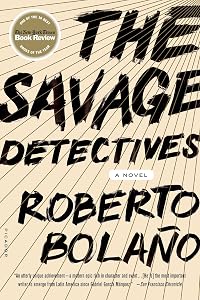
The Savage Detectives
by Roberto Bolaño
On This Page
Description
The late Chilean writer Roberto Bolaño has been called the García Márquez of his generation. In this dazzling novel, the book that established his international reputation, Bolaño tells the story of two modern-day Quixotes—the last survivors of an underground literary movement, perhaps of literature itself—on a tragicomic quest through a darkening, entropic universe. Brilliantly rendered into English by Natasha Wimmer, the acclaimed translator of Bolaño's other great masterwork, show more 2666, The Savage Detectives is an exuberant, wildly inventive and ambitious novel from one of the greatest Latin American authors of our age. show lessTags
Recommendations







Member Recommendations


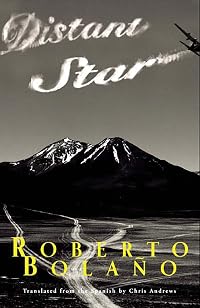
poetontheone Another highly meditative book by a revered Spanish language novelist that examines the nature of literature and writing while containing tonal elements of the absurd and the surreal.
Member Reviews
This is an incredible novel that took me a long time to read. Having read other reviewers on the book I see I'm not the only one who has had this experience and I think it speaks for the structural effects of the novel more than the laziness of the reader. The story is told in three parts. Part one (the first 139 pages in my edition) go by at a clip. They are told in diary form and plot mainly around the introduction of a group of poets who call themselves the visceral realists. The narrative form breaks in the second part and becomes about this same group only it is told in interviews with various people who have been in contact with them. The section is not laid out chronologically, it is 450 pages long, and it is the section that show more seems to be most culpable for readers setting their books down. The third part (only about 60 pages) goes back to the original structural format and goes quickly.
It has been a long time since I have felt as excited about the possibility of poetry and how literature can change the world. Indeed, the feelings evoked in the first section of the book reminded me of my youth in it's purest form. All things were possible and it was possible to do all things. The visceral realists matter and the fate of the world hangs in their balance. Among the many themes of this work is the passage of this group of poets from youth to experience (and whatever that means for each of them). The opening section of the novel starts with such exuberance that we are launched into the middle section with the same bright-eyed energy and optimism as youth into adulthood.
I think the reason the second part takes so long to read is that structurally the reader is given a lot of stopping points. Within each chapter (it isn't easy to say how each chapter is organized or why they are even chapters) different sections begin like a documentary, complete with location and date stats at the opening (eg, "Simone Darrieux, Rue des Petites Ecuries, Paris, July 1977."). Often the stories told within each section were so rich and full of meaning it took me a few days to digest them. Within each chapter you might have 4 or 5 different sections (sometimes less). The effect is a meandering relationship with the text as a reader. I put it down and came back often after reading several other novels in the interim.
This relationship mirrors the meandering visceral realists during the second section of the novel as we hear about them indirectly while they pass through innocence to experience and optimism to sometimes pessimism, sometimes distraction, sometimes violence (who would argue Luscious Skin's demise wasn't the natural endpoint for his trajectory... and yet, how similar to Belano's end).
Much is made by readers of the final puzzle: "What's outside the window?" Here's my answer: just as the reader's relationship with the text is implicated in the journey of the visceral realists (a name that accumulates authority throughout the novel), so the answer to the question is that it depends on what's inside the window. The lines of window are blurred. The contents of the novel's physically qualities as a book are (and have always been) blurred. What's outside the window? A good point: what is "outside the window?" show less
It has been a long time since I have felt as excited about the possibility of poetry and how literature can change the world. Indeed, the feelings evoked in the first section of the book reminded me of my youth in it's purest form. All things were possible and it was possible to do all things. The visceral realists matter and the fate of the world hangs in their balance. Among the many themes of this work is the passage of this group of poets from youth to experience (and whatever that means for each of them). The opening section of the novel starts with such exuberance that we are launched into the middle section with the same bright-eyed energy and optimism as youth into adulthood.
I think the reason the second part takes so long to read is that structurally the reader is given a lot of stopping points. Within each chapter (it isn't easy to say how each chapter is organized or why they are even chapters) different sections begin like a documentary, complete with location and date stats at the opening (eg, "Simone Darrieux, Rue des Petites Ecuries, Paris, July 1977."). Often the stories told within each section were so rich and full of meaning it took me a few days to digest them. Within each chapter you might have 4 or 5 different sections (sometimes less). The effect is a meandering relationship with the text as a reader. I put it down and came back often after reading several other novels in the interim.
This relationship mirrors the meandering visceral realists during the second section of the novel as we hear about them indirectly while they pass through innocence to experience and optimism to sometimes pessimism, sometimes distraction, sometimes violence (who would argue Luscious Skin's demise wasn't the natural endpoint for his trajectory... and yet, how similar to Belano's end).
Much is made by readers of the final puzzle: "What's outside the window?" Here's my answer: just as the reader's relationship with the text is implicated in the journey of the visceral realists (a name that accumulates authority throughout the novel), so the answer to the question is that it depends on what's inside the window. The lines of window are blurred. The contents of the novel's physically qualities as a book are (and have always been) blurred. What's outside the window? A good point: what is "outside the window?" show less
This book hangs in the air like a dirge. The opening section of the book evokes a time of youthful exuberance of the sensual and intellectual thrill of being part of a movement. The visceral realists poets described in the opening part of the book embody the romanticism of big ideas and of surging forward movement. It is a group that, in the minds of those who strive to be part, crackles with energy and potential. There are plenty of other groups and movements built from the same template — those coming to mind for me are the Dada movement and Situationist International. Like those groups, the visceral realists coalesce around a desire to critique meaning, form, and tradition and to hurtle people forward into the unknown. To the show more visceral realists, poetry was the embodiment of critique. But eventually, perhaps inevitably, critique runs out of steam (as Bruno Latour argues) and it is, by itself no longer enough or sufficient no matter how many voices contribute.
I see the middle section of the book (comprising the bulk of the novel) as showing the ways that idealistic critique encounters the world and either makes some kind of headway or is rebuffed or is quashed. So many of the voices that make up this part of the novel show, I think, the translation of critique into other outlets and experiences. Only in Belano and Lima does the center of that critique hold, and those two figures cut their paths by design or by luck but seemingly always penniless and by the beneficence of friends and strangers. The voices in this part of the book offer sometimes incoherent narratives that jump around in time, but I don’t think they are supposed to be sensible in a linear sense. As I see it, they are movements of poetry, macro-poetry, that attempts to evoke an experience of the friction between resistance and assimilation; difference and sameness; possibility and predestination.
I hadn’t expected this novel to resonate quite the way it does in this political and cultural moment in the US. For example, the US President’s recent executive order targeting the Smithsonian for promoting divisive and “improper” ideology shows, on the one hand, that art and culture and writing does still have teeth. It does still chafe. But it is also shows that art exists and is available to us through tenuous, extrapolated, institutionalized forms of a patronage system. In the case of the US, this patronage often comes in the form of federal funding through public arts programs and direct grants of federal dollars through institutions like the NEA and NEH. Threaten to “hit ‘em in the money” and critique really does run out of steam. Maybe that’s why this novel seems more dirge like to me — or like a protest song played at someone’s funeral.
There is a degree to which I empathize with Belano and Lima, probably because I see a bit of myself in the 1970’s versions of those central figures. It’s not that I was a poet but rather that I believed in the transformative potential of art and expression and of the capacity of individuals and small bands of like-minded people to be agents of radical change. I still want to believe that, but I don’t know that I actually do anymore. Nevertheless, I admire those who do believe with sincerity. Belano and Lima are these kinds of people. show less
I see the middle section of the book (comprising the bulk of the novel) as showing the ways that idealistic critique encounters the world and either makes some kind of headway or is rebuffed or is quashed. So many of the voices that make up this part of the novel show, I think, the translation of critique into other outlets and experiences. Only in Belano and Lima does the center of that critique hold, and those two figures cut their paths by design or by luck but seemingly always penniless and by the beneficence of friends and strangers. The voices in this part of the book offer sometimes incoherent narratives that jump around in time, but I don’t think they are supposed to be sensible in a linear sense. As I see it, they are movements of poetry, macro-poetry, that attempts to evoke an experience of the friction between resistance and assimilation; difference and sameness; possibility and predestination.
I hadn’t expected this novel to resonate quite the way it does in this political and cultural moment in the US. For example, the US President’s recent executive order targeting the Smithsonian for promoting divisive and “improper” ideology shows, on the one hand, that art and culture and writing does still have teeth. It does still chafe. But it is also shows that art exists and is available to us through tenuous, extrapolated, institutionalized forms of a patronage system. In the case of the US, this patronage often comes in the form of federal funding through public arts programs and direct grants of federal dollars through institutions like the NEA and NEH. Threaten to “hit ‘em in the money” and critique really does run out of steam. Maybe that’s why this novel seems more dirge like to me — or like a protest song played at someone’s funeral.
There is a degree to which I empathize with Belano and Lima, probably because I see a bit of myself in the 1970’s versions of those central figures. It’s not that I was a poet but rather that I believed in the transformative potential of art and expression and of the capacity of individuals and small bands of like-minded people to be agents of radical change. I still want to believe that, but I don’t know that I actually do anymore. Nevertheless, I admire those who do believe with sincerity. Belano and Lima are these kinds of people. show less
Roberto Bolaño was an interesting and peripatetic guy. Born in Chile in 1953 to a working class family, he moved to Mexico as a teenager in the late 1960s, where he quickly dropped out of school to become a journalist involved with left-wing political causes. While developing his talent as a poet and writer of fiction, he returned to Chile around the time of the Pinochet coup and was imprisoned as a terrorist for a brief stretch before returning to Mexico City to start the Infrarrealismo movement as a reaction against the conventional literary traditions prevailing at the time (e.g., magical realism). Bolaño later left Mexico for Spain, where he lived a bohemian lifestyle as a writer and also as a security guard at a campground. He show more died prematurely at the age of 50 just as he was reaching the height of his fame as a novelist.
That background is useful to know before one launches into reading The Savage Detectives. Hailed as “the first great Latin American novel of the 21st century,” the book tells of two renegade poets—Arturo Belano, a Chilean ex-pat, and Ulises Lima, a Mexican national—who start a literary movement in Mexico City in 1975. They call themselves the “Visceral Realists,” resurrecting a short-lived group from the 1920s, and stand for whatever isn’t the current literary fashion. The ostensible plot of the story is the search that Belano (who is Bolaño’s alter ego) and Lima conduct for Cesárea Tinajero, the elusive founder of the original Visceral Realists, who long ago disappeared into the Sonoran desert. Their search takes them from the heart of Mexico City to the northern border of the country (accompanied by a prostitute and a young acolyte of the movement, all while being followed by two men intent on killing them), before they eventually scatter to Europe, Africa, and the Middle East.
If that sounds like reasonably direct story-telling, rest assured that The Savage Detectives is anything but straightforward. The novel is divided into three parts, spread over a span of about two decades. The first and third sections involve the first-person narration of Juan García Madero, the young want-to-be Visceral Realist, who tells of how he got involved with Belano and Lima, how they came to leave Mexico City in a stolen car with a prostitute in tow, and their adventures in Sonora. These events are relayed as diary entries over a three-month period from late 1975 to early 1976. The middle section, comprising the bulk of the novel, adopts a completely different stylistic tone. Spread between 1976 and 1996, this part of the book chronicles a series of “interviews” with about forty people who had some sort of contact with Belano and Lima over the years following their trip to the desert. Of course, each of these narrators has a different opinion of the poets and their abortive movement and, collectively, their vignettes provide the reader with a not-quite-complete view of the rest of the story.
I found this novel to be always interesting and often thrilling, with only occasional stretches that dragged on too long (almost all of these were in the middle section of the book). Bolaño’s language is simply electric and the frenetic way he paces the story captures perfectly the passion and angst of a generation of young artists who likely never find what they are searching for. In that regard, The Savage Detectives has been likened to some of the great Beat Generation works (e,g, On the Road, Howl) that caught the spirit of a different place and time, and I think that comparison is apt. To be sure, though, this is an author with his own voice and the way he is able to mash up so many interrelated personal stories with themes involving politics, sex, philosophy, violence, and literary references into an almost-coherent story is simply amazing. This is a book that I really enjoyed reading and it ranks right beside the magnificent and harrowing 2666 as the best work this talented writer produced. show less
That background is useful to know before one launches into reading The Savage Detectives. Hailed as “the first great Latin American novel of the 21st century,” the book tells of two renegade poets—Arturo Belano, a Chilean ex-pat, and Ulises Lima, a Mexican national—who start a literary movement in Mexico City in 1975. They call themselves the “Visceral Realists,” resurrecting a short-lived group from the 1920s, and stand for whatever isn’t the current literary fashion. The ostensible plot of the story is the search that Belano (who is Bolaño’s alter ego) and Lima conduct for Cesárea Tinajero, the elusive founder of the original Visceral Realists, who long ago disappeared into the Sonoran desert. Their search takes them from the heart of Mexico City to the northern border of the country (accompanied by a prostitute and a young acolyte of the movement, all while being followed by two men intent on killing them), before they eventually scatter to Europe, Africa, and the Middle East.
If that sounds like reasonably direct story-telling, rest assured that The Savage Detectives is anything but straightforward. The novel is divided into three parts, spread over a span of about two decades. The first and third sections involve the first-person narration of Juan García Madero, the young want-to-be Visceral Realist, who tells of how he got involved with Belano and Lima, how they came to leave Mexico City in a stolen car with a prostitute in tow, and their adventures in Sonora. These events are relayed as diary entries over a three-month period from late 1975 to early 1976. The middle section, comprising the bulk of the novel, adopts a completely different stylistic tone. Spread between 1976 and 1996, this part of the book chronicles a series of “interviews” with about forty people who had some sort of contact with Belano and Lima over the years following their trip to the desert. Of course, each of these narrators has a different opinion of the poets and their abortive movement and, collectively, their vignettes provide the reader with a not-quite-complete view of the rest of the story.
I found this novel to be always interesting and often thrilling, with only occasional stretches that dragged on too long (almost all of these were in the middle section of the book). Bolaño’s language is simply electric and the frenetic way he paces the story captures perfectly the passion and angst of a generation of young artists who likely never find what they are searching for. In that regard, The Savage Detectives has been likened to some of the great Beat Generation works (e,g, On the Road, Howl) that caught the spirit of a different place and time, and I think that comparison is apt. To be sure, though, this is an author with his own voice and the way he is able to mash up so many interrelated personal stories with themes involving politics, sex, philosophy, violence, and literary references into an almost-coherent story is simply amazing. This is a book that I really enjoyed reading and it ranks right beside the magnificent and harrowing 2666 as the best work this talented writer produced. show less
This is an interesting, if somewhat daunting, precursor to Bolaño’s magisterial epic, “2666.” Having read “2666” first, I wasn’t as enamored with “The Savage Detectives” as I might otherwise have been; the conventions of the detective genre had already been exposed as fraudulent, the brutal style had already been perfected, the thematic nightmare of inevitable destruction had already been explored… I had already been to Santa Teresa. That said, the two books should rightly be read together and the effect of reading each one is haunting in its own right. “The Savage Detectives” is sometimes painfully slow, it’s true; however, it seems to be written in a way that is deliberately so. This is not a book that is show more meant to be read and then written off. It stays with you. This is the kind of book that grows over time and is best understood with repeated readings. (By the way, Natasha Wimmer is a brilliant translator. I probably wouldn’t have read this book if anyone else had translated it into English.) show less
Book 2, Chapter 23 has each narrator's interlude close with a variation on the same sentence:
Everything that begins as comedy ends as tragedy.
Everything that begins as comedy ends as tragicomedy.
Everything that begins as comedy ends as comedy.
Everything that begins as comedy ends as a cryptographic exercise.
Everything that begins as a comedy ends as a horror movie.
What begins as a comedy ends as a
triumphal march, wouldn’t you say?
Everything that begins as a comedy inevitably ends as a mystery.
Everything that begins as a comedy ends as a dirge in the void.
Everything that begins as a comedy ends as a comic monologue, but we aren’t laughing anymore.
Any one of those sentences could ultimately be the key, the real meat of the book. Or not. Perhaps they are a general outline of the structure of the book. Or not. They do feel like important sentences that are scratching at the soul of this book. You could read to the end of the book, shut it, then say any one of those sentences & it would be true of the book as a whole.
Which makes it pretty masterful, while also maintaining a mystique of something just out of reach & still slightly baffling.
An aside: Twice I tried to read the book & pretty much gave up very shortly after starting because I was turned off by the teen boy horniness of it. The misogyny. And then I decided to plow through anyway. I needed to see for myself why so many love & revere this book. Why it is a cult classic or perhaps just a classic. A reflection of Latin American writing as well as an inspiration for it. And I do see, I think so anyway. I see why people love it. I see why people hate it. I see why people reread it. I see why people abandon it before finishing. Any of those responses feel appropriate. Just like those quotes from the book, each person will have their own way of viewing the book &, to a certain extent, I think it may determine your like or dislike of it, your appreciation for or dismissal of it.
That's a really tall order for a book to pull off. All in all, Bolaño did pull it off & pulled it off it very, very well.
"For a while, Criticism travels side by side with the Work, then Criticism vanishes and it's the Readers who keep pace. The journey may be long or short. Then the Readers die one by one and the Work continues on alone, although a new Criticism and new Readers gradually fall into step with it along its path. Then Criticism dies again and the Readers die again and the Work passes over a trail of bones on its journey toward solitude. To come near the work, to sail in her wake, is a sign of certain death, but new Criticism and new Readers approach her tirelessly and relentlessly and are devoured by time and speed. Finally the Work journeys irremediably alone in the Great Vastness. And one day the Work dies, as all things must die and come to an end: the Sun and the Earth and the Solar System and the Galaxy and the farthest reaches of man's memory. Everything that begins as a comedy ends as a tragedy."
Haunting, hypnotic masterpiece.
This book somehow nails so many different styles and genres – adventure mystery, autobiographical fiction, coming-of-age story – and is unlike anything I've read before.
The story behind the book with it basically being a homage to Bolaño's literary peers and featuring several characters based on real writers (including Bolaño himself) means there are so many subtexts and references to read up on. Most of these are lost on me but if/when I return to this book armed with more of the context I'm sure I'll appreciate it even more.
The second section which forms the bulk of the book is disorientating at first as the narrator changes every few pages and the story bounces around across continents and show more decades. At a certain point you realise there's no hope trying to keep up with all the different characters and just let yourself be carried along for the ride. Luckily the writing is so absorbing and the polyphonic structure turns out to be a bit of a cheat code for rendering minor characters in acute detail. The irony is we never actually hear from the two central characters in the book – they're only told through the testimonies of others.
This book was a revelation for me and I now feel urged to read this guy's entire catalogue, which is really the highest praise you can give a writer. show less
This book somehow nails so many different styles and genres – adventure mystery, autobiographical fiction, coming-of-age story – and is unlike anything I've read before.
The story behind the book with it basically being a homage to Bolaño's literary peers and featuring several characters based on real writers (including Bolaño himself) means there are so many subtexts and references to read up on. Most of these are lost on me but if/when I return to this book armed with more of the context I'm sure I'll appreciate it even more.
The second section which forms the bulk of the book is disorientating at first as the narrator changes every few pages and the story bounces around across continents and show more decades. At a certain point you realise there's no hope trying to keep up with all the different characters and just let yourself be carried along for the ride. Luckily the writing is so absorbing and the polyphonic structure turns out to be a bit of a cheat code for rendering minor characters in acute detail. The irony is we never actually hear from the two central characters in the book – they're only told through the testimonies of others.
This book was a revelation for me and I now feel urged to read this guy's entire catalogue, which is really the highest praise you can give a writer. show less
Si a alguna obra le calza esa cursilería, tan del gusto de los críticos, de novela coral, ésta es «Los detectives salvajes» de Roberto Bolaño. Coral en el sentido nietzscheano. Al menos como el joven Nietzsche imaginó, o inventó, el origen de la tragedia en la Grecia antigua («...la tragedia surgió del coro trágico y que en su origen era únicamente coro y nada más que coro…» «El nacimiento de la tragedia» Cap. 7). El héroe bifronte: Lima-Belano, es cantado por multitud de personajes que desgranan sus recuerdos. El corifeo, el autor, no aparece más que como caótico ordenador de este guirigay de voces llegado de diferentes lugares (América, Africa, Asia, Europa) y tiempo (recuerdos que abarcan desde 1975 a 1996).
show more Crítica y parodia del mundillo literario: autores, críticos, editores, representantes, premios,… Una obra morosa, sin prisas, laberíntica, cuyo hilo se columbra bien avanzada la novela. Entonces cada pieza va ocupando su lugar, o el lugar que quiere darle el lector, en las dispersas vidas de los personajes e imaginar que el mito «Cesárea Tinajero existió, tal vez todavía existe» (II parte, Cap. 15 Luis Sebastián Rosado… p. 352). show less
show more Crítica y parodia del mundillo literario: autores, críticos, editores, representantes, premios,… Una obra morosa, sin prisas, laberíntica, cuyo hilo se columbra bien avanzada la novela. Entonces cada pieza va ocupando su lugar, o el lugar que quiere darle el lector, en las dispersas vidas de los personajes e imaginar que el mito «Cesárea Tinajero existió, tal vez todavía existe» (II parte, Cap. 15 Luis Sebastián Rosado… p. 352). show less
Members
- Recently Added By
Lists

The Guardian's 1000 Novels Everyone Must Read
1,005 works; 550 members

1001 Books You Must Read Before You Die
1,448 works; 1,134 members

Best Contemporary Literary Fiction (Around the Last 30 Years)
388 works; 124 members

Recommend the 20 best books you've read in the last five years
2,168 works; 602 members

Favorite Long Books
330 works; 41 members

Best Crime Fiction
262 works; 39 members

Significant works of postmodern fiction
86 works; 25 members

Canon de la narrativa universal del siglo XX
254 works; 6 members
Latin American Literature
50 works; 11 members

1990s
309 works; 17 members

Unread books
1,063 works; 84 members

Experimental Literature
141 works; 18 members

Five star books
1,755 works; 107 members

Blue Pyramid 1,276 Best Books of All Time
1,248 works; 32 members

A Novel Cure
742 works; 23 members

Literature in Translation
113 works; 4 members

recalling favorites...
105 works; 2 members

Las 100 mejores novelas de la literatura hispanoamericana (cicutadry)
100 works; 1 member

contemporary literary fiction list to check out
47 works; 1 member

Widely acclaimed, one book per year
105 works; 3 members

Retrospective of 20th- and 21st-century literature
154 works; 1 member

España en cien libros
100 works; 1 member

End of Your Life Book Club
134 works; 4 members
Canon de la narrativa universal del s. XX (cicutadry)
499 works; 3 members

NYT 100 best books of 21st C
100 works; 31 members

My TBR
371 works; 3 members
Las 100 mejores novelas de la literatura hispanoamericana
96 works; 1 member

Los 100 mejores libros en español de los últimos 25 años
26 works; 1 member
.
396 works; 1 member
Author Information

95+ Works 28,007 Members
Some Editions
Awards and Honors
Awards
Distinctions
Notable Lists
Series
Belongs to Publisher Series
Common Knowledge
- Canonical title
- The Savage Detectives
- Original title
- Los detectives salvajes
- Alternate titles*
- De woeste zoekers
- Original publication date
- 1998
- People/Characters
- Arturo Belano; Ulises Lima; Octavio Paz; Auxilio Lacouture; Juan García Madero; Cesárea Tinajero (show all 8); Piel Divina; Ernesto San Epifanio
- Important places
- Africa; Barcelona, Catalonia, Spain; Israel; Latin America; Mexico City, Mexico; Sonora Desert, Mexico (show all 10); Chile; Liberia; Morocco; Santa Teresa, Sonora, Mexico
- Epigraph
- "Do you want Mexico to be saved? Do you want Christ to be our king?"
"No."
-Malcolm Lowry - Dedication
- For Carolina López and Lautaro Bolaño, who have the good fortune to look alike.
- First words
- I've been cordially invited to join the visceral realists.
- Quotations
- You can woo a girl with a poem, but you can't hold on to her with a poem. Not even with a poetry movement.
- Last words
- (Click to show. Warning: May contain spoilers.)What's outside the window?
- Blurbers
- Krauss, Nicole
- Original language
- Spanish
*Some information comes from Common Knowledge in other languages. Click "Edit" for more information.
Classifications
- Genres
- General Fiction, Fiction and Literature
- DDC/MDS
- 863.64 — Literature & rhetoric Spanish Literature Spanish fiction 20th Century 1945-2000
- LCC
- PQ8098.12 .O38 .D4813 — Language and Literature French, Italian, Spanish and Portuguese literatures Spanish literature Provincial, local, colonial, etc. Spanish America
- BISAC
Statistics
- Members
- 6,172
- Popularity
- 2,019
- Reviews
- 138
- Rating
- (3.97)
- Languages
- 21 — Czech, Danish, Dutch, English, Estonian, Finnish, French, German, Greek, Hebrew, Hungarian, Italian, Norwegian (Bokmål), Polish, Portuguese, Romanian, Croatian, Slovenian, Spanish, Swedish, Turkish
- Media
- Paper, Audiobook, Ebook
- ISBNs
- 90
- UPCs
- 1
- ASINs
- 32