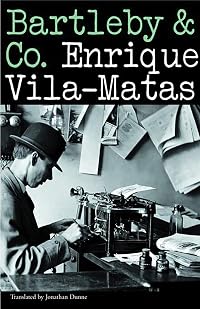
Bartleby & Co.
by Enrique Vila-Matas
On This Page
Description
InBartleby & Co., an enormously enjoyable novel, Enrique Vila-Matas tackles the theme of silence in literature: the writers and non-writers who, like the scrivener Bartleby of the Herman Melville story, in answer to any question or demand, replies: "I would prefer not to." Addressing such "artists of refusal" as Robert Walser, Robert Musil, Arthur Rimbaud, Marcel Duchamp, Herman Melville, and J. D. Salinger,Bartleby & Co. could be described as a meditation: a walking tour through the annals show more of literature. Written as a series of footnotes (a non-work itself),Bartleby embarks on such questions as why do we write, why do we exist? The answer lies in the novel itself: told from the point of view of a hermetic hunchback who has no luck with women, and is himself unable to write,Bartleby is utterly engaging, a work of profound and philosophical beauty. show lessTags
Recommendations
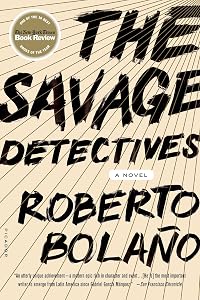
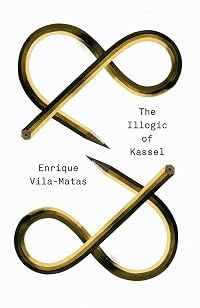
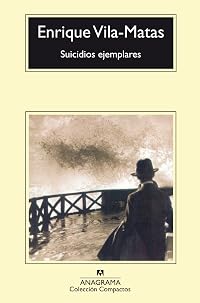
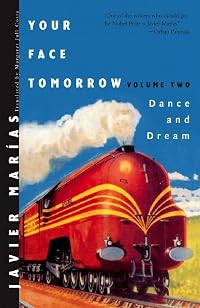

Member Recommendations
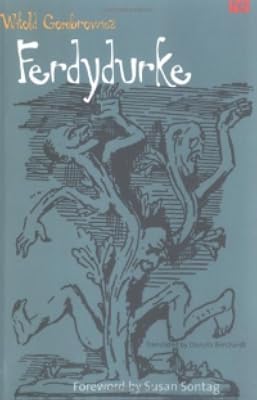
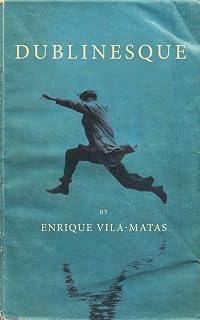
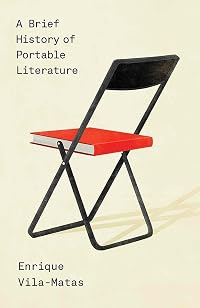
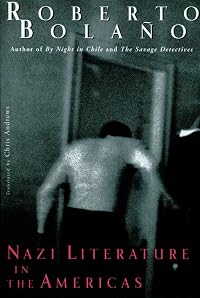
thorold Writers who stop writing
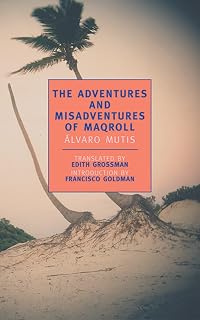
poetontheone Another highly meditative book by a revered Spanish language novelist that examines the nature of literature and writing while containing tonal elements of the absurd and the surreal.
Member Reviews
A fascinating collection of anecdotes about writers who turned away from writing, or writers who, paradoxically, never wrote at all. You'd think that such a study in negation would leave bitter taste in your mouth, a loss and a sadness, but that is not the case. These accounts are often whimsical, and even beautiful. I found myself moved, often to laughter, while reading this work. There is also no shortage of opportunity for contemplation here, for readers and writers a like, about the very nature and purpose of literature. The book also serves as a road map to discovering a great variety of writers one would not come across otherwise. Sadly, for the non-Spanish speaker, many writers in this book are Spanish or Latin American and show more obscure at that, so readng them may not be an option. Despite that, you will find your pencil underlining the titles of intriguing works as well as marking beautiful passages that are to be found right here in this book. show less
These phantom books, invisible texts, are the ones that knock at our door one day and, when we go to receive them, for what is often a trivial reason, they disappear; we open the door and they are no longer there, they have gone. It was undoubtedly a great book, the great book that was inside us, the one we were really destined to write, our book, the very book we shall never be able to write or read now. But that book, let is be clear, exists, it is held in suspension in the history of the art of the No.We tend to hold aloft those works of literature that are, to put it crudely, too heavy to actually hold aloft. For some reason, literary genius, in our view, denotes extensive creative output: literary genius is Proust writing his show more seven-volume masterpiece À la recherche du temps perdu by lamplight in his cork-lined bedroom; it is Woolf suffering a nervous breakdown after the symphonic jetties of The Waves have sapped every word from her, every ounce of creativity; it is Musil's The Man without Qualities for its examination of artistry, morality, and the social structures that oppress individuals and their relations with others. Hell, literary genius is even Freud's 24-volume complete psychological works, a monumental achievement of groundbreaking thought that continues to influence many disciplines to this day.
But what about the smaller masterpieces? In one of the many vignettes collected in Vila-Matas's literary-critical-cum-novelistic meditation Bartleby & Co., the humpbacked narrator recalls a childhood friend, Pineda, who scoffed literary production, preferring instead to write only the first lines of poems; on occasion, too, he would write a whole verse on cigarette paper, after which he would then smoke his poem literally to ashes. What about the writers who write one novel, and then never produce another work—whether because they have dried up all creative energy in the initial endeavor, whether because they have lost their muse (in whatever form that might take), or just because they have been forced into relative obscurity? As Marguerite Duras observes: "To write ... is also not to speak. It is to keep silent. It is to howl noiselessly... To write is to attempt to know what we would write were we to write."
While Vila-Matas names these lesser-known and more marginal writers as Bartlebys, after Melville's fictional scrivener who famously "prefers not to" do anything, he is also quick to point to larger socioeconomic and literary trends that often silence writers of immense promise. (The example of Proust above is one that fits here quite relevantly, as, despite the initial rejection of his work, his social status allowed him to continue carving away at the Recherche, even publishing the first volume himself.) As far as Melville, a writer who has become virtually synonymous with literature-with-a-capital-L, Vila-Matas rightly points out that he suffered obscurity in his own lifetime, eventually forced to take on the same job as his fictional creation to make ends meet: a mere scrivener, a copyist of other people's words.
Because I mentioned Freud and Woolf above, I'm also interested in the ways in which Vila-Matas's project echoes theirs. Before Freud conceptualized the uncanny, the field of aesthetics was largely concerned only with what was beautiful; while Burke and Romantic philosophy began to change this, it's only with Freud and the advent of modernity that we see more artists turning to the grotesque, the horrors, and the ugly aspects that inform our lives and our experiences just as much as do the pleasurable aspects. Similarly, Woolf's call for literature to not ignore the very real topic of illness is one that is very much in line with Vila-Matas's thoughts here: while he does mention illness several times (and, to be clear, by writers who have abandoned writing—or even those who are "writers" but have never written a word—he does not mean those whose lives are cut short by suicide, although he does make three exceptions to this rule), it is less how illness can cut short a writer's productive years than how illness can feature in the works we come to think of as canonical, again aligning his thesis with this trend après Freud.
While Bartleby & Co. is a difficult book to review, it is a project that is so very important, one that makes readers rethink what literary production is, entails, and what it might mean to be "a writer." Do we need thousands of pages to have been produced in order to name someone "a writer," or is the person who never sets down his or her thoughts—or else abandons a writing career after one or two successful (or not) texts—as much "a writer" by right?
Poetry unwritten, but lived in the mind: a beautiful ending for someone who ceases to write.What constitutes the writing life: the output or the intellectual framework and thought patterns that often inform, and sometimes do not inform, this output? As Jaime Gil de Biedma writes: "I believed that I wanted to be a poet, but deep down I wanted to be a poem."
In making his case for "a literature of the No," Vila-Matas is concerned both with Bartlebyan writers who would "prefer not to" writer, for whatever reason, and also with the intersecting matrices within and by which literature is inspired, produced, and eventually disseminated. A personal yet philosophical inquiry into the underbelly of literature, and one that questions canonical assumptions and often flips them on their categorical heads, Bartleby & Co. is a text that all writers should read, but also all readers: not only will Vila-Matas cause you to jot down names of unfamiliar writers on nearly every page of his text (although not all, as most do not exist except "in suspension in the history of the art of the No"), but he will also cause you to question rigorously just what "literature" is in the first place, and what we mean when we call someone "a writer." In fact, in quoting from Peruvian writer Julio Ramón Riberyo's The Temptation of Failure, Vila-Matas seems to agree that we all are:
We all have a book, possibly a great book, but in the tumult of our inner lives it rarely emerges or is so fleeting that we don't have time to pin it down.show less
Finally finished this birthday present from a dear friend. That fact alone puts me outside the world of the reclusive narrator, whose story is the ultimate filter through which the content of this book passes; it's a series of footnotes and interpretations on a lifetime spent on very little aside from reading. Through that lens, the refusal to write is an affirmation of solitude, but from a place of an intensely romantic value on pure communication, disappointed by the realities of life. We wish to express that life is suffering, but it's not, it's just shitty, and it's so much harder to make another person feel for vague disappointment than for sorrow; literature is impossible in a world that's merely mediocre. Much easier to stay back show more and point things out, draw attention to interesting details, stories and other people. There's some comfort in being merely witty, and hinting at the depth of feeling there to be had, somewhere beyond the barrier of what our words can bring directly. show less
Diário ficcionado, composto como notas de rodapé para textos inexistentes. Histórias, curiosidades, citações e especulações sobre escritores peculiares: aqueles que não o chegaram a ser, não deixando qualquer obra de relevo; e outros, que tendo publicado um ou dois livros, se remeteram depois a um longo silêncio. “Não, preferia não o fazer” insistia Bartleby, o escrivão, personagem enigmática (e aqui emblemática) de Herman Melville, líder do gang dos que “já não são daqui”, dos que “estão sós, solteiros”, da literatura do Não.
O livro explora as razões desta recusa da escrita. Juan Rulfo invocava a morte do seu Tio Celerino (que lhe contava as histórias) para justificar o seu silêncio. Existem as mais show more variadas razões (os tios Celerinos), como uma certa preponderância para as limitações apresentadas pela própria escrita. Neste sentido, Wittgenstein dizia “que tudo o que se pode pensar pode pensar-se claramente, tudo o que se pode dizer pode dizer-se claramente, mas nem tudo o que se pode pensar pode dizer-se”. Frase que induziu no narrador um pesadelo kafkiano a que atendiam Rimbaud, o próprio Wittgenstein e Duchamp queixando-se do quanto estavam arrependidos de terem deixado de escrever e pintar (no caso de Duchamp). Chega então Gombrowicz (parece uma anedota literata) que sentencia que apenas Duchamp tinha razões para não se arrepender, pois a pintura era uma coisa monstruosa: “Nenhuma arte é tão pobre em expressão. Pintar não é mais que renunciar a tudo o que não se pode pintar”. Contudo, não será tão diferente com a escrita. “Escrever é tentar saber os que escreveríamos se escrevêssemos”, dizia Maguerite Duras. Em certo sentido a escrita pode apenas iniciar no leitor mecanismos que estão ausentes na própria. Por isso, é comum gostarmos de livros que não conseguimos completamente compreender e ainda mais frequente não conseguirmos exprimir por que razão gostámos de determinado livro, que sentimos ter tocado algo profundo, mas inefável.
No fundo, escrever é sobretudo uma grande canseira: “Durante muito tempo, deitei-me por ter escrito”, dizia Perec, numa espécie de paródia a Proust. Sendo a síntese, até nos momentos mais marcantes, uma técnica preciosa: o cardeal Roncalli, quando foi eleito chefe da Igreja católica, escreveu uma única entrada no seu diário “Hoje fizeram-me Papa.”; e Luís XVI, aquando da tomada da Bastilha, anotou perspicazmente no seu diário: “Rien”. Só não seria uma atividade cansativa para Georges Simenon, que em 1929 escreveu 41 romances – número absolutamente provocatório contra tanta angústia da página em branco.
Resumindo: excelente prosa de Vila-Matas, condimentada com um sentido de humor inteligente (não sei se haverá outro), e povoada de pequenas histórias, curiosidades e citações sobre estes escritores do Não. Nem toda a gente achará piada a estas coisas, mas eu sim. show less
O livro explora as razões desta recusa da escrita. Juan Rulfo invocava a morte do seu Tio Celerino (que lhe contava as histórias) para justificar o seu silêncio. Existem as mais show more variadas razões (os tios Celerinos), como uma certa preponderância para as limitações apresentadas pela própria escrita. Neste sentido, Wittgenstein dizia “que tudo o que se pode pensar pode pensar-se claramente, tudo o que se pode dizer pode dizer-se claramente, mas nem tudo o que se pode pensar pode dizer-se”. Frase que induziu no narrador um pesadelo kafkiano a que atendiam Rimbaud, o próprio Wittgenstein e Duchamp queixando-se do quanto estavam arrependidos de terem deixado de escrever e pintar (no caso de Duchamp). Chega então Gombrowicz (parece uma anedota literata) que sentencia que apenas Duchamp tinha razões para não se arrepender, pois a pintura era uma coisa monstruosa: “Nenhuma arte é tão pobre em expressão. Pintar não é mais que renunciar a tudo o que não se pode pintar”. Contudo, não será tão diferente com a escrita. “Escrever é tentar saber os que escreveríamos se escrevêssemos”, dizia Maguerite Duras. Em certo sentido a escrita pode apenas iniciar no leitor mecanismos que estão ausentes na própria. Por isso, é comum gostarmos de livros que não conseguimos completamente compreender e ainda mais frequente não conseguirmos exprimir por que razão gostámos de determinado livro, que sentimos ter tocado algo profundo, mas inefável.
No fundo, escrever é sobretudo uma grande canseira: “Durante muito tempo, deitei-me por ter escrito”, dizia Perec, numa espécie de paródia a Proust. Sendo a síntese, até nos momentos mais marcantes, uma técnica preciosa: o cardeal Roncalli, quando foi eleito chefe da Igreja católica, escreveu uma única entrada no seu diário “Hoje fizeram-me Papa.”; e Luís XVI, aquando da tomada da Bastilha, anotou perspicazmente no seu diário: “Rien”. Só não seria uma atividade cansativa para Georges Simenon, que em 1929 escreveu 41 romances – número absolutamente provocatório contra tanta angústia da página em branco.
Resumindo: excelente prosa de Vila-Matas, condimentada com um sentido de humor inteligente (não sei se haverá outro), e povoada de pequenas histórias, curiosidades e citações sobre estes escritores do Não. Nem toda a gente achará piada a estas coisas, mas eu sim. show less
Libro per chi ama la letteratura e vuole perdersi in questo saggio strambo e sbilenco, alla ricerca degli autori del "NO" fra nomi reali e inventati, godibili aneddoti e ancor più piacevoli scenette inventate di sana piana e appiccicate sulla pelle dell'anonima voce narrante (uomo spagnolo con la gobba), per esempio quella dell'incontro con Salinger in tram. Vila-Matas sa sempre come uscire dal convenzionale creando qualcosa di unico.
I'm discouraged and also relieved to have abandoned this short novel.
Its premise is terrific metafiction (a writer who stopped writing now undertakes a project to explore other writers who stopped writing*) and its structure is clever (a series of 86 footnotes -- just the footnotes -- to a non-existent text). Exactly to my taste!
Alas, my literary eyes are bigger than...; this is way over my head. Vila-Matas references dozens (hundreds?) of iconically erudite writers who span civilization’s geography and chronology. I knew enough about a few that I'd already read their work or made plans to do so; I’d at least heard of others; but so, so many more were completely unfamiliar and there was so little space to get to know them in each show more one- or two-page “footnote.”
So I dug in deeper, Googleing the writers and trying to orient myself until that became too ambitious to keep up. Then I Googled just those who legitimately caught my interest, often to find (to my frustration and amusement) that their existence was fictitious! There’s Clement Cadou, for example, an aspiring writer who feels overlooked to the point of feeling like a piece of furniture, and so abandons writing to become a painter -- each painting featuring a piece of furniture and titled, “Self-Portrait.” Hilarious! (And deep -- isn't it what some writers do, continually re-working an aspect of self in their writing?) Or Felisberto Hernandez (apparently a real person), reputed for refusing to write endings to his stories and whose collection of such stories, Incomplete Narratives, intrigues me (but apparently isn’t real).
So I lightened up and then felt completely adrift in the book. I struggled to the halfway point where, even though I noticed an underlying narrative forming, I let it go.
------------
* a la Herman Melville’s story Bartleby the Scrivener, about a man who makes hand-written copies of documents in an 1850s Wall Street law office. Early on, Bartleby declines his boss’s assignment to proofread colleagues’ copies by responding, “I would prefer not to.” Before long, he also prefers not to write his own copies, or leave the office, or even eat, and events follow to a logical conclusion. show less
Its premise is terrific metafiction (a writer who stopped writing now undertakes a project to explore other writers who stopped writing*) and its structure is clever (a series of 86 footnotes -- just the footnotes -- to a non-existent text). Exactly to my taste!
Alas, my literary eyes are bigger than...; this is way over my head. Vila-Matas references dozens (hundreds?) of iconically erudite writers who span civilization’s geography and chronology. I knew enough about a few that I'd already read their work or made plans to do so; I’d at least heard of others; but so, so many more were completely unfamiliar and there was so little space to get to know them in each show more one- or two-page “footnote.”
So I dug in deeper, Googleing the writers and trying to orient myself until that became too ambitious to keep up. Then I Googled just those who legitimately caught my interest, often to find (to my frustration and amusement) that their existence was fictitious! There’s Clement Cadou, for example, an aspiring writer who feels overlooked to the point of feeling like a piece of furniture, and so abandons writing to become a painter -- each painting featuring a piece of furniture and titled, “Self-Portrait.” Hilarious! (And deep -- isn't it what some writers do, continually re-working an aspect of self in their writing?) Or Felisberto Hernandez (apparently a real person), reputed for refusing to write endings to his stories and whose collection of such stories, Incomplete Narratives, intrigues me (but apparently isn’t real).
So I lightened up and then felt completely adrift in the book. I struggled to the halfway point where, even though I noticed an underlying narrative forming, I let it go.
------------
* a la Herman Melville’s story Bartleby the Scrivener, about a man who makes hand-written copies of documents in an 1850s Wall Street law office. Early on, Bartleby declines his boss’s assignment to proofread colleagues’ copies by responding, “I would prefer not to.” Before long, he also prefers not to write his own copies, or leave the office, or even eat, and events follow to a logical conclusion. show less
High-concept literature like this provides so much pure pleasure that it's a real shame that a sequel would be inappropriate. Taking its title and central inspiration from Melville's immortal scrivener who would "prefer not to", this is an "anti-novel" in the form of 86 footnotes about writers who would also prefer not to, who possess the capability to write and create but choose instead to refrain. Channeling Kafka, Pessoa, Borges, Beckett, Salinger, and many more, Vila-Matas provides an oddly hopeful exploration of the various motivations that writers use to avoid practicing their craft, from seclusion to despair, exhaustion, and suicide. Yet as this novel is itself an act of creation, Vila-Matas shows that even the lengthiest list of show more Nos can still somehow add up to a Yes.
For such an insular and self-referential book, a "secondary" work of art if you will, it stands in its own right by the fascinating way that the protagonist, an idle, hunchbacked copyist who's no good with women, takes Melville's celebrated anti-hero as his guide, blending the noble refusal of his namesake with Pessoa's heteronym Bernardo Soares' disdain for the mundane. Structurally, the division into footnotes immediately brings The Book of Disquiet to mind, and the explorations of the negative sideroads that the mind's wandering can take definitely recall Pessoa. That hesitancy to fully engage with the world, the retreat into introspection and fantasy, the negation of the vital impulse of creation - I think that side of art is, paradoxically, artistically underexplored. We venerate artists for their finished works and mourn them for their unfinished ones, but what about the ones they never even begin? As the narrator says:
"These phantom books, invisible texts, are the ones that knock at our door one day and, when we go to receive them, for what is often a trivial reason, they disappear; we open the door and they are no longer there, they have gone. It was undoubtedly a great book, the great book that was inside us, the one we were really destined to write, our book, the very book we shall never be able to write or read now. But that book, let it be clear, exists, it is held in suspension in the history of the art of the No."
Of course, this is the sort of thing that only plays in literature - imagine compiling a cookbook for the Chefs of the No, or dedicating a symphony to composers who'd stopped writing. Are novels somehow more "artistically pure" than a pastiche commemorating the exhausted Painters of the No? And, somewhat surprisingly, Stanislaw Lem is missing from the lengthy list of authors Vila-Matas conscripts as members of the army of the No. His pseudoepigraphic A Perfect Vacuum contains "Rien du tout, ou la consequence", which translates to "Nothing, or the consequence", and purports to be a review of an imaginary novel constructed entirely of negations, such as the opening "The train did not arrive. He did not come." Given that Lem's artistic goals dovetail with Vila-Matas', he would seem a natural fit, but perhaps an omission from a list is just as significant as being on it, particularly in this case.
Vila-Matas' excursion is a quick read, over all too soon. There are many funny vignettes, such as the one about man who was convinced that José Saramago was stealing his ideas, and who became a "living character" from one of his novels as a form of protest. The protagonist's biographical sections are poignant, especially in section 57, when he discusses his past personal associations with a blocked artist schoolfriend who wrote poems that never went past the first line. Despite, or maybe because of the subject matter, it's inspiring to read a novel that boldly states its premise up front and then delivers, in words reminiscent of Miles Davis' famous statement that if he knew the jazz of the future, he'd play it:
"Only from the negative impulse, from the labyrinth of the No, can the writing of the future appear. But what will this literature be like? Not long ago a work colleague, somewhat maliciously, put this question to me. "I don't know," I said. "If I knew, I'd write it myself."" show less
For such an insular and self-referential book, a "secondary" work of art if you will, it stands in its own right by the fascinating way that the protagonist, an idle, hunchbacked copyist who's no good with women, takes Melville's celebrated anti-hero as his guide, blending the noble refusal of his namesake with Pessoa's heteronym Bernardo Soares' disdain for the mundane. Structurally, the division into footnotes immediately brings The Book of Disquiet to mind, and the explorations of the negative sideroads that the mind's wandering can take definitely recall Pessoa. That hesitancy to fully engage with the world, the retreat into introspection and fantasy, the negation of the vital impulse of creation - I think that side of art is, paradoxically, artistically underexplored. We venerate artists for their finished works and mourn them for their unfinished ones, but what about the ones they never even begin? As the narrator says:
"These phantom books, invisible texts, are the ones that knock at our door one day and, when we go to receive them, for what is often a trivial reason, they disappear; we open the door and they are no longer there, they have gone. It was undoubtedly a great book, the great book that was inside us, the one we were really destined to write, our book, the very book we shall never be able to write or read now. But that book, let it be clear, exists, it is held in suspension in the history of the art of the No."
Of course, this is the sort of thing that only plays in literature - imagine compiling a cookbook for the Chefs of the No, or dedicating a symphony to composers who'd stopped writing. Are novels somehow more "artistically pure" than a pastiche commemorating the exhausted Painters of the No? And, somewhat surprisingly, Stanislaw Lem is missing from the lengthy list of authors Vila-Matas conscripts as members of the army of the No. His pseudoepigraphic A Perfect Vacuum contains "Rien du tout, ou la consequence", which translates to "Nothing, or the consequence", and purports to be a review of an imaginary novel constructed entirely of negations, such as the opening "The train did not arrive. He did not come." Given that Lem's artistic goals dovetail with Vila-Matas', he would seem a natural fit, but perhaps an omission from a list is just as significant as being on it, particularly in this case.
Vila-Matas' excursion is a quick read, over all too soon. There are many funny vignettes, such as the one about man who was convinced that José Saramago was stealing his ideas, and who became a "living character" from one of his novels as a form of protest. The protagonist's biographical sections are poignant, especially in section 57, when he discusses his past personal associations with a blocked artist schoolfriend who wrote poems that never went past the first line. Despite, or maybe because of the subject matter, it's inspiring to read a novel that boldly states its premise up front and then delivers, in words reminiscent of Miles Davis' famous statement that if he knew the jazz of the future, he'd play it:
"Only from the negative impulse, from the labyrinth of the No, can the writing of the future appear. But what will this literature be like? Not long ago a work colleague, somewhat maliciously, put this question to me. "I don't know," I said. "If I knew, I'd write it myself."" show less
Members
- Recently Added By
Published Reviews
ThingScore 100
This slender, beautiful and honest work is about invisible writers and their phantom books.
added by private library
Vila-Matas has produced a postmodern paradox, something out of nothing, a positive out of a negative. His non-novel is highly original, both lucid and ludic.
added by private library
Lists

1001 Books You Must Read Before You Die
1,448 works; 1,134 members

Los 100 mejores libros en español de los últimos 25 años
26 works; 1 member

Gimmicks
56 works; 12 members

Books Read in 2024
4,623 works; 126 members
Author Information

93+ Works 4,876 Members
Some Editions
Awards and Honors
Awards
Notable Lists
Series
Belongs to Publisher Series
Иллюминатор (84)
Narrativas hispánicas (279)
Common Knowledge
- Canonical title*
- Bartleby & Co.
- Original title
- Bartleby y compañía
- Alternate titles*
- Бартлби и компания
- Original publication date
- 2000 (original Spanish) (original Spanish); 2004 (English: Dunne) (English: Dunne)
- Epigraph
- The glory or the merit of certain men consists in writing well; that of others consists in not writing
Jean de la Bruyère - Dedication*
- Voor Paula van Parma
- First words
- Ik heb nooit veel succes gehad bij de vrouwen.
I never had much luck with women. - Last words
- (Click to show. Warning: May contain spoilers.)Vele jaren later zou Beckett zeggen dat zelfs de woorden ons in de steek laten. Daarmee is alles gezegd.
(Click to show. Warning: May contain spoilers.)Many years later, Beckett would say even words abandon us and that's all there is to it. - Blurbers
- McGonigle, Thomas; Burnside, John
- Original language
- Spanish
- Canonical DDC/MDS
- 863.64
- Canonical LCC
- PQ6672.I37 B3713
*Some information comes from Common Knowledge in other languages. Click "Edit" for more information.
Classifications
Statistics
- Members
- 1,020
- Popularity
- 25,500
- Reviews
- 35
- Rating
- (3.96)
- Languages
- 14 — Czech, Danish, Dutch, English, Finnish, French, German, Italian, Norwegian (Bokmål), Polish, Spanish, Swedish, Turkish, Portuguese (Portugal)
- Media
- Paper, Ebook
- ISBNs
- 38
- ASINs
- 7