
Frank Herbert (1920–1986)
Author of Dune
About the Author
Frank Herbert was born Franklin Patrick Herbert, Jr. in Tacoma, Washington on October 8, 1920. He worked originally as a journalist, but then turned to science fiction. His Dune series has had a major impact on that genre. Some critics assert that Herbert is responsible for bringing in a new branch show more of ecological science fiction. He had a personal interest in world ecology, and consulted with the governments of Vietnam and Pakistan about ecological issues. The length of some of Herbert's novels also helped make it acceptable for science fiction authors to write longer books. It is clear that, if the reader is engaged by the story---and Herbert certainly has the ability to engage his readers---length is not important. As is usually the case with popular fiction, it comes down to whether or not the reader is entertained, and Herbert is, above all, an entertaining and often compelling writer. His greatest talent is his ability to create new worlds that are plausible to readers, in spite of their alien nature, such as the planet Arrakis in the Dune series. Frank Herbert died of complications from pancreatic cancer on February, 11, 1986, in Madison, Wisconsin. He was 65. (Bowker Author Biography) show less
Disambiguation Notice:
Please do not combine with the art historian Herbert Frank (1909-1979) (pseud. Frank Andermann)
Series
Works by Frank Herbert
The Dune Collection: Dune / Dune Messiah / Children of Dune / God Emperor of Dune / Heretics of Dune / Chapterhouse Dune (2012) 488 copies, 6 reviews
Four Complete Novels: Whipping Star / The Dosadi Experiment / The Santaroga Barrier / Soul Catcher (1984) 128 copies
The Dune Collection Box Set: Dune / Dune Messiah / Children of Dune / God Emperor of Dune (1990) 49 copies, 1 review
The Dosadi Experiment and The Eyes of Heisenberg: Two Classic Works of Science Fiction (2017) 23 copies
Four Unpublished Novels: High-Opp, Angel's Fall, A Game of Authors, A Thorn in the Bush (2016) 20 copies
Threshold: The Blue Angels Experience; The Text and Full Color Photos from the Motion Picture (1973) 11 copies
Ein Cyborg fällt aus / Adam, einer von uns / Das Evangelium nach Lump. Drei Science Fiction Romane in einem Band. (1987) 8 copies
Classic Science Fiction Stories by Frank Herbert (Unexpurgated Edition) (Halcyon Classics) (2009) 7 copies
Dune Genesis 7 copies
Die Leute von Santaroga / Das Orakel der Fremden / Herrscher der Galaxis. Drei Science Fiction-Romane in einem Band. (1986) 6 copies
Série Duna. - 6 copies
Die Leute von Santaroga, Das große Abenteuer des Mutanten (Unterwegs in die Welt von morgen) (1991) 6 copies
Worlds Beyond Dune: The Eyes of Heisenberg / The Dosad Experiment / The Godmakers / Whipping Star / Destination Void (1980) 5 copies
Dune: Deluxe Trade Paperback Edition 5 copies
A Praga branca - vol 2 3 copies
O efeito Lázaro - vol. 2 3 copies
Egg And Ashes 3 copies
O factor de ascensão - vol. 2 3 copies
Five Fates, PB Library Sep 1971 2 copies
Dune [BOOK DISCUSSION] 2 copies
Thorn in the Bush, WFP 2014 1 copy
Heretics of Dune, ?? Asian? 1 copy
duna 2ed 1 copy
Hijos de Dune [Children of Dune]: Las crónicas de Dune 3 [The Dune Chronicles, Book 3] (2022) 1 copy
Dune: The Desert Planet 1 copy
Chapterhouse: Dune (Dune #6) 1 copy
沙丘 -5- 異端 1 copy
Dune Messiah (Dune #2) 1 copy
El mesías de Dune (Las crónicas de Dune 2): Las crónicas de Dune 2 [The Chronicles of Dune, Book 2] 1 copy
תחיית המתים 1 copy
Pandora e altri mondi 1 copy
Dune, Ace 79th ed 1 copy
Капитул Дюны 1 copy
Dune II, PC Game CD 1 copy
The Waters of Kan-E 1 copy
The Cage 1 copy
Capricornia 1 copy
Herbert Frank 1 copy
The Yellow Coat 1 copy
The Wrong Cat 1 copy
Wilfred 1 copy
Public Hearing 1 copy
Paul’s Friend 1 copy
The Little Window 1 copy
A Lesson in History 1 copy
The Iron Maiden 1 copy
The Illegitimate Stage 1 copy
The Heat’s On 1 copy
The Daddy Box 1 copy
Faktor nanebevzetí 1 copy
THE DUNE TRILOGY SOUNDBOOK (CASSETTE 1; BANQUET SCENE 2. SANDWORMS OF DUNE 3, BATTLES OF DUNE 4 , TRUTHES OF DUNE) (1999) 1 copy
The Chronicles of Dune (Dune (1), Dune Messiah (2), Children of Dune (3), Heretics of Dune (5)) 1 copy, 1 review
Songs Of Muad'dib: 2 1 copy
All Books by this Author 1 copy
You Take The High Road 1 copy
A Matter of Traces 1 copy
Frogs and Scientists 1 copy
A Praga Branca I Livro 1 1 copy
Dune: Bagian 1 1 copy
O Factor de Ascensão 1 1 copy
The Prophet of Dune 1 copy
More Fantastic Stories 1 copy
Associated Works
Frank Herbert's Children of Dune [2003 TV mini series] (2003) — Screenwriter — 185 copies, 8 reviews
The Prentice Hall Anthology of Science Fiction and Fantasy (2000) — Contributor — 101 copies, 2 reviews
Science Fiction Today and Tomorrow: A Discursive Symposium (1974) — Contributor — 101 copies, 2 reviews
L. Ron Hubbard Presents Writers of the Future, Volume 38 (2022) — Contributor — 45 copies, 8 reviews
Analog Science Fiction/Science Fact: Vol. XCVI, No. 1 (January 1976) (1976) — Contributor — 39 copies
Analog Science Fiction/Science Fact: Vol. XCVI, No. 2 (February 1976) (1976) — Contributor — 33 copies, 1 review
Analog Science Fiction/Science Fact: Vol. XCIX, No. 2 (February 1979) (1979) — Contributor — 30 copies
Analog Science Fiction/Science Fact: Vol. XCVI, No. 3 (March 1976) (1976) — Contributor — 26 copies, 1 review
Maailma mielen mukaan : yksitoista tieteisnovellia kolmeltatoista sci-fi -sarjan kirjailijalta (1986) — Contributor — 24 copies, 1 review
Analog Science Fiction/Science Fact: Vol. XCVIII, No. 12 (December 1978) (1978) — Author — 23 copies
Analog Science Fiction/Science Fact: Vol. LXXVII, No. 6 (August 1966) (1966) — Contributor — 20 copies
Analog Science Fiction/Science Fact: Vol. LXXXV, No. 2 (April 1970) (1970) — Contributor — 17 copies
Analog Science Fact/Science Fiction: Vol. LXXIV, No. 5 (January 1965) (1965) — Contributor — 11 copies
Analog Science Fact/Science Fiction: Vol. LXXII, No. 5 (January 1964) (1964) — Contributor — 11 copies
Analog Science Fact/Science Fiction: Vol. LXXII, No. 6 (February 1964) (1964) — Contributor — 11 copies
Short Science Fiction Collection 004 5 copies
Short Science Fiction Collection 011 4 copies
ANALOG - Science Fiction Science Fact - Volume 96, number 1, 2, 3, 4 - January Jan February Feb March April 1976: Childr — Contributor — 2 copies
Short Science Fiction Collection 045 2 copies
Short Science Fiction Collection 047 — Contributor — 2 copies
Children of Dune: Episode 3 — Original author — 1 copy
Children of Dune: Episode 1: Messiah — Original author — 1 copy
Thrilling Science Fiction, December 1973 — Contributor — 1 copy
Children of Dune: Episode 2 — Original author — 1 copy
Tagged
Common Knowledge
- Canonical name
- Herbert, Frank
- Legal name
- Herbert, Franklin Patrick, Jr.
- Birthdate
- 1920-10-08
- Date of death
- 1986-02-11
- Gender
- male
- Education
- University of Washington (no degree)
- Occupations
- journalist
editor
writer
author
novelist
photographer - Organizations
- United States Navy
Seattle Post-Intelligencer
University of Washington (lecturer) - Awards and honors
- SF Hall Of Fame (Posthumous Inductee, 2006)
- Relationships
- Herbert, Brian (son)
- Short biography
- Né le 8 octobre 1920 au Etats-Unis à Tacoma dans l’état de Washington et mort le 11 février 1986 . Franck Patrick Herbert commence à publier de la science fiction en 1952 dans Starling stories. Le succès arrive en 1955 avec la publication de son premier roman « UNDER PRESSURE » dans Astounding magazine.Homme de science, il a effectué des recherches dans divers domaines tel que la géologie sous-marine, la botanique des régions tropicales , la psychologie , l’ethnologie…
En tant qu’expert , il a participé à l’instruction de pilotes de la NASA. Il a aussi enseigné a l’université de Seattle.Avant son décès , il vivait à Port Townsend ou il menait un projet de culture écologique ( le Projet Biosphère -à vérifier).
Il est l’auteur d’une des œuvres majeurs de la science fiction : Le Cycle de Dune(quasi 20 millions d’exemplaires, des ventes digne de la Bible). Le livre de Dune a été rédigé en 1964/65 et valut a Franck Herbert le prix Hugo et le prix Nebula .Franklin Patrick Herbert Jr. (October 8, 1920 – February 11, 1986) was an American science-fiction author best known for the 1965 novel Dune and its five sequels. Though he became famous for his novels, he also wrote short stories and worked as a newspaper journalist, photographer, book reviewer, ecological consultant, and lecturer.
The Dune saga, set in the distant future, and taking place over millennia, explores complex themes, such as the long-term survival of the human species, human evolution, planetary science and ecology, and the intersection of religion, politics, economics and power in a future where humanity has long since developed interstellar travel and settled many thousands of worlds. Dune is the best-selling science fiction novel of all time, and the whole series is widely considered to be among the classics of the genre.
Frank Herbert was born on October 8, 1920, in Tacoma, Washington, to Frank Patrick Herbert Sr. and Eileen (McCarthy) Herbert. Because of a poor home environment, he ran away from home in 1938 to live with an aunt and uncle in Salem, Oregon. He enrolled in high school at Salem High School (now North Salem High School), where he graduated the next year. In 1939 he lied about his age to get his first newspaper job at the Glendale Star. Herbert then returned to Salem in 1940 where he worked for the Oregon Statesman newspaper (now Statesman Journal) in a variety of positions, including photographer.
He served in the U.S. Navy's Seabees for six months as a photographer during World War II, then he was given a medical discharge. He married Flora Parkinson in San Pedro, California, in 1940. - Cause of death
- pulmonary embolism
- Nationality
- USA
- Birthplace
- Tacoma, Washington, USA
- Places of residence
- Tacoma, Washington, USA (birth)
Hawaii, USA
Washington, USA
Madison, Wisconsin, USA (death) - Place of death
- Madison, Wisconsin, USA
- Burial location
- cremated
- Map Location
- USA
- Disambiguation notice
- Please do not combine with the art historian Herbert Frank (1909-1979) (pseud. Frank Andermann)
- Associated Place (for map)
- USA
Members
Discussions
Dune Limited Edition in Folio Society Devotees (June 12)
Centipede Press Dune in Fine Press Forum (June 11)
Dune Chronicles in Centipede Press (June 7)
Dune DLE in Easton Press Collectors (March 21)
Frank Herbert: Soul Catcher in Good Show Sir! — bad science fiction and fantasy covers (August 2024)
What's your vote for the worst movie made of a good book? in Jo's Book Group (September 2022)
Looking for Dune Signed in Centipede Press (October 2021)
Question about the Dune universe..... in Science Fiction Fans (August 2012)
Another Dune question. in Science Fiction Fans (August 2012)
Frank Herbert's Hellstrom's Hive reviewed by jseger9000 in Reviews reviewed (May 2011)
Reviews

For readers not attuned to Herbert's thematic preoccupations, Dune Messiah might provide an increasingly bewildering experience. Characters once sympathetic become increasingly less so, protagonists seem to turn on friends and family alike, the global scope of events seems reduced to individual scenes of conflict ... or worse, to characters fretting about conflict but not actually doing anything. Thematically, however, events are a natural extension of what came before.
If characters in Dune show more set a boulder in motion, in Dune Messiah the reader's gaze shifts first from characters to the boulder's path, and then to its imagined trajectory. That boulder is Paul's "star empire", twelve years on and despite his intention a Qizara no better than the Harkonnen state terror it supplanted, while vastly more expansive.
Predominant is the theme of Paul's prescience failing him: he no longer is confident in what he sees, multiple developments surprise him having never appeared in his visions, and the reader learns of plots seemingly concealed from him. Alia too seems to find her spice prescience muddied. One reading of their declining prescience: events now are steered not by individuals and their decisions, but the collective momentum of human systems "grinding on and on". If prescience is understood as a vision of possible future paths, a future shaped by intentional decisions at various times, there's now nothing to see. At least, not in the sense of anticipating someone's move ahead of time, and blocking it, or shaping it, or revealing a hidden agenda. Rather, a clockwork is in motion, the scene is set and running to the end. If the Dune Tarot "interferes" in Paul's ability to see into the future, perhaps that marks personal dynamics being taken over by the impersonal dynamics of systems.
So: whereas initially there was spice prescience (for Paul, for Edric, for Alia, and others) foretelling the forking paths dependent upon various players and their separate intentions, now the Dune Tarot alone serves, showing glimpses of the path predominantly constrained by events already underway? Interesting that in the summaries prepared for the novel's original serialization in Galaxy magazine, Herbert nowhere mentions the Dune Tarot introduced in this novel, but repeatedly "clarifies" the meaning or inefficacy of visions for the characters having them.
The novel closes with Paul walking into the desert in keeping with Fremen tradition, seemingly setting the stage for a third act featuring new characters and new power alignments: the Bene Gesserit sidelined, Irulan brought into House Atreides, Alia and Duncan Idaho paired, and Twins unexpectedly a new counterweight to both Fremen rebels and Imperial actors alike. Presumably the third novel reveals whether that boulder's trajectory continues to shape events of the Imperium or if its influence is largely spent and human actors again shall prevail. show less
If characters in Dune show more set a boulder in motion, in Dune Messiah the reader's gaze shifts first from characters to the boulder's path, and then to its imagined trajectory. That boulder is Paul's "star empire", twelve years on and despite his intention a Qizara no better than the Harkonnen state terror it supplanted, while vastly more expansive.
Predominant is the theme of Paul's prescience failing him: he no longer is confident in what he sees, multiple developments surprise him having never appeared in his visions, and the reader learns of plots seemingly concealed from him. Alia too seems to find her spice prescience muddied. One reading of their declining prescience: events now are steered not by individuals and their decisions, but the collective momentum of human systems "grinding on and on". If prescience is understood as a vision of possible future paths, a future shaped by intentional decisions at various times, there's now nothing to see. At least, not in the sense of anticipating someone's move ahead of time, and blocking it, or shaping it, or revealing a hidden agenda. Rather, a clockwork is in motion, the scene is set and running to the end. If the Dune Tarot "interferes" in Paul's ability to see into the future, perhaps that marks personal dynamics being taken over by the impersonal dynamics of systems.
So: whereas initially there was spice prescience (for Paul, for Edric, for Alia, and others) foretelling the forking paths dependent upon various players and their separate intentions, now the Dune Tarot alone serves, showing glimpses of the path predominantly constrained by events already underway? Interesting that in the summaries prepared for the novel's original serialization in Galaxy magazine, Herbert nowhere mentions the Dune Tarot introduced in this novel, but repeatedly "clarifies" the meaning or inefficacy of visions for the characters having them.
The novel closes with Paul walking into the desert in keeping with Fremen tradition, seemingly setting the stage for a third act featuring new characters and new power alignments: the Bene Gesserit sidelined, Irulan brought into House Atreides, Alia and Duncan Idaho paired, and Twins unexpectedly a new counterweight to both Fremen rebels and Imperial actors alike. Presumably the third novel reveals whether that boulder's trajectory continues to shape events of the Imperium or if its influence is largely spent and human actors again shall prevail. show less

The reread of the Dune series continues, and now that I’ve finished the Children of Dune I have the somewhat daunting prospect of God Emperor of Dune next on the list. To be fair, I remember enjoying that book on previous reads. But it is big. Children of Dune, however… follows on directly from Dune Messiah, but the two children born at the end of that book, Leto and Ghanima, are now nine years old. Herbert conceived all three books as one since he was interested in exploring how a show more messiah figure might bend a society out of shape and what might happen after the fall of said messiah. Despite claims to the contrary, I suspect the first book was conceived alone and the story arc of the trilogy imposed later. But certainly, Dune Messiah and Children of Dune follow a story arc that proceeds naturally from the end of Dune. Paul Atreides’s children are both the future of Paul’s empire – and the enemy of its current regent, Alia – and so a threat to all those who would wrest power from the Atreides. But Leto and Ghanima have their own plan for the future, the Golden Path, based in part on their vision of possible futures and what they think is best for humanity… It’s been interesting during this reread seeing what I find in the novel when compared to my memories of earlier reads. Leto’s transformation, which ends the book and sets up God Emperor of Dune, obviously. Plus Alia’s take-over – Abomination! – by the Baron Harkonnen. But in Dune Messiah, Paul Atreides, now the Preacher, had come across as something of a cipher, but here he is much better characterised. Unfortunately, the rest of the cast are not so well-drawn. There’s lots of politicking going on, as one of the old emperor’s daughters arranges for the assassination of Leto and Ghanima so her son can take the throne. But the twins have foreseen it all and… well, one of things that does annoy about Children of Dune is that the two protagonists are nine years old but behave like adults (and not just in dialogue, since Leto experiences “an adult beefswelling in his loins” at one point, which is totally WTF but also, are there cows on Arrakis?). True, the twins are “Pre-born” so they have genetic memories going back generations – although it’s not really clear how they manage to stay sane, despite frequent attempts in the text to explain it. Herbert’s views on government are also extremely annoying – at one point, Leto states that good government “does not depend upon law or precedent, but upon the personal qualities of whoever governs” – it’s even repeated as part of a chapter heading – which is complete bullshit; but exactly the sort of meretricious bullshit that science fiction fans and creators seem to believe, and have done since the genre’s beginnings. But then space opera is a right-wing mode of fiction, and even its left-leaning creators write the same tired old right-wing crap – which makes them little different to actual right-wing writers. Herbert was no Heinlein or Pournelle, of course, but he was American, so even if he was left-wing his politics would still be to the right of mine. Certainly, the whole Dune series is all about an authoritarian empire, with a rich and powerful nobility lording it over serfs, who have no freedom of movement (something Brits will shortly lose, and you have to wonder how many actually know what that means) – and if Herbert’s empire is not actually fascist, it does love its giant architecture, as both the Imperial Keep and Temple are apparently single buildings the size of small towns (they were built remarkably quickly, given their size). In fact, in Children of Dune, the furniture somewhat overwhelms the story. Clearly Herbert wanted his trappings of imperial rule to impress but it’s like the fleet of a million battleships – it’s too much, it just generates questions – practical questions (how did they build them? where did they get the crews?) – all of which detract from the intended effect. But that’s a common failing of space opera. Children of Dune closes off the original trilogy, but it struck me on this reread that, although it’s a better put-together book than Dune, with better prose, Children of Dune‘s story detracts from the first book’s universe and story… Not, it has to be said, in an especially damaging way, since most people don’t even bother to read the sequels. Their loss, of course; and those who actually liked Dune, it makes you wonder why they even bother reading novels that start series… I’m undecided about Children of Dune, and the final shape of the trilogy, but I’m looking forward to reading God Emperor of Dune. show less

I first read Dune at about the age of ten in the late 1970s. Because of its enormous influence on science fiction literature, not even counting direct adaptations into other media, I have never been permitted to forget it. But I suspected that after the intervening decades I had probably misremembered much, and I have now finished a fresh re-reading of the novel. (My plan is to continue with the sequels this year.)
This book offers absolutely ferocious world-building of the sort to justify show more the existence of the term. That said, I was not always wowed by the prose. Some of the character diction seemed needlessly affected. I did like the poetry, of which there is a great deal--a feature not much reflected in the screen adaptations to which I have been exposed. I am always fond of speculative fiction that can provide and exploit liturgy, which this book does very well.
When I first read Dune, its attention to ecological issues was celebrated, while its anti-imperialist politics were comparatively underplayed. Now, I suspect that the relative weights of these features in public consciousness may have been reversed. And there is some irony in the more pressing message for each readership being the one less noticed by them. Although, of course, both are important and ultimately inseparable.
As a schoolboy, I read the descriptions of mystical and psychopharmaceutical states in Dune and understood them as proper to exceptional people in an exotic world. Now, after my own psychedelic and contemplative experiences, much about them strikes me as authentic and common. I am left with a chicken-and-egg conundrum: did the novel give me mental scaffolding that helped to flavor or even determine my own later adventures, or did the author simply draw on experiences and insights congruent to mine?
From here on out, I will share thoughts on this widely-acknowledged standard of its genre, first published generations ago, where I won't scruple to flag "spoilers." Caveat lector.
Within the projected history, it is peculiar that the value of Arrakis' export can be so thoroughly mischaracterized to the reader--and presumably to the interstellar civilization--as "the geriatric spice, melange" (5). For how many centuries were even the governing planetary elites supposed to have been kept in the dark about the spice's crucial function for the Spacing Guild and the Bene Gesserit? I guess if it had been overproduced to serve its relatively unimportant medical use, that might be credible.
I enjoyed the two long Villeneuve-directed films adapting this book, and the sort of largely non-culpable omissions they made demonstrate how enormously much the novel contains of plot and character. In the films, there is no scheme to frame Jessica as the traitor, Thufir Hawat doesn't die, Count Fenring does not appear, Leto II is never born, Alia is kept in utero, &c. I have to admit that the casting of these movies was so truly fine that I was happy to use my own mental images of the actors in 'scenes' from the book that were never on the screen. (Liet-Kynes is of course an exception because of the way Villeneuve contradicted the text in that case. I did like her in the movie, and my reading head-cinema picked up Lynch's Max van Sydow for him in the book.)
The 2005 edition I read featured a short afterword by Herbert's son Brian, who has since gone on to write more than a dozen books set in his father's imagined universe. The afterword is largely biographical, and its discussion of the novel didn't show any sort of insight that might excite me to read Brian Herbert's fictional contributions. show less
This book offers absolutely ferocious world-building of the sort to justify show more the existence of the term. That said, I was not always wowed by the prose. Some of the character diction seemed needlessly affected. I did like the poetry, of which there is a great deal--a feature not much reflected in the screen adaptations to which I have been exposed. I am always fond of speculative fiction that can provide and exploit liturgy, which this book does very well.
When I first read Dune, its attention to ecological issues was celebrated, while its anti-imperialist politics were comparatively underplayed. Now, I suspect that the relative weights of these features in public consciousness may have been reversed. And there is some irony in the more pressing message for each readership being the one less noticed by them. Although, of course, both are important and ultimately inseparable.
As a schoolboy, I read the descriptions of mystical and psychopharmaceutical states in Dune and understood them as proper to exceptional people in an exotic world. Now, after my own psychedelic and contemplative experiences, much about them strikes me as authentic and common. I am left with a chicken-and-egg conundrum: did the novel give me mental scaffolding that helped to flavor or even determine my own later adventures, or did the author simply draw on experiences and insights congruent to mine?
From here on out, I will share thoughts on this widely-acknowledged standard of its genre, first published generations ago, where I won't scruple to flag "spoilers." Caveat lector.
Within the projected history, it is peculiar that the value of Arrakis' export can be so thoroughly mischaracterized to the reader--and presumably to the interstellar civilization--as "the geriatric spice, melange" (5). For how many centuries were even the governing planetary elites supposed to have been kept in the dark about the spice's crucial function for the Spacing Guild and the Bene Gesserit? I guess if it had been overproduced to serve its relatively unimportant medical use, that might be credible.
I enjoyed the two long Villeneuve-directed films adapting this book, and the sort of largely non-culpable omissions they made demonstrate how enormously much the novel contains of plot and character. In the films, there is no scheme to frame Jessica as the traitor, Thufir Hawat doesn't die, Count Fenring does not appear, Leto II is never born, Alia is kept in utero, &c. I have to admit that the casting of these movies was so truly fine that I was happy to use my own mental images of the actors in 'scenes' from the book that were never on the screen. (Liet-Kynes is of course an exception because of the way Villeneuve contradicted the text in that case. I did like her in the movie, and my reading head-cinema picked up Lynch's Max van Sydow for him in the book.)
The 2005 edition I read featured a short afterword by Herbert's son Brian, who has since gone on to write more than a dozen books set in his father's imagined universe. The afterword is largely biographical, and its discussion of the novel didn't show any sort of insight that might excite me to read Brian Herbert's fictional contributions. show less
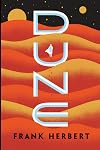
Herbert's monumental novel of time and space, centered on a desert planet that holds the secret to interplanetary travel, stands as tall today as it did in 1965.
The world he has created is complete and functioning -- while the politics are recognizably human, there are also sub-cultures within it that plan not in generations but in millennia, as eldritch forces manipulate lives and societies and redefine what it is possible for the human mind to encompass.
The evolution of Paul Atreides into show more Muad'Dib is as horrifying as it is compelling, and it's a journey that sweeps the reader onward into a world of frightening possibilities for humankind.
There is, fifty-some years on, a shadow permeating the culture of the Fremen that Herbert could not fully have predicted. While the adaptation of many Islamic concepts makes sense for the harsh desert world of Arrakis, the contemporary reader cannot help but feel a frisson of discomfort at the combination of religion and law, of superstition and world dominance, of single-mindedness that admits no variance from its own harsh control. The term 'jihad' may have been unfamiliar and even exotic to the Western reader of 1965; to the Western reader of 2020, it has a different connotation altogether. show less
The world he has created is complete and functioning -- while the politics are recognizably human, there are also sub-cultures within it that plan not in generations but in millennia, as eldritch forces manipulate lives and societies and redefine what it is possible for the human mind to encompass.
The evolution of Paul Atreides into show more Muad'Dib is as horrifying as it is compelling, and it's a journey that sweeps the reader onward into a world of frightening possibilities for humankind.
There is, fifty-some years on, a shadow permeating the culture of the Fremen that Herbert could not fully have predicted. While the adaptation of many Islamic concepts makes sense for the harsh desert world of Arrakis, the contemporary reader cannot help but feel a frisson of discomfort at the combination of religion and law, of superstition and world dominance, of single-mindedness that admits no variance from its own harsh control. The term 'jihad' may have been unfamiliar and even exotic to the Western reader of 1965; to the Western reader of 2020, it has a different connotation altogether. show less
Lists
Epic Fiction (1)
Greatest Books (1)
1980s (1)
Read in 2013 (1)
A Novel Cure (1)
Must read (1)
BitLife (1)
Seeking the Soul (1)
BBC Big Read (1)
Best Beach Reads (1)
Overdue Podcast (1)
Best Audiobooks (1)
Books 2021 (1)
Farm Boy Fantasy (1)
. (1)
Ranking (1)
Five star books (1)
Page Turners (1)
SF - To Read (1)
Gen X Library (1)
BBC Big Read (1)
Nebula Award (1)
Best Dystopias (1)
um actually (1)
Classic Sci-Fi (1)
SF Masterworks (1)
al.vick-series (1)
Carole's List (1)
Allie's Wishlist (1)
Read in 2006 (2)
SF Masterworks (2)
Unread books (6)
Favourite Books (3)
1960s (1)
Poly Sci Fi (1)
Science Fiction (1)
Elevenses (1)
Folio Society (1)
Books with Twins (1)
BbBooBooks (1)
1970 Club (1)
Phoebe Bridgers (1)
Favorite Series (1)
Awards


You May Also Like


Associated Authors
Statistics
- Works
- 259
- Also by
- 97
- Members
- 148,608
- Popularity
- #41
- Rating
- 3.9
- Reviews
- 1,745
- ISBNs
- 1,723
- Languages
- 31
- Favorited
- 469
