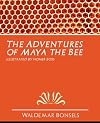
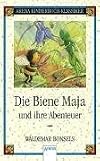
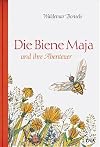
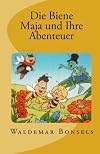
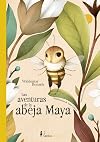
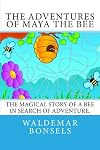
The Adventures of Maya the Bee
by Waldemar Bonsels
On This Page
Description
The Adventures of Maya the Bee is an exciting tale for children of all ages. It is the story of Maya, a rebellious little bee who flies from the hive in search of adventure and encounters her own heroism. Themes of growth and development of courage and wisdom are found, as well as the extreme joy and satisfaction that Maya experiences in the beauty of creation and all creatures. Her ultimate and innate loyalty to her Nation of Bees unfolds in the final heroic scenes. This story gives us the show more delightful sense of having seen a small segment of the world through a Bee's eyes. show lessTags
Recommendations
























Member Reviews
Waldemar Bonsels' Maya the Bee is full of story and feeling, and it also happens to be beautifully written, with the vocabulary and diction and wonder of other great children's books of this era--this is a book that rivals The Wizard of Oz, or Wind in the Willows.
In addition to its lush diction--0ne beautifully written sentence after another--this novel is different from modern children's books in the way it neither shirks from nor exploits violent happenings. Characters are mostly insects; throughout the book some die, or are subject to grave danger. Bad things happen and those who survive carry on. It's a look at life when the young deaths of innocents wasn't terribly uncommon. Before penicillin or cures for childhood diseases were show more discovered. I read this first as a child, a copy in my grandmother's house, and reading again this time I remembered so vividly the scenes when insect lives are cut short. They didn't scare me as a child--they did make me feel wiser and more ready for this business of growing up, though.
The German version is lovely. The English translation is also out of copyright and it is very good, too, available for free online. There are even illustrated versions on the Gutenberg project. You owe it to yourself to read it, and then, to read it with your children. show less
In addition to its lush diction--0ne beautifully written sentence after another--this novel is different from modern children's books in the way it neither shirks from nor exploits violent happenings. Characters are mostly insects; throughout the book some die, or are subject to grave danger. Bad things happen and those who survive carry on. It's a look at life when the young deaths of innocents wasn't terribly uncommon. Before penicillin or cures for childhood diseases were show more discovered. I read this first as a child, a copy in my grandmother's house, and reading again this time I remembered so vividly the scenes when insect lives are cut short. They didn't scare me as a child--they did make me feel wiser and more ready for this business of growing up, though.
The German version is lovely. The English translation is also out of copyright and it is very good, too, available for free online. There are even illustrated versions on the Gutenberg project. You owe it to yourself to read it, and then, to read it with your children. show less
First level: lovely kids' story that doesn't talk down--kind of the fresh-air joy of Heidi meets the terror of insect life, with a product that can be considered along, say, Watership Down without coming off badly.
Second level: Congealescence of 19th-century bourgeois values of the Teutonic persuasion--the busy burgher bees explicitly figured as bourgeois by the hornet "brigands"--I like bees, but I find Bonsels's figuration moves highly problematic.
Third level: Echoic of the first, perhaps, an endlessly fascinating commentary on anthropomorphism and the unknowability of the insect Other. It's one thing when Fantastic Mr. Fox is breaking chicken necks--another thing altogether when the repulsive spider closes in on the human-living baby show more bee with a cutely trendy name. You will not be surprised to hear that there is a line of Maya products.
But a multitude of sins can be forgiven, because underlying it all is this luminous joy. I don't know any book, maybe, with a higher passages-like this ratio:
She felt as though she were darting like
an arrow through a green-shimmering sea of light, to greater and
greater splendor. The bright flowers seemed to call to her, the
still, sunlit distances lured her on, and the blue sky blessed
her joyous young flight.
"Never again will it be as beautiful as it is to-day," she
thought. "I can't turn back. I can't think of anything except
the sun."
Beneath her the gay pictures kept changing, the peaceful
landscape slid by slowly, in broad stretches.
"The sun must be all of gold," thought the baby-bee.
Coming to a large garden, which seemed to rest in blossoming
clouds of cherry-tree, hawthorn, and lilacs, she let herself
down to earth, dead-tired, and dropped in a bed of red tulips,
where she held on to one of the big flowers. With a great sigh
of bliss she pressed herself against the blossom-wall and looked
up to the deep blue of the sky through the gleaming edges of the
flowers.
"Oh, how beautiful it is out here in the great world, a thousand
times more beautiful than in the dark hive. I'll never go back
there again to carry honey or make wax. No, indeed, I'll never
do that. I want to see and know the world in bloom. I am not
like the other bees, my heart is meant for pleasure and
surprises, experiences and adventures. I will not be afraid of
any dangers. Haven't I got strength and courage and a sting?"
She laughed, bubbling over with delight, and took a deep draught
of nectar out of the flower of the tulip.
"Grand," she thought. "It's glorious to be alive."
Saccharine? No. Mellifluous. show less
Second level: Congealescence of 19th-century bourgeois values of the Teutonic persuasion--the busy burgher bees explicitly figured as bourgeois by the hornet "brigands"--I like bees, but I find Bonsels's figuration moves highly problematic.
Third level: Echoic of the first, perhaps, an endlessly fascinating commentary on anthropomorphism and the unknowability of the insect Other. It's one thing when Fantastic Mr. Fox is breaking chicken necks--another thing altogether when the repulsive spider closes in on the human-living baby show more bee with a cutely trendy name. You will not be surprised to hear that there is a line of Maya products.
But a multitude of sins can be forgiven, because underlying it all is this luminous joy. I don't know any book, maybe, with a higher passages-like this ratio:
She felt as though she were darting like
an arrow through a green-shimmering sea of light, to greater and
greater splendor. The bright flowers seemed to call to her, the
still, sunlit distances lured her on, and the blue sky blessed
her joyous young flight.
"Never again will it be as beautiful as it is to-day," she
thought. "I can't turn back. I can't think of anything except
the sun."
Beneath her the gay pictures kept changing, the peaceful
landscape slid by slowly, in broad stretches.
"The sun must be all of gold," thought the baby-bee.
Coming to a large garden, which seemed to rest in blossoming
clouds of cherry-tree, hawthorn, and lilacs, she let herself
down to earth, dead-tired, and dropped in a bed of red tulips,
where she held on to one of the big flowers. With a great sigh
of bliss she pressed herself against the blossom-wall and looked
up to the deep blue of the sky through the gleaming edges of the
flowers.
"Oh, how beautiful it is out here in the great world, a thousand
times more beautiful than in the dark hive. I'll never go back
there again to carry honey or make wax. No, indeed, I'll never
do that. I want to see and know the world in bloom. I am not
like the other bees, my heart is meant for pleasure and
surprises, experiences and adventures. I will not be afraid of
any dangers. Haven't I got strength and courage and a sting?"
She laughed, bubbling over with delight, and took a deep draught
of nectar out of the flower of the tulip.
"Grand," she thought. "It's glorious to be alive."
Saccharine? No. Mellifluous. show less
Charming! And (aside from the fact that insects don't chat and have strong personalities, and one fleeting encounter with a sprite) definitely based on some very real and specific insect behaviours. It was rather shocking how casually some of the predatory insects would devour a nearby prey insect (who may have just been chatting with Maya)--it's very honest about how nature works.
But beyond that there's Maya's belief in the wonder and beauty of nature (even humans), and despite all she witnesses and goes through, her ability to appreciate the goodness and sweetness of life remains the strongest impression. A delightful, fairly quick read.
(Note: 5 stars = amazing, wonderful, 4 = very good book, 3 = decent read, 2 = disappointing, 1 = show more awful, just awful. I'm fairly good at picking for myself so end up with a lot of 4s). I feel a lot of readers automatically render any book they enjoy 5, but I grade on a curve! show less
But beyond that there's Maya's belief in the wonder and beauty of nature (even humans), and despite all she witnesses and goes through, her ability to appreciate the goodness and sweetness of life remains the strongest impression. A delightful, fairly quick read.
(Note: 5 stars = amazing, wonderful, 4 = very good book, 3 = decent read, 2 = disappointing, 1 = show more awful, just awful. I'm fairly good at picking for myself so end up with a lot of 4s). I feel a lot of readers automatically render any book they enjoy 5, but I grade on a curve! show less
Vintage yet enjoyable story of a bee who decides to explore instead of work gathering nectar. Maya's defection results in a number of adventures, both good and bad. Not for the youngest reader due to some depictions of death, as is common in the natural world.
I thought I'd enjoy this, and I must admit, I like the story. But I guess I'm too good at visualising it. I just couldn't relax with all those images of insects in my head. So I've decided not to continue. The Librivox narrator is again terrific.
First published in German in 1912, this series of adventures stars a young rebel bee who leaves the hive despite warnings to the contrary. She encounters good insects and bad, dangers and delights. The overarching theme of the book is a hit-you-over-the-head moral play: obey, work hard, be loyal.
Wikipedia advises that it was originally published as a fable with a political message. “Maya represents the ideal citizen, and the beehive represents a well-organised militarist society. It has also elements of nationalism and speciesism.”
I understand this is now also a comic book and an animated television series with its attendant marketed products. The moral of that series, I’m sure, is not what Bansels originally intended.
P.S. This is show more a free Kindle ebook on Amazon. 3 stars show less
Wikipedia advises that it was originally published as a fable with a political message. “Maya represents the ideal citizen, and the beehive represents a well-organised militarist society. It has also elements of nationalism and speciesism.”
I understand this is now also a comic book and an animated television series with its attendant marketed products. The moral of that series, I’m sure, is not what Bansels originally intended.
P.S. This is show more a free Kindle ebook on Amazon. 3 stars show less
1,001
Also narrated on Librivox.
Also narrated on Librivox.
Members
- Recently Added By
Lists

Favorite Childhood Books
1,646 works; 514 members

Favorite Animal Fiction
359 works; 156 members
1001 Children's Books You Must Read Before You Grow Up
774 works; 100 members

Out of Copyright
244 works; 14 members

Recommended Nature Writing
346 works; 180 members

Children's Literature 1900 - 1950 in order
413 works; 8 members
Talk Discussions
Past Discussions
Yellow JuvFic, Honeybee Adventure in Name that Book (January 2012)
Author Information

Some Editions
Awards and Honors
Series
Belongs to Publisher Series
Work Relationships
Is contained in
Has the adaptation
Has as a student's study guide
Common Knowledge
- Canonical title
- The Adventures of Maya the Bee
- Original title
- Die Biene Maja und ihre Abenteuer
- Alternate titles*
- Maya la abeja y sus aventuras
- Original publication date
- 1912
- People/Characters
- Maya
- First words*
- Die ältere Bienendame, die der kleinen Maja behilflich war, als sie zum Leben erwachte und aus ihrer Zelle schlüpfte, hiess Kassandra und hatte grosses Ansehen im Stock.
- Last words*
- (Click to show. Warning: May contain spoilers.)Dort erzählte sie den jungen Bienen, die ihr gerne lauschten, die Geschichten, die wir mit ihr erlebt haben.
- Publisher's editor*
- Editorial Juventud, S.A.
- Original language
- German
- Canonical DDC/MDS
- 813.912
*Some information comes from Common Knowledge in other languages. Click "Edit" for more information.
Classifications
Statistics
- Members
- 271
- Popularity
- 119,134
- Reviews
- 11
- Rating
- (3.79)
- Languages
- 11 — Dutch, English, Finnish, French, German, Hungarian, Korean, Lithuanian, Polish, Russian, Spanish
- Media
- Paper, Audiobook, Ebook
- ISBNs
- 89
- UPCs
- 1
- ASINs
- 25