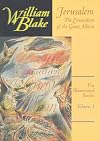
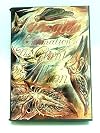
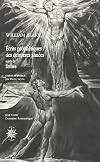
Jerusalem: The Emanation of the Giant Albion
by William Blake
On This Page
Description
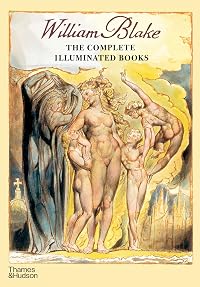
The nature of William Blake's genius and of his art is most completely expressed in his Illuminated books. In order to give full and free expression to his vision Blake invented a method of printing that enabled him to create works in which words and images combine to form pages uniquely rich in content and beautiful in form. It is only through the pages as originally conceived and published by the poet himself that Blake's meaning can be fully experienced.Tags
Recommendations


















Member Reviews
I don't imagine I understood half of it, but it's glorious verse.
I guess I'm not the only one having trouble with this book. It clearly belongs to Blake’s mature period (1804), but this makes it considerably more hermetic than his other work, which is already very difficult to access. What is striking is the epic character of this longer book, with a complete doctrine of salvation and his own vision of the universe in the background. Formally there is the very pathetic quality, with constant exclamations and an almost continuous verbal flow, often also of geographical names. Blake revisits a number of themes from his early work; thus Urizen (the enforcer of order and reason) and Los emerge again. Even more than before, Albion, the mythical name of Great Britain, is present, and on a superficial show more reading this seems like a patriotic writing (cf. the much-quoted lines “And did those feet in ancient time/Walk upon England's mountains green” ). Nothing could be further from the truth, as John Higgs (Blake versus the World) taught me. The fervent praise of Christianity (not that of the churches, however) and the outbursts against the Enlightened deists are other ingredients. So there's a lot of meat on the bone. Best to read with extensive, expert commentary show less
Jun 19, 2024Dutch
Ratings
Members
- Recently Added By
Lists

Greatest Books, allegedly
484 works; 9 members
Author Information

501+ Works 20,199 Members
William Blake's poems, prophecies, and engravings represent his strong vision and voice for rebellion against orthodoxy and all forms of repression. Born in London in November 1757; his father, a hosier of limited means, could do little for the boy's education. However, when the young Blake's talent for design became apparent, his wise father sent show more him to drawing school at the age of 10. In 1771 Blake was apprenticed to an engraver. Blake went on to develop his own technique, a method he claimed that came to him in a vision of his deceased younger brother. In this, as in so many other areas of his life, Blake was an iconoclast; his blend of printing and engraving gave his works a unique and striking illumination. Blake joined with other young men in support of the Revolutions in France and America. He also lived his own revolt against established rules of conduct, even in his own home. One of his first acts after marrying his lifetime companion, Catherine Boucher, was to teach her to read and write, rare for a woman at that time. Blake's writings were increasingly styled after the Hebrew prophets. His engravings and poetry give form and substance to the conflicts and passions of the elemental human heart, made real as actual characters in his later work. Although he was ignored by the British literary community through most of his life, interest and study of his work has never waned. Blake's creativity and original thinking mark him as one of the earliest Romantic poets, best known for his Songs of Innocence (1789) and Songs of Experience (1794) and The Tiger. Blake died in London in 1827. (Bowker Author Biography) show less
Some Editions
Series
Belongs to Publisher Series
Work Relationships
Is contained in
Common Knowledge
- Canonical title
- Jerusalem: The Emanation of the Giant Albion
- Original title
- Jerusalem: The Emanation of the Giant Albion
- Alternate titles
- Jerusalem
- Original publication date
- 1820
Classifications
Statistics
- Members
- 173
- Popularity
- 188,917
- Reviews
- 2
- Rating
- (4.29)
- Languages
- Danish, English, French, Hebrew
- Media
- Paper, Ebook
- ISBNs
- 19
- ASINs
- 7