On This Page
Description
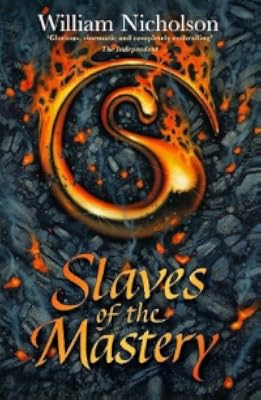
Fifteen-year-old Bowman uses his newly-discovered powers to join with his twin sister Kestrel in an attempt to liberate their people from the "beautiful but cruel" civilization which has enslaved them.Tags
Recommendations




Member Reviews
I've put off reading this book for a long time. I loved William Nicholson's first book in this trilogy, The Wind Singer, but others said the second one wasn't nearly as good. I disagree! Both books are filled with action, engaging characters, and philosophies of society and life that I find challenging and meaningful.
The second book in the 'Wind on Fire' series starts from a less familiar perspective and situation than its predecessor, 'The Wind Singer', which may be why I didn't feel as immediately engaged in the plot. Five years have passed since Kestrel and Bowman Hath rescued the city of Aramanth from the power of the Morah and although life has become more equal, the city is weaker and its citizens less focused. This leaves them ripe for plunder by Ortiz Semeon, a young man whose desire to please his master is only equaled by his pride in his skills. His brisk and merciless attack on the city means the Manth people are enslaved once more and begin the long trek to reach the Mastery, a strange world that revolves around the Master, who, like show more many despots, believes that he enslaves people for their own good. In the haste, Kestrel is left behind in the dying city, but soon embarks upon a quest to find her people and avenge them by destroying their captor.
The early section of the novel is possibly the most interesting as Kestrel and Bowman, used to acting together, are forced to rely upon their own skills to survive and eventually attempt to overcome the Mastery. They do both have to learn to revise their initial judgements of people to accept a more complex personality than initial meetings would suggest, and they both use their positions as confidantes to their advantage. Gradually, the two tales come together as the Mastery prepares for a wedding and several characters are involved in love triangles that will surely ruin the big day.
The cruelty of the characters involved in the majestic Mastery is best exemplified by the dance they have developed: the manaxa. This involves beautiful, controlled movements like a dance, but the two participants have deadly armour on their arms and legs which they use to attack each other, sometimes to the death. The beauty and violence of the manaxa is a perfect symbol for the Mastery as a whole, which is beautiful and seductive but irrevocably founded on violence. The descriptions of characters reactions to the manaxa exemplify human response, which is Nicholson's skill: even in surreal situations, characters respond in a way that is in keeping with human behaviour: no character is one dimensional.
Due to the more war like nature of this story, I did find the plot less engaging than that of 'The Wind Singer', but it flowed neatly - albeit without much suspense - aided by the clear narration and interludes introducing the Singer people. The joy of the novel is in the characters' dialogue and actions. For example, a travelling King wishes to place blame on someone for the slow progress of his carriage. His advisor suggests that perhaps if they ceased stopping for the daily dancing lessons…and for lunch…and for the rest after lunch…and for dinner, then the carriage might move rather more quickly. The King agrees in theory, but quickly recants after discussion with his daughter because they need the daily dancing lessons outside…and the lunch…and the rest after lunch…and after dinner. Perhaps they do not need the thirty thousand armed men who are following them on foot? suggests the advisor. No, no, if there was a battle they will be essential. The King then insists that whoever is to blame for the slow progress of the carriage should be found, blamed and punished. The advisor simply acquiesces, bows and withdraws. This kind of understated humour is often found in the sections of the narrative that follow Kestrel and add real pleasure to the reading.
So is it worth reading? Yes, but you may find that it is less compelling than its predecessor due to greater focus on characters rather than plot. Of course, you may prefer that greater focus and find that keeps you hooked. Will I read the third in the series, 'Firesong'? Yes, but largely because I want to find out if Mumpo, possibly one of the most sympathetic characters, can ever achieve his dream. Otherwise, the Singer people are starting to become a little too fantastical for me personally. show less
The early section of the novel is possibly the most interesting as Kestrel and Bowman, used to acting together, are forced to rely upon their own skills to survive and eventually attempt to overcome the Mastery. They do both have to learn to revise their initial judgements of people to accept a more complex personality than initial meetings would suggest, and they both use their positions as confidantes to their advantage. Gradually, the two tales come together as the Mastery prepares for a wedding and several characters are involved in love triangles that will surely ruin the big day.
The cruelty of the characters involved in the majestic Mastery is best exemplified by the dance they have developed: the manaxa. This involves beautiful, controlled movements like a dance, but the two participants have deadly armour on their arms and legs which they use to attack each other, sometimes to the death. The beauty and violence of the manaxa is a perfect symbol for the Mastery as a whole, which is beautiful and seductive but irrevocably founded on violence. The descriptions of characters reactions to the manaxa exemplify human response, which is Nicholson's skill: even in surreal situations, characters respond in a way that is in keeping with human behaviour: no character is one dimensional.
Due to the more war like nature of this story, I did find the plot less engaging than that of 'The Wind Singer', but it flowed neatly - albeit without much suspense - aided by the clear narration and interludes introducing the Singer people. The joy of the novel is in the characters' dialogue and actions. For example, a travelling King wishes to place blame on someone for the slow progress of his carriage. His advisor suggests that perhaps if they ceased stopping for the daily dancing lessons…and for lunch…and for the rest after lunch…and for dinner, then the carriage might move rather more quickly. The King agrees in theory, but quickly recants after discussion with his daughter because they need the daily dancing lessons outside…and the lunch…and the rest after lunch…and after dinner. Perhaps they do not need the thirty thousand armed men who are following them on foot? suggests the advisor. No, no, if there was a battle they will be essential. The King then insists that whoever is to blame for the slow progress of the carriage should be found, blamed and punished. The advisor simply acquiesces, bows and withdraws. This kind of understated humour is often found in the sections of the narrative that follow Kestrel and add real pleasure to the reading.
So is it worth reading? Yes, but you may find that it is less compelling than its predecessor due to greater focus on characters rather than plot. Of course, you may prefer that greater focus and find that keeps you hooked. Will I read the third in the series, 'Firesong'? Yes, but largely because I want to find out if Mumpo, possibly one of the most sympathetic characters, can ever achieve his dream. Otherwise, the Singer people are starting to become a little too fantastical for me personally. show less
The second book in the triology has more plot and less dreamlike-fairytale. The Mastery invade Aramanth and capture the people as slaves. Only Kestrel escapes, and in her journey to save her family she meets a beautiful but sheltered princess, who is travelling to the Mastery to marry the Master's son...
William Nicholson continues with his interesting but disturbing themes around what is good, and what is freedom. The citizens of the Mastery are all slaves, but they build beautiful things, and when they are released they riot and destroy. Bowman gains his victory by using the evil power of the Zars. The Manaxa is deadly and violent and cruel, but is beautiful and alluring.
Again, like the first book, it doesn't really hang together if show more over-examined. If the master has such perfect mind-control over them all, why do they need the monkey-cages? If he can turn all his people into soldiers, why can't he just control the soldiers of Gong not to fight? If everyone in the mastery is encouraged and supported to do what they love and are good at, how do they ever find people to do dull and manual jobs? No matter how naturally talented Kestrel and Mumpo are, they can't just magically know how to do difficult and physical things by just watching...
But I love the very fact this book challenges and disturbs my world view. And Kestrel dancing the tantaraza will stay with me. And Sisi's development and growth is haunting and inspiring. show less
William Nicholson continues with his interesting but disturbing themes around what is good, and what is freedom. The citizens of the Mastery are all slaves, but they build beautiful things, and when they are released they riot and destroy. Bowman gains his victory by using the evil power of the Zars. The Manaxa is deadly and violent and cruel, but is beautiful and alluring.
Again, like the first book, it doesn't really hang together if show more over-examined. If the master has such perfect mind-control over them all, why do they need the monkey-cages? If he can turn all his people into soldiers, why can't he just control the soldiers of Gong not to fight? If everyone in the mastery is encouraged and supported to do what they love and are good at, how do they ever find people to do dull and manual jobs? No matter how naturally talented Kestrel and Mumpo are, they can't just magically know how to do difficult and physical things by just watching...
But I love the very fact this book challenges and disturbs my world view. And Kestrel dancing the tantaraza will stay with me. And Sisi's development and growth is haunting and inspiring. show less
Twin sister and brother Kestrel and Bowman Hath are living peacefully in their now egalitarian society after having endured a totalitarian regime most of their lives (this is covered in book 1 of the Wind of Fire Trilogy). However this state of affairs doesn't last long when an ambitious young soldier decides to capture the entire town as slaves for the people of the Mastery. The methods used to keep captured slaves compliant are incredibly cruel, so the people have no choice but to let themselves be led to their new masters. While the raid takes place, Kestrel and Bowman are separated, with the boy and other family members taken in captivity while Kestrel is left behind to make her way to safety. Along the road, she meets a young and show more extremely beautiful princess travelling in great pomp who takes her under her wing. The twins each use their great intelligence and special skills to get their family back together again while also doing all they can to overthrow the oppressive regime, with the girls also having to fend off the advances of dangerously enamoured men. And exciting adventure story which is rather unique, as was the first book. Both are highly recommended. show less
This is stronger than its predecessor as the people of Aramanth are marched away from the sacked city into slavery. The relationships are more complex and there are fascinating conspiracies and machinations between the characters.
My favourite of this trilogy. So much better than the first one. Aramanth is destroyed and all of its inhabitants are either killed or taken prisoner by the Mastery. Kestral is the only one who escapes and seeks to rescue her twin brother Bowman and her people. She forumaltes a plan after being found by Sisi and her people. Sisi is on her way to be married to the son of the Master, the man who Kes is vowed to kill for destroying Aramanth.
It has love, magic, courage and betrayal. A fantastic book that leaves you wanting more. At the end Sisi surprises the reader and becomes a new person. You are left beginning your journey with the Manth people in the search to find their homeland.
It has love, magic, courage and betrayal. A fantastic book that leaves you wanting more. At the end Sisi surprises the reader and becomes a new person. You are left beginning your journey with the Manth people in the search to find their homeland.
Even better than the first of the trilogy. Characters are more developed and again William Nicholson creates a rich new world for the setting.
Still, I can't help but feel that the number of ideas for fantasy realms he has created are worthy of being explored in greater depth. He has almost used too many good ideas in this short trilogy.
Still, I can't help but feel that the number of ideas for fantasy realms he has created are worthy of being explored in greater depth. He has almost used too many good ideas in this short trilogy.
Members
- Recently Added By
Lists

Books Read in 2015
3,299 works; 129 members

Kindle Fantasy/Science Fiction
206 works; 1 member
Author Information

37+ Works 8,645 Members
William Nicholson worked for the BBC as the director/producer of more than forty documentary films, and has authored screenplays for such feature films as Shadowlands, Sarafina!, Nell, First Knight, and Gladiator, as well as books one and two of The Wind on Fire trilogy, The Wind Singer and Slaves of the Mastery. Mr. Nicholson lives with his show more family in England show less
Some Editions
Awards and Honors
Awards
Distinctions
Series

Belongs to Publisher Series
dtv extra (70704)
Work Relationships
Is contained in
Common Knowledge
- Canonical title
- Slaves of the Mastery
- Original title
- Slaves of the Mastery
- Original publication date
- 2001-05-01
- People/Characters
- Kestrel Hath; Mumpo; Bowman Hath; Ira Hath
- First words
- On a clear day the island can be seen from the mainland, the long ridge of its tree-ringed hill breaking the horizon to the south.
- Last words
- (Click to show. Warning: May contain spoilers.)It was the first snowfall of the coming winter.
- Original language*
- Englisch
*Some information comes from Common Knowledge in other languages. Click "Edit" for more information.
Classifications
- Genres
- Fiction and Literature, Fantasy, Teen, Young Adult
- DDC/MDS
- 823.914 — Literature & rhetoric English & Old English literatures English fiction 1900- 1901-1999 1945-1999
- LCC
- PZ7 .N5548 .S — Language and Literature Fiction and juvenile belles lettres Fiction and juvenile belles lettres Juvenile belles lettres
- BISAC
Statistics
- Members
- 1,203
- Popularity
- 20,652
- Reviews
- 12
- Rating
- (3.98)
- Languages
- 6 — Dutch, English, Finnish, French, German, Spanish
- Media
- Paper, Audiobook, Ebook
- ISBNs
- 40
- UPCs
- 3
- ASINs
- 6