On This Page
Description
John Banville's stunning powers of mimicry are brilliantly on display in this engrossing novel, the darkly compelling confession of an improbable murderer.Freddie Montgomery is a highly cultured man, a husband and father living the life of a dissolute exile on a Mediterranean island. When a debt comes due and his wife and child are held as collateral, he returns to Ireland to secure funds. That pursuit leads to murder. And here is his attempt to present evidence, not of his innocence, but show more of his life, of the events that lead to the murder he committed because he could. Like a hero out of Nabokov or Camus, Montgomery is a chillingly articulate, self-aware, and amoral being, whose humanity is painfully on display.
. show less
Tags
Recommendations















Member Recommendations
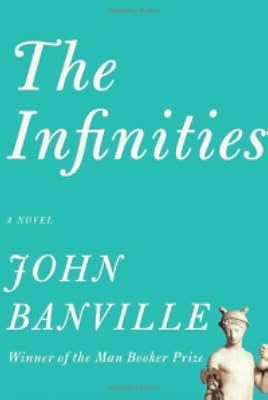
CGlanovsky Connected plots (Read Book of Evidence first).
Member Reviews
The problem I almost have with Banville is that his use of the language is just so beautiful. That doesn't sound like a problem, but it almost becomes one when every other page has one stopping to go back and read a sentence or two over a few times, just to savor the sound or the phrasing. But the story is gripping enough to make you dive right back into it. An unpleasant story, to be sure, and the narrator and technically-he-must-be-the protagonist Freddie is a consistently unsympathetic character, but somehow you end up sympathizing with him anyway (or at least have some sympathy for him).
I read my first Banville — his early novel Birchwood — back in 2019 and strangely retained almost nothing of it, except the idea that I didn't much dig it. Based on this nebulous impression I didn't read any more of the dude until now, which was dumb, because The Book of Evidence is as delicious an unreliable first-personer as you could wish for. You never know how much to believe of Freddie Montgomery's narrative, or his self-proclaimed Jekyll & Hydedom, but his voice is a tortuous, oblivious delight, his interactions with normals a font of ironic comedy. And now checking my spreadsheet I see I actually liked Birchwood, although not quite as much as this, so I'm 2 for 2 with Banville and ready for more!
I wanted to read something set in Ireland for St. Patrick's Day and since this book is on the 1001 Books to Read Before You Die list it ticked two boxes. Banville is a wonderful wordsmith but I was disgusted with the main character.
Freddie Montgomery is Irish but he, his wife and their son, Van, have been living abroad for many years. At first Freddie went to pursue graduate studies in California which is where he met his wife (also Irish). They returned to Ireland for a while and Freddie had a job in Dublin but after his father's death he and his wife moved to a Spanish island. It appears Freddie didn't do much besides eat, drink, screw his wife, drink some more, and run up debts. He touched up a friend for a loan and the friend went show more to a loan shark. Freddie didn't repay the loan (it didn't appear that he really ever intended to) and the loan shark threatened to harm the friend. Freddie still didn't pay so the loan shark cut off the friend's ear and delivered it to Freddie. Freddie promised to pay the money but said he would have to go home so the loan shark allowed him to leave but kept the wife and child. Once Freddie got back to Ireland he realized his mother didn't have the funds that he needed; she had even sold the paintings in the house in order to start up a small horse business. Freddie decided to confront the person who bought the paintings but he no longer had then. Freddie conceived a plan to steal a painting from his house but he was surprised by a maid while taking it. Freddie forced her into the car and then hit her repeatedly with a hammer. The girl was badly injured but not dead when Freddie abandoned the car. He hid out for a few days in the home of an old family friend, managing to take advantage of the man by stealing money and credit cards and drink. Eventually captured by the police this book is Freddie's recounting of his crime which certainly doesn't paint Freddie in a very good light. For most of his life it appears that Freddie felt entitled to anything he wanted, not caring who he hurt along the way.
By the end Freddie rose a little in my estimation since writing out his story seems to have led him to some soul-searching; still he's a piece of work that I won't soon forget. show less
Freddie Montgomery is Irish but he, his wife and their son, Van, have been living abroad for many years. At first Freddie went to pursue graduate studies in California which is where he met his wife (also Irish). They returned to Ireland for a while and Freddie had a job in Dublin but after his father's death he and his wife moved to a Spanish island. It appears Freddie didn't do much besides eat, drink, screw his wife, drink some more, and run up debts. He touched up a friend for a loan and the friend went show more to a loan shark. Freddie didn't repay the loan (it didn't appear that he really ever intended to) and the loan shark threatened to harm the friend. Freddie still didn't pay so the loan shark cut off the friend's ear and delivered it to Freddie. Freddie promised to pay the money but said he would have to go home so the loan shark allowed him to leave but kept the wife and child. Once Freddie got back to Ireland he realized his mother didn't have the funds that he needed; she had even sold the paintings in the house in order to start up a small horse business. Freddie decided to confront the person who bought the paintings but he no longer had then. Freddie conceived a plan to steal a painting from his house but he was surprised by a maid while taking it. Freddie forced her into the car and then hit her repeatedly with a hammer. The girl was badly injured but not dead when Freddie abandoned the car. He hid out for a few days in the home of an old family friend, managing to take advantage of the man by stealing money and credit cards and drink. Eventually captured by the police this book is Freddie's recounting of his crime which certainly doesn't paint Freddie in a very good light. For most of his life it appears that Freddie felt entitled to anything he wanted, not caring who he hurt along the way.
By the end Freddie rose a little in my estimation since writing out his story seems to have led him to some soul-searching; still he's a piece of work that I won't soon forget. show less
Originally published in 1989, The Book of Evidence by John Banville is about a 38 year-old scientist, Freddie Montgomery who murders a servant girl during the course of a robbery. While awaiting trail, he gives this account of what led him to kill. As he rambles on about his life what comes across most strongly is his own despair and self-pity. His self-justification and lack of empathy for others clearly projects the behavior of a sociopath and as such was rather distasteful to read.
That said, the author did a brilliant job of getting into the self-absorbed Freddie’s head and offering up this dark meditation upon evil and guilt. Freddie recounts the events that led to his downfall, being in debt to a mobster, having to abandon his show more wife and child to return to Ireland to obtain funds, deciding to steal the painting and then killing the young girl. There are some moments of dark humor and, no surprise, we also find that Freddie can be an unreliable narrator.
The Book of Evidence is a revealing character study that is in turns tragic, ironic, and witty. Freddie’s ambiguity along with the authors strong prose creates an unusual narrative and makes this book quite memorable. I can’t say that I loved this book, but it did hold my interest. show less
That said, the author did a brilliant job of getting into the self-absorbed Freddie’s head and offering up this dark meditation upon evil and guilt. Freddie recounts the events that led to his downfall, being in debt to a mobster, having to abandon his show more wife and child to return to Ireland to obtain funds, deciding to steal the painting and then killing the young girl. There are some moments of dark humor and, no surprise, we also find that Freddie can be an unreliable narrator.
The Book of Evidence is a revealing character study that is in turns tragic, ironic, and witty. Freddie’s ambiguity along with the authors strong prose creates an unusual narrative and makes this book quite memorable. I can’t say that I loved this book, but it did hold my interest. show less
“A man with a decent accent can do almost anything.”
Freddie Montgomery is apparently defending his actions to a judge: he stole a small painting and brutally murdered the servant who saw him do so. He admits the crimes. The story is Freddie’s account, and only his, of why, with a bit of how.
“To do the worst thing, the very worst thing, that’s the way to be free.”
It’s a chilling insight into the cold heart and twisted mind of a clever, entitled, amoral, and beguiling raconteur.
“I never imagined there would be anything so vulgar as a police investigation.”
As a character, he’s utterly convincing, but what he says is clearly not. That is the intrigue.
Image: Bloody hands (Source)
The mind of a cold-blooded show more criminal
“None of this means anything.”
Freddie’s pompous, slightly self-pitying account mixes self-aggrandisement (“I see myself like the villain of an old three-reeler”) with excuses (circumstances and coincidences), and deflected blame (“Why did she not run away?”). He actually says, “It was all so unfair” while relishing the infamy of his crimes and wanting the reader to believe that his defence lawyer likes him and a young prisoner fancies him.
He accuses his wife of “moral laziness”, describes his mother as “majestic and slovenly”, and an American of “euphoric self-regard” - all of which probably apply more to him. He mentions “the impatient assurance of the rich” who have “this gilded ease” - envy, rather than projection.
His emotional detachment from “the child” (his seven-year old son), his wife (“I don’t know that I love Daphne in the manner that the world understands by that word”), and his mother, are surely psychopathic. The working class are “these people” and even “these grotesques”.
He says he has no remorse because he does not expect forgiveness - typically twisted logic.
“The feeling of power… It sprang not from what I had done, but from the fact that I had done it and no one knew.”
The allure of gloves
Freddie needs money urgently (he claims his comfortable Mediterranean expat life came to an abrupt halt after hubris got him in trouble with a local crime boss). The way he is drawn to one particular picture, “Portrait of a Woman with Gloves”, is more of a mystical compulsion than a way to maximise filthy lucre.
“There is something in the way the woman regards me, the querulous, mute insistence of her eyes, which I can neither escape nor assuage.”
Image: Portrait of a Woman with Gloves, “Workshop of Rembrandt”, in the National Gallery of Ireland. (Source)
He imagines a detailed backstory and he describes her gloves, but he doesn’t acknowledge their utility to criminals nor their seductive potential (especially with one, teasingly off, and the other still on).
“It’s as if she were asking me to let her live.”
A strange excuse for theft, and ultimately, the unnamed woman in the picture is the opposite of Josie Bell, the maid he murders.
“Failure of imagination is my real crime, the one that made the others possible. For me she [Josie] was not alive.”
The last sentence is a horrifying admission with the rare ring of truth.
Paradox?
“How much is true?
All of it. None of it. Only the shame.”
If an unreliable narrator admits they’re unreliable, is that admission reliable? (The claim of shame isn’t.)
“It’s my story and I’m sticking to it.”
Noxious smells and dirty light
Evocative descriptions of stinks, sunlight, and mist are trademarks of Banville’s writing (see my review of some of his other books, HERE). Sometimes he combines the two:
“The light outside seemed moist and dense as glair, I imagined it in my mouth, my nostrils.”
Comparing prison with boarding school is a cliché, but the fug marks this as Banville:
“It’s just like school, really, the mixture of misery and cosiness, the numbed longing, the noise, and everywhere, always, that particular smelly grey warm fug.”
Image: Prison yard, in grey (Source)
“The daylight too is strange, even outside, in the yard, as if something has happened to it, as if something has been done to it, before it is allowed to reach us. It has an acid, lemony cast, and comes in two intensities: either it is not enough to see by or it sears the sigh. Of the various kinds of darkness I shall not speak.”
Literary links
From the first page, comparisons with Lolita are inevitable (see my review HERE). The similarities are strong, but there are many differences and this is worthwhile in its own right. Furthermore, a casual murder will be less upsetting to some readers than paedophilia.
Oedipus, Freud (especially dreams), and Lady Macbeth are the more interesting comparisons.
Quotes
• “Flower children of all shapes and colours fell into my bed, their petals trembling.”
• "There is something about gin, the tang in it of the deep wildwood, perhaps, that always makes me think of twilight and mists and dead maidens. Tonight it tinkled in my mouth like secret laughter."
• “I enjoy the inappropriate, the disreputable… In low dives… the burden of birth and education falls from me.”
• “Pity is always, for me, the only permissible version of an urge to give weak things a good hard shake.”
• “His clothes had more substance than he did.” [An old man near death]
• “Evil, wickedness, mischief, these words imply an agency, the conscious or at least active doing of wrong. They do not signify the bad in its inert, neutral, self-sustaining state. Then there are the adjectives: dreadful, heinous, execrable, vile, and so on. They are not so much descriptive as judgmental. They carry the weight of censure mingled with fear.”
• “All sorts of unspoken things swam in the air between us like slithery, dangerous fish.”
• “The silence was fraying at the edges.”
• “It was out of a muddled conflation of ideas of knight errantry and rescue and reward that my plan originated.” [He also claims not to have had a plan]
• “Shadows hung down the walls like fronds of cobweb.”
• “I could feel my horrible smile, like something sticky that had dripped onto my face.” show less
Freddie Montgomery is apparently defending his actions to a judge: he stole a small painting and brutally murdered the servant who saw him do so. He admits the crimes. The story is Freddie’s account, and only his, of why, with a bit of how.
“To do the worst thing, the very worst thing, that’s the way to be free.”
It’s a chilling insight into the cold heart and twisted mind of a clever, entitled, amoral, and beguiling raconteur.
“I never imagined there would be anything so vulgar as a police investigation.”
As a character, he’s utterly convincing, but what he says is clearly not. That is the intrigue.
Image: Bloody hands (Source)
The mind of a cold-blooded show more criminal
“None of this means anything.”
Freddie’s pompous, slightly self-pitying account mixes self-aggrandisement (“I see myself like the villain of an old three-reeler”) with excuses (circumstances and coincidences), and deflected blame (“Why did she not run away?”). He actually says, “It was all so unfair” while relishing the infamy of his crimes and wanting the reader to believe that his defence lawyer likes him and a young prisoner fancies him.
He accuses his wife of “moral laziness”, describes his mother as “majestic and slovenly”, and an American of “euphoric self-regard” - all of which probably apply more to him. He mentions “the impatient assurance of the rich” who have “this gilded ease” - envy, rather than projection.
His emotional detachment from “the child” (his seven-year old son), his wife (“I don’t know that I love Daphne in the manner that the world understands by that word”), and his mother, are surely psychopathic. The working class are “these people” and even “these grotesques”.
He says he has no remorse because he does not expect forgiveness - typically twisted logic.
“The feeling of power… It sprang not from what I had done, but from the fact that I had done it and no one knew.”
The allure of gloves
Freddie needs money urgently (he claims his comfortable Mediterranean expat life came to an abrupt halt after hubris got him in trouble with a local crime boss). The way he is drawn to one particular picture, “Portrait of a Woman with Gloves”, is more of a mystical compulsion than a way to maximise filthy lucre.
“There is something in the way the woman regards me, the querulous, mute insistence of her eyes, which I can neither escape nor assuage.”
Image: Portrait of a Woman with Gloves, “Workshop of Rembrandt”, in the National Gallery of Ireland. (Source)
He imagines a detailed backstory and he describes her gloves, but he doesn’t acknowledge their utility to criminals nor their seductive potential (especially with one, teasingly off, and the other still on).
“It’s as if she were asking me to let her live.”
A strange excuse for theft, and ultimately, the unnamed woman in the picture is the opposite of Josie Bell, the maid he murders.
“Failure of imagination is my real crime, the one that made the others possible. For me she [Josie] was not alive.”
The last sentence is a horrifying admission with the rare ring of truth.
Paradox?
“How much is true?
All of it. None of it. Only the shame.”
If an unreliable narrator admits they’re unreliable, is that admission reliable? (The claim of shame isn’t.)
“It’s my story and I’m sticking to it.”
Noxious smells and dirty light
Evocative descriptions of stinks, sunlight, and mist are trademarks of Banville’s writing (see my review of some of his other books, HERE). Sometimes he combines the two:
“The light outside seemed moist and dense as glair, I imagined it in my mouth, my nostrils.”
Comparing prison with boarding school is a cliché, but the fug marks this as Banville:
“It’s just like school, really, the mixture of misery and cosiness, the numbed longing, the noise, and everywhere, always, that particular smelly grey warm fug.”
Image: Prison yard, in grey (Source)
“The daylight too is strange, even outside, in the yard, as if something has happened to it, as if something has been done to it, before it is allowed to reach us. It has an acid, lemony cast, and comes in two intensities: either it is not enough to see by or it sears the sigh. Of the various kinds of darkness I shall not speak.”
Literary links
From the first page, comparisons with Lolita are inevitable (see my review HERE). The similarities are strong, but there are many differences and this is worthwhile in its own right. Furthermore, a casual murder will be less upsetting to some readers than paedophilia.
Oedipus, Freud (especially dreams), and Lady Macbeth are the more interesting comparisons.
Quotes
• “Flower children of all shapes and colours fell into my bed, their petals trembling.”
• "There is something about gin, the tang in it of the deep wildwood, perhaps, that always makes me think of twilight and mists and dead maidens. Tonight it tinkled in my mouth like secret laughter."
• “I enjoy the inappropriate, the disreputable… In low dives… the burden of birth and education falls from me.”
• “Pity is always, for me, the only permissible version of an urge to give weak things a good hard shake.”
• “His clothes had more substance than he did.” [An old man near death]
• “Evil, wickedness, mischief, these words imply an agency, the conscious or at least active doing of wrong. They do not signify the bad in its inert, neutral, self-sustaining state. Then there are the adjectives: dreadful, heinous, execrable, vile, and so on. They are not so much descriptive as judgmental. They carry the weight of censure mingled with fear.”
• “All sorts of unspoken things swam in the air between us like slithery, dangerous fish.”
• “The silence was fraying at the edges.”
• “It was out of a muddled conflation of ideas of knight errantry and rescue and reward that my plan originated.” [He also claims not to have had a plan]
• “Shadows hung down the walls like fronds of cobweb.”
• “I could feel my horrible smile, like something sticky that had dripped onto my face.” show less
Narrator trying to explain how he finds himself guilty of a brutal and pointless murder. Very well written, the voice of the narrator is compelling and chillingly mundane.
This book introduced me to John Banville, one of my favorite writers, even though it is not my favorite of his novels. The story is told by 38-year-old scientist Freddie Montgomery, who kills a servant girl while trying to take a painting from a neighbor. Freddie is an aimless drifter, and though he is a perceptive observer of himself and his surroundings, he is largely amoral. In addition to recounting his life story, he is an untrustworthy narrator who describes how he was arrested for the murder of a servant girl in one of Ireland's "big houses." After running afoul of a gangster in the Mediterranean, Freddie, a sophisticated but slouched Anglo-Irish scientist who has lived overseas for many years, returns to his ancestral home in show more search of money. Shocked to discover that his mother has sold the family's collection of paintings, Freddie attempts to recover them. This leads to a tragic series of events culminating in Freddie's killing of a maid while stealing a painting. On the run, he hides out in the house of an old family friend, Charlie, a man of some influence, before being arrested and interrogated.
Because Banville, like Ford Madox Ford, has cleverly constructed a novel about sex, betrayal, and self-deception—a novel whose narrator's testimony is notoriously unreliable and laced with internal contradictions—it made me think of one of the best books I have read and reread, Ford Madox Ford's The Good Soldier. Mr. Banville's book also recalls other, mostly French, novels, among them Andre Gide's The Immoralist (which, like Mr. Banville's book, depicts the consequences of sexual repression) and Albert Camus's The Stranger (which concerns a senseless murder). show less
Because Banville, like Ford Madox Ford, has cleverly constructed a novel about sex, betrayal, and self-deception—a novel whose narrator's testimony is notoriously unreliable and laced with internal contradictions—it made me think of one of the best books I have read and reread, Ford Madox Ford's The Good Soldier. Mr. Banville's book also recalls other, mostly French, novels, among them Andre Gide's The Immoralist (which, like Mr. Banville's book, depicts the consequences of sexual repression) and Albert Camus's The Stranger (which concerns a senseless murder). show less
Members
- Recently Added By
Lists

1001 Books You Must Read Before You Die
1,448 works; 1,136 members

Booker Prize
491 works; 62 members

Books Read in 2023
5,638 works; 147 members

Man Booker Prize Longlist 1989
6 works; 2 members

TML 200 Best Books 1950-1999
202 works; 10 members

Top 50 Favourite Books
50 works; 2 members

A Good Read (Radio 4)
287 works; 1 member

Booker Prize Shortlist: Titles Not Yet Read
161 works; 4 members
SantaThing 2014 Gifts
299 works; 17 members
Canon de la narrativa universal del s. XX (cicutadry)
499 works; 3 members

The Modern Library (The Two Hundred Best Novels....
202 works; 1 member
Talk Discussions
Past Discussions
Group Read, March 2021: The Book of Evidence in 1001 Books to read before you die (March 2021)
Author Information

91+ Works 28,103 Members
Some Editions
Awards and Honors
Awards
Series

Belongs to Publisher Series
Work Relationships
Common Knowledge
- Canonical title*
- Todistajan kirja
- Original title
- The Book of Evidence
- Alternate titles
- Book of Evidence
- Original publication date
- 1989
- People/Characters
- Frederick Charles St John Vanderveld Montgomery; Freddie Montgomery
- First words
- My Lord, when you ask me to tell the court in my own words, this is what I shall say.
- Last words
- (Click to show. Warning: May contain spoilers.)Only the shame.
- Blurbers
- DeLillo, Don; Rendell, Ruth
- Original language
- English
*Some information comes from Common Knowledge in other languages. Click "Edit" for more information.
Classifications
Statistics
- Members
- 1,713
- Popularity
- 13,016
- Reviews
- 34
- Rating
- (3.66)
- Languages
- 13 — Catalan, Danish, Dutch, English, Finnish, French, German, Hebrew, Italian, Portuguese, Romanian, Spanish, Swedish
- Media
- Paper, Ebook
- ISBNs
- 43
- ASINs
- 14