

Colm Tóibín
Author of Brooklyn
About the Author
Colm Tóibín was born in Enniscorthy, Ireland in 1955. He studied history and English at University College Dublin, earning his B.A. in 1975. After graduating he moved to Barcelona for three years and taught at the Dublin School of English. In 1978 he returned to Dublin and began working on an show more M.A. in Modern English and American Literature. He wrote for In Dublin, Hibernia, and The Sunday Tribune. He became the Features Editor of In Dublin in 1981, and then a year later accepted the position of Editor for the Irish current affairs magazine Magill. His first book, Walking Along the Border, was published in 1987 and his first novel, The South, was published in 1990. He wrote for The Sunday Independent as a drama or television critic and political commentator. He writes regularly for The London Review of Books. He has written several other novels including The Story of the Night, The Blackwater Lightship, Brooklyn, The Testament of Mary, and Nora Webster. The Heather Blazing received the 1993 Encore Award and The Master received the 2006 International IMPAC Dublin Literary Award, the Stonewall Book Award, and the Lambda Literary Award. In 2015 he made The New Zealand High Profile Titles List with All The Light We Cannot See. He was short listed for the 2015 Folio Prize for his title Nora Webster. (Bowker Author Biography) show less
Image credit: Photo by Larry D. Moore, 2006 (Wikimedia Commons)
Series
Works by Colm Tóibín
Love in a Dark Time: And Other Explorations of Gay Lives and Literature (2001) 365 copies, 5 reviews
The Modern Library: The 200 Best Novels in English Since 1950 (1999) — Editor — 312 copies, 5 reviews
One Hundred Years of James Joyce’s “Ulysses” (Penn State Series in the History of the Book) (2022) 20 copies
The Bridge 2 copies
Sleep 1 copy
Huldigung an Barcelona 1 copy
21 [short story] 1 copy
The Master/ The Blackwater Lightship / The Heather Blazing / Brooklyn / The South / The Story of the Night (2010) 1 copy
The long winter 1 copy
Donal Webster - short story 1 copy
The Street [short story] 1 copy
What Would Lynne Tillman Do? 1 copy
What Catalans Want 1 copy
Uncorrected Excerpts 2009 1 copy
Associated Works
The Discovery of France: A Historical Geography (2007) — Introduction, some editions — 1,423 copies, 29 reviews
Lost Classics: Writers on Books Loved and Lost, Overlooked, Under-read, Unavailable, Stolen, Extinct, or Otherwise Out of Commission (2000) — Contributor — 319 copies, 6 reviews
Kingdom of Olives and Ash: Writers Confront the Occupation (2017) — Contributor — 166 copies, 5 reviews
The Decameron Project: 29 New Stories from the Pandemic (2020) — Contributor — 160 copies, 5 reviews
Know the Past, Find the Future: The New York Public Library at 100 (2011) — Contributor — 132 copies, 4 reviews
Queer: A Collection of LGBTQ Writing from Ancient Times to Yesterday (2021) — Contributor, some editions — 65 copies
The Good Book: Writers Reflect on Favorite Bible Passages (2015) — Contributor — 44 copies, 3 reviews
Heavy Rotation: Twenty Writers on the Albums That Changed Their Lives (2009) — Contributor — 23 copies, 2 reviews
A Very Irish Christmas: The Greatest Irish Holiday Stories of All Time (2021) — Contributor — 20 copies, 1 review
Tagged
Common Knowledge
- Canonical name
- Tóibín, Colm
- Birthdate
- 1955-05-30
- Gender
- male
- Education
- Christian Brothers School, Enniscorthy
St. Peter's College, Wexford
University College Dublin (BA, 1975) - Occupations
- magazine editor
journalist
novelist
critic
commentator - Organizations
- Royal Society of Literature (2007)
American Academy of Arts and Letters (Honorary member, 2014) - Awards and honors
- E. M. Forster Award (1995)
Fellow, Center for Scholars and Writers, New York Public Library
Los Angeles Times Book Prize (2004)
Costa Novel Award (2009)
Kenyon Review Award for Literary Achievement (2017)
Richard C. Holbrooke Distinguished Achievement Award (2017) (show all 7)
Bodley Medal (2023) - Short biography
- Irish writer Colm Tóibín, born in 1955, worked as a journalist before achieving fame as a fiction writer. His works often depict Irish society and explore themes of creativity and homosexuality.
- Nationality
- Ireland
- Birthplace
- Enniscorthy, County Wexford, Ireland
- Places of residence
- Enniscorthy, County Wexford, Ireland
Dublin, Ireland
Barcelona, Spain - Map Location
- Ireland
Members
Discussions
Group Read, July 2020: The Master in 1001 Books to read before you die (October 2020)
Richard C. Holbrooke Distinguished Achievement Award in The Prizes (September 2017)
2013 Booker longlist: The Testament of Mary by Colm Tóibín in Booker Prize (March 2014)
Reviews
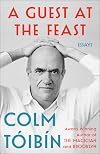
I started this two weeks ago in the midst of a series of migraines and a day of stomach issues - quite a time to enter the first essay about the author's experience with cancer. Somehow it was just right.
Tóibín's writing is casual and free and sometimes funny, but also frank. A number of very difficult subjects are referenced but they are stated so plainly that I found myself shocked and appreciative at the same time. I had as my guide not only a story-teller but also a truth-teller.
A mark show more of a good essay writer might be that they can turn a reader from being uninterested in a topic at the beginning, whether by ignorance or prejudice, to being fully engrossed and wanting more by the end. This happened a few times here: I'm glad to have been introduced to Frederick May, Marilynne Robinson, Francis Stuart, and John McGahern and their work and I praise Tóibín by admitting a new curiousity about all of them.
It was also a joy to come across small mentions of artists whose work I admire, including Yeats, Hardy, and Bergman, and full essays on subjects I'm interested in, including Catholic popes and Catholic sexuality.
The centrepiece and gem of the collection is the eponymous A Guest at the Feast, a perfectly-titled short memoir that somehow feels both local and universal. The scenes at home, at school, at church, at the beach, at the museum, at the library, in Tóibín's aunts's houses are full of life and the way he ranges from a family tale of his relative's part in the Easter Rising of 1916 to examining the books in his mother's bedroom after her death in 2000, including the cultural changes that occurred in Ireland in the middle of the last century, is wonderful.
This collection has only whetted my appetite for more from the author. Next up may be Bad Blood: A Walk Along the Irish Border, which I already own, or Lady Gregory's Toothbrush, which I don't... yet. show less
Tóibín's writing is casual and free and sometimes funny, but also frank. A number of very difficult subjects are referenced but they are stated so plainly that I found myself shocked and appreciative at the same time. I had as my guide not only a story-teller but also a truth-teller.
A mark show more of a good essay writer might be that they can turn a reader from being uninterested in a topic at the beginning, whether by ignorance or prejudice, to being fully engrossed and wanting more by the end. This happened a few times here: I'm glad to have been introduced to Frederick May, Marilynne Robinson, Francis Stuart, and John McGahern and their work and I praise Tóibín by admitting a new curiousity about all of them.
It was also a joy to come across small mentions of artists whose work I admire, including Yeats, Hardy, and Bergman, and full essays on subjects I'm interested in, including Catholic popes and Catholic sexuality.
The centrepiece and gem of the collection is the eponymous A Guest at the Feast, a perfectly-titled short memoir that somehow feels both local and universal. The scenes at home, at school, at church, at the beach, at the museum, at the library, in Tóibín's aunts's houses are full of life and the way he ranges from a family tale of his relative's part in the Easter Rising of 1916 to examining the books in his mother's bedroom after her death in 2000, including the cultural changes that occurred in Ireland in the middle of the last century, is wonderful.
This collection has only whetted my appetite for more from the author. Next up may be Bad Blood: A Walk Along the Irish Border, which I already own, or Lady Gregory's Toothbrush, which I don't... yet. show less
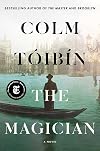
This novel came as a total surprise! Here comes my rave!
When I picked up THE MAGICIAN, I did not realize I would discover not only a stunningly crafted novel, but also a great work of literature. This is historical fiction exploring the life of writer Thomas Mann (1875-1955), but also doubles as an insightful portrait of the first half of the dynamic 20th century.
This is my first Colm Tóibín novel but it certainly won't be my last. What a master storyteller! I was completely enthralled show more with the way he put words together, not something that often happens. But this book feels as though it was written by one those famous writers from an earlier time that we all learned about it school. Toibin's descriptions have a richness that grows out of skillful and precise choice of language. He makes each character distinctive, with a full inner life. So that the Mann family dynamics becomes complex, multi-dimensional, and totally believable. THE MAGICIAN turns out to be a page-turner as well.
I knew going in that Thomas Mann was considered one of the greatest writers of all time (THE MAGIC MOUNTAIN, DEATH IN VENICE, DOCTOR FAUSTUS, and many others) and that he won the 1929 Nobel Prize for Literature. I did not understand (until this book) how much his life reflected the times in which he lived.
Mann, the son of a prosperous German businessman and his Brazilian wife, was born into late 19th century, upper-class European privilege, survived two world wars, weathered great personal tragedy, and navigated a tense and ever-shifting political landscape. All the while hiding his authentic self from everyone, including his wife and six children. Turns out the members of his family were interesting characters too.
It's unusual for me to read a book where the writing style is so masterful that it rivals (or exceeds) the value I place on story. But THE MAGICIAN is one of those novels. It introduced me to a new writer and I'm looking forward to exploring his other novels. Thank you Colm Tóibín. I've also made a mental note to revisit the works of Thomas Mann. show less
When I picked up THE MAGICIAN, I did not realize I would discover not only a stunningly crafted novel, but also a great work of literature. This is historical fiction exploring the life of writer Thomas Mann (1875-1955), but also doubles as an insightful portrait of the first half of the dynamic 20th century.
This is my first Colm Tóibín novel but it certainly won't be my last. What a master storyteller! I was completely enthralled show more with the way he put words together, not something that often happens. But this book feels as though it was written by one those famous writers from an earlier time that we all learned about it school. Toibin's descriptions have a richness that grows out of skillful and precise choice of language. He makes each character distinctive, with a full inner life. So that the Mann family dynamics becomes complex, multi-dimensional, and totally believable. THE MAGICIAN turns out to be a page-turner as well.
I knew going in that Thomas Mann was considered one of the greatest writers of all time (THE MAGIC MOUNTAIN, DEATH IN VENICE, DOCTOR FAUSTUS, and many others) and that he won the 1929 Nobel Prize for Literature. I did not understand (until this book) how much his life reflected the times in which he lived.
Mann, the son of a prosperous German businessman and his Brazilian wife, was born into late 19th century, upper-class European privilege, survived two world wars, weathered great personal tragedy, and navigated a tense and ever-shifting political landscape. All the while hiding his authentic self from everyone, including his wife and six children. Turns out the members of his family were interesting characters too.
It's unusual for me to read a book where the writing style is so masterful that it rivals (or exceeds) the value I place on story. But THE MAGICIAN is one of those novels. It introduced me to a new writer and I'm looking forward to exploring his other novels. Thank you Colm Tóibín. I've also made a mental note to revisit the works of Thomas Mann. show less
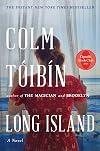
This is an intense, beautifully written novel that dives deep into the complexities of secrecy, misunderstanding, and love. This book continues the story of Eilis Lacey from Tóibín's famous novel "Brooklyn."
Eilis Lacey is Irish, married to Tony Fiorello, a plumber and one of four Italian American brothers living in a close-knit cul-de-sac on Long Island. Despite being surrounded by Tony's large extended family, Eilis now in her forties with two teenage children, Eilis remains profoundly show more isolated, her ties to her Irish roots still stronger than those to her new homeland.
The story takes a shocking turn when an Irishman knocks on Eilis's door with surprising news: his wife is pregnant with Tony's child and that when the baby is born, he will not raise it but instead deposit it on Eilis’s doorstep. This bombshell and Eilis's reaction to it drive the gripping plot, exploring betrayal, resilience, and the search for identity and belonging. Tóibín's writing is full of tension as he delves into Eilis's emotional turmoil and the tough decisions she must make.
This is a gorgeous story of a woman alone in a marriage and the deepest bonds she rekindles on her return to the place and people she left behind, to ways of living and loving she thought she’d lost.
The characters are flawed, unforgettable, human. While I struggled somewhat with the characters' deceitfulness, Tóibín's portrayal of Eilis's inner world makes her a compelling figure. Her journey back to Ireland to reconnect with her past and introduce her children to their heritage adds layers to her character, showcasing her strength and vulnerability. The novel beautifully captures the struggle between the comfort of the familiar and the hope for something better, a recurring theme in Tóibín's work.
A novel about secrets and dreams and the conflict of desire over duty, “Long Island” is rich with yearning and regret. show less
Eilis Lacey is Irish, married to Tony Fiorello, a plumber and one of four Italian American brothers living in a close-knit cul-de-sac on Long Island. Despite being surrounded by Tony's large extended family, Eilis now in her forties with two teenage children, Eilis remains profoundly show more isolated, her ties to her Irish roots still stronger than those to her new homeland.
The story takes a shocking turn when an Irishman knocks on Eilis's door with surprising news: his wife is pregnant with Tony's child and that when the baby is born, he will not raise it but instead deposit it on Eilis’s doorstep. This bombshell and Eilis's reaction to it drive the gripping plot, exploring betrayal, resilience, and the search for identity and belonging. Tóibín's writing is full of tension as he delves into Eilis's emotional turmoil and the tough decisions she must make.
This is a gorgeous story of a woman alone in a marriage and the deepest bonds she rekindles on her return to the place and people she left behind, to ways of living and loving she thought she’d lost.
The characters are flawed, unforgettable, human. While I struggled somewhat with the characters' deceitfulness, Tóibín's portrayal of Eilis's inner world makes her a compelling figure. Her journey back to Ireland to reconnect with her past and introduce her children to their heritage adds layers to her character, showcasing her strength and vulnerability. The novel beautifully captures the struggle between the comfort of the familiar and the hope for something better, a recurring theme in Tóibín's work.
A novel about secrets and dreams and the conflict of desire over duty, “Long Island” is rich with yearning and regret. show less
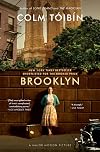
Colm Toibin writes with such clear sincerity one can easily walk in young Eilis Lacey's shoes as she navigates entry into adulthood. Unable to find decent employment in rural Ireland, she is taken under the wing of Father Flood, an Irish priest who has emigrated to the big city of Brooklyn, New York; the land of opportunity. Father Flood has seen Eilis's talents and believes she will do well in America. Leaving behind her widowed and weak mother and vivacious sister, Eilis slowly makes a show more life for herself in her strange new city. Even though she is naive she finds work, starts college for a career in book keeping, and even finds a nice Italian boy with whom to fall in love. But, Brooklyn is not Ireland. It's not even close to feeling like home. No one is her true family. When she is called back to Ireland following a family tragedy, it is no surprise that Eilis falls comfortably back into old routines. Only this time she is a different, more confident young woman. Both worlds feel right to her. Both worlds are home but which one will she chose? show less
Lists
Obama Reads (1)
Short and Sweet (1)
Writing (1)
Five star books (1)
Unmarried women (1)
A Novel Cure (1)
Unread books (1)
BLM (1)
Europe (1)
Irish writers (6)
. (2)
Take Four Books (2)
Tour of Ireland (2)
Booker Prize (4)
Audio Books (1)
2015 UpROOTed (1)
to get (1)
Awards


You May Also Like


Associated Authors
Statistics
- Works
- 87
- Also by
- 49
- Members
- 25,365
- Popularity
- #824
- Rating
- 3.9
- Reviews
- 1,041
- ISBNs
- 728
- Languages
- 22
- Favorited
- 72
