
Colum McCann
Author of Let the Great World Spin
About the Author
Irish writer Colum McCann was born near Dublin in 1965 and graduated from the University of Texas with a B.A. degree. He has worked as a newspaper journalist in Ireland and written several short stories and bestselling novels. The short film of Everything in this Country Must was nominated for an show more Academy Award in 2005. McCann's work has appeared in publications including The New York Times, The Atlantic Monthly, GQ, The Irish Times, La Repubblica, Die Zeit, Paris Match, the Guardian, and the Independent. He has won numerous awards, such as a Pushcart Prize, the Rooney Prize, the Irish Novel of the Year Award, and the 2002 Ireland Fund of Monaco Princess Grace Memorial Literary Award. In 2009 McCann was inducted into the Irish arts association Aosdana. He teaches in the Master of Fine Arts Creative Writing program at New York's Hunter College. (Bowker Author Biography) show less
Works by Colum McCann
Associated Works
The Art of the Story: An International Anthology of Contemporary Short Stories (1999) — Contributor — 394 copies, 5 reviews
Kingdom of Olives and Ash: Writers Confront the Occupation (2017) — Contributor — 166 copies, 5 reviews
Know the Past, Find the Future: The New York Public Library at 100 (2011) — Contributor — 133 copies, 4 reviews
Eat Joy: Stories and Comfort Food from 31 Celebrated Writers (2019) — Contributor — 84 copies, 3 reviews
Bullets Into Bells: Poets and Citizens Respond to Gun Violence (2017) — Introduction — 68 copies, 3 reviews
New Dubliners: Original Stories Celebrating 100 Years of Joyce's Dubliners (2005) — Contributor — 27 copies, 2 reviews
Tagged
Common Knowledge
- Birthdate
- 1965-02-28
- Gender
- male
- Education
- University of Texas
- Occupations
- writer
teacher - Organizations
- American Academy of Arts and Letters (2017)
- Awards and honors
- Esquire Magazine's "Best and Brightest (2003)
Hennessy Hall of Fame (2006)
Hughes and Hughes Novel of the Year (2003)
Ireland Fund of Monaco Literary Award
Rooney Prize for Irish Literature
Hennessy Award for Irish Literature (show all 11)
Oscar Nomination (Best Short Film ∙ 2005)
National Book Award 2009
Deauville Literary Prize 2009
International Dublin Literary Award 2011
Prix du Meilleur Livre Étranger 2020 - Agent
- Sarah Chalfant (Wylie Agency)
The Lavin Agency
Michael Prevett (Gotham Group) - Nationality
- Ireland (birth)
USA - Birthplace
- Dublin, County Dublin, Ireland
- Places of residence
- New York, New York, USA
Japan - Associated Place (for map)
- Dublin, County Dublin, Ireland
Members
Reviews
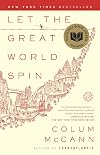
I've read a few of Colum McCann's more recent books and thoroughly enjoyed them, but this one, LET THE GREAT WORLD SPIN (2009), will probably come to be regarded as his magnum opus. It did win the National Book Award, so I'm obviously not alone in thinking this. It is an incredibly complex novel, his uniquely serpentine, multi-tale reaction to the tragedy of 9/11. It begins with "a man in the air" 110 stories above the streets of New York City the morning of August 7, 1974. Crowds gather far show more below, watching, wondering. The story continues with the brothers Corrigan, beginning in Dublin, then moving to New York, the younger a Jesuit brother who has taken vows and chooses to work among the hookers in the slums and projects. Two prostitutes' stories are soon interwoven into the narrative, mother and daughter Tillie and Jazzlyn (who has two small children of her own). And there is Adelita, who works at a nursing home and falls in love with the Jesuit. In another thread we meet Claire Soderberg, a Park Avenue matron, and Gloria from the Projects, both members of a group of grieving mothers who have lost sons in Vietnam. Claire's son Joshua also gets a thread of his own, as does her husband, Judge Solomon Soderberg.
All of these characters have their own particular stories to tell, and yet McCann manages to pull them all together, using that unnamed "man in the air" as a unifying thread, because his action touched all of them. That man, of course, was the daring 'funambulist' Philippe Petit, who walked, hopped and performed for a full 45 minutes on a cable stretched between the Twin Towers of the World Trade Center on that day in 1974. The same towers that were destroyed on 9/11. The connection is acknowledged in a final chapter, the story of Jaslyn, daughter of Jazzlyn, granddaughter of Tillie, and adopted daughter of Gloria, who flies into New York in 2006 to be with her dying "Aunt" Claire.
Colum McCann just may be one of the best damn living writers around today. I loved this book with its multiple stories and how he connected them all together. A kind of magic. My very highest recommendation.
- Tim Bazzett, author of the memoir, BOOKLOVER show less
All of these characters have their own particular stories to tell, and yet McCann manages to pull them all together, using that unnamed "man in the air" as a unifying thread, because his action touched all of them. That man, of course, was the daring 'funambulist' Philippe Petit, who walked, hopped and performed for a full 45 minutes on a cable stretched between the Twin Towers of the World Trade Center on that day in 1974. The same towers that were destroyed on 9/11. The connection is acknowledged in a final chapter, the story of Jaslyn, daughter of Jazzlyn, granddaughter of Tillie, and adopted daughter of Gloria, who flies into New York in 2006 to be with her dying "Aunt" Claire.
Colum McCann just may be one of the best damn living writers around today. I loved this book with its multiple stories and how he connected them all together. A kind of magic. My very highest recommendation.
- Tim Bazzett, author of the memoir, BOOKLOVER show less
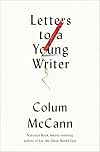
I could use more Colum McCann in my life. I'd shell out some money just to have a little Colum figure in my office that dispenses wisdom from time to time. Better yet, I'll make a nice comfy spot in the corner and perhaps the author can stop by once or twice a day and share a tidbit or two. What say you, Mr. McCann? I'll get you a nice desk and you can have half the room and I'll make the coffee the way you like. And if you like my half of the room better, I'll even trade you. I'm amiable show more and quiet and won't bother you at all. Just every once in a while, share a bit of advice. It's a good trade if you ask me.
I read one McCann novel eight years ago, Let the Great World Spin, and while I enjoyed it, I now realize I've ignored this author far too long. Letters to a Young Writer is the most inspirational book about writing I've ever had the pleasure of reading. Nearly every book I've read on the craft of writing has given me an inspirational moment or two, taught me quite a bit, or merely given me the impetus to prove the author wrong, but none has moved me as this one has. McCann doesn't talk down to his reader. He doesn't repeat warnings about how the young writer is never going to make it anyway and might as well accept their fate. Sure, it's a fact that making a life out of writing is very difficult and statistically improbable, but if writers wanted a sure thing, they probably wouldn't be writers. McCann refrains from these warnings that fill other authors' writing manifestos; he doesn't say, “you're not going to get there,” rather, he says, “it's a tough road, but when you get there, here's what it's going to be like.” That 'when' may not always be a reality, but for the first time ever, I feel like someone high in the publishing world believes in me. And that's just what I needed.
We all have our student styles. I see it in my own children who've fallen in love with soccer (they didn't inherit their love of sports from me). One kid crumples under a coach who's hard on his team. Another rises to the challenge of a coach like that. One thrives with encouragement and a guiding hand on the shoulder. Another grows lazy with the same guidance. Perhaps some writers need the hard-ass coach (Sol Stein: Stein on Writing - “You suck and you're never going to amount to anything”) and some need the realist coach (Elizabeth Gilbert: Big Magic - “You're beautiful and you have potential, but it's too hard, so stop dreaming”). Personally, I thrive under McCann's style. That's not to say I didn't learn much from my other coaches. I enjoyed my experience with the authors mentioned here, as well as many others. None of those other authors got me out of my rut, however. None of them changed my outlook. None of them encouraged me to go to my office, rearrange the furniture, and get down to business (I made a spot in the corner for you, Colum, just in case you decide to stop by).
And it wasn't just the coaching style that I loved about Letters to a Young Writer, it was McCann's stories and phrases. This isn't only an inspirational how-to for the writer, it's a gorgeously written volume. These little snippets of advice read almost like poetry. And so, I'm convinced, if I can't have the author in my office, I'll just have to find an audio version of this book and play a segment or two every day. Likely, I'll get sucked in from time to time, listen to the whole thing when I should be writing, but then McCann will gently remind me that time is ticking and that I cannot die until I finish the books that are within me. Thank you, Mr. McCann, for helping me rediscover my purpose. show less
I read one McCann novel eight years ago, Let the Great World Spin, and while I enjoyed it, I now realize I've ignored this author far too long. Letters to a Young Writer is the most inspirational book about writing I've ever had the pleasure of reading. Nearly every book I've read on the craft of writing has given me an inspirational moment or two, taught me quite a bit, or merely given me the impetus to prove the author wrong, but none has moved me as this one has. McCann doesn't talk down to his reader. He doesn't repeat warnings about how the young writer is never going to make it anyway and might as well accept their fate. Sure, it's a fact that making a life out of writing is very difficult and statistically improbable, but if writers wanted a sure thing, they probably wouldn't be writers. McCann refrains from these warnings that fill other authors' writing manifestos; he doesn't say, “you're not going to get there,” rather, he says, “it's a tough road, but when you get there, here's what it's going to be like.” That 'when' may not always be a reality, but for the first time ever, I feel like someone high in the publishing world believes in me. And that's just what I needed.
We all have our student styles. I see it in my own children who've fallen in love with soccer (they didn't inherit their love of sports from me). One kid crumples under a coach who's hard on his team. Another rises to the challenge of a coach like that. One thrives with encouragement and a guiding hand on the shoulder. Another grows lazy with the same guidance. Perhaps some writers need the hard-ass coach (Sol Stein: Stein on Writing - “You suck and you're never going to amount to anything”) and some need the realist coach (Elizabeth Gilbert: Big Magic - “You're beautiful and you have potential, but it's too hard, so stop dreaming”). Personally, I thrive under McCann's style. That's not to say I didn't learn much from my other coaches. I enjoyed my experience with the authors mentioned here, as well as many others. None of those other authors got me out of my rut, however. None of them changed my outlook. None of them encouraged me to go to my office, rearrange the furniture, and get down to business (I made a spot in the corner for you, Colum, just in case you decide to stop by).
And it wasn't just the coaching style that I loved about Letters to a Young Writer, it was McCann's stories and phrases. This isn't only an inspirational how-to for the writer, it's a gorgeously written volume. These little snippets of advice read almost like poetry. And so, I'm convinced, if I can't have the author in my office, I'll just have to find an audio version of this book and play a segment or two every day. Likely, I'll get sucked in from time to time, listen to the whole thing when I should be writing, but then McCann will gently remind me that time is ticking and that I cannot die until I finish the books that are within me. Thank you, Mr. McCann, for helping me rediscover my purpose. show less
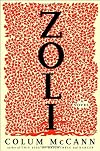
What a daring idea...trace the life of a Roma poetess from early life under fascist rule in the dying democracy of Czechoslovakia to dying years in the utterly different but equally repressive "Free World" that doesn't like her unrepentant socialism...in her own voice.
McCann's up to the task. It's a very well-built book, and Zoli (a boy's name in her culture, given by her grandfather to help protect her) is a fully realized person. She lives an exciting life. She writes amazing poetry (so show more we're told). She has a daughter who, true to life, turns out to be very little like her amazing mummy.
My kick is that, like most extraordinary women, she falls in love with the damnedest collection of creeps and yutzes imaginable. There's this one Brit who is just about the most Babbitty little snot imaginable. Her response to him when they meet up later in life is pretty amusing.
But, and here's the kick part, why is she bothering with these guys? Why is it no one writes about these women with actual worthy partners? Blech.
Recommended. Enthusiastically. Read now. show less
McCann's up to the task. It's a very well-built book, and Zoli (a boy's name in her culture, given by her grandfather to help protect her) is a fully realized person. She lives an exciting life. She writes amazing poetry (so show more we're told). She has a daughter who, true to life, turns out to be very little like her amazing mummy.
My kick is that, like most extraordinary women, she falls in love with the damnedest collection of creeps and yutzes imaginable. There's this one Brit who is just about the most Babbitty little snot imaginable. Her response to him when they meet up later in life is pretty amusing.
But, and here's the kick part, why is she bothering with these guys? Why is it no one writes about these women with actual worthy partners? Blech.
Recommended. Enthusiastically. Read now. show less
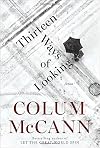
Thirteen Ways of Looking, Colum McCann
Thirteen ways of looking is a keeper! I wish I could assign 10 stars to this book of four short stories. The writing is lyrical with clean lines and no wasted words as they slip from the page and gently wrap the reader inside each tale. The author’s expert use of puns adds wit to the otherwise often sober narratives. All the scenes unfold without extreme graphic descriptions, even when sex and torture are involved, making it easy to read and absorb, as show more well as enabling the reader to get the point without the foul language and excessive detail of some of today’s novels. All of the stories involve the watching eyes of a camera or of a person, or of the blackbird; the eyes of a bird see more clearly than a human’s.
The first story, which takes its name from the title and a poem, 13 Ways of Looking at a Blackbird, by Wallace Stevens, is the longest. Each scene in the story begins with a stanza from the poem, which in an online analysis is explained to mean a view seen from 13 different vantage points. In each scene, Mendelssohn looked back at his life from different moments and thought about their meaning, not knowing that this would be his last day to ponder. Peter Mendelssohn, and elderly Jew, an octogenarian, former judge and formerly happily married family man, was lunching with his son who was obnoxious and rude, spoiled by his success, and with far different values than his father. Peter was growing frail with age; Elliot was growing more arrogant. One represented an age gone by and the other the one coming of age. As Mendelssohn’s thoughts emerged and he tried to make sense of the world around him, even as his memory sometimes failed him, he began to better appreciate the life he was living. Mendelssohn, a widower, still yearned for the company of his wife, Eileen. He was a lonely man who found solace in his routine, but he enjoyed his companionship with his live in housekeeper and caregiver, whom he was beginning to realize he might not treat well enough. She was, after all, kinder and more concerned about him than his own son. When Mendelssohn was murdered, the eyes of the video cameras which usually saw more than the human eye, actually saw less because of a snowstorm. How did Peter die? The story concerned itself with the contemplation of a life, about the different ways to view things; the camera’s sharper view and ultimately, the world view.
In the story, What Time Is It Now, Where you are?, a writer is facing a deadline for a story to appear in a New Year’s Eve edition. He writes about Sally, a female soldier who sits high on a hilltop in Afghanistan. It is New Year’s Eve, and she is watching the barren landscape, searching for the enemy. The night sky is dark, her loneliness for family deep; the danger is out there, but it seems minimal. In the midst of this timeworn place, enmeshed in war, she thinks of her family at home and waits impatiently to call them at midnight with her SAT phone. She has taken the watch to allow everyone else to celebrate, albeit without her. It is a story within a story, his story of his writer’s block, as he struggles to find a theme, and then it is the magnetic story he settles on about the lonely soldier, far from home, on New Years’ Eve. The ending leaves the reader wondering what the New Year will bring.
In Sh’Khol, the tension grows slowly but surely. A 13-year old boy, Tomas, goes missing. He was deaf and emotionally and mentally disabled. His divorced parents had adopted him when he was 6-years old, from Vladivostok. He is now 13. He is away with his mom, Rebecca Marcus, vacationing in an Irish beach town when he disappears on Christmas day. The search for him is riveting as all eyes wander the landscape, hoping, even after several days, that he will be found. The ending leaves the reader with many unanswered questions to think about especially about how the eyes of each individual viewed the disappearance through a different lens. The meaning of Sh’Khol is interesting. It is translated loosely as bereavement, but in Hebrew it usually means the premature loss of someone due to war or terrorism.
Treaty is about a heinous unsolved crime involving the rape, torture and kidnapping of a Maryknoll nun, by a paramilitary group near Puerto Boyacá, in Columbia. When 76 year old Beverly was in her twenties, she was captured by rebel soldiers and held prisoner for six months. She bears the mental and physical scars of the brutality. Now years later, she has been told by the order to go to a seaside town on Long Island to relax because she is elderly, overly stressed and sleeps poorly. While there, she watches a Spanish language station with two of the other Sisters in her order; suddenly, she sees a face that is familiar and unsettling. It is the face of the revolutionary who kidnapped her decades ago. She wonders how he morphed into a diplomat involved in peace talks, from the scruffy brutal man he once was when she was his prisoner. She must find him and confront him, but when she does, it is an odd confrontation, and the eyes of the video camera once again play a role, but in this case, it does not conceal the evidence of a crime, but reveals it. Will she ever reveal it publicly? Should she seek revenge?
There are many common threads in this book worthy of intense discussions. All of the women play different, important roles. Video cameras play important roles as eye witnesses. All of the stories are set in cold places. Good judgment and misjudgments are common themes. The characters are larger than their superficial descriptions. Peter looks back on his life, Sally, the soldier, contemplates the life she is missing, Rebecca regrets some parts of her life and Sister Beverly is guilty and ashamed about hers. The eye of humans, the lens of the camera and the dark eyes of the blackbird are at work in each story, in some capacity, as they bear witness to events. All of the stories are open ended with unresolved questions for the reader to ponder.
After the book ends, there is a brief paragraph in which the author explains that he believes every writer’s work is somewhat autobiographical. He had been mugged (like Peter) and beaten into unconsciousness when he went to the aid of a woman. He had to decide whether revenge was the appropriate response for the victim of a crime. show less
Thirteen ways of looking is a keeper! I wish I could assign 10 stars to this book of four short stories. The writing is lyrical with clean lines and no wasted words as they slip from the page and gently wrap the reader inside each tale. The author’s expert use of puns adds wit to the otherwise often sober narratives. All the scenes unfold without extreme graphic descriptions, even when sex and torture are involved, making it easy to read and absorb, as show more well as enabling the reader to get the point without the foul language and excessive detail of some of today’s novels. All of the stories involve the watching eyes of a camera or of a person, or of the blackbird; the eyes of a bird see more clearly than a human’s.
The first story, which takes its name from the title and a poem, 13 Ways of Looking at a Blackbird, by Wallace Stevens, is the longest. Each scene in the story begins with a stanza from the poem, which in an online analysis is explained to mean a view seen from 13 different vantage points. In each scene, Mendelssohn looked back at his life from different moments and thought about their meaning, not knowing that this would be his last day to ponder. Peter Mendelssohn, and elderly Jew, an octogenarian, former judge and formerly happily married family man, was lunching with his son who was obnoxious and rude, spoiled by his success, and with far different values than his father. Peter was growing frail with age; Elliot was growing more arrogant. One represented an age gone by and the other the one coming of age. As Mendelssohn’s thoughts emerged and he tried to make sense of the world around him, even as his memory sometimes failed him, he began to better appreciate the life he was living. Mendelssohn, a widower, still yearned for the company of his wife, Eileen. He was a lonely man who found solace in his routine, but he enjoyed his companionship with his live in housekeeper and caregiver, whom he was beginning to realize he might not treat well enough. She was, after all, kinder and more concerned about him than his own son. When Mendelssohn was murdered, the eyes of the video cameras which usually saw more than the human eye, actually saw less because of a snowstorm. How did Peter die? The story concerned itself with the contemplation of a life, about the different ways to view things; the camera’s sharper view and ultimately, the world view.
In the story, What Time Is It Now, Where you are?, a writer is facing a deadline for a story to appear in a New Year’s Eve edition. He writes about Sally, a female soldier who sits high on a hilltop in Afghanistan. It is New Year’s Eve, and she is watching the barren landscape, searching for the enemy. The night sky is dark, her loneliness for family deep; the danger is out there, but it seems minimal. In the midst of this timeworn place, enmeshed in war, she thinks of her family at home and waits impatiently to call them at midnight with her SAT phone. She has taken the watch to allow everyone else to celebrate, albeit without her. It is a story within a story, his story of his writer’s block, as he struggles to find a theme, and then it is the magnetic story he settles on about the lonely soldier, far from home, on New Years’ Eve. The ending leaves the reader wondering what the New Year will bring.
In Sh’Khol, the tension grows slowly but surely. A 13-year old boy, Tomas, goes missing. He was deaf and emotionally and mentally disabled. His divorced parents had adopted him when he was 6-years old, from Vladivostok. He is now 13. He is away with his mom, Rebecca Marcus, vacationing in an Irish beach town when he disappears on Christmas day. The search for him is riveting as all eyes wander the landscape, hoping, even after several days, that he will be found. The ending leaves the reader with many unanswered questions to think about especially about how the eyes of each individual viewed the disappearance through a different lens. The meaning of Sh’Khol is interesting. It is translated loosely as bereavement, but in Hebrew it usually means the premature loss of someone due to war or terrorism.
Treaty is about a heinous unsolved crime involving the rape, torture and kidnapping of a Maryknoll nun, by a paramilitary group near Puerto Boyacá, in Columbia. When 76 year old Beverly was in her twenties, she was captured by rebel soldiers and held prisoner for six months. She bears the mental and physical scars of the brutality. Now years later, she has been told by the order to go to a seaside town on Long Island to relax because she is elderly, overly stressed and sleeps poorly. While there, she watches a Spanish language station with two of the other Sisters in her order; suddenly, she sees a face that is familiar and unsettling. It is the face of the revolutionary who kidnapped her decades ago. She wonders how he morphed into a diplomat involved in peace talks, from the scruffy brutal man he once was when she was his prisoner. She must find him and confront him, but when she does, it is an odd confrontation, and the eyes of the video camera once again play a role, but in this case, it does not conceal the evidence of a crime, but reveals it. Will she ever reveal it publicly? Should she seek revenge?
There are many common threads in this book worthy of intense discussions. All of the women play different, important roles. Video cameras play important roles as eye witnesses. All of the stories are set in cold places. Good judgment and misjudgments are common themes. The characters are larger than their superficial descriptions. Peter looks back on his life, Sally, the soldier, contemplates the life she is missing, Rebecca regrets some parts of her life and Sister Beverly is guilty and ashamed about hers. The eye of humans, the lens of the camera and the dark eyes of the blackbird are at work in each story, in some capacity, as they bear witness to events. All of the stories are open ended with unresolved questions for the reader to ponder.
After the book ends, there is a brief paragraph in which the author explains that he believes every writer’s work is somewhat autobiographical. He had been mugged (like Peter) and beaten into unconsciousness when he went to the aid of a woman. He had to decide whether revenge was the appropriate response for the victim of a crime. show less
Lists
Five star books (4)
To Read (1)
Ballet Fiction (1)
Check Library (1)
Awards


You May Also Like


Associated Authors
Statistics
- Works
- 23
- Also by
- 16
- Members
- 14,392
- Popularity
- #1,594
- Rating
- 3.9
- Reviews
- 766
- ISBNs
- 430
- Languages
- 21
- Favorited
- 42


