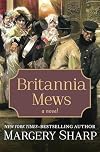
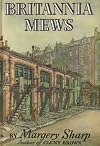
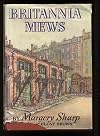
Britannia Mews
by Margery Sharp
On This Page
Description
A passionate heroine defies the English class system in this novel set in 1875 London-perfect for lovers of Edith Wharton and Downton Abbey. Around the corner from the elegant townhouses on Albion Place is Britannia Mews, a squalid neighborhood where servants and coachmen live. In 1875, it's no place for a young girl of fine breeding, but independent-minded Adelaide Culver is fascinated by what goes on there. Years later, Adelaide shocks her family when she falls in love with an impoverished show more artist and moves into the mews. But violence shatters Adelaide's dreams. In a dangerous new world, she must fend for herself-until she meets a charismatic stranger and her life takes a turn she never expected. A novel about social manners and mores reminiscent of Edith Wharton, this story of love, family, and the price one must pay for throwing off the shackles of convention is also a witty and incisive dissection of the "upstairs, downstairs" English class system of the last two centuries. show lessTags
Recommendations













Member Recommendations

Member Reviews
I love the way blogs continue to survive the onslaught of mega-umbrella-sites. In this case, I'm thinking of Margery Sharp Day, initiated several years ago by the blog Beyond Eden Rock, and picked up by lots of readers who maintain their own blogs. Each has their own community of followers and commentators.
This year Jane, for the day she put into the calendar, read Britannia Mews and as chance would have it, I picked up a copy (along with several other Sharps) just a couple of days later. I put it at the top of the pile.
It's almost entirely lacking the often acerbic humor of her books, presumably because it was written just after WWII. Instead, there is a story which might almost be a metaphor for the stubbornness without which the UK show more could not have stood against Hitler, stubbornness without which it is impossible to think of how the world might look now. Adelaide, the chief protagonist, is a young woman with no future she can bear to look towards. She is deprived in the late nineteenth century of the higher education her undeserving brother is permitted. She watches her cousin fall into the sensible marriage that is her only real future and while that is happening, a revolution takes place in her life.
Her painting instructor makes love to her and she instantly is transformed by it. She believes she is in love and nothing - NOTHING - is going to take that away from her. After secret assignations, she announces to her family that she is going to marry this man and elopes with him because it is that or nothing. They go to live in what is at that point, the slum of Brittania Mews. She soon discovers that he is an alcoholic wastrel. Her life is ruined. And yet she displays all the stiff upper lip of the English in WWII. She has made her bed and although it has been made clear to her than she (but not the scoundrel husband) can come 'home' whenever she likes, that is not an option in her mind. When he dies it is still not an option.
After a while she becomes involved with a married man (whose wife is in India and wants nothing to do with him). They live together unmarried for the rest of their lives. That doesn't mean life becomes easy for Adelaide, it isn't. But she remains strong and stubborn. Most importantly she relishes being in control; she'd rather a hard life like that, than an easy life as the doormat of family. Independence is everything to her.
This is clearly no conventional kowtowing-to-the-morals-of-the-time storyline. Adelaide has a niece whom she eventually meets and takes under her wing. The niece - and really, this is a long time after Adelaide's young adulthood - has exactly the same experiences. The utter meaningless of her life insofar as it would be perforce marriage and the running of a house, a loveless union, but no doubt a civilised and practical one. She breaks off her engagement, leaves home, and in a state of profound confusion ends up in the Mews. I don't know if these things sound trivial these days, but there is no doubt that they are brave and far from trivial acts at the time.
So here we have Adelaide, an eloper, living 'in sin' for decades with a married man who takes his wife's name and Dodo her niece living a fulfilling single life - the implication being this will never change, when the book ends. The book sees the women who behave in the 'right' way feeling as if they are losing out to the women who eschew their duty. How unfair! Both Adelaide and Dodo fail to give the filial love which is the only important thing women can do with their lives. Yet it is these two women who carry the book morally. They are true to themselves; though there are moments made to tempt them, they never seriously waver. Sharp makes it quite clear that the women who stay at home and keep house and raise children are not the good women in this story. I thought this was interesting for the period - but maybe that reflects no more than my ignorance.
rest here: https://alittleteaalittlechat.wordpress.com/2018/02/08/britannia-mews-by-margery... show less
This year Jane, for the day she put into the calendar, read Britannia Mews and as chance would have it, I picked up a copy (along with several other Sharps) just a couple of days later. I put it at the top of the pile.
It's almost entirely lacking the often acerbic humor of her books, presumably because it was written just after WWII. Instead, there is a story which might almost be a metaphor for the stubbornness without which the UK show more could not have stood against Hitler, stubbornness without which it is impossible to think of how the world might look now. Adelaide, the chief protagonist, is a young woman with no future she can bear to look towards. She is deprived in the late nineteenth century of the higher education her undeserving brother is permitted. She watches her cousin fall into the sensible marriage that is her only real future and while that is happening, a revolution takes place in her life.
Her painting instructor makes love to her and she instantly is transformed by it. She believes she is in love and nothing - NOTHING - is going to take that away from her. After secret assignations, she announces to her family that she is going to marry this man and elopes with him because it is that or nothing. They go to live in what is at that point, the slum of Brittania Mews. She soon discovers that he is an alcoholic wastrel. Her life is ruined. And yet she displays all the stiff upper lip of the English in WWII. She has made her bed and although it has been made clear to her than she (but not the scoundrel husband) can come 'home' whenever she likes, that is not an option in her mind. When he dies it is still not an option.
After a while she becomes involved with a married man (whose wife is in India and wants nothing to do with him). They live together unmarried for the rest of their lives. That doesn't mean life becomes easy for Adelaide, it isn't. But she remains strong and stubborn. Most importantly she relishes being in control; she'd rather a hard life like that, than an easy life as the doormat of family. Independence is everything to her.
This is clearly no conventional kowtowing-to-the-morals-of-the-time storyline. Adelaide has a niece whom she eventually meets and takes under her wing. The niece - and really, this is a long time after Adelaide's young adulthood - has exactly the same experiences. The utter meaningless of her life insofar as it would be perforce marriage and the running of a house, a loveless union, but no doubt a civilised and practical one. She breaks off her engagement, leaves home, and in a state of profound confusion ends up in the Mews. I don't know if these things sound trivial these days, but there is no doubt that they are brave and far from trivial acts at the time.
So here we have Adelaide, an eloper, living 'in sin' for decades with a married man who takes his wife's name and Dodo her niece living a fulfilling single life - the implication being this will never change, when the book ends. The book sees the women who behave in the 'right' way feeling as if they are losing out to the women who eschew their duty. How unfair! Both Adelaide and Dodo fail to give the filial love which is the only important thing women can do with their lives. Yet it is these two women who carry the book morally. They are true to themselves; though there are moments made to tempt them, they never seriously waver. Sharp makes it quite clear that the women who stay at home and keep house and raise children are not the good women in this story. I thought this was interesting for the period - but maybe that reflects no more than my ignorance.
rest here: https://alittleteaalittlechat.wordpress.com/2018/02/08/britannia-mews-by-margery... show less
For sheer engrossing story-telling and hard-to-put-down-ness, this book is going to be very near the top of my list this year. I started reading it the day it arrived in my mailbox from a generous LT friend, thinking I'd use it to fill in those snatched reading intervals when I didn't have time to get lost in something deeper. It turned out to be the book I couldn't wait to get back to. The story begins and ends in Britannia Mews, which came into existence to serve as stables and living quarters for the coachmen of the tenants of the fashionable houses of Albion Place. Over the years the character of the mews changes repeatedly, reflecting changes in English society, becoming a slum, then a bohemian retreat from Victorian show more conventionality, then a fashionable address in its own right, and finally a brave pocket of survival during the bombing of London during World War II. Changing along with the location is Adelaide Culver Lambert, who we meet as a pampered child of Albion place giving a penny to a ragged girl she encounters during a forbidden foray into the mews. When Adelaide elopes with her drawing master at the age of 21, her life becomes inextricably entwined with that of Britannia Mews. My copy of this book came with a reprint of the original Book-of-the-Month Club description of the novel. I can say nothing more to the point than this: "Britannia Mews described quietly and competently the evolution of character and customs in England from Victoria to World War II...in all its pages there is not a single dull or turgid moment." Recommended. show less
Britannia Mews is a novel rooted in a particular place, the mews dwellings 'to accommodate the carriage-horses, coachmen, and other respectable dependants of the ten houses in Albion Place.' Like Helen Ashton (in Bricks and Mortar and The Half-Crown House) Sharp follows the fortunes of her central character through her relationship with this architecture and place.
Adelaide Culver is the opinionated little Victorian miss whose life will be entwined with the mews for the rest of her life. Without revealing the plot, Adelaide is a young girl ill at ease with middle-class restrictions and who pushes at the acceptable rules of engagement between a young lady and the world at large with an almost wilful sense of recklessness and adventure. show more Her story goes veers from the genteel pages of 'The Girl's Own Paper' and 'The Woman at Home' to the macabre pages of 'The Police Gazette' .
Happily married herself, Sharp was fascinated by women's marital choices and romantic alliances and Britannia Mews has its difficult girl (not the archetypal bad) in Adelaide and the good Victorian girl in Alice her pretty cousin. There's Adelaide's fascinating aunt Mrs Burnett, who 'looked richer than the richest person the Culvers knew'. Belle Burnett is beautiful, wealthy but divorced. Miss Yates is the serious girl with a fondness for practical good works who tries to befriend Adelaide and is rebuffed with a 'a curious, fleeting, but quite definite sensation of regret'. Adelaide is taking a different path. Her path includes the revolting Mrs Mounsey known as 'The Sow', the unreliable Henry Lambert and the intriguing Gilbert Lauderdale and the novel stretches from the 1870s until the Second World War. This is no comfort read but do take it up because it is so worthwhile. Sharp's novel is a retelling of a Victorian morality tale told to frighten wayward girls in the schoolroom, told with a feminist sensibility and also a respect for old-fashioned grit and making the best of one's situation. An awkward, foolhardy heroine but one to remember.
The review is part of Margery Sharp Day 2015 celebrating the 110th anniversary of her birth organised by Fleur in her World. show less
Adelaide Culver is the opinionated little Victorian miss whose life will be entwined with the mews for the rest of her life. Without revealing the plot, Adelaide is a young girl ill at ease with middle-class restrictions and who pushes at the acceptable rules of engagement between a young lady and the world at large with an almost wilful sense of recklessness and adventure. show more Her story goes veers from the genteel pages of 'The Girl's Own Paper' and 'The Woman at Home' to the macabre pages of 'The Police Gazette' .
Happily married herself, Sharp was fascinated by women's marital choices and romantic alliances and Britannia Mews has its difficult girl (not the archetypal bad) in Adelaide and the good Victorian girl in Alice her pretty cousin. There's Adelaide's fascinating aunt Mrs Burnett, who 'looked richer than the richest person the Culvers knew'. Belle Burnett is beautiful, wealthy but divorced. Miss Yates is the serious girl with a fondness for practical good works who tries to befriend Adelaide and is rebuffed with a 'a curious, fleeting, but quite definite sensation of regret'. Adelaide is taking a different path. Her path includes the revolting Mrs Mounsey known as 'The Sow', the unreliable Henry Lambert and the intriguing Gilbert Lauderdale and the novel stretches from the 1870s until the Second World War. This is no comfort read but do take it up because it is so worthwhile. Sharp's novel is a retelling of a Victorian morality tale told to frighten wayward girls in the schoolroom, told with a feminist sensibility and also a respect for old-fashioned grit and making the best of one's situation. An awkward, foolhardy heroine but one to remember.
The review is part of Margery Sharp Day 2015 celebrating the 110th anniversary of her birth organised by Fleur in her World. show less
Every time I pick up one of Margery Sharp’s books I find both things that are wonderfully familiar and things that make each book feel quite distinctive.
This particular book, that I plucked from the middle of her backlist, sets out the story of one remarkable woman and one London Street. It makes a wonderful entertainment, and, along the way, it says much about how English society changed between the reign of Queen Victoria and the Second World War.
“There had always been this quality about Britannia Mews, that to step into it from Albion Alley was like stepping into a self-contained and separate small world. No one who passed under the archway ever had any doubt as to what sort of place he was entering — in 1865, model stables; in show more 1880, a slum; in 1900, a respectable working class court. Thus, when an address in a mews came to imply a high degree of fashion, Britannia Mews was unmistakably smart.”
Adelaide was born late in the 19th century, the only daughter of a very well to do family, she was brought up in a fashionable row of London townhouses called Albion Place, and she grew into an inquisitive and independent thinking young woman.
Her family’s carriage and horses were housed nearby in Britannia Mews. There was a row of stable for the horses on one side of an alley, there was a row of coach-houses on the other, and over the coach-houses there was living accommodation for the coachmen and their families. The residents were sensible working class people, who worked hard and took a pride in their homes, but they were worlds apart from the grand residents of Albion Place.
Adelaide loved her life, her home, and her extended family; but she came to realise that she didn’t want the conventional life that her mother was mapping out for her. Maybe that was why, when she found herself alone with her drawing master and he flirted with her quite outrageously, she saw a grand romance and began to plan to elope.
They were married before she learned that Henry Lambert wasn’t the man she thought he was; that he was better at talking about art than creating it; that he flirted with all of his students; that he was dissolute, penniless and saw nothing wrong with living in squalid rented rooms at Britannia Mews.
The Mews had deteriorated into a slum as fewer of the residents of Albion Place thought it necessary to keep their own coach and horses.
“Adelaide was very little of a fool: she had gone into the Mews as thought with her eyes open, prepared for the worst; she would have laughed as much as Henry at the idea of calling or being called on; but she had expected to be able to ignore her surroundings. They were to live in a little world of their own, in a bubble of love and hope, whose elastic, iridescent walls no squalor could penetrate. Within a week she discovered that while she could see and hear, such isolation was impossible.”
Many young women in that position would have allowed their family to rescue them from their dreadful situation, would have wept because they had made such a terrible mistake, but not Adelaide. She picked herself up; she tidied and polished and cleaned; and she did her level best to set her husband on the right track.
That was one battle she couldn’t win, but fighting it changed her life, and she began to change her life. She lost her husband but she found a new love and she found herself at the centre of a rich community of characters at Britannia Mews.
That came about in an extraordinary way. Henry Lambert left behind a valuable legacy: a basket full of exquisite, hand-crafted marionettes that had been his greatest work, that had been his pride and joy. Adelaide hated them, but her new love saw wonderful possibilities.
‘To step under the archway, in 1922, was like stepping into a toy village—a very expensive toy from Hamley’s or Harrods: with a touch of the Russian Ballet about it, as though at any moment a door might fly open upon Petroushka or the Doll, for the colours of the doors, like the colours of the window-curtains, were unusually bright and varied; green, yellow, orange. Outside them stood tubs of begonias, or little clipped bushes. The five dwarf houses facing west were two-storey, with large downstairs rooms converted from old coach-houses; opposite four stables had been thrown into one to make the Puppet Theatre. The Theatre thus dominated the scene, but with a certain sobriety; its paintwork was a dark olive, the sign above the entrance a straightforward piece of lettering…People often said that the theatre made the Mews.’
Adelaide loved it but she missed her old life. She would have loved to live in her parents’ new country house, but she knew that to go home she would have to give up her independence and admit that she had taken the wrong path in life, and she could not bring herself to do that. But she couldn’t quite let go of her family, they couldn’t quite let go of her, and certain members of her family were drawn to the wonderful puppet theatre at Britannia Mews.
The story follows Adelaide, her family, her neighbours and her puppet theatre thorough the Second World War, until she is a very old lady and a younger generation is making new plans for the people and the puppets of Britannia Mews.
That story was compelling, it loses focus a little when the story moves to the next generation, but it picks up again in the war years and for a beautifully pitched final act.
This is a quieter, more serious book than many of Margery Sharp’s, but there are flashes of her wonderful wit, and many moments that have lovely, emotional insight. She acknowledges some people have good reason to not like Adelaide, but I am not one of them. I loved her and I loved her story.
It works because the puppet theatre was a wonderful idea and its realisation was pitch perfect.
It works because it is populated by a wonderful array of characters, who take the story in some interesting and unexpected directions; and it is so cleverly crafted that it reads like a fascinating true story – a tale of people that lived and breathed, a chapter of London’s history – that had been plucked from obscurity to delight a new generation of readers.
I am so glad that I chose this book to read to mark Margery Sharp's birthday. show less
This particular book, that I plucked from the middle of her backlist, sets out the story of one remarkable woman and one London Street. It makes a wonderful entertainment, and, along the way, it says much about how English society changed between the reign of Queen Victoria and the Second World War.
“There had always been this quality about Britannia Mews, that to step into it from Albion Alley was like stepping into a self-contained and separate small world. No one who passed under the archway ever had any doubt as to what sort of place he was entering — in 1865, model stables; in show more 1880, a slum; in 1900, a respectable working class court. Thus, when an address in a mews came to imply a high degree of fashion, Britannia Mews was unmistakably smart.”
Adelaide was born late in the 19th century, the only daughter of a very well to do family, she was brought up in a fashionable row of London townhouses called Albion Place, and she grew into an inquisitive and independent thinking young woman.
Her family’s carriage and horses were housed nearby in Britannia Mews. There was a row of stable for the horses on one side of an alley, there was a row of coach-houses on the other, and over the coach-houses there was living accommodation for the coachmen and their families. The residents were sensible working class people, who worked hard and took a pride in their homes, but they were worlds apart from the grand residents of Albion Place.
Adelaide loved her life, her home, and her extended family; but she came to realise that she didn’t want the conventional life that her mother was mapping out for her. Maybe that was why, when she found herself alone with her drawing master and he flirted with her quite outrageously, she saw a grand romance and began to plan to elope.
They were married before she learned that Henry Lambert wasn’t the man she thought he was; that he was better at talking about art than creating it; that he flirted with all of his students; that he was dissolute, penniless and saw nothing wrong with living in squalid rented rooms at Britannia Mews.
The Mews had deteriorated into a slum as fewer of the residents of Albion Place thought it necessary to keep their own coach and horses.
“Adelaide was very little of a fool: she had gone into the Mews as thought with her eyes open, prepared for the worst; she would have laughed as much as Henry at the idea of calling or being called on; but she had expected to be able to ignore her surroundings. They were to live in a little world of their own, in a bubble of love and hope, whose elastic, iridescent walls no squalor could penetrate. Within a week she discovered that while she could see and hear, such isolation was impossible.”
Many young women in that position would have allowed their family to rescue them from their dreadful situation, would have wept because they had made such a terrible mistake, but not Adelaide. She picked herself up; she tidied and polished and cleaned; and she did her level best to set her husband on the right track.
That was one battle she couldn’t win, but fighting it changed her life, and she began to change her life. She lost her husband but she found a new love and she found herself at the centre of a rich community of characters at Britannia Mews.
That came about in an extraordinary way. Henry Lambert left behind a valuable legacy: a basket full of exquisite, hand-crafted marionettes that had been his greatest work, that had been his pride and joy. Adelaide hated them, but her new love saw wonderful possibilities.
‘To step under the archway, in 1922, was like stepping into a toy village—a very expensive toy from Hamley’s or Harrods: with a touch of the Russian Ballet about it, as though at any moment a door might fly open upon Petroushka or the Doll, for the colours of the doors, like the colours of the window-curtains, were unusually bright and varied; green, yellow, orange. Outside them stood tubs of begonias, or little clipped bushes. The five dwarf houses facing west were two-storey, with large downstairs rooms converted from old coach-houses; opposite four stables had been thrown into one to make the Puppet Theatre. The Theatre thus dominated the scene, but with a certain sobriety; its paintwork was a dark olive, the sign above the entrance a straightforward piece of lettering…People often said that the theatre made the Mews.’
Adelaide loved it but she missed her old life. She would have loved to live in her parents’ new country house, but she knew that to go home she would have to give up her independence and admit that she had taken the wrong path in life, and she could not bring herself to do that. But she couldn’t quite let go of her family, they couldn’t quite let go of her, and certain members of her family were drawn to the wonderful puppet theatre at Britannia Mews.
The story follows Adelaide, her family, her neighbours and her puppet theatre thorough the Second World War, until she is a very old lady and a younger generation is making new plans for the people and the puppets of Britannia Mews.
That story was compelling, it loses focus a little when the story moves to the next generation, but it picks up again in the war years and for a beautifully pitched final act.
This is a quieter, more serious book than many of Margery Sharp’s, but there are flashes of her wonderful wit, and many moments that have lovely, emotional insight. She acknowledges some people have good reason to not like Adelaide, but I am not one of them. I loved her and I loved her story.
It works because the puppet theatre was a wonderful idea and its realisation was pitch perfect.
It works because it is populated by a wonderful array of characters, who take the story in some interesting and unexpected directions; and it is so cleverly crafted that it reads like a fascinating true story – a tale of people that lived and breathed, a chapter of London’s history – that had been plucked from obscurity to delight a new generation of readers.
I am so glad that I chose this book to read to mark Margery Sharp's birthday. show less
'The Mews was strictly forbidden territory to both the Culver children', 30 Jun. 2013
By
sally tarbox
Verified Purchase(What is this?)
This review is from: Britannia Mews (Hardcover)
Started out brilliantly; following stubborn young Adelaide Culver and her elopement with her drawing master to live in the slums of Britannia Mews. The attempts by her well-to-do family to coax her home fail:
'Alice had in fact influenced her - though not in the direction intended. The commiseration in Alice's first manner (which Adelaide had so quickly removed) was a foretaste of the commiseration which lay in wait at Platt's End and Kensington; and sitting there in the beautifully clean tea-room, out of sight and smell of Britannia Mews, Adelaide felt she show more could more easily bear life with Henry than life in the family bosom...There was also the fact that on imposing on Alice a totally false picture of her marriage, Adelaide had also, for all practical purposes, imposed it on herself.'
After the first section, and its gripping climax, the story introduces new characters, and meanders on up to the Second World War. I found the book became a lot less interesting as it went on. show less
By
sally tarbox
Verified Purchase(What is this?)
This review is from: Britannia Mews (Hardcover)
Started out brilliantly; following stubborn young Adelaide Culver and her elopement with her drawing master to live in the slums of Britannia Mews. The attempts by her well-to-do family to coax her home fail:
'Alice had in fact influenced her - though not in the direction intended. The commiseration in Alice's first manner (which Adelaide had so quickly removed) was a foretaste of the commiseration which lay in wait at Platt's End and Kensington; and sitting there in the beautifully clean tea-room, out of sight and smell of Britannia Mews, Adelaide felt she show more could more easily bear life with Henry than life in the family bosom...There was also the fact that on imposing on Alice a totally false picture of her marriage, Adelaide had also, for all practical purposes, imposed it on herself.'
After the first section, and its gripping climax, the story introduces new characters, and meanders on up to the Second World War. I found the book became a lot less interesting as it went on. show less
Today is Margery Sharp day – started by Jane at Beyond Eden Rock it’s a day to celebrate the work of Margery Sharp on what would have been her 111th birthday. Last year I read The Foolish Gentlewoman, a book I thoroughly enjoyed. I hadn’t meant to go a whole year before reading another Margery Sharp book – but there it is – as ever too many books not enough time.
My sister did a great job at finding some lovely old books as stocking fillers for me at Christmas– and one was Britannia Mews by Margery Sharp – a 1960’s paperback (pictured above) with a rather startling portrait of a woman who looks nothing like how I pictured the central character Adelaide Lambert.
Britannia Mews is the story of Adelaide Lambert – born show more Adelaide Culver – from childhood to very old age. Born into a prosperous Victorian family, as a child Adelaide would sneak round to the forbidden Britannia Mews tucked between the streets of conventional middle class homes. Here the coachmen from Albion Place take care of the vehicles and live with their families above the coach houses, a working men’s pub sits on one corner. One end of the mews at this time is respectably working class while the other end is already beginning to slide into slumishness – it is certainly not considered a suitable place for Adelaide to spend her time.
The Culver family move house – and Adelaide and her cousins have many happy days playing in the park. As Adelaide grows up she is not often very happy at home, paying calls with her mother – who, when the time comes, will seek out the right kind of man for her to marry – is not the life she wants.
“Adelaide tilted her blue velvet toque, with the ermine’s head in front, till she could feel its hard rim pressing on her eyebrows. Mrs Culver nodded absently. Adelaide never expected much notice from her mother, which was odd, since Mrs Culver considered that she devoted her life to her children. She did in fact devote herself to the work of making nine hundred pounds a year do the work, or at least produce the effect of twelve, and so from one point of view was possibly right.”
As a young woman Adelaide is educated at home, while her younger brother is sent away to school. A drawing tutor is engaged to teach Adelaide and her cousin Alice – so they can chaperone each other. If Adelaide is the unconventional Victorian young woman, straining against the strictures of a rigid society then Alice is very much the good little Victorian miss. However one day Henry Lambert turns up and Alice suffering from a cold doesn’t and Henry begins to flirt outrageously with Adelaide. Adelaide is old enough to know her own mind, but desperately innocent in the ways of charming, unsuitable young men. Keen to break away from her conventional family, Adelaide elopes with Henry Lambert, marrying him in secret on the day the Culver family move again – this time to Mrs Culver’s dream house in the country. Henry Lambert takes his new young wife back to the rooms he rents above an old coach house – in Britannia Mews.
“Adelaide was very little of a fool: she had gone into the Mews as thought with her eyes open, prepared for the worst; she would have laughed as much as Henry at the idea of calling or being called on; but she had expected to be able to ignore her surroundings. They were to live in a little world of their own, in a bubble of love and hope, whose elastic, iridescent walls no squalor could penetrate. Within a week she discovered that while she could see and hear, such isolation was impossible.”
britannia-mews2It isn’t too long before Adelaide must acknowledge her husband to be little more than a good for nothing drunk. Soon Henry as fewer pupils than ever – and is returning home in a pretty sorry state more and more often. With Adelaide refusing to admit her marriage a failure – she decides to grimly set her teeth at living with Henry – rather than leaving him and going home –where she would be welcomed with daily doses of humble pie. The Mews in now little short of a slum, filled with characters, of which the very proper imposing figure of Adelaide Lambert has become one. There’s The Sow, The Blazer and Old’un – all of whom play important roles in the life that Adelaide Lambert carves out for herself in Britannia Mews.
Adelaide’s fortunes fall and rise over the years – as does the character of the mews themselves. Events conspire to keep Adelaide in the mews – until the time comes when it’s the only place she wants to be.
In time Adelaide regains something of the position she was born to – partly responsible for the opening of a successful puppet theatre created out of two of the coach houses. Moving from the 1880’s through to the Second World War, we watch the character of the mews and its inhabitants shift from working class neighbourhood to slum, to a fashionable bohemian retreat in the 1920’s.
“There had always been this quality about Britannia Mews, that to step into it from Albion Alley was like stepping into a self-contained world. Its character might change, its Dark Ages alternate, so to speak, with its Christian Eras, but always it retained this strong individuality. No one passed under the archway had any doubt as to what sort of place they were entering – in 1865 model stables, in 1880 a slum, in 1900 a respectable working-class court. Thus when an address in a mews came to imply a high degree of fashion, Britannia Mews was unmistakably smart.”
By the time the bombs of the second world war are raining down on London, the character of the mews has changed again – the home of the famous puppet theatre who like the Windmill theatre can boast ‘we never closed’ it is a place of stubborn stoicism and grim determination. Adelaide is now eighty, and a younger generation are preparing to take the theatre and the mews forward.
britannia-mews3This book kept me company during a very busy week – when I had rather less time for reading than usual. It was a fabulous companion; this is such a compelling novel, endlessly readable – I looked forward every day to getting back to these characters even if it was just for a short time. Margery Sharp was a very good writer; her characters are believable, with all their small flaws and quiet heroisms. I can easily see why this was made into a film – The Forbidden Street – (a rather histrionic title I thought) it lends itself to a good old fashioned epic beautifully. show less
My sister did a great job at finding some lovely old books as stocking fillers for me at Christmas– and one was Britannia Mews by Margery Sharp – a 1960’s paperback (pictured above) with a rather startling portrait of a woman who looks nothing like how I pictured the central character Adelaide Lambert.
Britannia Mews is the story of Adelaide Lambert – born show more Adelaide Culver – from childhood to very old age. Born into a prosperous Victorian family, as a child Adelaide would sneak round to the forbidden Britannia Mews tucked between the streets of conventional middle class homes. Here the coachmen from Albion Place take care of the vehicles and live with their families above the coach houses, a working men’s pub sits on one corner. One end of the mews at this time is respectably working class while the other end is already beginning to slide into slumishness – it is certainly not considered a suitable place for Adelaide to spend her time.
The Culver family move house – and Adelaide and her cousins have many happy days playing in the park. As Adelaide grows up she is not often very happy at home, paying calls with her mother – who, when the time comes, will seek out the right kind of man for her to marry – is not the life she wants.
“Adelaide tilted her blue velvet toque, with the ermine’s head in front, till she could feel its hard rim pressing on her eyebrows. Mrs Culver nodded absently. Adelaide never expected much notice from her mother, which was odd, since Mrs Culver considered that she devoted her life to her children. She did in fact devote herself to the work of making nine hundred pounds a year do the work, or at least produce the effect of twelve, and so from one point of view was possibly right.”
As a young woman Adelaide is educated at home, while her younger brother is sent away to school. A drawing tutor is engaged to teach Adelaide and her cousin Alice – so they can chaperone each other. If Adelaide is the unconventional Victorian young woman, straining against the strictures of a rigid society then Alice is very much the good little Victorian miss. However one day Henry Lambert turns up and Alice suffering from a cold doesn’t and Henry begins to flirt outrageously with Adelaide. Adelaide is old enough to know her own mind, but desperately innocent in the ways of charming, unsuitable young men. Keen to break away from her conventional family, Adelaide elopes with Henry Lambert, marrying him in secret on the day the Culver family move again – this time to Mrs Culver’s dream house in the country. Henry Lambert takes his new young wife back to the rooms he rents above an old coach house – in Britannia Mews.
“Adelaide was very little of a fool: she had gone into the Mews as thought with her eyes open, prepared for the worst; she would have laughed as much as Henry at the idea of calling or being called on; but she had expected to be able to ignore her surroundings. They were to live in a little world of their own, in a bubble of love and hope, whose elastic, iridescent walls no squalor could penetrate. Within a week she discovered that while she could see and hear, such isolation was impossible.”
britannia-mews2It isn’t too long before Adelaide must acknowledge her husband to be little more than a good for nothing drunk. Soon Henry as fewer pupils than ever – and is returning home in a pretty sorry state more and more often. With Adelaide refusing to admit her marriage a failure – she decides to grimly set her teeth at living with Henry – rather than leaving him and going home –where she would be welcomed with daily doses of humble pie. The Mews in now little short of a slum, filled with characters, of which the very proper imposing figure of Adelaide Lambert has become one. There’s The Sow, The Blazer and Old’un – all of whom play important roles in the life that Adelaide Lambert carves out for herself in Britannia Mews.
Adelaide’s fortunes fall and rise over the years – as does the character of the mews themselves. Events conspire to keep Adelaide in the mews – until the time comes when it’s the only place she wants to be.
In time Adelaide regains something of the position she was born to – partly responsible for the opening of a successful puppet theatre created out of two of the coach houses. Moving from the 1880’s through to the Second World War, we watch the character of the mews and its inhabitants shift from working class neighbourhood to slum, to a fashionable bohemian retreat in the 1920’s.
“There had always been this quality about Britannia Mews, that to step into it from Albion Alley was like stepping into a self-contained world. Its character might change, its Dark Ages alternate, so to speak, with its Christian Eras, but always it retained this strong individuality. No one passed under the archway had any doubt as to what sort of place they were entering – in 1865 model stables, in 1880 a slum, in 1900 a respectable working-class court. Thus when an address in a mews came to imply a high degree of fashion, Britannia Mews was unmistakably smart.”
By the time the bombs of the second world war are raining down on London, the character of the mews has changed again – the home of the famous puppet theatre who like the Windmill theatre can boast ‘we never closed’ it is a place of stubborn stoicism and grim determination. Adelaide is now eighty, and a younger generation are preparing to take the theatre and the mews forward.
britannia-mews3This book kept me company during a very busy week – when I had rather less time for reading than usual. It was a fabulous companion; this is such a compelling novel, endlessly readable – I looked forward every day to getting back to these characters even if it was just for a short time. Margery Sharp was a very good writer; her characters are believable, with all their small flaws and quiet heroisms. I can easily see why this was made into a film – The Forbidden Street – (a rather histrionic title I thought) it lends itself to a good old fashioned epic beautifully. show less
!946. This is my favorite Margery Sharp so far, my fourth. Adelaide is a girl from a moderately well-off family who runs amok. She decides to run off with her drawing instructor whose prospects are not promising. He soon takes to drink and abuses her. They live in Brittania Mews, which was originally built as stables for the nice houses around it and lodging for the servants, but soon became derelict after the horses had gone. There is some murder, blackmail, and miscellaneous shenanigans before she starts a successful puppet theatre in the Mews, of all things, and is part of it gentrifying and becoming quite a fashionable address. She is another of Sharp's queerly independent women, with little contact with her family, just sort of show more doing her own thing. Indomitable. show less
Members
- Recently Added By
Published Reviews
The witty pen that wrote Cluny Brown tells of people living in the Mews from 1875 to modern blitz-torn London. The heroine is Adelaide with a penchant for alcoholic lovers. Her first, Henry, dies from what Adelaid tells the coroner was a fall. Then there is Gilbert an ex-actor with whom she operates a puppet theatre. An amusing combination of the period piece and modern novel.
added by KMRoy
Lists

Books We Discovered On LibraryThing
530 works; 130 members
Author Information

50+ Works 5,799 Members
Some Editions
Awards and Honors
Distinctions
Common Knowledge
- Canonical title*
- Britannia Mews
- Original title
- Britannia Mews
- Alternate titles*
- Britanniagasse
- Original publication date
- 1946
- People/Characters*
- Adelaide
- Related movies
- Britannia Mews (1949 | IMDb)
- Dedication
- To Geoffrey Castle
- First words
- Britannia Mews was built in 1865 to accomodate the carriage-horses, coachmen and other respectable dependents of the ten houses in Albion Place.
*Some information comes from Common Knowledge in other languages. Click "Edit" for more information.
Classifications
- Genres
- General Fiction, Fiction and Literature, Historical Fiction
- DDC/MDS
- 823.912 — Literature & rhetoric English & Old English literatures English fiction 1900- 1901-1999 1901-1945
- LCC
- PZ3 .S5316 — Language and Literature Fiction and juvenile belles lettres Fiction and juvenile belles lettres Fiction in English
- BISAC
Statistics
- Members
- 261
- Popularity
- 123,619
- Reviews
- 8
- Rating
- (3.83)
- Languages
- Dutch, English, German, Italian
- Media
- Paper, Audiobook, Ebook
- ISBNs
- 7
- ASINs
- 24