On This Page
Description
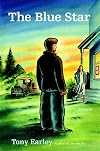
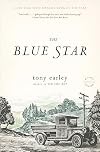
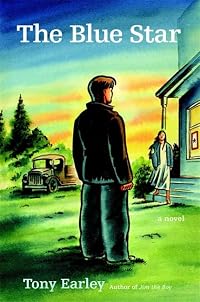
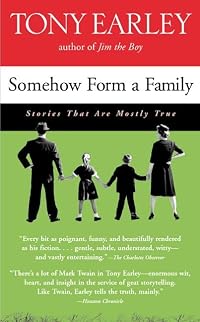
Seven years ago, readers everywhere fell in love with Jim Glass, the precocious ten-year-old at the heart of Tony Earley's bestseller Jim the boy. Now a teenager, Jim returns in another tender and wise story of young love on the eve of World War Two. Jim Glass has fallen in love, as only a teenage boy can fall in love, with his classmate Chrissie Steppe. Unfortunately, Chrissie is Bucky Bucklaw's girlfriend, and Bucky has joined the Navy on the eve of war. Jim vows to win Chrissie's heart in show more his absence, but the war makes high school less than a safe haven, and gives a young man's emotions a grown man's gravity. With the uncanny insight into the well-intentioned heart that made Jim the boy a favorite novel for thousands of readers, Tony Earley has fashioned another nuanced and unforgettable portrait of America in another time--making it again even realer than our own day. This is a timeless and moving story of discovery, loss and growing up, proving why Tony Earley's writing "radiates with a largeness of heart" (Esquire). show lessTags
Recommendations







Member Reviews
Autumn 1941 sees Jim Glass begin his senior year of high school in Aliceville, a tiny town in rural North Carolina. Though aware of war that has yet to involve the United States, and therefore him, he’s more focused on his love life. Having recently broken up with Norma Harris, the prettiest girl in the school, because she’s a know-it-all and won’t kiss him, Jim falls hard for Chrissie Steppe, part Cherokee and wholly mature for her age, which Jim isn’t.
She’s also the girlfriend of Bucky, a boy who graduated the previous year and joined the Navy. Bucky’s father employs Chrissie’s family, which, in his case, also means he controls them. By all accounts, Bucky takes after his father, though with a little more polish. Jim show more knows him as a former baseball teammate, selfish on the diamond, and rumor has it Bucky assumes Chrissie to be his property; her feelings don’t matter.
The Blue Star is a sequel to the delightful, warm-hearted Jim the Boy, which depicts the protagonist at age ten, trying to understand the father who died the week before he was born. The boy’s three unmarried uncles do their best to teach him life lessons and spring him, when they can, from the shackles of his overprotective widowed mother.
In The Blue Star, they’re much the same, not taking themselves too seriously and attempting to pass that attitude onto Jim, with mixed success. Love is one thing a mentor can talk about all he likes; it’s the boy himself who’s got to get a grip on that slippery, elusive dynamite. Mama doesn’t make it any easier. She was certain that her beloved only child would marry Norma — apparently, in these parts, teenage romance is an immediate prelude to marriage — and can’t stop meddling to save her life.
As he did in Jim the Boy, Earley sets his scenes and emotional challenges in effortless, evocative prose.
Jim worries about Bucky and his nasty, irascible father, but makes his pitch to Chrissie anyway. He has the sense to ask questions rather than blather about himself or preen, but he often blunders. He doesn’t always know which questions can hurt, or why, or how they sound to a girl who’s shunned for her race and her poverty.
Earley’s approach to race in both novels bears a subtle touch; social barriers are so obvious, they need no explanation. Consequently, Jim, from a comfortable white family that insists on outward respect for all (yet still obeys societal rules without question), has never encountered the pressures Chrissie faces daily, nor has he even imagined them.
To his credit, however, when someone points out that if he married Chrissie, his children would be one-quarter Cherokee, he retorts that it doesn’t matter — they’d be half Chrissie’s. And when Chrissie and Jim click in funny, poignant flights of fancy, he’s subsequently bewildered to find their connection appears to have indelible limits. He believes with all his heart that Chrissie cares for him; why isn’t that enough?
Early captures youthful love in all its pains and awkwardness. Reading it, I winced in recognition several times, and I imagine others would too. Earley doesn’t protect his hero — Jim can be pigheaded, jealous, and selfish — but he has a good heart. True to life, he learns most when he can see past his self-regard, which, among other instances, makes him realize there’s more to Norma than he knew.
Bucky’s posting to Hawaii, this place called Pearl Harbor, feels portentous. Even so, Earley redeems the clunky plot device, for the emotional effects move his characters in unexpected ways, further proof that reversals need not rest on a plot point. The inner journeys of these characters, major or minor, count for everything.
The Blue Star is a marvelously colorful yet understated exploration of love, duty, sex, social prejudice, and what it means for a boy to become a man. show less
She’s also the girlfriend of Bucky, a boy who graduated the previous year and joined the Navy. Bucky’s father employs Chrissie’s family, which, in his case, also means he controls them. By all accounts, Bucky takes after his father, though with a little more polish. Jim show more knows him as a former baseball teammate, selfish on the diamond, and rumor has it Bucky assumes Chrissie to be his property; her feelings don’t matter.
The Blue Star is a sequel to the delightful, warm-hearted Jim the Boy, which depicts the protagonist at age ten, trying to understand the father who died the week before he was born. The boy’s three unmarried uncles do their best to teach him life lessons and spring him, when they can, from the shackles of his overprotective widowed mother.
In The Blue Star, they’re much the same, not taking themselves too seriously and attempting to pass that attitude onto Jim, with mixed success. Love is one thing a mentor can talk about all he likes; it’s the boy himself who’s got to get a grip on that slippery, elusive dynamite. Mama doesn’t make it any easier. She was certain that her beloved only child would marry Norma — apparently, in these parts, teenage romance is an immediate prelude to marriage — and can’t stop meddling to save her life.
As he did in Jim the Boy, Earley sets his scenes and emotional challenges in effortless, evocative prose.
Jim worries about Bucky and his nasty, irascible father, but makes his pitch to Chrissie anyway. He has the sense to ask questions rather than blather about himself or preen, but he often blunders. He doesn’t always know which questions can hurt, or why, or how they sound to a girl who’s shunned for her race and her poverty.
Earley’s approach to race in both novels bears a subtle touch; social barriers are so obvious, they need no explanation. Consequently, Jim, from a comfortable white family that insists on outward respect for all (yet still obeys societal rules without question), has never encountered the pressures Chrissie faces daily, nor has he even imagined them.
To his credit, however, when someone points out that if he married Chrissie, his children would be one-quarter Cherokee, he retorts that it doesn’t matter — they’d be half Chrissie’s. And when Chrissie and Jim click in funny, poignant flights of fancy, he’s subsequently bewildered to find their connection appears to have indelible limits. He believes with all his heart that Chrissie cares for him; why isn’t that enough?
Early captures youthful love in all its pains and awkwardness. Reading it, I winced in recognition several times, and I imagine others would too. Earley doesn’t protect his hero — Jim can be pigheaded, jealous, and selfish — but he has a good heart. True to life, he learns most when he can see past his self-regard, which, among other instances, makes him realize there’s more to Norma than he knew.
Bucky’s posting to Hawaii, this place called Pearl Harbor, feels portentous. Even so, Earley redeems the clunky plot device, for the emotional effects move his characters in unexpected ways, further proof that reversals need not rest on a plot point. The inner journeys of these characters, major or minor, count for everything.
The Blue Star is a marvelously colorful yet understated exploration of love, duty, sex, social prejudice, and what it means for a boy to become a man. show less
The Blue Star, published in 2008, is a sequel of sorts to Jim the Boy, published in 2000. In the first book, Jim Glass, the hero of both books, is ten, and in this one he is seventeen. I did not read the first book, but had no trouble gleaning the background of the main characters and following the story.
It is 1941, and Jim lives with his mom in the small town of Aliceville, North Carolina. He has a close relationship with his three bachelor uncles, Zeno, Al, and Coran, who all help raise and mentor Jim. He never knew his dad, who died of a heart attack shortly after Jim’s birth.
Jim is in love with Chrissie Steppe, a girl who sits in front of him in class, and who is the daughter of a white woman and a Cherokee man (which is a problem show more in this conservative town). Chrissie is not available anyway though; she is engaged to Bucky Bucklaw, who is off serving in the Navy. Chrissie’s engagement wasn’t entirely voluntary, however, and she clearly is attracted to Jim. Not free to act upon it, she tries to keep her distance. Still, they skirt the edges of a touching and innocent courtship which is disrupted when Pearl Harbor is bombed, and Jim is forced to make some adult choices.
Discussion: This is a “sweet” book written in simple prose, perhaps to evoke simpler times. There are some class and race issues in the book, but they are just part of the landscape, like the laurel and rhododendron, and poplar, oak, maple and sweet gum that Jim so loves on the mountain near his home.
The high school boys experiment with love, without understanding much about it. Jim asks his friend Dennis Deane whether or not he loves the girl they call Ellie Something, because they can never remember her last name:
"‘Do you love Ellie Something?’
‘I guess so. I mean, I think so. I mean I think about her a lot. I didn’t used to think about her at all. What does that mean? I look forward to seeing her get off the school bus. Does that mean I love her?”
And they experiment with sex. When Dennis finally “does it,” Jim wants details:
"‘You never did tell me what it was like.’
Dennis Deane frowned. ‘I don’t really know how to explain it,’ he said. ‘It was different than I thought.’
‘Different better or different worse?’
‘Just different different. You know how, when you’re by yourself and you think about doing it?’
Jim nodded slightly.
‘Well, I guess I never really thought about the girl being there.’”
Evaluation: I didn’t love this book, but I did like it. There are some charming passages, but I have the feeling a male could identify more with the story. show less
It is 1941, and Jim lives with his mom in the small town of Aliceville, North Carolina. He has a close relationship with his three bachelor uncles, Zeno, Al, and Coran, who all help raise and mentor Jim. He never knew his dad, who died of a heart attack shortly after Jim’s birth.
Jim is in love with Chrissie Steppe, a girl who sits in front of him in class, and who is the daughter of a white woman and a Cherokee man (which is a problem show more in this conservative town). Chrissie is not available anyway though; she is engaged to Bucky Bucklaw, who is off serving in the Navy. Chrissie’s engagement wasn’t entirely voluntary, however, and she clearly is attracted to Jim. Not free to act upon it, she tries to keep her distance. Still, they skirt the edges of a touching and innocent courtship which is disrupted when Pearl Harbor is bombed, and Jim is forced to make some adult choices.
Discussion: This is a “sweet” book written in simple prose, perhaps to evoke simpler times. There are some class and race issues in the book, but they are just part of the landscape, like the laurel and rhododendron, and poplar, oak, maple and sweet gum that Jim so loves on the mountain near his home.
The high school boys experiment with love, without understanding much about it. Jim asks his friend Dennis Deane whether or not he loves the girl they call Ellie Something, because they can never remember her last name:
"‘Do you love Ellie Something?’
‘I guess so. I mean, I think so. I mean I think about her a lot. I didn’t used to think about her at all. What does that mean? I look forward to seeing her get off the school bus. Does that mean I love her?”
And they experiment with sex. When Dennis finally “does it,” Jim wants details:
"‘You never did tell me what it was like.’
Dennis Deane frowned. ‘I don’t really know how to explain it,’ he said. ‘It was different than I thought.’
‘Different better or different worse?’
‘Just different different. You know how, when you’re by yourself and you think about doing it?’
Jim nodded slightly.
‘Well, I guess I never really thought about the girl being there.’”
Evaluation: I didn’t love this book, but I did like it. There are some charming passages, but I have the feeling a male could identify more with the story. show less
A portrait of life in America on the eve of World War II, The Blue Star tells the story of Jim Glass Jr during his last year of high school. From among the well-to-do families in his small town, Jim has recently broken up with Norma Harris. Jim finds himself in the awkward position of being fascinated by his friend Bucky's girl friend Chrissie Steppe. But his friend, Bucky Bucklaw Jr. is in the Navy, surely courting Chrissie Steppe would be out of bounds.
When Jim digs deeper into the relationship between Chrissie Steppe and Bucky Bucklaw, he learns more than he'd bargained for about the Steppes and even his own family.
Review:
There is so much more to The Blue Star than Jim's attraction to Chrissie Steppe, which is what makes The Blue show more Star such an interesting and satisfying read. You don't have to have read the earlier book Jim The Boy to appreciate The Blue Star. The characters are fully fleshed out. Each individual struggle adds to the tension and coherence of the novel. There is enough romance, tragedy and action to make The Blue Star hard to categorize and easy to enjoy. show less
When Jim digs deeper into the relationship between Chrissie Steppe and Bucky Bucklaw, he learns more than he'd bargained for about the Steppes and even his own family.
Review:
There is so much more to The Blue Star than Jim's attraction to Chrissie Steppe, which is what makes The Blue show more Star such an interesting and satisfying read. You don't have to have read the earlier book Jim The Boy to appreciate The Blue Star. The characters are fully fleshed out. Each individual struggle adds to the tension and coherence of the novel. There is enough romance, tragedy and action to make The Blue Star hard to categorize and easy to enjoy. show less
Jim the Boy is growing up. On the cusp of America's entry into WWII, Jim Glass is a senior in high school. He and his friends are the big kahunas at school and they intend for their last year to be a good one. It's a year in which Jim falls in love and much changes. He still lives with his widowed mother and his three bachelor uncles, has the run of town in his car, and goes about with his buddies. But he's fallen in love with Chrissie Steppe, who lives up on the mountain and is the girlfriend of one of last year's seniors who has joined the navy and is stationed in Pearl Harbor, Hawaii. As the story unfolds, Jim wants nothing more than to figure a way for Chrissie to be his girl, not Bucky's.
Earley has once again beautifully captured show more the feel of small town southern USA in the early 40's. He has delicately limned social issues through Jim, Chrissie, and Jim's friends, touching on racism, teen pregnancy, and the gathering storm of war. As charming as the first book, this one deftly handles a boy becoming a man and the reader is swept along as Jim comes to understand that so much of what lies underneath adult interactions would have been unknowable to him as a child. He is still a delightful and sympathetic character. Hearkening back to a quieter, in some ways more innocent time, this is a wonderful read that will please those who have read the first novel and will even enchant those who haven't as a stand-alone novel. Here's hoping we see more of Jim Glass in the future. show less
Earley has once again beautifully captured show more the feel of small town southern USA in the early 40's. He has delicately limned social issues through Jim, Chrissie, and Jim's friends, touching on racism, teen pregnancy, and the gathering storm of war. As charming as the first book, this one deftly handles a boy becoming a man and the reader is swept along as Jim comes to understand that so much of what lies underneath adult interactions would have been unknowable to him as a child. He is still a delightful and sympathetic character. Hearkening back to a quieter, in some ways more innocent time, this is a wonderful read that will please those who have read the first novel and will even enchant those who haven't as a stand-alone novel. Here's hoping we see more of Jim Glass in the future. show less
Well, having all my people sick sucks, but it's done wonders for my reading this week. I've been plowing through books the past 10 days or so like it's the Reading Olympics or something.
I read this book yesterday in two sittings. (Well, one sitting and one lying in bed anyway.) It's the sequel to Earley's lovely little book, Jim the Boy. Earley's books are simple and homespun, gentle enough to share with your grandma (of course, I share lots of books with my grandma, but you could share this with any ol' grandma and be okay). The Salon review of Jim the Boy made it sound too sickly sweet, cloying in its innocence, but that's why I loved it. Why shouldn't a 10 year old, especially a small-town farm boy in 1934, be innocent and learn life show more lessons from his wise old bachelor farmer uncles? Maybe I loved it because I grew up a small-town farm kid too and knew men who were just like those old farmers.
Anyway, Earley continues that same down-home, straight-shooting tone in this book. Jim's now 17, a senior at Aliceville High, and he's fallen head over heels in love with Chrissie Steppe. But there are obstacles to a relationship with Chrissie, and Jim has to learn a bit about life and human nature as he tries to overcome those obstacles. I don't know why I love books like this. I hated being a teenager and how hard it was with those emotions so raw, those feelings so deep and dangerous, but I love reading about them, especially when the author gets it right. Maybe it's because in books there's at least a good chance that it won't be as messy and ugly as real life usually is.
So, yes, I loved this book. I don't care if it is simple and sentimental. Sometimes you need simple and sentimental.
I even loved the advice Uncle Zeno gives Jim. It may be hokey, but it's true, you know?
"You have to choose to be a good man," Uncle Zeno said. "You have to choose every minute of every day. As soon as you don't, you're lost."
"I don't believe in fighting a man to keep him away from a woman. Either you can trust a woman or you can't. If you can trust her, nothing anybody can say is going to turn her head, and if you can't trust her, beating up every man who says howdy to her won't do you a bit of good."
Sometimes it's nice having morals spelled out so plainly. show less
I read this book yesterday in two sittings. (Well, one sitting and one lying in bed anyway.) It's the sequel to Earley's lovely little book, Jim the Boy. Earley's books are simple and homespun, gentle enough to share with your grandma (of course, I share lots of books with my grandma, but you could share this with any ol' grandma and be okay). The Salon review of Jim the Boy made it sound too sickly sweet, cloying in its innocence, but that's why I loved it. Why shouldn't a 10 year old, especially a small-town farm boy in 1934, be innocent and learn life show more lessons from his wise old bachelor farmer uncles? Maybe I loved it because I grew up a small-town farm kid too and knew men who were just like those old farmers.
Anyway, Earley continues that same down-home, straight-shooting tone in this book. Jim's now 17, a senior at Aliceville High, and he's fallen head over heels in love with Chrissie Steppe. But there are obstacles to a relationship with Chrissie, and Jim has to learn a bit about life and human nature as he tries to overcome those obstacles. I don't know why I love books like this. I hated being a teenager and how hard it was with those emotions so raw, those feelings so deep and dangerous, but I love reading about them, especially when the author gets it right. Maybe it's because in books there's at least a good chance that it won't be as messy and ugly as real life usually is.
So, yes, I loved this book. I don't care if it is simple and sentimental. Sometimes you need simple and sentimental.
I even loved the advice Uncle Zeno gives Jim. It may be hokey, but it's true, you know?
"You have to choose to be a good man," Uncle Zeno said. "You have to choose every minute of every day. As soon as you don't, you're lost."
"I don't believe in fighting a man to keep him away from a woman. Either you can trust a woman or you can't. If you can trust her, nothing anybody can say is going to turn her head, and if you can't trust her, beating up every man who says howdy to her won't do you a bit of good."
Sometimes it's nice having morals spelled out so plainly. show less
A worthy successor to one of my favorite books, the author's marvelous "Jim the Boy", in which Jim Glass, no longer ten but seventeen, realizes some of what the world that was too big for him as a ten-year-old has to offer. He has fallen in love with his classmate, Chrissie Steppe. But she is engaged to Bucky Bucklaw, who has gone to fight in the war, and Jim and Chrissie are left behind to try to find answers in a confusing world made much more so by death and love and duty. The last several pages stand out in my mind as nearly perfect, and as moving a finish to a story as I can remember reading.
I'm a sucker for sweet, unpretentious novels about the good ol' days. This is the sequel to "Jim the Boy" -- one of the best of such novels, and it's darn good. The plot is simple: boy falls in love with girl, girl has secrets, boy learns hard truths.... It's a bit like watching a tankful of fish, or a fallen leaf navigating a stream: calm on the surface, with only hints of untold dramas. I tried to read it as slowly as possible to enjoy the words and let the story unfold in my imagination as well as the pages.
Members
- Recently Added By
Lists

A Rainbow of Books: Colors in the Title
570 works; 24 members
Author Information

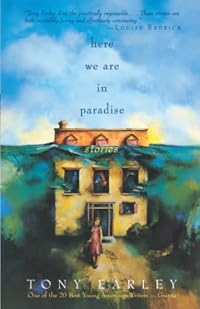
Tony Earley was born & raised in Rutherfordton, North Carolina, & graduated from Warren Wilson College in Asheville, North Carolina. He attended the University of Alabama at Tuscaloosa, where he earned his MFA in creative writing, studied under Richard Yates, & won several fiction prizes. He is the author of the short story collection "Here We Are show more in Paradise" & he wrote the preface to "New Stories from the South 1999", by Algonquin Books. He lives with his wife & dogs in Nashville, Tennessee, where he is an assistant professor at Vanderbilt University. (Bowker Author Biography) show less
Awards and Honors
Series

Common Knowledge
- Original publication date
- 2008
- People/Characters
- Jim Glass; Chrissie Steppe; Dennis Deane
- Important places
- North Carolina, USA
- Important events
- Attack on Pearl Harbor (1941-12-07)
- Epigraph
- I got a pig home in the pen, And corn to feed him on, All I need is a pretty little girl, To feed him when I'm gone. ~Arthur Smith "Pig in a Pen"
- Dedication
- For - The girls who live in the blue house
In memory of Gordon Kato 1961-2006 - Blurbers
- Turow, Scott; Zipp, Yvonne; Jones, Malcolm; Shreve, Porter; Freeman, John; Sullivan, Patrick (show all 18); Minzesheimer, Bob; Maslin, Janet; Gess, Denise; Freedenberg, Harvey; Vagnino, Kate; Flanagan, Margaret; Ciuraru, Carmela; Schneider, Bethany; Charles, Ron; Friskics-Warren, Bill; Rouvalis, Christina; Williams, Lynna
Classifications
Statistics
- Members
- 341
- Popularity
- 92,448
- Reviews
- 23
- Rating
- (3.93)
- Languages
- English, Italian
- Media
- Paper, Audiobook, Ebook
- ISBNs
- 9
- ASINs
- 5