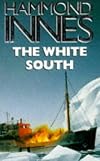
The White South
by Hammond Innes
On This Page
Description
A tense tale of disaster in the Antarctic - perfect fireside reading for cold winter evenings A 22,000 ton whaling ship steams into a broken plain of white, glimmering ice during the howling fury of an Antarctic gale. What madness drives the ship forwards, deeper and deeper into the ice until its jagged edges hold her fast? Marooned amidst the pitiless, frozen wastes, the crew of the Southern Cross make a desperate attempt to survive against the odds.Tags
Recommendations




Member Reviews
This 1949 thriller is a positive orgy of political incorrectness, from the hilariously unfortunate title (how many people have got this out from the library hoping for a racist epic, I wonder?) to the gratuitous polluting of the Antarctic and slaughter of whales. Of course, Hammond Innes didn't intend it to be offensive, but it's all so over the top when seen with the hindsight of fifty years that the book gets a certain camp, Rider-Haggardish charm from it all. Innes wasn't a bad writer at all, but history has conspired against him more than usually in this particular case. He wasn't to know that the general perception of whaling would change so rapidly from "brave men risking their lives to harvest the bounty of the ocean" to show more "gruesome industrialised slaughter of noble animals". Possibly he even contributed to that shift by his graphic descriptions of how the whalers do their work. With a little bit of goodwill you might even imagine foreshadowings of climate change in the story (an unusually cold Antarctic summer, and fewer whales than usual).
We do get a sort of Captain Ahab, but there's no Great White Whale here: the chief character is really the Antarctic pack-ice, and the main part of the story deals with a party of shipwrecked whalers stranded on an iceberg. This part of the book, describing the grim struggle to survive on the ice with little hope of rescue, is very well done, even if the surrounding plot is a bit corny.
The book takes a while to get going, though — it looks as though Innes wasn't happy with the original opening of the story and had to tack on an awkward prologue to try to grab the reader's attention. Using a first-person narrator in a survival story is a bit of a risk. The reader knows that the narrator survives, so the only suspense is in working out how that's going to happen.
So it's not Innes on the top of his form, but once we're in the Antarctic it is high-camp British adventure in the best tradition, even if most of the characters are actually Norwegian. It's a tough old world, where men are men and women are on the verge of hysterics. We do get a female ship's officer, but she turns out to be "motherly" and fond of darning socks, so that's all right. Balance of Universe undisturbed. show less
We do get a sort of Captain Ahab, but there's no Great White Whale here: the chief character is really the Antarctic pack-ice, and the main part of the story deals with a party of shipwrecked whalers stranded on an iceberg. This part of the book, describing the grim struggle to survive on the ice with little hope of rescue, is very well done, even if the surrounding plot is a bit corny.
The book takes a while to get going, though — it looks as though Innes wasn't happy with the original opening of the story and had to tack on an awkward prologue to try to grab the reader's attention. Using a first-person narrator in a survival story is a bit of a risk. The reader knows that the narrator survives, so the only suspense is in working out how that's going to happen.
So it's not Innes on the top of his form, but once we're in the Antarctic it is high-camp British adventure in the best tradition, even if most of the characters are actually Norwegian. It's a tough old world, where men are men and women are on the verge of hysterics. We do get a female ship's officer, but she turns out to be "motherly" and fond of darning socks, so that's all right. Balance of Universe undisturbed. show less
Concluding his novels was never among Hammond Innes' greatest strengths. Too often, he simply provided a summary resolution with a bit too much happiness and no lasting edge to them. That is usually alright, however, because it's the process in reading an Innes novel that rewards the reader, not the conclusion. Yet it's a pity in the case of The White South. But for the cheery, upbeat ending that is out of synch with the rest of the book, Innes was on the verge of completing a work of literature, instead of mere fiction. Again, a pity. But for a still struggling author trying to make a paying career out of his writing, which Innes was at the time, it's understandable.
Innes did have talent. Serious talent. And it's on display, here. I've show more never thought I could care much for a story set in the Antarctic. But Innes proved me wrong. Usually, I prefer adventure stories set in the South Seas, South East Asia, South America, or the deserts of North Africa. But it's because I like the latter of those places that I became drawn to The White South. Why? Because Innes creates a desert landscape in that frozen land. In place of desert thirst and a burning sun, there is starvation and brutal cold. Still, the key to survival in both Antarctica and the great deserts is the same--endurance, intelligence, commitment, and luck. And so it will be with Duncan Craig in this story. Had but the author made a more Conradian solution to his ending, it would have been so much better. show less
Innes did have talent. Serious talent. And it's on display, here. I've show more never thought I could care much for a story set in the Antarctic. But Innes proved me wrong. Usually, I prefer adventure stories set in the South Seas, South East Asia, South America, or the deserts of North Africa. But it's because I like the latter of those places that I became drawn to The White South. Why? Because Innes creates a desert landscape in that frozen land. In place of desert thirst and a burning sun, there is starvation and brutal cold. Still, the key to survival in both Antarctica and the great deserts is the same--endurance, intelligence, commitment, and luck. And so it will be with Duncan Craig in this story. Had but the author made a more Conradian solution to his ending, it would have been so much better. show less
"Ship abandoned: the great whaling factory-ship Southern Cross, of more than 20,000 tons, is caught and crushed in the polar ice. 500 men face an agonising death in the frozen wastes of the Antarctic. A last desperate plea for help to the outside world, and then silence...
The disaster was a nine day wonder, quickly forgotten by the newspapers. But long after the abortive rescue attempts, after all help had been abandoned, the great ice-fields yielded their cruel secret." - Fontana jacket notes from the 1971 paperback.
A tense, memorable suspense thriller, vintage Hammond Innes. A good page turning escape novel.
The disaster was a nine day wonder, quickly forgotten by the newspapers. But long after the abortive rescue attempts, after all help had been abandoned, the great ice-fields yielded their cruel secret." - Fontana jacket notes from the 1971 paperback.
A tense, memorable suspense thriller, vintage Hammond Innes. A good page turning escape novel.
Typical Innes, an ordinary man is thrown into extraordinary circumstances, this time it is a clerk call Duncan Craig. He decides to give up his job in London and seek a new life and promised job in South Africa, but when the job disappears he is offered another with a whaling fleet in the Antarctic on a short expedition. Being a commander of a Corvette in the war he decides to take up the offer, but soon finds that life about a whaling vessel is totally different. A murder onboard causes major upset, but then pales into insignificance when the ship become trapped inbetween gigantic ice floes which threatens the life of everyone on board. With a potential murderer on board Craig must battle not just nature but a potential enemy as well.
A show more really interesting book that doesn't shy away from the violence of whaling and cruelty of the Antarctic, you can tell Innes has done his research and loves what he is writing about. A well written adventure story that transports the reader directly into the action. Maybe not the best pace to start with Innes, but def worth a look. show less
A show more really interesting book that doesn't shy away from the violence of whaling and cruelty of the Antarctic, you can tell Innes has done his research and loves what he is writing about. A well written adventure story that transports the reader directly into the action. Maybe not the best pace to start with Innes, but def worth a look. show less
Only two lifeboats arrived after the destruction of a large
whaling ship. This is the story of the those who survived.
whaling ship. This is the story of the those who survived.
Ratings
Members
- Recently Added By
Lists

Most unfortunate titles
44 works; 3 members

Stories set in the Polar Regions
33 works; 3 members
Author Information

74+ Works 6,350 Members
Author Ralph Hammond Innes was born in Horsham, England on July 15, 1914. He attended Cranbrook School in Kent, but left in 1931 to work as a journalist. He published his first novel, The Doppelganger, in 1937. During World War II, he served in the Royal Artillery and published a number of books. In 1946, he became a full-time writer and wrote show more over thirty novels, children's books, and travel books throughout his career. He published children's books under the pseudonym Ralph Hammond until 1953. Four of his novels were made into films. He was awarded a C.B.E. (Commander, Order of the British Empire) in 1978 and received the Bouchercon Lifetime Achievement award in 1993. He died on June 10, 1998 and left a bulk of his estate to the Assoication of Sea Training Organisations. (Bowker Author Biography) show less
Work Relationships
Common Knowledge
- Original title
- The White South
- Alternate titles
- The Survivors (USA) (USA)
- Original publication date
- 1949
Classifications
Statistics
- Members
- 246
- Popularity
- 132,402
- Reviews
- 5
- Rating
- (3.63)
- Languages
- 7 — Danish, Dutch, English, French, German, Polish, Swedish
- Media
- Paper, Audiobook, Ebook
- ISBNs
- 21
- ASINs
- 23