On This Page
Description
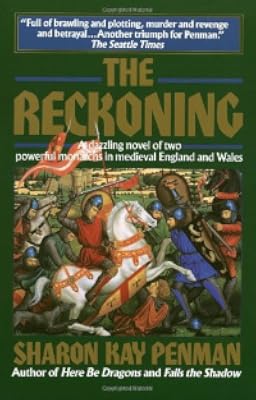
A novel set in 1271 amidst the growing conflict between England and Wales. Llewelyn of Wales married Ellen de Montfort to spite Edward I; but, he found himself participating in one of the great love stories of the Middle Ages. Caught up in the power struggles and lives of these highborn are a host of lesser characters, for the devotion Llewelyn inspired in his followers was equalled only by the loyalty felt by all who came under the spell of the de Montfort family. Ranged against them was a show more worthy opponent, Edward I, whose power and success inspired its own support. show lessTags
Recommendations



Member Reviews
This third and final book in the Welsh Princes series tells about the life of Llewellyn, Prince of Wales, and the final, desperate attempts to protect Welsh culture, language and independence in the face of increasing threats and encroachment on the part of Edward I of England.
Despite having a pretty good sense of how the conflict and ultimately political repercussions would play out, I felt nevertheless kind of devastated and heartbroken at the ending. Yep, England, I'm disappointed in you...and not for the first time. While I've given the individual books anywhere from three to five stars, the trilogy as a whole — for superb writing, engaging storytelling, and overall enlightenment about historical events all but overlooked today show more — is an absolute five. Not to be missed for readers of historical fiction. show less
Despite having a pretty good sense of how the conflict and ultimately political repercussions would play out, I felt nevertheless kind of devastated and heartbroken at the ending. Yep, England, I'm disappointed in you...and not for the first time. While I've given the individual books anywhere from three to five stars, the trilogy as a whole — for superb writing, engaging storytelling, and overall enlightenment about historical events all but overlooked today show more — is an absolute five. Not to be missed for readers of historical fiction. show less
Summary: Brings to a close the struggles between Wales and England under Edward I, the complicated relationship between brothers Llewellyn and David ab Gruffyd, and tells the story of the women who loved them--a true tale of love and loss.
Last month, I reviewed the second volume of the Welsh Princes Trilogy, Falls the Shadow, which focused on Simon de Montfort and his campaign for the rights of the people with their king. In that book, the ongoing power struggle between the English and the Welsh remains in the background. In The Reckoning, Penman brings the history of conflict between England and Wales to its culmination.
Much of the story is told through the eyes of a young man, Hugh, who becomes squire to Bran de Montfort until his show more death of tertian fever in Italy, after which he serves Bran's sister Ellen, who had been betrothed to Llewellyn ab Gruffyd, Prince of Wales, until the death of her father Simon and the family's flight to France.
Llewellyn has his own troubles. His mercurial brother Davydd has always coveted his power, even while Llewellyn, as did his grandfather, Llewellyn Fawr, understood that only a united Wales could have any hope of standing against English might. It is an odd relationship of brothers strangely drawn to each other, despite Davydd's betrayals, and alliance for a time with their hated enemy, Edward I, who, with the death of his feeble father, Henry III, is exerting his reign. Davydd marries Edward relation, Elizabeth at Edward's behest, a relation that blossoms into genuine love.
Meanwhile, Llewellyn, fighting for Wales survival, and without an heir beside his betraying brother Davydd, revives his betrothal to Ellen, Simon and Nell's daughter. Ellen, her priest brother Amaury, and Hugh take a perilous sea voyage and are seized by "pirates" who are in fact in Edward's employ, and becomes a bargaining chip in the struggle, In the end, Llewellyn relents, is humbled and pays homage to Edward in return for the chance to marry Ellen. He continues to hold Amaury to keep Llewellyn on his best behavior. Edward encroaches more and more on what were once Welsh domains and prerogatives, doing what Llewellyn had been unable to do--to unite Wales against the English and under his leadership.
The story reaches a high point at Dolwyddelan in December of 1281. Despite an earlier plot to assassinate Llewellyn, foiled only by a freak storm, Davydd and Llewellyn have drawn close, and the other lords of Wales are ready to follow Llewellyn into rebellion. There is one other wonder, and it is that Ellen is with child--an heir for Llewellyn! Was this what goaded Davydd into initiating the rebellion before Llewellyn was ready?
Edward I is a relentless foe, and the remainder of the story is one of heartbreak that I will leave to the reader. Only the love of the Squire Hugh, and Caitlin, the daughter of Davydd (a fictitious element) survives. Let us just say that it is from this period of time that the heir to the English crown is the Princ(ess) of Wales.
Penman writes a gripping tale of two men, Edward and Llewellyn, who each love a country and idea. Only one could survive. Her characters and their relationships are complex, especially the relationship between Llewellyn and Davydd. So many of these people are related by blood or marriage and we see in Edward especially the tension of love and the ruthless use of power to achieve his ends. She paints a time where love could be passionate, especially in the knowledge that life was fragile and death could come in many guises, and often before one was ready. This is an older series, yet one that I hope remains in print. Penman, over these three volumes, tells the story of the ascent of the English kingship, and what was lost in the process.
My review of Here Be Dragon: https://bobonbooks.com/2015/07/17/review-here-be-dragons/
My review of Falls the Shadow: https://bobonbooks.com/2018/01/09/review-falls-the-shadow/ show less
Last month, I reviewed the second volume of the Welsh Princes Trilogy, Falls the Shadow, which focused on Simon de Montfort and his campaign for the rights of the people with their king. In that book, the ongoing power struggle between the English and the Welsh remains in the background. In The Reckoning, Penman brings the history of conflict between England and Wales to its culmination.
Much of the story is told through the eyes of a young man, Hugh, who becomes squire to Bran de Montfort until his show more death of tertian fever in Italy, after which he serves Bran's sister Ellen, who had been betrothed to Llewellyn ab Gruffyd, Prince of Wales, until the death of her father Simon and the family's flight to France.
Llewellyn has his own troubles. His mercurial brother Davydd has always coveted his power, even while Llewellyn, as did his grandfather, Llewellyn Fawr, understood that only a united Wales could have any hope of standing against English might. It is an odd relationship of brothers strangely drawn to each other, despite Davydd's betrayals, and alliance for a time with their hated enemy, Edward I, who, with the death of his feeble father, Henry III, is exerting his reign. Davydd marries Edward relation, Elizabeth at Edward's behest, a relation that blossoms into genuine love.
Meanwhile, Llewellyn, fighting for Wales survival, and without an heir beside his betraying brother Davydd, revives his betrothal to Ellen, Simon and Nell's daughter. Ellen, her priest brother Amaury, and Hugh take a perilous sea voyage and are seized by "pirates" who are in fact in Edward's employ, and becomes a bargaining chip in the struggle, In the end, Llewellyn relents, is humbled and pays homage to Edward in return for the chance to marry Ellen. He continues to hold Amaury to keep Llewellyn on his best behavior. Edward encroaches more and more on what were once Welsh domains and prerogatives, doing what Llewellyn had been unable to do--to unite Wales against the English and under his leadership.
The story reaches a high point at Dolwyddelan in December of 1281. Despite an earlier plot to assassinate Llewellyn, foiled only by a freak storm, Davydd and Llewellyn have drawn close, and the other lords of Wales are ready to follow Llewellyn into rebellion. There is one other wonder, and it is that Ellen is with child--an heir for Llewellyn! Was this what goaded Davydd into initiating the rebellion before Llewellyn was ready?
Edward I is a relentless foe, and the remainder of the story is one of heartbreak that I will leave to the reader. Only the love of the Squire Hugh, and Caitlin, the daughter of Davydd (a fictitious element) survives. Let us just say that it is from this period of time that the heir to the English crown is the Princ(ess) of Wales.
Penman writes a gripping tale of two men, Edward and Llewellyn, who each love a country and idea. Only one could survive. Her characters and their relationships are complex, especially the relationship between Llewellyn and Davydd. So many of these people are related by blood or marriage and we see in Edward especially the tension of love and the ruthless use of power to achieve his ends. She paints a time where love could be passionate, especially in the knowledge that life was fragile and death could come in many guises, and often before one was ready. This is an older series, yet one that I hope remains in print. Penman, over these three volumes, tells the story of the ascent of the English kingship, and what was lost in the process.
My review of Here Be Dragon: https://bobonbooks.com/2015/07/17/review-here-be-dragons/
My review of Falls the Shadow: https://bobonbooks.com/2018/01/09/review-falls-the-shadow/ show less
I can now say I've read all of Penman's novels, a baker's dozen of them, and my favorites remain The Sunne in Splendour and the first novel in the Welsh Princes trilogy, Here Be Dragons. I'd say this ranks just the next level down--a four and a half, rather than a five. Not to be counted among my favorite books of all time and it didn't move me to tears--but great as historical fiction nevertheless. I'm newly impressed with Penman's skills as a historical novelist. Her research is evident, she definitely conveys how alien the medieval mindset was compared to our times but makes her characters relatable. It can't be easy, fleshing out these stick figures we get mere outlines of from chroniclers, putting actions and words that fit.
If show more anything, that was the problem as I reached the end of the book. I dreaded that ending and it made me drag my feet those last hundred pages. In fact, I had deliberately avoided the last two books in this trilogy for years. Here Be Dragons is a true life love story--among the most moving I'd ever read, all the more for being based on real people. As a love story, it's has it's share of the bitter among the sweet, but of all of Penman's books I'd say its the most upbeat. But the other two? Well, anyone who knows anything about British history would know that it wasn't long after the events of that book that Wales was swallowed into England. The very titles of the books gave me pause: "Falls the Shadow" and "The Reckoning." If that weren't enough, well, Penman is all to good at showing the flaws and foibles of the characters that doomed them--and poor Wales. All at the same time making medieval Wales terribly appealing to a modern reader. At the same time she doesn't demonize Edward I--but you want to damn him thoroughly anyway!
And now, if you'll excuse me I think I'll begin the process of Penman withdrawal by finding the fluffiest, more sickening sweet and upbeat story I can. show less
If show more anything, that was the problem as I reached the end of the book. I dreaded that ending and it made me drag my feet those last hundred pages. In fact, I had deliberately avoided the last two books in this trilogy for years. Here Be Dragons is a true life love story--among the most moving I'd ever read, all the more for being based on real people. As a love story, it's has it's share of the bitter among the sweet, but of all of Penman's books I'd say its the most upbeat. But the other two? Well, anyone who knows anything about British history would know that it wasn't long after the events of that book that Wales was swallowed into England. The very titles of the books gave me pause: "Falls the Shadow" and "The Reckoning." If that weren't enough, well, Penman is all to good at showing the flaws and foibles of the characters that doomed them--and poor Wales. All at the same time making medieval Wales terribly appealing to a modern reader. At the same time she doesn't demonize Edward I--but you want to damn him thoroughly anyway!
And now, if you'll excuse me I think I'll begin the process of Penman withdrawal by finding the fluffiest, more sickening sweet and upbeat story I can. show less
I can only say that I love Ms. Penman's books. Truly the best kind of historical fiction in that it educates and entertains. She completely has pulled me into a world and a time foreign to me. This isn't reading about Ancient Rome, King Henry VIII, the Civil War -- this is 13th century Wales. I know neither the history nor the legend so this finale of the Welsh trilogy was riveting to me. One thing about keeping true to historical facts -- the truth respects no laws of the novel. Jesu forfend, our heroes and heroines might actually die at any seemingly mundane moment!
I have only praise. I teared up, I routed hard for certain people. I grieved. I really enjoyed the character of Davydd ap Griffuth -- what an enigma. I enjoyed his daughter show more Caitlin as well, but was sad to read at the end that she was fictional. I am certainly seeing that there is an over the top idealistic love shared by many of our central spouses in these novels - this has been a running theme -- yet even prudish me falls for it every time.
I am always sad to leave one of these odysseys -- I am thankful there are more by this author to read but sad that I am done with this trilogy. It was fantastic! One last admirable thing -- not too many writers choose to tell history sympathetically from the side of the vanquished. Penman does; which leaves the reader with a sense of lingering heartbreak. show less
I have only praise. I teared up, I routed hard for certain people. I grieved. I really enjoyed the character of Davydd ap Griffuth -- what an enigma. I enjoyed his daughter show more Caitlin as well, but was sad to read at the end that she was fictional. I am certainly seeing that there is an over the top idealistic love shared by many of our central spouses in these novels - this has been a running theme -- yet even prudish me falls for it every time.
I am always sad to leave one of these odysseys -- I am thankful there are more by this author to read but sad that I am done with this trilogy. It was fantastic! One last admirable thing -- not too many writers choose to tell history sympathetically from the side of the vanquished. Penman does; which leaves the reader with a sense of lingering heartbreak. show less
Follow on from "Falls the Shadow". Picks up after a gap of 5 years, and concentrates on the story of Llewelyn and the end of an independant Wales. I'm left with the urge the give Edward I a massive thump for being so blinkered and almost hypocritical, as well as to give David (Llewelyn's younger brother) a dammed good slapping for being both such a schemer and so very naieve at one and the same time. Terribly sad in lots of places, and the ending is very bleak. I'm torn between wanting Llewelyn and wales to survive and knowing that they don't. But it is a good read.
Sharon Kay Penman concludes her Welsh trilogy (after Here Be Dragons and Falls the Shadow) with this, The Reckoning. And what a reckoning it is.
For anyone familiar with British history, it's well-known that the story of Wales' struggle for independence is a sad one. Penman certainly doesn't write "down" to her audience, sugar-coating things or putting a more positive spin on events. She makes it very plain, seemingly from the first, that the Welsh are fighting a losing battle against the English. The Prince of Wales cannot even get his own wife into Wales due to the English crown- how to fight a battle against the crown?
A previous reviewer said that the story of Ellen and Llewelyn seems sometimes to be a rehash of Joanna and the earlier show more Llewelyn. I'd tend to agree with that- the two also allude to Joanna and her Llewelyn fairly often. But they are characters of their own, especially this Llewelyn ap Gruffyd who tries so hard to unite Wales against England and keep sovereignty with his countrymen, even as he is betrayed time and again by his own family. And even the romance between the two speaks so much to me about medieval poems, all about glory and honor and love that I think it fits perfectly well into the story.
The only thing I did *not* think fit as well into the story was Penman's inclusion of two characters (Hugh and Caitlin) that have little or no historical basis whatsoever. It's fine to include these people as small characters, but these seem sometimes to overwhelm the rest of the story. However, by the end, their inclusion seems to make sense, as they help the story come to a more satisfying conclusion as would have been possible without them.
Even with that slight negative, the story overall is very moving. It's painful to read, and yet you cannot put it down. Over and over, you will cheer with the Welsh and cry with them, and by the end ... you'll want to go to Wales. show less
For anyone familiar with British history, it's well-known that the story of Wales' struggle for independence is a sad one. Penman certainly doesn't write "down" to her audience, sugar-coating things or putting a more positive spin on events. She makes it very plain, seemingly from the first, that the Welsh are fighting a losing battle against the English. The Prince of Wales cannot even get his own wife into Wales due to the English crown- how to fight a battle against the crown?
A previous reviewer said that the story of Ellen and Llewelyn seems sometimes to be a rehash of Joanna and the earlier show more Llewelyn. I'd tend to agree with that- the two also allude to Joanna and her Llewelyn fairly often. But they are characters of their own, especially this Llewelyn ap Gruffyd who tries so hard to unite Wales against England and keep sovereignty with his countrymen, even as he is betrayed time and again by his own family. And even the romance between the two speaks so much to me about medieval poems, all about glory and honor and love that I think it fits perfectly well into the story.
The only thing I did *not* think fit as well into the story was Penman's inclusion of two characters (Hugh and Caitlin) that have little or no historical basis whatsoever. It's fine to include these people as small characters, but these seem sometimes to overwhelm the rest of the story. However, by the end, their inclusion seems to make sense, as they help the story come to a more satisfying conclusion as would have been possible without them.
Even with that slight negative, the story overall is very moving. It's painful to read, and yet you cannot put it down. Over and over, you will cheer with the Welsh and cry with them, and by the end ... you'll want to go to Wales. show less
This writer speaks to me as a history facts first consumer of the genre. In fact she's illuminated my more academic reading on this period. So i recommend the last novel in the Welsh Princes trilogy. David gets his, and Edward I as a good english king, is hard on the neighbours.
Members
- Recently Added By
Published Reviews
ThingScore 100
"With a large cast of sturdy characters, a gripping (true) story, and research that supports, rather than impales, good storytelling: a first-rate historical novel, crowning a solid series."
added by bookfitz
Lists

Historical Fiction
889 works; 91 members

Books That Made Me Cry
199 works; 105 members

Best Historical Fiction authors
41 works; 9 members

Historical Fiction Lovers
88 works; 4 members

Authors from the United States
245 works; 3 members
Author Information

21+ Works 19,008 Members
Sharon Kay Penman was born in New York City on August 13, 1945. She received a bachelor's degree in history from the University of Texas at Austin and a Juris Doctor degree from Rutgers University School of Law. She worked as a tax lawyer before becoming a full-time writer. She wrote The Sunne in Splendour, which chronicled the life of Richard show more III, while she was a student and a tax lawyer. After finishing the manuscript, her only copy was stolen from her car. She eventually rewrote the book and it was published in 1982. Her other works include Here Be Dragons, The Reckoning, When Christ and His Saints Slept, The Queen's Man, Cruel as the Grave, Dragon's Lair, Prince of Darkness, Lionheart and A King's Ransom. She won the 2001 Career Achievement Award for Historical Mysteries from Romantic Times. (Bowker Author Biography) show less

Sharon Kay Penman is a LibraryThing Author, an author who lists their personal library on LibraryThing.
Some Editions
Awards and Honors
Notable Lists
Series

Common Knowledge
- Canonical title
- The Reckoning
- Original title
- The Reckoning
- Original publication date
- 1991-09-01
- People/Characters
- Llywelyn ap Gruffudd (Llywelyn the Last); Eleanor de Montfort (Ellen); Edward I, King of England; Dafydd ap Gruffudd
- Important places
- Kingdom of Gwynedd (medieval kingdom); Wales, UK; England, UK
- Important events
- Conquest of Wales (1277 | 1283)
- Dedication
- To my parents
- First words
- There were no stars.
- Last words
- (Click to show. Warning: May contain spoilers.)We must remember that in the dark days that lie ahead.
- Publisher's editor
- Wood, Marian; Watt, Susan
- Blurbers
- Goldman, James
- Original language
- English
Classifications
Statistics
- Members
- 1,457
- Popularity
- 16,154
- Reviews
- 22
- Rating
- (4.37)
- Languages
- English
- Media
- Paper, Ebook
- ISBNs
- 9
- ASINs
- 7