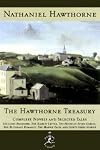
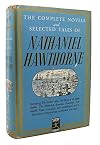
The Complete Novels and Selected Tales of Nathaniel Hawthorne
by Nathaniel Hawthorne
On This Page
Description
Fanshawe: Ellen is memorable as the typical damsel in distress. Fanshawe and Edward Walcott are captivating as the rivals for Ellen's love who put their differences aside to save her. The Angler is captivating as a villain who offers some interesting passages and is not quite a monster. And Hawthorne manages to speed things up with a wild chase and bitter confrontation. The scarlet letter: In the early days of Puritan Boston Hester Prynne braves the stigma of adultery by wearing the show more embroidered scarlet "A" on her clothing. Hester resists oppression and unearths new temptations at the margins of society, where the primeval forests hang their evil influence pendulously over the evil flourishing within the community itself. The house of the seven gables: This novel of crime and retribution reflects the social and moral values of New England in the 1840s. It is the story of the Pyncheon family, a dynasty founded on pious theft who lived for generations under a dead man's curse until their house was finally exorcised by love. Blithedale romance: Based on Hawthorne's own experience of a Utopian socialist community outside Boston, this novel tells of the attempts of a like-minded group to begin reforming a dissipated America. However, rather than dropping bad habits and changing the world, they find themselves pursuing egotistical paths. Marble faun: The fragility of human life and art dominate this story of American expatriates in Italy in the mid-19th century. Befriended by Donatello, a young Italian with the classical grace of the "Marble Faun", Miriam, Hilda, and Kenyon find their pursuit of art taking a sinister turn. show lessTags
Recommendations




















Member Reviews
Hawthorne is unfortunately known to many readers only as the author of the Scarlet Letter, which I was forced to read in high school. There is nothing wrong with that novel - but it is Hawthorne's short stories that really grab me. They are fascinating - Rappaccini's Daughter for instance, which equals in horror anything Poe wrote - and Hawthorne comes across as someone I would have loved to be able to sit down with and have a conversation.
Fanshawe - I can't imagine anyone reading this today were it not by Nathaniel Hawthorne. When he wrote this he was barely out of college, and he would later try to destroy every copy in existence. I can see glimmers of the genius he'd later display in his novels and short stories. I first saw that in the confrontation between "the Angler" and Hugh Crombie: "Your good resolutions were always like cobwebs, and your evil habits like five-inch cables." Great line--and I can see some of the classic Hawthorne themes here concerning good and evil and redemption. But oh, the melodrama! And his heroine Ellen Langton is a rather dull, insipid, damsel-in-distress. There's also far too much tell, not show here--Hawthorne would get much, much show more better. Two Stars
The Scarlet Letter - Hester Prynne is a heroine with a capital A. I was puzzled when in my recent read of Ahab's Wife Hawthorne was depicted as, well, puritanical and that critics consider the novel as patriarchal in its sentiments, because my memory of the novel was that Hawthorne's sympathies, even admiration, was with Hester. After a recent reread I saw no reason to change my mind, even if I can see flaws. Among them the "introductory sketch," "The Custom-House" framing the story I found pointless and boring. And admittedly, there are melodramatic romantic touches I found a bit much. (A capital "A" in the sky? Really Hawthorne?) Past that first chapter though, I immediately found myself gripped by the story and by Hester. It's not a long novel--about 88 thousand words, about 150 pages. We first meet Hester coming out of a prison door by which are roses that legend said bloomed at the feet of the martyred Ann Hutchinson, banished from the Puritans' Massachusetts Bay Colony for her heresies and her daring in preaching despite her female sex. Early on is mentioned that not far past is the Elizabethian Age in which a woman ruled. Hester comes out of that prison with a Scarlet "A" emblazoned on her bosom, and I can't help but admire that this is no small, demure "A" but one Hester herself elaborately embroidered with golden thread. She refuses to name the man that shares her sin even though it would mean she could take that letter off her dress rather than wear it the rest of her life. She names the child of that adultery Pearl after the "pearl of great price" and fights to keep her when the authorities are thinking of taking her child away. Hester stays true to herself throughout and never runs away. Five Stars
The House of Seven Gables - This tale of a family curse is, believe it or not, a lot sunnier than The Scarlet Letter. There so much that's rich here. The vocabulary, the imagery and certain scenes are burned into my memory--particularly that of Judge Pynchon seated in a certain oak chair. It would take Hitchcock or Spielberg to do justice to that scene. And poor Hepzibah and Clifford are such vivid characters--as are even minor secondary characters like the small urchin Ned Higgins who provides some of the humor in the story. Phoebe alas is only the usual 19th century heroine, such an angel you expect birds to weave ribbons into her hair. I found the romance fairly predictable. But there's a lot more to the book than that. I especially found interesting the theme--touched upon by both Clifford and Holgrave--of how the weight of history, ancestry, heredity, even just the stones of an old manse can crush individuals and families beneath them. Four and a Half Stars
The Blithedale Romance - Blithedale is the name of a commune in which this story takes place. But it's only backdrop, not really the subject, and that disappointed me. Why bother having that as your setting if it's not tightly woven into your plot and theme? It's supposedly based on Hawthorne's own experiences on Brook Farm, a utopian commune. I've read that Hawthorne was suspicious of utopianism, and one would think that was fed by his own experiences, but I felt it got short shrift here. Yes, I can see aspects of the novel that are critical. Coverdale, the first person narrator, has all these puffed-up aspirations that seem to drain away once he meets anyone with dirt on his hands--let alone gets his own hands dirty. Hollingsworth is a portrait of the dangerous monomaniac you meet among a lot of those with utopian schemes. And then there's Zenobia. What a waste of a character. She's the patron of the place, a feminist before her time easily toppled over by love of a not very worthy man. In the end it's all a just a love triangle that I can't really see tying well into a theme about the impossibility of the perfectibility of man. (Of course the point might have been the imperfectness of women, and the impossibility of feminism, but you can't expect me to give Hawthorne points for that.) The ending to me seemed melodramatic and the last line made me roll my eyes. Three and a Half Stars
The Marble Faun - I got through even the not very good Fanshawe, but Fanshawe was little more than a hundred pages, and Hawthorne’s other two novels two hundred odd pages--The Marble Faun is 402 pages, and by page 150, I was feeling it was going on forever. Mind you, I rather loved Miriam--rather rare to have a strong female Jewish character in 19th Century fiction. Perhaps Hawthorne took a page from Sir Walter Scott's Rebecca in Ivanhoe? For that matter it was refreshing to see two women artists who were living--and making a living--independently. But then Hawthorne rather reversed that strong depiction of women with Hilda, Miriam’s fellow artist and friend, praised for being a “handmaid of Raphael” and simply copying rather than following her own vision and thus invariably creating “fancies of snow and moonlight” like women authors... And what does it say that I found such digressions as his description of art and Roman monuments more interesting than the main narrative so transparently about a modern retelling of the Fall of Adam? And if how Hawthorne depicts Jews is commendable for his time, how he portrays Catholics is just abominable--even if understandable for a Protestant of his time. And worst of all is the "marble faun" of the story, Donatello. If ever a metaphor was overdone... Two and a Half Stars
This volume also contains “thirty-seven novelettes and tales” from Twice Told Tales, Mosses from an Old Manse and The Snow Image. No one should miss reading “The Minister’s Black Veil,” “Young Goodman Brown,” and “Rappaccini’s Daughter,” all classics assigned me in high school as creepy and striking as anything in Poe. show less
The Scarlet Letter - Hester Prynne is a heroine with a capital A. I was puzzled when in my recent read of Ahab's Wife Hawthorne was depicted as, well, puritanical and that critics consider the novel as patriarchal in its sentiments, because my memory of the novel was that Hawthorne's sympathies, even admiration, was with Hester. After a recent reread I saw no reason to change my mind, even if I can see flaws. Among them the "introductory sketch," "The Custom-House" framing the story I found pointless and boring. And admittedly, there are melodramatic romantic touches I found a bit much. (A capital "A" in the sky? Really Hawthorne?) Past that first chapter though, I immediately found myself gripped by the story and by Hester. It's not a long novel--about 88 thousand words, about 150 pages. We first meet Hester coming out of a prison door by which are roses that legend said bloomed at the feet of the martyred Ann Hutchinson, banished from the Puritans' Massachusetts Bay Colony for her heresies and her daring in preaching despite her female sex. Early on is mentioned that not far past is the Elizabethian Age in which a woman ruled. Hester comes out of that prison with a Scarlet "A" emblazoned on her bosom, and I can't help but admire that this is no small, demure "A" but one Hester herself elaborately embroidered with golden thread. She refuses to name the man that shares her sin even though it would mean she could take that letter off her dress rather than wear it the rest of her life. She names the child of that adultery Pearl after the "pearl of great price" and fights to keep her when the authorities are thinking of taking her child away. Hester stays true to herself throughout and never runs away. Five Stars
The House of Seven Gables - This tale of a family curse is, believe it or not, a lot sunnier than The Scarlet Letter. There so much that's rich here. The vocabulary, the imagery and certain scenes are burned into my memory--particularly that of Judge Pynchon seated in a certain oak chair. It would take Hitchcock or Spielberg to do justice to that scene. And poor Hepzibah and Clifford are such vivid characters--as are even minor secondary characters like the small urchin Ned Higgins who provides some of the humor in the story. Phoebe alas is only the usual 19th century heroine, such an angel you expect birds to weave ribbons into her hair. I found the romance fairly predictable. But there's a lot more to the book than that. I especially found interesting the theme--touched upon by both Clifford and Holgrave--of how the weight of history, ancestry, heredity, even just the stones of an old manse can crush individuals and families beneath them. Four and a Half Stars
The Blithedale Romance - Blithedale is the name of a commune in which this story takes place. But it's only backdrop, not really the subject, and that disappointed me. Why bother having that as your setting if it's not tightly woven into your plot and theme? It's supposedly based on Hawthorne's own experiences on Brook Farm, a utopian commune. I've read that Hawthorne was suspicious of utopianism, and one would think that was fed by his own experiences, but I felt it got short shrift here. Yes, I can see aspects of the novel that are critical. Coverdale, the first person narrator, has all these puffed-up aspirations that seem to drain away once he meets anyone with dirt on his hands--let alone gets his own hands dirty. Hollingsworth is a portrait of the dangerous monomaniac you meet among a lot of those with utopian schemes. And then there's Zenobia. What a waste of a character. She's the patron of the place, a feminist before her time easily toppled over by love of a not very worthy man. In the end it's all a just a love triangle that I can't really see tying well into a theme about the impossibility of the perfectibility of man. (Of course the point might have been the imperfectness of women, and the impossibility of feminism, but you can't expect me to give Hawthorne points for that.) The ending to me seemed melodramatic and the last line made me roll my eyes. Three and a Half Stars
The Marble Faun - I got through even the not very good Fanshawe, but Fanshawe was little more than a hundred pages, and Hawthorne’s other two novels two hundred odd pages--The Marble Faun is 402 pages, and by page 150, I was feeling it was going on forever. Mind you, I rather loved Miriam--rather rare to have a strong female Jewish character in 19th Century fiction. Perhaps Hawthorne took a page from Sir Walter Scott's Rebecca in Ivanhoe? For that matter it was refreshing to see two women artists who were living--and making a living--independently. But then Hawthorne rather reversed that strong depiction of women with Hilda, Miriam’s fellow artist and friend, praised for being a “handmaid of Raphael” and simply copying rather than following her own vision and thus invariably creating “fancies of snow and moonlight” like women authors... And what does it say that I found such digressions as his description of art and Roman monuments more interesting than the main narrative so transparently about a modern retelling of the Fall of Adam? And if how Hawthorne depicts Jews is commendable for his time, how he portrays Catholics is just abominable--even if understandable for a Protestant of his time. And worst of all is the "marble faun" of the story, Donatello. If ever a metaphor was overdone... Two and a Half Stars
This volume also contains “thirty-seven novelettes and tales” from Twice Told Tales, Mosses from an Old Manse and The Snow Image. No one should miss reading “The Minister’s Black Veil,” “Young Goodman Brown,” and “Rappaccini’s Daughter,” all classics assigned me in high school as creepy and striking as anything in Poe. show less
Ratings
Members
- Recently Added By
Author Information

875+ Works 79,280 Members
Nathaniel Hawthorne was born on July 4, 1804 in Salem, Massachusetts. When he was four years old, his father died. Years later, with financial help from his maternal relatives who recognized his literary talent, Hawthorne was able to enroll in Bowdoin College. Among his classmates were the important literary and political figures Horatio Bridge, show more Henry Wadsworth Longfellow, and Franklin Pierce. These friends supplied Hawthorne with employment during the early years after graduation while Hawthorne was still establishing himself as a legitimate author. Hawthorne's first novel, Fanshawe, which he self-published in 1828, wasn't quite the success that he had hoped it would be. Not willing to give up, he began writing stories for Twice-Told Tales. These stories established Hawthorne as a leading writer. In 1842, Hawthorne moved to Concord, Massachusetts, where he wrote a number of tales, including "Rappaccini's Daughter" and "Young Goodman Brown," that were later published as Mosses from an Old Manse. The overall theme of Hawthorne's novels was a deep concern with ethical problems of sin, punishment, and atonement. No one novel demonstrated that more vividly than The Scarlet Letter. This tale about the adulterous Puritan Hester Prynne is regarded as Hawthorne's best work and is a classic of American literature. Other famous novels written by Hawthorne include The House of Seven Gables and The Blithedale Romance. In 1852, Hawthorne wrote a campaign biography of his college friend Franklin Pierce. After Pierce was elected as President of the United States, he rewarded Hawthorne with the Consulship at Liverpool, England. Hawthorne died in his sleep on May 19, 1864, while on a trip with Franklin Pierce. (Bowker Author Biography) show less
All Editions
Series
Belongs to Publisher Series
Modern Library Giant (G37)
Work Relationships
Contains
The Custom House (indirect)
Classifications
Statistics
- Members
- 392
- Popularity
- 79,771
- Reviews
- 2
- Rating
- (4.05)
- Languages
- English
- Media
- Paper
- ISBNs
- 4
- ASINs
- 21