True Women
by Janice Woods Windle
On This Page
Description
Based on the author's own family, the adventures of Texans Euphemia, Georgia, and Bettie, as well as other female relatives of differing racial backgrounds.Tags
Recommendations













Member Reviews
True Women is an ambitious labor of love on the part of the author. Windle seeks to record and share her family's colorful heritage with the world, and she accomplishes this by utilizing the perspectives of three ancestors - Euphemia, Virginia, and Bettie - as well as herself on occasion. Where Windle succeeds is by highlighting these pioneering women and the often dangerous environment they grew up in, and she doesn't shirk on her duty to highlight just how harrowing life was back in Texas's early days. However, this ambition is a double-edged sword. While there are poignant and revealing moments, there are also sweeping generalizations that pull the reader out of the narrative and make it difficult to sink back into it.
For each of her show more heroines, Windle starts in their childhood. For Euphemia, in particular, this is a particularly volatile time for both the character and the state of Texas, so it makes sense. However, the narrative around Euphemia's older life is cut off, even though there are strong hints that her pioneering ways aren't over yet. Honestly, the whole book could've been about Euphemia, her life was that interesting. As a result, readers only get a glimpse of this extraordinary woman, and the tail end of Euphemia's story loses its relatability and poignancy because Windle has to cover larger swathes of years, and this criticism holds for the other two heroines, as well.
Virginia is, I would say, Windle's most complicated heroine. She is the one who most directly deals with the topic of slavery compared to the other ancestors, and Virginia certainly seems conflicted by the practice. However, she and Windle pretty much avoid addressing the topic directly. There's a scene where Virginia meets with a lawyer to free some slaves of hers, but the resolution of that conversation is vague. It's not clear if Virginia succeeded in her aim or not. Coinciding with that is her husband's desire to bring on slave labor to help on their farm. Virginia opposes this, but it's not clear what actually happened. By avoiding the topic while having it simultaneously serve as a backdrop was confusing and felt like a sanitization of history. That said, reading about how her fortunes went up and down with the times felt like a great peek into the South's Reconstruction history, which was complicated in its own right. You empathize with Virginia, and you root for her. But it would be a disservice to history to not read between the lines as to what's not being shared on the page.
Compared to Euphemia and Virginia's lives, Bettie's life was devoid of life-threatening drama. At first, her story unfolds the same way: we begin with a traumatic early childhood experience, but unlike with Euphemia and Virginia, Bettie's trauma doesn't seem to dictate her life to the same extent. Euphemia and Virginia had to overcome enormous obstacles just to survive. Bettie's trauma is certainly the stuff of nightmares, but then she goes on to live a relatively normal life in comparison. In a way, she felt like a gentle come-down from the previous heroines. Bettie's life also just sort of happens to her, and while she meets all these historical people and witnesses massive historical events (the Great Depression, WWII), she seems to have less agency in her story. She provides for her community, but she doesn't outright challenge it. I'm not at all suggesting that makes her a bad person. Her life is comfortable, and she doesn't want to jeopardize that. One can hardly blame her. It does make Windle's job harder because she has to portray a character's inner world when that inner world doesn't want to be challenged and suffering by being compared to the other two heroines.
Overall, this was a wild ride, which you should be able to expect from a novel about Texan women. It's often a tough read, in the sense that there are a lot of gruesome scenes from a brutal time. However, it's still enlightening and even inspiring. That said, it suffers greatly, I think, from stuffing the lives of three women into one book. Readers establish an early connection with the heroines, but then through the massive passages of time, readers just as quickly lose that connection. There's also a very uncritical look at these women in the name of honoring a family legacy, which cannot be ignored, given the time period these stories took place in.
One final thought: I was often struck by the principle of luck in family legacies. Throughout everything these women endure, there's an element of luck that makes their survival possible: the tornado decimated another farm instead of theirs, their sons made it back from the war but not their neighbors', their friends were kidnapped by Native Americans but not them. There's no question these women are strong, capable, and resilient, but they are also incredibly lucky. I just find that fascinating. show less
For each of her show more heroines, Windle starts in their childhood. For Euphemia, in particular, this is a particularly volatile time for both the character and the state of Texas, so it makes sense. However, the narrative around Euphemia's older life is cut off, even though there are strong hints that her pioneering ways aren't over yet. Honestly, the whole book could've been about Euphemia, her life was that interesting. As a result, readers only get a glimpse of this extraordinary woman, and the tail end of Euphemia's story loses its relatability and poignancy because Windle has to cover larger swathes of years, and this criticism holds for the other two heroines, as well.
Virginia is, I would say, Windle's most complicated heroine. She is the one who most directly deals with the topic of slavery compared to the other ancestors, and Virginia certainly seems conflicted by the practice. However, she and Windle pretty much avoid addressing the topic directly. There's a scene where Virginia meets with a lawyer to free some slaves of hers, but the resolution of that conversation is vague. It's not clear if Virginia succeeded in her aim or not. Coinciding with that is her husband's desire to bring on slave labor to help on their farm. Virginia opposes this, but it's not clear what actually happened. By avoiding the topic while having it simultaneously serve as a backdrop was confusing and felt like a sanitization of history. That said, reading about how her fortunes went up and down with the times felt like a great peek into the South's Reconstruction history, which was complicated in its own right. You empathize with Virginia, and you root for her. But it would be a disservice to history to not read between the lines as to what's not being shared on the page.
Compared to Euphemia and Virginia's lives, Bettie's life was devoid of life-threatening drama. At first, her story unfolds the same way: we begin with a traumatic early childhood experience, but unlike with Euphemia and Virginia, Bettie's trauma doesn't seem to dictate her life to the same extent. Euphemia and Virginia had to overcome enormous obstacles just to survive. Bettie's trauma is certainly the stuff of nightmares, but then she goes on to live a relatively normal life in comparison. In a way, she felt like a gentle come-down from the previous heroines. Bettie's life also just sort of happens to her, and while she meets all these historical people and witnesses massive historical events (the Great Depression, WWII), she seems to have less agency in her story. She provides for her community, but she doesn't outright challenge it. I'm not at all suggesting that makes her a bad person. Her life is comfortable, and she doesn't want to jeopardize that. One can hardly blame her. It does make Windle's job harder because she has to portray a character's inner world when that inner world doesn't want to be challenged and suffering by being compared to the other two heroines.
Overall, this was a wild ride, which you should be able to expect from a novel about Texan women. It's often a tough read, in the sense that there are a lot of gruesome scenes from a brutal time. However, it's still enlightening and even inspiring. That said, it suffers greatly, I think, from stuffing the lives of three women into one book. Readers establish an early connection with the heroines, but then through the massive passages of time, readers just as quickly lose that connection. There's also a very uncritical look at these women in the name of honoring a family legacy, which cannot be ignored, given the time period these stories took place in.
One final thought: I was often struck by the principle of luck in family legacies. Throughout everything these women endure, there's an element of luck that makes their survival possible: the tornado decimated another farm instead of theirs, their sons made it back from the war but not their neighbors', their friends were kidnapped by Native Americans but not them. There's no question these women are strong, capable, and resilient, but they are also incredibly lucky. I just find that fascinating. show less
True Women is Windle’s second novel, and like the first, Hill Country, it is based on the lives of her Texas ancestors. As the title suggests, Windle tells her family history through the eyes of its women. She begins with five-year-old Euphemia Texas Ashby watching a procession of “the widows of the Alamo” pass through her settlement after the terrible defeat of the Texians at the Alamo mission. Euphemia and her older married sister, Sarah, are among those who must flee their homes to escape the advancing Mexican army. With all the men at war, the women and children left behind frantically bolt for the safety of the U.S. border. After the defeat of the troops led by Mexican General Santa Anna, they return home to looted, sometimes show more burned homesteads.
Euphemia (one of Windle’s maternal great great grandmothers) grows to maturity on the Texas frontier, learning how to shoot and ride, and marries William King. Their son, Henry King, weds Bettie Moss, another character whose event-filled life is dramatized by Windle. In parallel fashion, Windle relates the fictionalized lives of the Lawshe and Woods women on her father’s side of the family, until Ashbys, Kings, Lawshes, and Woods become neighbors in Seguin, Texas.
Just as the finest historical novels do, True Women embodies a history lesson, giving some insight into the motives and emotions behind the events of the time. A recurring theme in the lives of Windle’s women is war. In addition to the Texas War of Independence and the Civil War, there is the continually escalating Indian wars. In every generation of her family, men go to war, sometimes more than once; some come home maimed, others don’t come home at all. Wars fought on home soil may come to an end with the 1875 surrender of Quanah Parker’s Comanches, but the era of great overseas conflicts begin. The first war not fought on native soil by Windle’s Texas ancestors is World War I, closely followed by World War II. Observed through the eyes of these women, war appears as a young man’s obsession, an opportunity to flex the first muscles of their manhood.
Windle’s writing has improved by leaps and bounds since her first novel. She writes powerful description and often shows a wry wit, as when Bettie Moss King decides to vote for Roosevelt: “Maybe Roosevelt and John Nance Garner would bring prosperity back from wherever it had been hidden by Hoover.” And when populist Jacob Coxey declares his candidacy for president, Annie declares she cannot vote for someone endorsed by the American Martian Society.
True Women is a lengthy read that might have benefitted from less extraneous detail, undoubtedly an artifact of Windle’s amazingly prodigious research. It would be alright if I didn’t learn that the word typhoid comes from Typhon, the name of a fire-breathing monster from Greek mythology, and poor Dr. Peter Woods would be saved from so awkwardly inserting this bit of trivia in his conversation.
Windle’s women are smart, strong, courageous, persistent, and principled. She leaves us with the uneasy thought that war is how men occupy themselves while women do the work of life. She reminds us that human beings recycle their mistakes and that we have a long way to go; and that working for that inch of progress makes life worthwhile (at least we need to think so). She doesn’t write philosophically; she just writes about the real lives of real people who gave us the society into which we were born. A real treat for fans of historic fiction or tales of the Wild West. show less
Euphemia (one of Windle’s maternal great great grandmothers) grows to maturity on the Texas frontier, learning how to shoot and ride, and marries William King. Their son, Henry King, weds Bettie Moss, another character whose event-filled life is dramatized by Windle. In parallel fashion, Windle relates the fictionalized lives of the Lawshe and Woods women on her father’s side of the family, until Ashbys, Kings, Lawshes, and Woods become neighbors in Seguin, Texas.
Just as the finest historical novels do, True Women embodies a history lesson, giving some insight into the motives and emotions behind the events of the time. A recurring theme in the lives of Windle’s women is war. In addition to the Texas War of Independence and the Civil War, there is the continually escalating Indian wars. In every generation of her family, men go to war, sometimes more than once; some come home maimed, others don’t come home at all. Wars fought on home soil may come to an end with the 1875 surrender of Quanah Parker’s Comanches, but the era of great overseas conflicts begin. The first war not fought on native soil by Windle’s Texas ancestors is World War I, closely followed by World War II. Observed through the eyes of these women, war appears as a young man’s obsession, an opportunity to flex the first muscles of their manhood.
Windle’s writing has improved by leaps and bounds since her first novel. She writes powerful description and often shows a wry wit, as when Bettie Moss King decides to vote for Roosevelt: “Maybe Roosevelt and John Nance Garner would bring prosperity back from wherever it had been hidden by Hoover.” And when populist Jacob Coxey declares his candidacy for president, Annie declares she cannot vote for someone endorsed by the American Martian Society.
True Women is a lengthy read that might have benefitted from less extraneous detail, undoubtedly an artifact of Windle’s amazingly prodigious research. It would be alright if I didn’t learn that the word typhoid comes from Typhon, the name of a fire-breathing monster from Greek mythology, and poor Dr. Peter Woods would be saved from so awkwardly inserting this bit of trivia in his conversation.
Windle’s women are smart, strong, courageous, persistent, and principled. She leaves us with the uneasy thought that war is how men occupy themselves while women do the work of life. She reminds us that human beings recycle their mistakes and that we have a long way to go; and that working for that inch of progress makes life worthwhile (at least we need to think so). She doesn’t write philosophically; she just writes about the real lives of real people who gave us the society into which we were born. A real treat for fans of historic fiction or tales of the Wild West. show less
This book, being highly recommended in the Texas History group here at LT, became my Texas read for the Fifty States reading challenge. According to the folks in that group, this book came about as Mrs. Windle was putting together a book of family stories and recipes for her new daughter-in-law. In the process, she decided that the stories were too big for that little project and, in the end, they became THIS book. As Texans say, ‘everything is bigger in Texas’. The women in this author’s family certainly did big things. Their stories are so fascinating, that the book was made into a tv movie in 1997.
This book is a chronicle of Texas history, from the after-effects of the Alamo through World War II.
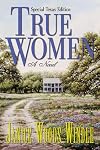
It is a beautiful painting of show more the Texas landscapes where the different stories took place.
It is a genealogy, of sorts. I found myself often referring back to the photographs on the inside covers, which depict the branches of the author’s family tree.
It is, above all, a story of real women, realistically told.
I enjoyed this author’s writing. As a recent transplant to Texas, I intend to find more of her books to help me ‘catch up’ on my new state’s history, in an enjoyable way. If you like historical fiction, get immersed in this book! Here’s what you can expect (from the first chapter):
“Vivid stories of the women in my family had been passed down ... for six generations: stories about the widows of the Alamo and how Euphemia nearly died in the Runaway Scrape and how her sister Sarah outsmarted the Comanches, stories about the women in my family who lived and loved and died in a river of time reaching back to the Alamo and Sam Houston. They were great epic tales of war and adventure, love and murder, violence and redemption. …
Was Euphemia Texas really there when the Widows of Gonzales found refuge at Peach Creek and when Sam Houston’s rag-tag army routed Santa Anna at San Jacinto? Could she ride and shoot like a man? And how did she manage to survive a life constantly plagued by war and violence, by wild Comanches and dread Republicans? Did my great-grandmother Georgia Lawshe really risk her plantation running the Yankee cotton blockade and did she help her children kill the Yankee officer? Did Aunt Sweet really fire on the advancing Yankee column from the balcony of their home? Was another of my great-grandmothers, Bettie King , really left alone all night as a small girl to protect the bodies of her dead friends from a pack of hungry wolves? And did that wonderful cast of characters really pass through their lives and their homes: Thomas Jefferson, Sam Houston, Santa Anna, Juan Seguin, the Queen of Tuckabatchee, Robert E. Lee, Teddy Roosevelt, the Comanche chief Iron Jacket, General Henry McCullock, Pink Rosebud, Precious Honey Child, and Reverend Andrew Jackson Potter?" show less
This book is a chronicle of Texas history, from the after-effects of the Alamo through World War II.
It is a beautiful painting of show more the Texas landscapes where the different stories took place.
It is a genealogy, of sorts. I found myself often referring back to the photographs on the inside covers, which depict the branches of the author’s family tree.
It is, above all, a story of real women, realistically told.
I enjoyed this author’s writing. As a recent transplant to Texas, I intend to find more of her books to help me ‘catch up’ on my new state’s history, in an enjoyable way. If you like historical fiction, get immersed in this book! Here’s what you can expect (from the first chapter):
“Vivid stories of the women in my family had been passed down ... for six generations: stories about the widows of the Alamo and how Euphemia nearly died in the Runaway Scrape and how her sister Sarah outsmarted the Comanches, stories about the women in my family who lived and loved and died in a river of time reaching back to the Alamo and Sam Houston. They were great epic tales of war and adventure, love and murder, violence and redemption. …
Was Euphemia Texas really there when the Widows of Gonzales found refuge at Peach Creek and when Sam Houston’s rag-tag army routed Santa Anna at San Jacinto? Could she ride and shoot like a man? And how did she manage to survive a life constantly plagued by war and violence, by wild Comanches and dread Republicans? Did my great-grandmother Georgia Lawshe really risk her plantation running the Yankee cotton blockade and did she help her children kill the Yankee officer? Did Aunt Sweet really fire on the advancing Yankee column from the balcony of their home? Was another of my great-grandmothers, Bettie King , really left alone all night as a small girl to protect the bodies of her dead friends from a pack of hungry wolves? And did that wonderful cast of characters really pass through their lives and their homes: Thomas Jefferson, Sam Houston, Santa Anna, Juan Seguin, the Queen of Tuckabatchee, Robert E. Lee, Teddy Roosevelt, the Comanche chief Iron Jacket, General Henry McCullock, Pink Rosebud, Precious Honey Child, and Reverend Andrew Jackson Potter?" show less
"...True Women is not just a genealogical treasure for the author and her family, but a novel of a genuine and legitimate Texas pride, and a novel of making it through all these difficulties with the added historical disadvantage of being a woman. It is a novel about determination, resilience, and perseverance. I would read this again, and I plan to lend it out to as many people as possible."
For full review, please visit me at Here Be Bookwyrms on Blogger:
http://herebebookwyrms.blogspot.com/2012/06/true-women.html
For full review, please visit me at Here Be Bookwyrms on Blogger:
http://herebebookwyrms.blogspot.com/2012/06/true-women.html
A fun read full of adventure from the women's perspective in Central Texas of the 1830s.
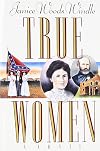
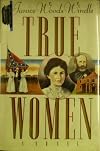
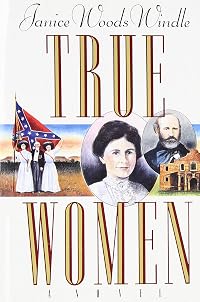
A much better story than the cover would lead you to believe.
Can't finish this one.
Members
- Recently Added By
Lists

I Can't Finish This Book
189 works; 22 members
Author Information

6 Works 545 Members
Work Relationships
Has the adaptation
Common Knowledge
- Original publication date
- 1993
- People/Characters
- Sam Houston; Juan Seguin; Benjamin Hawkins; Captain Lewis Lawshe; Georgia Virginia Lawshe Woods; Sweet Woods (show all 20); Sarah Ashby McClure; Bartlett McClure; Charles Braches; Little Johnny McClure; Euphemia Texas Ashby King; William King; Henry King; Bettie Moss King; Pink Rosebud; Precious Honey Child; Martha Benney; Matilda Lockhart; Antonio López de Santa Anna; the Queen of Tuckabatchee
- Important places
- Sequin, Texas, USA; San Jacinto, Texas, USA; San Marcos, Texas, USA; Gonzales, Texas, USA; Matagorda Bay, Texas, USA; Texas Hill Country, Texas, USA (show all 8); Macon, Georgia, USA; Fort Hawkins, Georgia, USA
- Important events
- Runaway Scrape (1836-03); Texas Revolution (1835-10-02 | 1836-04-21); Battle of San Jacinto (1836-04-21); American Civil War (1861 | 1865)
- Epigraph
- Sir: We, the undersigned, members of the Committee on State Affairs, after examining the declaration presented by Mr. Mundine on female suffrage, respectfully present this minority report, and unhesitatingly state that we ar... (show all)e opposed to female suffrage; not because we think them of less capacity than men, but, forsooth, we think that by the very law of their nature they are transcending above the active particpation in the government of the country and because their native modesty and inborn refinement of feeling causes every TRUE WOMAN to shrink from mingling in the busy noise of election days. They are conscious that they exercise, by keeping themselves in their appropriate spheres, and by exhibiting all those gentle qualities directly opposed to the rougher sex in their capacities as wives and mothers, an influence mightier far than that of the elective franchise. We are opposed to it, further, because we believe that the good sense of every TRUE WOMAN in the land teaches her that granting them the power to vote is a direct open insult to their sex by the implication that they are so unwomanly as to desire the privilege.
We therefore believe that such a declaration should not pass this body of gentlemen. - Dedication
- To my husband, Wayne E. Windle, who always believed in the dream. ~~ To my mother, Virginia Woods, whose scholarship made it a reality. ~~ In memory of my father, Wilton G. Woods, whose love of history was the inspiratio... (show all)n.
- First words
- Few places on earth could be as magical to a child as where the Guadalupe River bottoms cut deep around Idella's house behind Court Street in Seguin, Texas.
- Quotations
- Vivid stories of the women in my family had been passed down mother to daughter, grandmother to granddaughter, aunt to niece, and even father to daughter, for six generations: stories about the widows of the Alamo and how Eu... (show all)phemia nearly died in the Runaway Scrape and how her sister Sarah outsmarted the Comanches, stories about the women in my family who lived and loved and died in a river of time reaching back to the Alamo and Sam Houston. They were great epic tales of war and adventure, love and murder, violence and redemption. …
Who were the daughters of Euphemia Texas? There was so much I didn’t know about these women whose blood flowed in my veins, whose lives lay as prologue to my own. Were the tales embellished with the telling? Was Euphemia Texas really there when the Widows of Gonzales found refuge at Peach Creek and when Sam Houston’s rag-tag army routed Santa Anna at San Jacinto? Could she ride and shoot like a man? And how did she manage to survive a life constantly plagued by war and violence, by wild Comanches and dread Republicans? Did my great-grandmother Georgia Lawshe really risk her plantation running the Yankee cotton blockade and did she help her children kill the Yankee officer? Did Aunt Sweet really fire on the advancing Yankee column from the balcony of their home? Was another of my great-grandmothers, Bettie King , really left alone all night as a small girl to protect the bodies of her dead friends from a pack of hungry wolves? And did that wonderful cast of characters really pass through their lives and their homes: Thomas Jefferson, Sam Houston, Santa Anna, Juan Seguin, the Queen of Tuckabatchee, Robert E. Lee, Teddy Roosevelt, the Comanche chief Iron Jacket, General Henry McCullock, Pink Rosebud, Precious Honey Child, and Reverend Andrew Jackson Potter?
So I began my search for the daughters of Euphemia Texas. I revisited their homes and their graves. I pored through boxes of accumulated family documents and photographs brought out from under beds and down from attics. I interviewed surviving relatives, studied letters, diaries, maps, census records, death certificates, deeds, and land grants. I began to piece together an authentic version of the stories I’d heard as a child. In almost every detail, oral tradition and the historical record were identical.
If we are given life, doesn’t it seem that we should experience as much of it as we can? We should collect experiences in the same way some people collect butterflies. ... Life is a basket to be filled. “What if life is a... (show all)lmost over and the basket is almost empty?" Then fill your basket.
Theoretically, Texas was under military rule. Yet it was more a rule of punishment than of law. Georgia often thought the South was being broken on the rack and was being dismembered bit by bit and forced to make restitution ... (show all)by repaying fragments of its soul.
All afternoon the five sisters picked over the past like raptors, ravenously consuming scraps of time and memory. They talked of great revivals and of dead children and of the comings and goings of the men they had loved. The... (show all)y recalled the humor, irony, and absurdity that had touched their lives, and they laughed and sighed and wiped their eyes. They talked of the house and wove tales around the events that transpired in each room. They talked eagerly, leaning forward, the words almost hurried as if each brought life into the house and into the corridors of their minds. … How amazing, Bettie thought, after all these years the passion is still there. The five old women had survived so much. Sarah alone had buried eight of her nine children. They had endured wars and death and cruelty and every dread missile the dark horseman of the Apocalypse could hurl. They more than endured. They loved and fought, knew anger and compassion, were filled with the full range of the emotions they had felt when they were young. There is something in us, she thought, a flame, that does not change through time, that is as alive when we are old as when we first opened or eyes to this world.
'Imagine that.’ Idella seemed to be watching the sunlight on the river. ‘We rode in that new car from Santa Anna to the war with Japan. We passed by whole armies and nations and wars. We rode that automobile hundreds of y... (show all)ears and through hundreds of lives and we got back hardly before the sun was high. Imagine that. Everywhere is here. The past was just down the road.' - Last words
- (Click to show. Warning: May contain spoilers.)When I last saw Idella, she was standing on her porch above the river. Her lips were moving and she was smiling. As I walked to the Volvo I thought I heard an owl. I turned and Idella was gone.
- Blurbers
- Michener, James A.; Siddons, Anne Rivers; Flagg, Fannie; Richards, Ann; Johnson, Lady Bird
Classifications
Statistics
- Members
- 312
- Popularity
- 103,010
- Reviews
- 10
- Rating
- (3.95)
- Languages
- Dutch, English, German
- Media
- Paper
- ISBNs
- 10
- ASINs
- 3