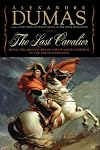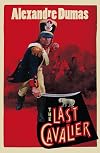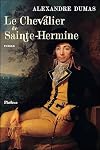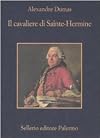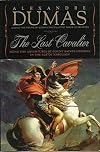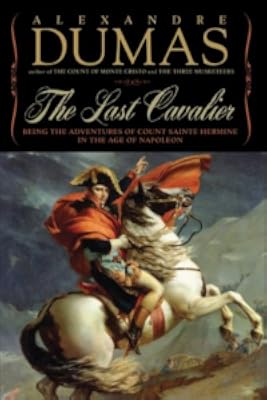
The Last Cavalier: Being the Adventures of Count Sainte-Hermine in the Age of Napoleon
by Alexandre Dumas
On This Page
Description
After being in prison for three years and wondering what his fate will be, Hector is released, but forced into battle.Tags
Recommendations










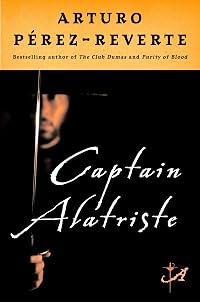
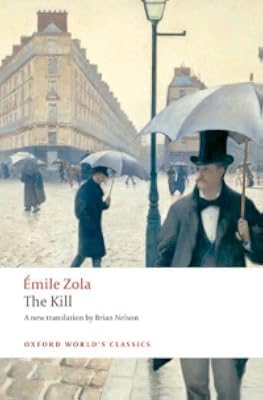

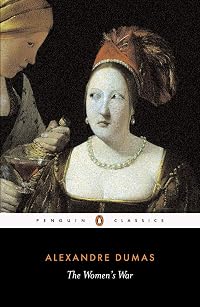


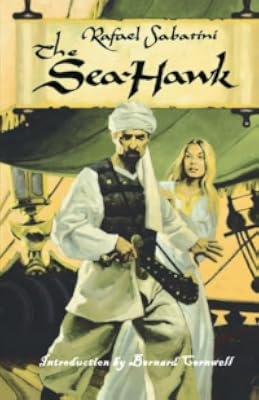








Member Recommendations


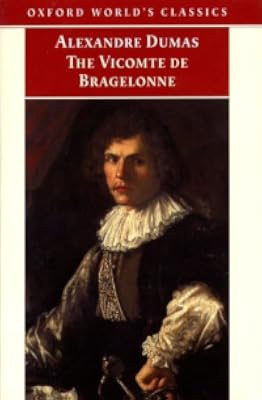
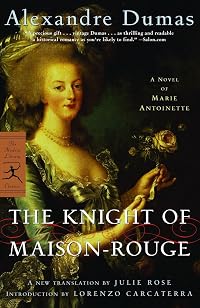
Artymedon Bernadotte, Josephine and Bonaparte appear in both
Member Reviews
*** Attenzione: di seguito anticipazioni sulla trama***
Premetto che Dumas, per me non si discute e rimane l’autore di uno dei miei due libri di formazione. Non passano estati senza che riprenda la lettura di uno dei suoi romanzi per inseguire l’avventura senza pensieri. Tuttavia questo libro ha più (molto più) di una pecca.
E’ vero che la famiglia spendacciona era sempre a corto di quattrini e che 40 centesimi di franco a riga erano un allettamento irresistibile ma, 1500 pagine di un romanzo CHE NON FINISCE, è più di quanto possa accettare dal Grande Sbruffone.
Ma la pecca vera è che l’eroe è semplicemente ODIOSO.
Un gagà aristocratico che (a parte la sfiga iniziale che motiva le sue avventure) è sempre al posto giusto nel show more momento giusto: è il più coraggioso, il più ricco, il più bello, il più forte, il più fortunato, il più audace, il più magnanimo, il più colto, il più stoico, il più gentiluomo, il più elegante; le sue armi sono sempre le più fin i suoi cavalli i più focosi, i suoi serpenti i più immensi, le sue tigri le più feroci ecc ecc.
Ma, ai nostri occhi moderni (sì, lo so che non si dovrebbe prescindere dall’epoca in cui è stato tratteggiato), scusate la volgarità, è anche il più testa di…
Per dire, massacra in allegria uomini e bestie senza fare un plissé, dà fuoco allegramente a una intera foresta per tenere lontane le bestie notturne, tratta i non europei che incontra come scimmie poco sviluppate, ecc. ecc.
Le uniche parti divertenti del romanzo sono quelle storiche (ascesa e consolidamento di Napoleone, Giuseppina, Fouché, i generali in disgrazia) e quelle enciclopediche (inserti sulla storia romana antica, sulle su grandi autori come Chateaubriand, Haydn).
“Il piacere della lettura, sul quale Dumas non transigeva”,
come scrive il curatore dell’edizione, qui è veramente andato a Patrasso: visto che si tratta di un romanzo perduto da quasi un secolo ci si domanda che bisogno c’era di ritrovarlo show less
Premetto che Dumas, per me non si discute e rimane l’autore di uno dei miei due libri di formazione. Non passano estati senza che riprenda la lettura di uno dei suoi romanzi per inseguire l’avventura senza pensieri. Tuttavia questo libro ha più (molto più) di una pecca.
E’ vero che la famiglia spendacciona era sempre a corto di quattrini e che 40 centesimi di franco a riga erano un allettamento irresistibile ma, 1500 pagine di un romanzo CHE NON FINISCE, è più di quanto possa accettare dal Grande Sbruffone.
Ma la pecca vera è che l’eroe è semplicemente ODIOSO.
Un gagà aristocratico che (a parte la sfiga iniziale che motiva le sue avventure) è sempre al posto giusto nel show more momento giusto: è il più coraggioso, il più ricco, il più bello, il più forte, il più fortunato, il più audace, il più magnanimo, il più colto, il più stoico, il più gentiluomo, il più elegante; le sue armi sono sempre le più fin i suoi cavalli i più focosi, i suoi serpenti i più immensi, le sue tigri le più feroci ecc ecc.
Ma, ai nostri occhi moderni (sì, lo so che non si dovrebbe prescindere dall’epoca in cui è stato tratteggiato), scusate la volgarità, è anche il più testa di…
Per dire, massacra in allegria uomini e bestie senza fare un plissé, dà fuoco allegramente a una intera foresta per tenere lontane le bestie notturne, tratta i non europei che incontra come scimmie poco sviluppate, ecc. ecc.
Le uniche parti divertenti del romanzo sono quelle storiche (ascesa e consolidamento di Napoleone, Giuseppina, Fouché, i generali in disgrazia) e quelle enciclopediche (inserti sulla storia romana antica, sulle su grandi autori come Chateaubriand, Haydn).
“Il piacere della lettura, sul quale Dumas non transigeva”,
come scrive il curatore dell’edizione, qui è veramente andato a Patrasso: visto che si tratta di un romanzo perduto da quasi un secolo ci si domanda che bisogno c’era di ritrovarlo show less
It is tempting to dismiss Dumas as not being a monument of fine literature such as Balzac and Flaubert. The clue to understand Last Cavalier is given by Dumas himself in its related novel: "The Companions of Jehu". Dumas said he wanted, like Balzac, to be remembered for a "Comedie Humaine" but one covering the times of the French Revolution and the age of Bonaparte/Napoloeon. Read under that filter given by the author himself, Last Cavalier is the missing piece of this giant historical frescoe that depicts this age from the intimacy and confidences of the private chambers of its actors, to the great ceremonies and battles that mark the convulsions of a European Revolution.
I was 10 when I read my way through the Musketeer-books that first time. They put me on a path I have followed since, both as a reader and a student. I still start grinning like a madwoman whenever I come across references to historical characters that remind me of these books, and I do not hesitate to place at their feet my subsequent interest in history.
I have also been fascinated by unfinished narrative for a while, especially the kind of narrative which was originally published as a feuilleton and remains unfinished because of the author's death.
When I stumbled across this newfound (2005) historic novel by Alexandre Dumas, never finished because he died … well. I had great expectations. I bought it, skipped away from the store show more clutching the copy, giggling.
Now. My expectations, my demands when it comes to Dumas, are not only that the books be historically accurate (to a certain point). While it is my impression that the man knew his history, his interpretation of events is often a little to the side of the general consensus. I still struggle to realise that Charles I and II may not have been the paragons of virtue that Vingt Ans Aprés and Le Vicomte de Bragelonne had led me to believe. On the flip side, though, it is thanks to these books that I know what I do about the English Civil War, the Fronde, the Restoration and the introduction of the absolute monarchy in France.
No, what I demand, first and foremost, of Dumas, is good writing and good characters. That is not altogether true. I expect characters that you can lift off the page and carry with you, characters that are not bound by plot or description. Is that too much to ask for?
Reading The Last Cavalier, which is the English name of this new book (the French Le Chevalier de Sainte-Hermine (1869)), was a terrible ordeal. Not because it is bad -- it isn't. It has some excellent parts. Let me try to explain. Dumas usually (and I am basing this on what I have read: I am not yet old enough to have read his entire opus) writes two main types of characters. Or at least I experience them as different.
The first is what I think of as the fictional. They are often also based in real people (d'Artagnan being the star example, I suppose), but they are obscure enough that the author can mostly meld them as he sees fit. I suspect the reason why The Three Musketeers and the subsequent books have attained such a central place in world literature is because he here created truly live characters complete with idiosyncrasies and character flaws -- none of them are perfect, and that makes them more interesting to read, more endearing.
The second type is the major historical character, those we already know of and quite a lot about. I have always admired Dumas' ability to make them complex and … real? He does not only focus on the larger political concerns, war and peace, does not paint in thick strokes of one colour. He presents the minor concerns, how they affect the larger decisions, their nobility and their flaws (although in the case of Charles I and II, that was lost on me). You have probably noticed how what I appreciate here is much the same as in the earlier group of characters. Complexity and humanity.
There is a reason why I have divided the characters in this way, however. In the last type of characters, The Last Cavalier does live up to my expectations. The descriptions of Napoleon are exciting, and the same holds true for Caroudal and Nelson (although the latter does feel rather more like a sketch). They were entertaining. So entertaining that whenever the story returned to the protagonist, Hector de Sainte-Hermine, I just got depressed and put the book down. The gap between what this book could have been and what it is is overpowering, and this is primarily due to the protagonist. He is, thankfully, out of sight for long stretches, but when he shows back up he is so nauseatingly perfect I didn't know whether to laugh or vomit.
If I had had to read one more time about how far he can throw cannon balls (with one hand, twelve meters), how accurately he can shoot (three bullets on top of each other in the bullseye), how high he climb in the mast of the ship during a storm while all others hesitate &c., &c. … if I had had to read "Huzzah! Huzzah! for Captain René one more time (René is a pseudonym he takes on), or yet another description of how easily he inspires complete loyalty in his men … ick.
He kills Nelson, by never takes credit; he shoots tigers without any problems (all you have to do, after all, is shoot them in the eye, for a tiger is only dangerous when injured); he is nobel, faithful to a woman who thinks him dead; other women die of their love for him; he takes no credit for his feats, demands nothing, bleh … .
It may be that Dumas felt there was simply too much to live up to for someone not disgustingly perfect. He had written about the Sainte-Hermine family before (in Companions of Jehu, for example), and as the last of the brothers Hector could not be allowed to betray the honour of the family in any way. And yet, he had to portray the last of a royalist family during the heyday of Napoleon. I also suspect the killing of Nelson was one of the core ideas. But the result is laughable. In a truly tragic way.
That being said, I am glad I read it. I should perhaps again emphasise that the parts treating the larger historical events and characters are truly interesting (even if he goes a little overboard with details of the Battle of Trafalgar). I especially liked the sequence on Lady Hamilton, the great love of Nelson (I have known of her for a long time, but I have known very little about her). Similarly, the parts on Cadoudal and the Companions of Jehu in Bretagne. I notice I am almost about to suggest one read only these sections and skip everything to do with the main character, but that may be going too far.
All this bitterness is due to my severe disappointment. The foundation of this story is potentially brilliant; the constellation of historical persons and evens intriguing; even Hector's background story is quite seductive. So why couldn't he make it work? show less
I have also been fascinated by unfinished narrative for a while, especially the kind of narrative which was originally published as a feuilleton and remains unfinished because of the author's death.
When I stumbled across this newfound (2005) historic novel by Alexandre Dumas, never finished because he died … well. I had great expectations. I bought it, skipped away from the store show more clutching the copy, giggling.
Now. My expectations, my demands when it comes to Dumas, are not only that the books be historically accurate (to a certain point). While it is my impression that the man knew his history, his interpretation of events is often a little to the side of the general consensus. I still struggle to realise that Charles I and II may not have been the paragons of virtue that Vingt Ans Aprés and Le Vicomte de Bragelonne had led me to believe. On the flip side, though, it is thanks to these books that I know what I do about the English Civil War, the Fronde, the Restoration and the introduction of the absolute monarchy in France.
No, what I demand, first and foremost, of Dumas, is good writing and good characters. That is not altogether true. I expect characters that you can lift off the page and carry with you, characters that are not bound by plot or description. Is that too much to ask for?
Reading The Last Cavalier, which is the English name of this new book (the French Le Chevalier de Sainte-Hermine (1869)), was a terrible ordeal. Not because it is bad -- it isn't. It has some excellent parts. Let me try to explain. Dumas usually (and I am basing this on what I have read: I am not yet old enough to have read his entire opus) writes two main types of characters. Or at least I experience them as different.
The first is what I think of as the fictional. They are often also based in real people (d'Artagnan being the star example, I suppose), but they are obscure enough that the author can mostly meld them as he sees fit. I suspect the reason why The Three Musketeers and the subsequent books have attained such a central place in world literature is because he here created truly live characters complete with idiosyncrasies and character flaws -- none of them are perfect, and that makes them more interesting to read, more endearing.
The second type is the major historical character, those we already know of and quite a lot about. I have always admired Dumas' ability to make them complex and … real? He does not only focus on the larger political concerns, war and peace, does not paint in thick strokes of one colour. He presents the minor concerns, how they affect the larger decisions, their nobility and their flaws (although in the case of Charles I and II, that was lost on me). You have probably noticed how what I appreciate here is much the same as in the earlier group of characters. Complexity and humanity.
There is a reason why I have divided the characters in this way, however. In the last type of characters, The Last Cavalier does live up to my expectations. The descriptions of Napoleon are exciting, and the same holds true for Caroudal and Nelson (although the latter does feel rather more like a sketch). They were entertaining. So entertaining that whenever the story returned to the protagonist, Hector de Sainte-Hermine, I just got depressed and put the book down. The gap between what this book could have been and what it is is overpowering, and this is primarily due to the protagonist. He is, thankfully, out of sight for long stretches, but when he shows back up he is so nauseatingly perfect I didn't know whether to laugh or vomit.
If I had had to read one more time about how far he can throw cannon balls (with one hand, twelve meters), how accurately he can shoot (three bullets on top of each other in the bullseye), how high he climb in the mast of the ship during a storm while all others hesitate &c., &c. … if I had had to read "Huzzah! Huzzah! for Captain René one more time (René is a pseudonym he takes on), or yet another description of how easily he inspires complete loyalty in his men … ick.
He kills Nelson, by never takes credit; he shoots tigers without any problems (all you have to do, after all, is shoot them in the eye, for a tiger is only dangerous when injured); he is nobel, faithful to a woman who thinks him dead; other women die of their love for him; he takes no credit for his feats, demands nothing, bleh … .
It may be that Dumas felt there was simply too much to live up to for someone not disgustingly perfect. He had written about the Sainte-Hermine family before (in Companions of Jehu, for example), and as the last of the brothers Hector could not be allowed to betray the honour of the family in any way. And yet, he had to portray the last of a royalist family during the heyday of Napoleon. I also suspect the killing of Nelson was one of the core ideas. But the result is laughable. In a truly tragic way.
That being said, I am glad I read it. I should perhaps again emphasise that the parts treating the larger historical events and characters are truly interesting (even if he goes a little overboard with details of the Battle of Trafalgar). I especially liked the sequence on Lady Hamilton, the great love of Nelson (I have known of her for a long time, but I have known very little about her). Similarly, the parts on Cadoudal and the Companions of Jehu in Bretagne. I notice I am almost about to suggest one read only these sections and skip everything to do with the main character, but that may be going too far.
All this bitterness is due to my severe disappointment. The foundation of this story is potentially brilliant; the constellation of historical persons and evens intriguing; even Hector's background story is quite seductive. So why couldn't he make it work? show less
Menos maniqueísta e mais cheio de reflexões religiosas, éticas e filosóficas do que os outros livros, mas falta alívio cômico do Ciclo dos Mosqueteiros ou dos Valois. Fiquei curiosa pelo que poderia ter sido, embora já estivesse um pouco cansada do cavaleiro de Sainte-Hermine, atirador, esgrimista, musicista, poeta, desenhista, belo como Antínoo, ético, riquíssimo, cultíssimo, cativadoramente melancólico...
I remember years ago reading The Count of Monte Cristo and not being able to put it down. Whereas, The Last Cavalier was eminently put-downable. So what’s the difference? This new book was translated by a true Dumas scholar. Perhaps he kept all the trivia when translators of the other books may have left stuff out. I read The Three Musketeers in both English and the original French. But maybe my French was bad enough that I skimmed past trivia. Or maybe Dumas would have cleaned it up for a full publication.
My review is on my Blog, Nate's Library, specifically at: http://nates-library.blogspot.com/2008/03/alexandre-dumas-last-cavalier.html
My review is on my Blog, Nate's Library, specifically at: http://nates-library.blogspot.com/2008/03/alexandre-dumas-last-cavalier.html
Mit das beste, was man über verstorbene Schriftsteller sagen kann ist, daß sie ihr Werk vollendet haben und man sich getrost eine Gesamtausgabe kaufen kann, ohne unliebsame Überraschungen a la „Spätwerk“ zu erleben. Aber – keine Regel ohne Ausnahme – und so werden jetzt alle Besitzer einer Dumas-Gesamtausgabe kräftig fluchen und gegen ihre Eichenholzregale trommeln: Der lange als verloren geglaubte, letzte Roman Dumas ist nicht nur wiederaufgetaucht, nein, er ist in Druck gegangen und damit käuflich zu erwerben. Der Graf von Sainte-Hermine. Gut, das klingt ein wenig nach Graf von Monte Christo, aber seien wir doch ehrlich: Man liest Alexandre Dumas doch nicht wegen seiner ausgefeilten Charaktere und seiner literarischen show more Fähigkeiten. Da ist man mit Balzac und Flaubert besser bedient. Man liest Dumas, weil der Mann so verdammt spannend schreiben konnte. Punkt. Und genau das bietet auch das vorliegende Buch: Einfach gute Unterhaltung! Und das auf knappen 1040 Seiten. Dabei hätte ich als Leser es schon schöner gefunden, das Buch in zwei Teilen a´ Seiten rauszubringen – eine solche Schwarte zu lesen kann ganz gut in die Arme gehen und Dünndruck wäre wohl etwas viel verlangt. Aber man muß ja schon dankbar sein, daß es dieses Buch auf Deutsch gibt, den Dumas ist bestimmt nicht mehr so zeitgemäß. Sollte also einer von Euch sich entschlossen haben, in diesen Sommerurlaub nur wirklich ein Buch zu lesen, so rate ich zu diesen. Es lohnt sich, es ist gut, es macht Spaß und ist keine schwere Kost. show less
Jun 26, 2009German
1
Members
- Recently Added By
Author Information

1,609+ Works 98,567 Members
Some Editions
Common Knowledge
- Original publication date
- 1869: Most of the novel was serialised in the French newspaper Le Moniteur Universel.; 2005: Published after Claude Schopp discovered the lost novel novel in 1990, and edited and completed it.
- People/Characters
- Horatio Nelson, 1st Viscount Nelson
- Important places
- Atlantic Ocean; North Atlantic Ocean
- Important events
- Napoleonic Wars (1803 | 1815); Battle of Trafalgar (1805-10-21)
- Original language*
- Französisch
*Some information comes from Common Knowledge in other languages. Click "Edit" for more information.
Classifications
- Genres
- Fiction and Literature, General Fiction, Historical Fiction
- DDC/MDS
- 843.7 — Literature & rhetoric French Literature French fiction Constitutional monarchy 1815–48
- LCC
- PQ2225 .C73413 — Language and Literature French, Italian, Spanish and Portuguese literatures French literature Modern literature 19th century
- BISAC
Statistics
- Members
- 421
- Popularity
- 73,320
- Reviews
- 9
- Rating
- (3.29)
- Languages
- 8 — Catalan, English, French, German, Italian, Portuguese, Spanish, Turkish
- Media
- Paper, Audiobook, Ebook
- ISBNs
- 25
- ASINs
- 9