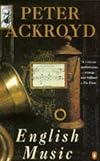
English Music
by Peter Ackroyd
On This Page
Description
"From the prize-winning author of First Light, Chatterton, and Hawksmoor - a dazzlingly inventive and powerfully moving novel about the intricate ties between fathers and sons, between inheritance and culture, and between our understanding of the past and our grasp of the present.". "In post-World War I London, on the stage of the out-of-the-way Chemical Theatre, Clement Harcombe and his young, motherless son, Timothy, perform acts of spiritual healing, their visionary skills lifting the show more weight of despair and failure from the shoulders of their small band of followers. For Timothy, a boy with remarkable psychic gifts, it is a thrilling apprenticeship, a wonderful life with an adored father. But in the eyes of the larger world, it is a wayward existence with a suspect parent. And when Timothy is abruptly removed from his father's side, from the familiar twilit world of phantoms and ghosts, and thrust into the simple world of his grandparents' home in the country, he is not too young to feel 'bereft of his past'. Yet nothing can remove him from the realm of his visions. And as he passes from a difficult childhood into a troubled adulthood - his father slipping in and out of his life - it is this other, private world that provides him with his only certainty.". "In his visions - unanticipated and wholly enveloping - Timothy is drawn into the creations of Charles Dickens and William Blake, Thomas Malory and Daniel Defoe, John Bunyan, Arthur Conan Doyle, Thomas Gainsborough and J.M.W. Turner. Accompanied by Merlin or Miss Havisham, William Byrd or William Hogarth, Crusoe's Friday or Wonderland's Alice, Timothy is swept across time and history. And as his mysterious journeys begin to illuminate the ideas that have shaped them, Timothy comes to discern the power of the writer over his characters, the composer over what is heard, the painter over what is perceived - learns, finally, to hear the 'English music' his father described to him as a child. It is the workings of the English imagination through the centuries, Timothy's cultural heritage, inside which lies the key to his understanding, and his acceptance, of the often perplexing ideas and emotions that are his singular inheritance from his father.". "English Music is a tour de force of imagination and evocation - a startling, masterful novel from one of the most exciting writers at work today."--BOOK JACKET. show lessTags
Recommendations












Member Reviews
There is something about English Music that stops it from being the great book it wants to be. There are many positives. The story of the life of Timothy Holcomb that binds the book is a good one, full of mystery, great characters and a sense of wonder that is a page turning experience. Alternate chapters are dream visions that lead the reader through ikons of English artistic culture in an attempt to provide a spirit and a feel for what is so uniquely English. No lack of ambition here then; especially as Ackroyd manages in most cases to provide a workable pastiche of the men who he feels are the most influential figures in literature, art and music. The book has a variety of writing styles all held together by the central story which show more like the dream visions is full of imagination and very well written. What holds it back in my view is an overall feeling of misery and depression and a political message that manages to have a whiff, a malodor of nationalism and if I was being very critical maybe even of racism and sexism.
The book starts with Timothy Holcombe looking back on his life as he revisits an old building in London which served as a meeting hall where he and his father attracted a number of people who were seeking to be cured of their afflictions. His Father Clement was an upbeat individual who by his powerful personality and well modulated speaking voice attracted a number of followers and a few that became part of an inner circle; this inner circle was made up of the lonely and unloved. The climax to the meetings was a healing session where Father and son were able to cure mild afflictions, but it is soon apparent that it is Timothy that has the real power. Clement takes it upon himself to educate his son (his wife had died giving birth to Timothy) and they read together every evening from the great English works of literature. Timothy both loves and admires his father and it comes as a shock to him when his father packs him off to live with his grandfather in the country. The ostensible reason is that Timothy should go to school, but his father has started a relationship with Gloria one of his followers and there is no room for the boy. Timothy has started to have his visions first of all in the safety of his own bed in the form of dreams, but later in times of stress or when feeling unwell. He successfully cures his grandmother of a shaking ailment, but at some cost to himself because it makes him unwell for a time. Timothy seeks out his father in his teenage years back in London and they get back together as a duo although they are not as successful as they were previously and his father disappears again. Their paths cross again later in life when he discovers his father as part of a circus; acting as a magician, he needs little persuasion in becoming again part of his fathers act and they become stronger together; and Timothy is drawn back into using his healing powers.
Timothys dream visions (told in alternate chapters) place the boy in worlds in which he meets characters from famous novels or the authors themselves, he also imagines himself in works of art or as a musician. There are chapters featuring characters from Pilgrims progress and Alice in Wonderland, Great Expectations and a meeting with Charles Dickens, The famous Detective Austin Smallwood who is a dead ringer for Sherlock Holmes, an adventure on Robinson Crusoe’s island, he has a music lesson with William Byrd, he walks the streets of London with Hogarth in search of the perfect line of beauty, He enters into a landscape by Thomas Gainsborough which morphs into one by Constable and then Turner and meets characters from Wuthering Heights and Mill on the Floss, after reading William Blake he composes his own Blake like poem and finally he is in the world of Mallory and Morte D’Arthur with echoes of T S Elliots Waste land. In many of these visions a sense of wonder is created only to be suffused with an impending sense of doom, Timothy himself is never in any real danger, but he sees and feels things that disturb and distress him. Ackroyd links these episodes with events in Timothy’s own life that reflect his thoughts and feelings, but some are more successful than others.
The dream visions are an integral part of the novel and being set out in alternating chapters means that the reader is prepared for what is coming. The main story is suspended while we are in the more imaginary world of Timothy’s dreams. Ackroyd overreaches in some of these sections, I am thinking of the pastiche of the Blake poem which I can imagine many readers skipping over and also in the music lesson with William Byrd, which gets bogged down in musical theory. Some however are a triumph; the walk through London in the company of Hogarth, the swirl of the changing landscapes in the pictures of Constable, Whistler, Turner and Gainsborough; a marvellous imaginary episode from Great Expectations where Dickens characters are recreated in all their grotesque obtuseness. In Ackroyd’s acknowledgment he says:
“The scholarly reader will soon realize that I have appropriated passages from Thomas Browne, Thomas Mallory, William Hogarth, Lewis Carrol, Samuel Johnson, Daniel Defoe, and many other English writers, the alert reader will understand why I have done so”
This could be off putting for some readers who may feel that they will not be “getting” the themes running through the dream visions, but Ackroyd for the most part labels them fairly well. The reader knows which books, artists or musicians that the dreams are based on and the quotes and explanations within the text add further guidance.
Palimpsest is a favourite word of Ackroyd’s he sees history and people from the past blending into present day scenarios, throughout the novel he is looking for these connections like Hogarth walking around the impoverished streets of London looking for the perfect line; the perfect form or Defoe’s idea that music is to be found as much in books as in instruments and that he hit on a “shadowed and hieroglyphical lesson of the whole world.” Ackroyd seems to be searching for a harmony of the spheres that comes originally from Aristotle but was a feature of medieval thought explained in some detail in C S Lewis’s [The Discarded Image]. The search for an English harmony is only one aspect of this book as another central theme emerges; literature, art and music as a barricade against misery and abandonment. Robinson Crusoe says to Timothy:
“But think not where you are or where you may go, since with these books you are in England, everywhere and under any meridian. Darkness may bury your eyes but not your imagination……… Do you understand how you came by this Island?
‘I came by way of England’
And that is the way you must return, but do not hope to make such a journey in some poor bark without a mast or sail. Feel something of your ancestors within your own self, and trust not simply to your own compass. Fill your sails with English music.”
What is the nature of an Englishman’s inheritance? asks Timothy and at the very end he realises that it is an acknowledgement of his past, and a knowledge gained form the books that he enjoyed with his father.
My misgivings about this book are the messages that it sends. It is no accident that Ackroyd stops his dream visions at the start of the 20th century, he seems to want to go back to a glorious past that on reflection from my standpoint today was not so glorious. I cannot put my finger on why I need to politicise this book, but that is probably inherent in the writing of Ackroyd. It is just so damn conservative. I do not need to think to much about the choices made in the subjects for the dream visions to realise that these are solely the visions of men. Women hardly feature even in the story of the life of Timothy Holcomb; there are no important voices from them.
I enjoyed the story of Timothy Holcomb, I enjoyed many of the dream vision chapters, characters come alive and the ambition of the novel is immense. As usual the London of Ackroyd is dirty, grimy even Dickensian but it has a glorious past. People in the novel live on the edge of desperation, they are for the most part individuals who have trouble in communicating; they are diseased, crippled, dwarfs, or characters from the circus, existing as best they can without human love and warmth. The Holcomb family shine like a beacon among them and even though Clement has his problems and Timothy struggles with his own questions of what he should be in the world, they struggle on in hope of better things to come. English Music is at times a great reading experience even if its themes can get a little preachy, the reader is left in no doubt where Ackroyd stands and this is the issue for me because his politics stink. 4 stars show less
The book starts with Timothy Holcombe looking back on his life as he revisits an old building in London which served as a meeting hall where he and his father attracted a number of people who were seeking to be cured of their afflictions. His Father Clement was an upbeat individual who by his powerful personality and well modulated speaking voice attracted a number of followers and a few that became part of an inner circle; this inner circle was made up of the lonely and unloved. The climax to the meetings was a healing session where Father and son were able to cure mild afflictions, but it is soon apparent that it is Timothy that has the real power. Clement takes it upon himself to educate his son (his wife had died giving birth to Timothy) and they read together every evening from the great English works of literature. Timothy both loves and admires his father and it comes as a shock to him when his father packs him off to live with his grandfather in the country. The ostensible reason is that Timothy should go to school, but his father has started a relationship with Gloria one of his followers and there is no room for the boy. Timothy has started to have his visions first of all in the safety of his own bed in the form of dreams, but later in times of stress or when feeling unwell. He successfully cures his grandmother of a shaking ailment, but at some cost to himself because it makes him unwell for a time. Timothy seeks out his father in his teenage years back in London and they get back together as a duo although they are not as successful as they were previously and his father disappears again. Their paths cross again later in life when he discovers his father as part of a circus; acting as a magician, he needs little persuasion in becoming again part of his fathers act and they become stronger together; and Timothy is drawn back into using his healing powers.
Timothys dream visions (told in alternate chapters) place the boy in worlds in which he meets characters from famous novels or the authors themselves, he also imagines himself in works of art or as a musician. There are chapters featuring characters from Pilgrims progress and Alice in Wonderland, Great Expectations and a meeting with Charles Dickens, The famous Detective Austin Smallwood who is a dead ringer for Sherlock Holmes, an adventure on Robinson Crusoe’s island, he has a music lesson with William Byrd, he walks the streets of London with Hogarth in search of the perfect line of beauty, He enters into a landscape by Thomas Gainsborough which morphs into one by Constable and then Turner and meets characters from Wuthering Heights and Mill on the Floss, after reading William Blake he composes his own Blake like poem and finally he is in the world of Mallory and Morte D’Arthur with echoes of T S Elliots Waste land. In many of these visions a sense of wonder is created only to be suffused with an impending sense of doom, Timothy himself is never in any real danger, but he sees and feels things that disturb and distress him. Ackroyd links these episodes with events in Timothy’s own life that reflect his thoughts and feelings, but some are more successful than others.
The dream visions are an integral part of the novel and being set out in alternating chapters means that the reader is prepared for what is coming. The main story is suspended while we are in the more imaginary world of Timothy’s dreams. Ackroyd overreaches in some of these sections, I am thinking of the pastiche of the Blake poem which I can imagine many readers skipping over and also in the music lesson with William Byrd, which gets bogged down in musical theory. Some however are a triumph; the walk through London in the company of Hogarth, the swirl of the changing landscapes in the pictures of Constable, Whistler, Turner and Gainsborough; a marvellous imaginary episode from Great Expectations where Dickens characters are recreated in all their grotesque obtuseness. In Ackroyd’s acknowledgment he says:
“The scholarly reader will soon realize that I have appropriated passages from Thomas Browne, Thomas Mallory, William Hogarth, Lewis Carrol, Samuel Johnson, Daniel Defoe, and many other English writers, the alert reader will understand why I have done so”
This could be off putting for some readers who may feel that they will not be “getting” the themes running through the dream visions, but Ackroyd for the most part labels them fairly well. The reader knows which books, artists or musicians that the dreams are based on and the quotes and explanations within the text add further guidance.
Palimpsest is a favourite word of Ackroyd’s he sees history and people from the past blending into present day scenarios, throughout the novel he is looking for these connections like Hogarth walking around the impoverished streets of London looking for the perfect line; the perfect form or Defoe’s idea that music is to be found as much in books as in instruments and that he hit on a “shadowed and hieroglyphical lesson of the whole world.” Ackroyd seems to be searching for a harmony of the spheres that comes originally from Aristotle but was a feature of medieval thought explained in some detail in C S Lewis’s [The Discarded Image]. The search for an English harmony is only one aspect of this book as another central theme emerges; literature, art and music as a barricade against misery and abandonment. Robinson Crusoe says to Timothy:
“But think not where you are or where you may go, since with these books you are in England, everywhere and under any meridian. Darkness may bury your eyes but not your imagination……… Do you understand how you came by this Island?
‘I came by way of England’
And that is the way you must return, but do not hope to make such a journey in some poor bark without a mast or sail. Feel something of your ancestors within your own self, and trust not simply to your own compass. Fill your sails with English music.”
What is the nature of an Englishman’s inheritance? asks Timothy and at the very end he realises that it is an acknowledgement of his past, and a knowledge gained form the books that he enjoyed with his father.
My misgivings about this book are the messages that it sends. It is no accident that Ackroyd stops his dream visions at the start of the 20th century, he seems to want to go back to a glorious past that on reflection from my standpoint today was not so glorious. I cannot put my finger on why I need to politicise this book, but that is probably inherent in the writing of Ackroyd. It is just so damn conservative. I do not need to think to much about the choices made in the subjects for the dream visions to realise that these are solely the visions of men. Women hardly feature even in the story of the life of Timothy Holcomb; there are no important voices from them.
I enjoyed the story of Timothy Holcomb, I enjoyed many of the dream vision chapters, characters come alive and the ambition of the novel is immense. As usual the London of Ackroyd is dirty, grimy even Dickensian but it has a glorious past. People in the novel live on the edge of desperation, they are for the most part individuals who have trouble in communicating; they are diseased, crippled, dwarfs, or characters from the circus, existing as best they can without human love and warmth. The Holcomb family shine like a beacon among them and even though Clement has his problems and Timothy struggles with his own questions of what he should be in the world, they struggle on in hope of better things to come. English Music is at times a great reading experience even if its themes can get a little preachy, the reader is left in no doubt where Ackroyd stands and this is the issue for me because his politics stink. 4 stars show less
A main plot woven with fantasy like experiences with English Literature, Music and Art. The main plot is a little thin, but the fantasy adds much needed colour. I found the English music theme tiring by the end.
This is really two books. This is because Ackroyd chooses for the main character, Timothy, to tell his story both through narration, but also to recount strange dreams, where he 'joins' famous works of English art and literature.
The 'traditional' narrative is well written and engrossing - not only is the plot interesting and well told, but it is a subtle exploration of issues such as fate and family influence. The 'dream' sections of the book are also well written, often emulation of the pieces they relate to. However, while clever, they add absolutely nothing to the book in this reader's opinion, and you could quite easily read this book while skipping every second chapter!
Overall - clever as a literary academic exercise, but it show more doesn't quite work show less
The 'traditional' narrative is well written and engrossing - not only is the plot interesting and well told, but it is a subtle exploration of issues such as fate and family influence. The 'dream' sections of the book are also well written, often emulation of the pieces they relate to. However, while clever, they add absolutely nothing to the book in this reader's opinion, and you could quite easily read this book while skipping every second chapter!
Overall - clever as a literary academic exercise, but it show more doesn't quite work show less
I could not get interested in this story.
Ratings
Members
- Recently Added By
Author Information

90+ Works 31,852 Members
Peter Ackroyd was born in London in 1949. He graduated from Cambridge University and was a Fellow at Yale (1971-1973). A critically acclaimed and versatile writer, Ackroyd began his career while at Yale, publishing two volumes of poetry. He continued writing poetry until he began delving into historical fiction with The Great Fire of London show more (1982). A constant theme in Ackroyd's work is the blending of past, present, and future, often paralleling the two in his biographies and novels. Much of Ackroyd's work explores the lives of celebrated authors such as Dickens, Milton, Eliot, Blake, and More. Ackroyd's approach is unusual, injecting imagined material into traditional biographies. In The Last Testament of Oscar Wilde (1983), his work takes on an autobiographical form in his account of Wilde's final years. He was widely praised for his believable imitation of Wilde's style. He was awarded the British Whitbread Award for biography in 1984 of T.S. Eliot, and the Whitbread Award for fiction in 1985 for his novel Hawksmoor. Ackroyd currently lives in London and publishes one or two books a year. He still considers poetry to be his first love, seeing his novels as an extension of earlier poetic work. (Bowker Author Biography) Peter Ackroyd is the award-winning author of four biographies, most recently the national bestseller "The Life of Thomas More", as well as ten novels, including "Chatterton" & "Hawksmoor". He lives in London, where he is at work on his next book, "London: The Biography. (Publisher Provided) Peter Ackroyd is a bestselling writer of both fiction and nonfiction. He lives in London. (Publisher Provided) show less
Common Knowledge
- Original title
- English Music
- Original publication date
- 1992
- Important places*
- Londen
- Important events*
- Eerste Wereldoorlog
- Epigraph
- "He who can interpret what has been seen is a greater prophet than he who has simply seen it." St Augustine, De Genesi ad Litteram.
"Invention, strictly speaking, is little more than a new combination of those images ... (show all)which have been previously gathered and deposited in the memory: nothing can come of nothing." Joshua Reynolds, Discourse II - First words
- Yes, I have returned to the past.
*Some information comes from Common Knowledge in other languages. Click "Edit" for more information.
Classifications
Statistics
- Members
- 468
- Popularity
- 64,674
- Reviews
- 4
- Rating
- (3.62)
- Languages
- English
- Media
- Paper
- ISBNs
- 7
- ASINs
- 4