On This Page
Description
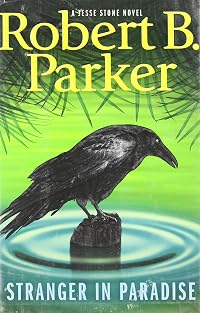
Police Chief Jesse Stone faces his most fearsome adversary in the latest addition to the celebrated series. The last time Jesse Stone, chief of police of Paradise, Massachusetts, saw Wilson "Crow" Cromartie, the Apache Indian hit man was racing away in a speedboat after executing one of the most lucrative and deadly heists in the town's history. Crow was part of a team of ex-cons who plotted to capture Stiles Island, the wealthy enclave off the Paradise coast, by blowing up the connecting show more bridge. Residents were kidnapped, some were killed, and Crow managed to escape with a boatload of cash, never to be seen again. Until now. So when Crow shows up in Jesse's office some ten years after the crime, it's not to turn himself in. Crow is on another job, and this time he's asking for Jesse's help-by asking him to stay out of his way. Crow's mission is simple: find young Amber Francisco and bring her back to her father, Louis, in Florida. It should be an easy payday for a pro like Crow, but there are complications. Amber, now living in squalor with her mother, Fiona, is mixed up with members of a Latino gang. And when Louis orders Crow to kill Fiona before heading back with Amber, he can't follow through. Crow may be a bad guy, but he doesn't kill women. It's up to Jesse to provide protection. Meanwhile, Jesse's on-again, off-again relationship with ex-wife Jenn picks up steam as Jenn investigates the gang problem for her TV station. As they dig deeper, the danger escalates. The life of a young girl hangs in the balance, and saving Amber could be the miracle Jesse and Jenn need for themselves, too. show lessTags
Recommendations






Member Reviews
I was thrilled when I found this book on the “New Books” shelf of my branch library. I couldn’t wait to get home and dive into the latest adventure of Jesse Stone, alcoholic chief of police in the ill-named Paradise, Massachusetts. But to my dismay, the book was awful. I’m a proud long-time fan of Parker’s, and I’m used to his recycling his Spenser series’ plots in his newer Sunny Randall and Jesse Stone books. Since he always adds a slightly new perspective when he does this, it’s never bothered me. I truly love his exploration of Spenser’s feminine alter ego, Sunny, for the female perspective on what is traditionally a masculine job. (Unlike Kinsey Milhone, in Sue Grafton’s great alphabet series, Sunny is show more unabashedly feminine – concerned about her hair, her make-up, and even her shoes!) But in Stranger in Paradise, for the first time, Parker’s work seems tired and out-of-touch.
Parker recycled the plot device of an earlier Spenser series work (Early Autumn) in one of his Sunny Randall thrillers (Melancholy Baby) – a badly parented adolescent who needs both rescuing and nurturing. In both of those books the device worked well. He trots out that device for a third time in this Jesse Stone novel, and third time is definitely not the charm in this attempt. The book’s characters, even the well-established ones like Jesse, and Jennifer (his somewhat ex-wife) and Molly Crane (great cop, great mother, devoted wife and Stone’s right-hand woman), seem cursorily presented, and the engaging and thoughtful dialogue that usually is characteristic of Parker’s work is totally absent. No one who’s gotten to know and love Parker’s characters as I have can be less than shocked at what he has two of them do in this book – with little explanation and little follow-up. I’m extrapolating here, but long-time fans of Parker’s know that his own marriage hit a rocky patch a while back, and I can’t but suspect that he’s excusing his own behavior here through the action of one of his characters. But it just doesn’t work, most especially since that action (adultery) is so out of character for that particular literary creation.
All in all, this book was an enormous disappointment. show less
Parker recycled the plot device of an earlier Spenser series work (Early Autumn) in one of his Sunny Randall thrillers (Melancholy Baby) – a badly parented adolescent who needs both rescuing and nurturing. In both of those books the device worked well. He trots out that device for a third time in this Jesse Stone novel, and third time is definitely not the charm in this attempt. The book’s characters, even the well-established ones like Jesse, and Jennifer (his somewhat ex-wife) and Molly Crane (great cop, great mother, devoted wife and Stone’s right-hand woman), seem cursorily presented, and the engaging and thoughtful dialogue that usually is characteristic of Parker’s work is totally absent. No one who’s gotten to know and love Parker’s characters as I have can be less than shocked at what he has two of them do in this book – with little explanation and little follow-up. I’m extrapolating here, but long-time fans of Parker’s know that his own marriage hit a rocky patch a while back, and I can’t but suspect that he’s excusing his own behavior here through the action of one of his characters. But it just doesn’t work, most especially since that action (adultery) is so out of character for that particular literary creation.
All in all, this book was an enormous disappointment. show less
Since Robert B. Parker died, I've been saving the few novels of his that I hadn't read. I parcel them out to myself very slowly. Yesterday I allowed myself the pleasure of reading this Jesse Stone novel.
If you've read any of this series or have seen a TV interpretation of one, you know Jesse has a drinking problem which got him fired from the police force in California, and an ex-wife who just refuses to stay away from him so he can get over her. He is now the police chief in Paradise, MA. He sees a shrink regularly in a vain attempt to handle his problems.
In Stranger in Paradise we have a character who is much like Hawk of the Spenser series. This guy is a crook, but he has scruples. He won't kill women, for instance; he likes them. show more And the women are fascinated by him, including me. He claims to be an Apache Indian and goes by the single name Crow although his real name is Wilson Cromartie. To my mind he makes this novel.
Detective "Suitcase" Simpson has changed since the beginning of the series, in what was to me a very surprising way. As usual, the story is punctuated by witty dialogue, a laid back approach to detecting, and some very snobby folks who are incensed because a half dozen little children are being transported to their neighborhood Monday through Friday to a new school. The residents keep going on about "the camel's nose in the tent" as if these little kids are going to steal their silver and put graffiti on their mansions. It's very funny, and of course Jesse gives them enough rope to hang themselves.
I'm not an unbiased reviewer in this case because I've loved Robert B. Parker novels forever, but really who wouldn't like this book. I urge you to read it. show less
If you've read any of this series or have seen a TV interpretation of one, you know Jesse has a drinking problem which got him fired from the police force in California, and an ex-wife who just refuses to stay away from him so he can get over her. He is now the police chief in Paradise, MA. He sees a shrink regularly in a vain attempt to handle his problems.
In Stranger in Paradise we have a character who is much like Hawk of the Spenser series. This guy is a crook, but he has scruples. He won't kill women, for instance; he likes them. show more And the women are fascinated by him, including me. He claims to be an Apache Indian and goes by the single name Crow although his real name is Wilson Cromartie. To my mind he makes this novel.
Detective "Suitcase" Simpson has changed since the beginning of the series, in what was to me a very surprising way. As usual, the story is punctuated by witty dialogue, a laid back approach to detecting, and some very snobby folks who are incensed because a half dozen little children are being transported to their neighborhood Monday through Friday to a new school. The residents keep going on about "the camel's nose in the tent" as if these little kids are going to steal their silver and put graffiti on their mansions. It's very funny, and of course Jesse gives them enough rope to hang themselves.
I'm not an unbiased reviewer in this case because I've loved Robert B. Parker novels forever, but really who wouldn't like this book. I urge you to read it. show less
At the conclusion of [Trouble in Paradise], Wilson “Crow” Cromartie, an Apache hit man was speeding off in a boat with roughly $2 million in cash and jewels he helped to steal from the wealthy residents of Paradise, Massachusetts. Now, some ten years later, well outside the statute of limitations for his previous crime, Crow has returned to Paradise on another job, find a Florida drug dealer’s daughter. The girl was taken by her mother and the two have been living under assumed names. But the girl wants to stay in Paradise with her boyfriend, the leader of a Hispanic gang. Jesse is caught in the middle of Crow’s efforts to keep the girl safe from her mother, her boyfriend, and her father.
The lure of Parker’s mystery series show more continues to be the main character – Jesse Stone, the self-contained, if a little tightly-wound, chief of police with a weakness for booze and women. Stone is cast from the same mold as Spillane’s Mike Hammer or Dashiell Hammet’s Sam Spade; rugged, even mean when necessary, and self-loathing while noble and loyal to fault. His overactive sense of responsibility is evidence of the obsession that often bubbles to the surface.
Parker’s consistent weakness with this series is overblown and unrealistic plots, especially for a small Massachusetts town. The story starts out simply enough with a parental kidnapping and townspeople unhappy that a minority element is creeping across the town limit. By the end, there is a gun battle between a drug kingpin’s hit squad and a local gang.
Another weakness is Parker’s own obsession with sex. The sex in Parker’s books is rarely graphic but it seems that every character has difficulty keeping their pants on. In this installment, one of the consistently good and wholesome characters finally surrenders to a meaningless one-night stand – and with a hitman whom she was trying to build evidence against just days before. Jesse’s unhealthy relationship with his ex-wife and his liaisons with every female that crosses his path has a certain logic in its pathology. But Parker seems bent on making Paradise more like Peyton Place.
Bottom Line: Worth the read for the main character, even if the plotlines and the amount of sex borders on the preposterous.
3 ½ bones show less
The lure of Parker’s mystery series show more continues to be the main character – Jesse Stone, the self-contained, if a little tightly-wound, chief of police with a weakness for booze and women. Stone is cast from the same mold as Spillane’s Mike Hammer or Dashiell Hammet’s Sam Spade; rugged, even mean when necessary, and self-loathing while noble and loyal to fault. His overactive sense of responsibility is evidence of the obsession that often bubbles to the surface.
Parker’s consistent weakness with this series is overblown and unrealistic plots, especially for a small Massachusetts town. The story starts out simply enough with a parental kidnapping and townspeople unhappy that a minority element is creeping across the town limit. By the end, there is a gun battle between a drug kingpin’s hit squad and a local gang.
Another weakness is Parker’s own obsession with sex. The sex in Parker’s books is rarely graphic but it seems that every character has difficulty keeping their pants on. In this installment, one of the consistently good and wholesome characters finally surrenders to a meaningless one-night stand – and with a hitman whom she was trying to build evidence against just days before. Jesse’s unhealthy relationship with his ex-wife and his liaisons with every female that crosses his path has a certain logic in its pathology. But Parker seems bent on making Paradise more like Peyton Place.
Bottom Line: Worth the read for the main character, even if the plotlines and the amount of sex borders on the preposterous.
3 ½ bones show less
Stranger in Paradise purports to be “a Jesse Stone novel.” Maybe. After all, Paradise, Massachusetts Police Chief Jesse Stone is the principal narrator. But the real focus of the book is on Wilson Cromartie, a.k.a. “Crow,” an independent hit-man for hire who claims to be an Apache warrior.
Jesse had a run in with Crow ten years earlier when some gangsters took over the nearby wealthy enclave, Stiles Island, bound and gagged several of the wealthy wives, extorted $10,000,000 from the local residents, and killed two policemen in the rescue operation. Crow was the only gangster who escaped, and he did so with the $10 million. The book opens with Crow showing up in Jesse’s office and informing him that the statute of limitations on show more robbery has run, that Jesse has no proof that Crow was involved in any murder, and that he (Crow) “has some business in Paradise,” and wants to avoid trouble with Jesse.
We later learn that Crow has been hired by a notorious Miami based gangster to find his daughter, who ran away with her mother. When Crow’s assignment is expanded to include killing the mother, he balks since he has an aversion to killing women as beneath the dignity of an Apache warrior. In fact, Crow rather likes women and is remarkably successful sexually with them. He even seduces Jesse’s otherwise faithful-to-her-husband secretary, Molly.
Parker would like us to know what motivates his mysterious creation, and so he has Jesse discuss Crow with Dix, Jesse’s psychoanalyst. But neither they, nor Molly, nor the one other woman Crow seduces are able to fathom the stranger’s psyche.
In the end, Jesse’s and Crow’s interests coincide as they cooperate in rounding up not only the local Latin gang, but also several members of the Miami mob. As usual with Parker, this is a fast-paced tale suitable for reading on airplanes or at home in one day.
(JAB) show less
Jesse had a run in with Crow ten years earlier when some gangsters took over the nearby wealthy enclave, Stiles Island, bound and gagged several of the wealthy wives, extorted $10,000,000 from the local residents, and killed two policemen in the rescue operation. Crow was the only gangster who escaped, and he did so with the $10 million. The book opens with Crow showing up in Jesse’s office and informing him that the statute of limitations on show more robbery has run, that Jesse has no proof that Crow was involved in any murder, and that he (Crow) “has some business in Paradise,” and wants to avoid trouble with Jesse.
We later learn that Crow has been hired by a notorious Miami based gangster to find his daughter, who ran away with her mother. When Crow’s assignment is expanded to include killing the mother, he balks since he has an aversion to killing women as beneath the dignity of an Apache warrior. In fact, Crow rather likes women and is remarkably successful sexually with them. He even seduces Jesse’s otherwise faithful-to-her-husband secretary, Molly.
Parker would like us to know what motivates his mysterious creation, and so he has Jesse discuss Crow with Dix, Jesse’s psychoanalyst. But neither they, nor Molly, nor the one other woman Crow seduces are able to fathom the stranger’s psyche.
In the end, Jesse’s and Crow’s interests coincide as they cooperate in rounding up not only the local Latin gang, but also several members of the Miami mob. As usual with Parker, this is a fast-paced tale suitable for reading on airplanes or at home in one day.
(JAB) show less
This is definitely one of the oddest Jesse Stone novels that Robert Parker has written. In Stranger In Paradise, Stone is confronted by William "Crow" Cromartie who has come to town to bring the daughter of Miami gangster back to her father. The catch is, Crow has been instructed to kill the girl's mother and he doesn't kill women. Instead he solicits Stone to stay out of his way while he protects the girl and takes care of the other bad guys. Catch number two is, last time Crow was seen in Paradise he was speeding off with 10 million dollars leaving behind a string of bodies. Needless to say Jesse gets caught up in the matter and he and Crow become uneasy allies.
I enjoyed this book as well as the other ones about Jesse Stone, Actually show more it is the only Robert Parker character that I like. I'm glad that someone is going to continue to write this series as they want to make more TV movies from the stories and they have used all the Jesse Stone stories Parker wrote befor he died. This book, like all the Stone books,draws you into the story. I would recommend this book to all that want a good, well written mystery. show less
I enjoyed this book as well as the other ones about Jesse Stone, Actually show more it is the only Robert Parker character that I like. I'm glad that someone is going to continue to write this series as they want to make more TV movies from the stories and they have used all the Jesse Stone stories Parker wrote befor he died. This book, like all the Stone books,draws you into the story. I would recommend this book to all that want a good, well written mystery. show less
BEWARE! SPOILERS AHEAD!
It's a good story. Wilson Cromartie, aka Crow--last seen escaping from the Trouble in Paradise--comes back to town. He's agreed to retrieve a Florida gangster's daughter (Amber Francisco or Alice Franklin, depending on context), then decides not to do so because it would obviously be the wrong thing. Complications ensue.
Another story line involves the town's reaction to a local charity setting up a school for disadvantaged children in a Paradise mansion. Officer Molly, taking notes at a meeting, characterizes this as "No spicks on Paradise Neck." The neighbors start complaining about graffiti on walls in the town and someone starts rumors about a gang war.
Meantime, the Crow storyline actually becomes a (very show more limited) mob war as the Florida gangster brings in professionals to fight the local gang headed by his daughter's boyfriend. This event occurs on the causeway to Stiles Island, very near the school/mansion. The main consequence is the death of the boyfriend.
We learn that the leader of the protests has a personal/financial stake in the mansion that's become a school, something I'd have thought every longtime Paradise resident would have recognized. Someone should have clued Chief Stone.
Jesse Stone and Crow make arrangements to save Amber from her difficult life.
And as the story winds down someone takes out the gangster in his Florida home.
As I said, a good story. But a two or three things bother me:
* Parker never ties the two story lines together, although the potential ties are obvious.
* Officer Molly, completely out of character, has a brief fling with Crow. And apparently has no remorse about it.
* Amber doesn't show up again in Parker's subsequent Jesse Stone novels. show less
It's a good story. Wilson Cromartie, aka Crow--last seen escaping from the Trouble in Paradise--comes back to town. He's agreed to retrieve a Florida gangster's daughter (Amber Francisco or Alice Franklin, depending on context), then decides not to do so because it would obviously be the wrong thing. Complications ensue.
Another story line involves the town's reaction to a local charity setting up a school for disadvantaged children in a Paradise mansion. Officer Molly, taking notes at a meeting, characterizes this as "No spicks on Paradise Neck." The neighbors start complaining about graffiti on walls in the town and someone starts rumors about a gang war.
Meantime, the Crow storyline actually becomes a (very show more limited) mob war as the Florida gangster brings in professionals to fight the local gang headed by his daughter's boyfriend. This event occurs on the causeway to Stiles Island, very near the school/mansion. The main consequence is the death of the boyfriend.
We learn that the leader of the protests has a personal/financial stake in the mansion that's become a school, something I'd have thought every longtime Paradise resident would have recognized. Someone should have clued Chief Stone.
Jesse Stone and Crow make arrangements to save Amber from her difficult life.
And as the story winds down someone takes out the gangster in his Florida home.
As I said, a good story. But a two or three things bother me:
* Parker never ties the two story lines together, although the potential ties are obvious.
* Officer Molly, completely out of character, has a brief fling with Crow. And apparently has no remorse about it.
* Amber doesn't show up again in Parker's subsequent Jesse Stone novels. show less
Stranger in Paradise trills along, with well-explored characters and situations. It seems like it should be implausible that a police chief would engage in the kinds of completely illegal shenanigans that Spenser is always plotting, but Parker doesn't let that bother him.
Members
- Recently Added By
Author Information

126+ Works 72,849 Members
Robert Brown Parker is an American fiction writer of mysteries. He was born in Springfield, Massachusetts and earned his BA degree from Colby College in Waterville, Maine. He went on to earn his master's degree in English literature from Boston University. He started his career working in advertising. After some years, he went back to school to show more earn his PhD in English from Boston University in 1971. He then began his writng career while teaching at Northeastern University. He decided to become a full-time writer in 1979. His most popular works were the 40 novels written about the private detective Spenser. The ABC Television Network developed the television series "Spenser: For Hire", based on the character in the mid-1980s. Parker also wrote nine novels based on the character Jesse Stone and six novels based on the character Sunny Randall. On January 18, 2010, Robert Parker died suddenly of a heart attack at his home in Cambridge Massachusetts. (Bowker Author Biography) show less
Some Editions
Awards and Honors
Distinctions
Series

Work Relationships
Common Knowledge
- Canonical title
- Stranger in Paradise
- Original publication date
- 2008
- People/Characters
- Jesse Stone; Wilson Cromartie 'Crow'; Molly Crane
- Important places
- Paradise, Massachusetts, USA
- Dedication
- For Joan: with whom I am no stranger.
- First words
- Molly Crane stuck her head in the doorway to Jesse's office.
- Last words
- (Click to show. Warning: May contain spoilers.)"God," Amber said. "Crow is so cool."
Classifications
Statistics
- Members
- 1,288
- Popularity
- 18,952
- Reviews
- 29
- Rating
- (3.62)
- Languages
- English
- Media
- Paper, Audiobook, Ebook
- ISBNs
- 22
- ASINs
- 11