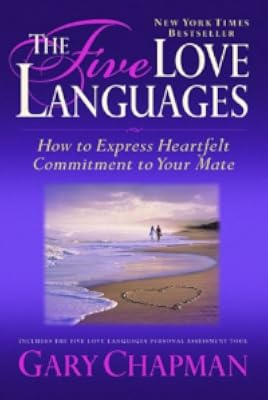
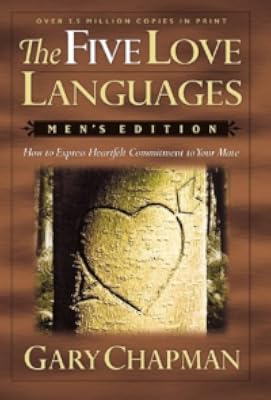
The Five Love Languages: The Secret to Love That Lasts
by Gary D. Chapman
On This Page
Description
Dr. Chapman explains how people communicate love in different ways, and shares the wonderful things that happen when men and women learn to speak each other's language.Tags
Recommendations









Member Recommendations

Member Reviews
The book is insightful, albeit a little long-winded, but I noticed this is the norm for self-help books. I always read reviews before purchasing a book and focus on the negative ones. What struck me, in this case, was the high number of people who didn't read the back cover. Wanna know how I know this? Because of the high number of bad reviews complaining of lack of inclusivity. Another review mentioned the information is obvious and presented for dummies. Do I need to say that microwave ovens warn against putting pets inside? Or bleach containers warning you not to drink it? The fact is, common sense is not as common as people think. I've seen many married people who fail at communication. The divorce rate is high enough to prove that show more keeping love alive is a struggle and not as obvious as you think. If you think this book is for dummies, then you are more perceptive than most and have a better chance at a successful relationship with your partner. Congratulations! There's no need to be condescending toward those who are struggling.
Let me help you with some context if you didn't read the back cover. The author, Gary Chapman, is a pastor and marriage counselor for the church. Why does this matter? Because all his advice is aimed at monogamous married couples. If you're not Christian (or religious), don't worry. The book doesn't tell you to go to church or pray to fix your marriage. It mentions quite a few Bible verses that inspired the author. You can quickly skim over those and move straight to the advice. So, if you're looking for an inclusive point of view, this is not the right book for you.
Does this mean the book is irrelevant if you're living together but not married, queer, or in a polyamorous relationship? Absolutely not, provided you can manage expectations. If every time the author says spouse, you can read partner/partners (or whatever you call your significant other/others), then this book can be helpful to you. At the end of the day, love is love. You know what they say, there are two types of people:
1. Those who can extrapolate from incomplete data
You should skip this book if you didn't get the joke. If you got it, read it, take the advice you find valuable, and ignore what doesn't apply to you.
The main point of this book is that people feel loved and show affection differently (the five languages are: Words of Affirmation, Quality Time, Receiving Gifts, Acts of Service, and Physical Touch). For a relationship to thrive, you must show affection in the love language your partner speaks. We tend to show affection in our own language (how we like to receive affection), and if the partner speaks a different language, they might not feel loved as much as we think they should. For instance, if your love language is receiving gifts, you might feel inclined to shower your partner with gifts. But if their love language is quality time, they might not appreciate your gifts too much, and they'd rather you made time to do something together. And, of course, you'd be disappointed at their lack of enthusiasm when receiving said gifts.
If you choose to read it, I hope you find it helpful. show less
Let me help you with some context if you didn't read the back cover. The author, Gary Chapman, is a pastor and marriage counselor for the church. Why does this matter? Because all his advice is aimed at monogamous married couples. If you're not Christian (or religious), don't worry. The book doesn't tell you to go to church or pray to fix your marriage. It mentions quite a few Bible verses that inspired the author. You can quickly skim over those and move straight to the advice. So, if you're looking for an inclusive point of view, this is not the right book for you.
Does this mean the book is irrelevant if you're living together but not married, queer, or in a polyamorous relationship? Absolutely not, provided you can manage expectations. If every time the author says spouse, you can read partner/partners (or whatever you call your significant other/others), then this book can be helpful to you. At the end of the day, love is love. You know what they say, there are two types of people:
1. Those who can extrapolate from incomplete data
You should skip this book if you didn't get the joke. If you got it, read it, take the advice you find valuable, and ignore what doesn't apply to you.
The main point of this book is that people feel loved and show affection differently (the five languages are: Words of Affirmation, Quality Time, Receiving Gifts, Acts of Service, and Physical Touch). For a relationship to thrive, you must show affection in the love language your partner speaks. We tend to show affection in our own language (how we like to receive affection), and if the partner speaks a different language, they might not feel loved as much as we think they should. For instance, if your love language is receiving gifts, you might feel inclined to shower your partner with gifts. But if their love language is quality time, they might not appreciate your gifts too much, and they'd rather you made time to do something together. And, of course, you'd be disappointed at their lack of enthusiasm when receiving said gifts.
If you choose to read it, I hope you find it helpful. show less
Having spent more hours than I can count attempting to speak my guy’s native tongue, I can tell you unequivocally...learning a second language is tough, but so worth the investment. Obviously, the more you can learn before you’re thrust into a situation demanding fluency, the better. If you’re reading this and relishing in your good fortune that you and your mate have always spoken the same language, I’m joining author Gary Chapman in possibly bursting that bubble. The odds are that you’re floating in my boat and you don’t even know it.
Have you ever felt kinda lonely despite the fact that your partner is in the same room? Or, maybe like you’re running a bit low on love? Do you sometimes feel frustrated that your mate just show more doesn’t get it? Chances are you’re one of the overwhelming many who just answered “Yeah,” “Yup,” and “Definitely!!!”. If you are and you did, I have some fabulous news. There’s a legit and quite solvable reason that you (and probably your partner) feel this way...and, this book will help.
First, you'll figure out what specific “love language” you speak. (If you're still clueless by the end of the last chapter, there's one of those fun little quizzes that will ensure you have the answer.) Next, you'll quiz your partner. If your languages are one and the same, high five and start conversing. If not, hit the book. And, remember...even with the best of teachers, learning a new language requires commitment, patience, and (tedious) hard work. The reward comes on that day where it happens...you’re fluent! Proud to be bilingual. And, your answers to my previous questions will undoubtedly change to “Noooo,” “Nope,” and “Only about once a month.” show less
Have you ever felt kinda lonely despite the fact that your partner is in the same room? Or, maybe like you’re running a bit low on love? Do you sometimes feel frustrated that your mate just show more doesn’t get it? Chances are you’re one of the overwhelming many who just answered “Yeah,” “Yup,” and “Definitely!!!”. If you are and you did, I have some fabulous news. There’s a legit and quite solvable reason that you (and probably your partner) feel this way...and, this book will help.
First, you'll figure out what specific “love language” you speak. (If you're still clueless by the end of the last chapter, there's one of those fun little quizzes that will ensure you have the answer.) Next, you'll quiz your partner. If your languages are one and the same, high five and start conversing. If not, hit the book. And, remember...even with the best of teachers, learning a new language requires commitment, patience, and (tedious) hard work. The reward comes on that day where it happens...you’re fluent! Proud to be bilingual. And, your answers to my previous questions will undoubtedly change to “Noooo,” “Nope,” and “Only about once a month.” show less
Cheesy, oversimplified, packed with self-promotion and anecdotal evidences... It surely has all the faults of many (many) other self-help books focused on marriage, but... How do you love? How do you feel loved? These questions may sound absurdly silly, their answers downright common sense, and yet, it's everything but.
We all love differently, and so we all experience love differently. And when you partner happens to have a different way of loving, and so showing love, miscommunication and misunderstanding can easily set in. Gary Chapman, based on his decades long experience in marriage counseling, breaks it all down to what he calls five love languages (words of affirmation, acts of service, receiving gifts, quality time, physical show more touch) and it's amazingly enlightening.
What is your spouse main love's languages? What are yours? Once you know, regardless if they align or not, you will be both better equipped to make each other happy. Here's a simple read based on a very basic idea, but how useful and practical! I highly recommend it. show less
We all love differently, and so we all experience love differently. And when you partner happens to have a different way of loving, and so showing love, miscommunication and misunderstanding can easily set in. Gary Chapman, based on his decades long experience in marriage counseling, breaks it all down to what he calls five love languages (words of affirmation, acts of service, receiving gifts, quality time, physical show more touch) and it's amazingly enlightening.
What is your spouse main love's languages? What are yours? Once you know, regardless if they align or not, you will be both better equipped to make each other happy. Here's a simple read based on a very basic idea, but how useful and practical! I highly recommend it. show less
We were pretty disappointed in this book (my husband and I read it together).
Although he might have something worth while to say about the 5 love languages we couldn't really pay attention to those without cringing in pain at his awful gender stereotypes. Firstly, he does not include homosexual couples in this book at all. He presumes that everyone is heterosexual. Then repeatedly made it seem that women were more in need of emotional support than men, one-sidedly using stereotypes about how women cry etc without recognizing that men are emotional beings as well. However, what was the worst part for us however was in the 'act of service' section. The husband fully expected his wife to be a stay at home, work all day doing house chores, show more no career wife. Rather than addressing this as the problem (as Betty Friedman did in The Feminine Mystique 50 years ago), Chapman told the couple that the wife needed to make sure she did 4 things for the husband everyday and in turn he would *help her* with 4 things of his choice. Why doesn't he just do four things for her? There's still an expectation that she will be doing at least twice as much housework. There is no equality in that marriage. A woman's place is not in the home. Only a patriarchal oppressor would force a woman to stay home and do housework when she aspires to do greater things.
Overall, Chapman was greatly disappointing. He really needs to take a Sociology of Gender class before he writes another book because his views are very outdated... but considering he's an 80 year old man perhaps we can cut him some slack.
Sincerely,
Not impressed at all show less
Although he might have something worth while to say about the 5 love languages we couldn't really pay attention to those without cringing in pain at his awful gender stereotypes. Firstly, he does not include homosexual couples in this book at all. He presumes that everyone is heterosexual. Then repeatedly made it seem that women were more in need of emotional support than men, one-sidedly using stereotypes about how women cry etc without recognizing that men are emotional beings as well. However, what was the worst part for us however was in the 'act of service' section. The husband fully expected his wife to be a stay at home, work all day doing house chores, show more no career wife. Rather than addressing this as the problem (as Betty Friedman did in The Feminine Mystique 50 years ago), Chapman told the couple that the wife needed to make sure she did 4 things for the husband everyday and in turn he would *help her* with 4 things of his choice. Why doesn't he just do four things for her? There's still an expectation that she will be doing at least twice as much housework. There is no equality in that marriage. A woman's place is not in the home. Only a patriarchal oppressor would force a woman to stay home and do housework when she aspires to do greater things.
Overall, Chapman was greatly disappointing. He really needs to take a Sociology of Gender class before he writes another book because his views are very outdated... but considering he's an 80 year old man perhaps we can cut him some slack.
Sincerely,
Not impressed at all show less
I don't read a lot of self-help type books, but I often have the same problem with the ones I have: they have a center of good information wrapped up in annoying presentation. The 5 Love Languages fits that description. The idea at the core of the book--that different people communicate love differently--seems like a pretty good one, but I found that "save your marriage by learning your spouse's love language" presentation irritating, both because it's oversimplistic and because it unnecessarily limits the usefulness of this information--this approach to thinking about communicating would work with anyone you care about and certainly isn't relevant to couples only if things are bad between them. I also found Chapman's discussion of some show more thorny issues (like abuse, like depression) waaaay too simplistic and lacking in the appropriate level of outreach (which could be as simple as offering contact information for support groups) to readers who might need help.
If you can get past those presentation irritations (or if they don't bother you), there's some good info here. Over years of counseling couples (it's unclear to me whether Chapman has any training in counseling or if he just has a lot of experience through religious organizations--I think it's the latter, and while that means I probably wouldn't seek him out for therapy, it doesn't, in my mind, disqualify him from sharing what he's learned through that experience), Chapman realized that not everyone expresses love in the same way and not everyone "hears" expressions of love in the same way. He lists the five ways he's observed couples express (and receive) love: words of affirmation, quality time, receiving gifts, acts of service, and physical touch. He claims that for most people, one of these ways will be more effective than the others (and that one or two of them will have little effect whatsoever). Problems can arise if one tries to express her love in a way (a "language") that is ineffective for the recipient. So, if one's "love language" is quality time and one's partner (or mother or friend or whoever; I maintain that there's no reason this should be limited to romantic partners) spends very little time with one but gives one lots of gifts, one will not feel very loved. It's kind of a simple concept but I can see how individuals could easily miss that their way of saying "I love you" just isn't being heard.
I picked this up because it is everywhere, and my curiosity about it eventually just wore me down. Not a bad read, and does have some good advice at the center. Worth a spin through, but probably good choice for taking out of the library. show less
If you can get past those presentation irritations (or if they don't bother you), there's some good info here. Over years of counseling couples (it's unclear to me whether Chapman has any training in counseling or if he just has a lot of experience through religious organizations--I think it's the latter, and while that means I probably wouldn't seek him out for therapy, it doesn't, in my mind, disqualify him from sharing what he's learned through that experience), Chapman realized that not everyone expresses love in the same way and not everyone "hears" expressions of love in the same way. He lists the five ways he's observed couples express (and receive) love: words of affirmation, quality time, receiving gifts, acts of service, and physical touch. He claims that for most people, one of these ways will be more effective than the others (and that one or two of them will have little effect whatsoever). Problems can arise if one tries to express her love in a way (a "language") that is ineffective for the recipient. So, if one's "love language" is quality time and one's partner (or mother or friend or whoever; I maintain that there's no reason this should be limited to romantic partners) spends very little time with one but gives one lots of gifts, one will not feel very loved. It's kind of a simple concept but I can see how individuals could easily miss that their way of saying "I love you" just isn't being heard.
I picked this up because it is everywhere, and my curiosity about it eventually just wore me down. Not a bad read, and does have some good advice at the center. Worth a spin through, but probably good choice for taking out of the library. show less
Gary Chapman, a marriage councillor (and pastor), comes up with 5 basic ways that people use to express (romantic) love:
- words of affirmation
- gift giving
- acts of service
- quality time
- and physical touch
He also, very daringly, theorises that most all marital problems are caused by the participants' lacking language skills, i.e. them having different ways of expressing love. In his defence, Mr. Chapman spends over 200 pages coming up with increasingly looser definitions for said love languages to support his claim... so he might as well be right by the end.
For all my hatred of the self-help/self-improvement genre in general, I'm fairly lenient when it comes to qualifications I require from authors writing these books. As long as show more they're fluent, are not boring me and try to make a modicum of sense, I'm willing to give them a chance. Yes, 9 times out of 10, I end up disappointed but no one can say I didn't at least give them the benefit of doubt.
I mainly view these kinds of books as advice from some "well-meaning" busybody intent on sharing their coping mechanism with the world. Had this book been a 2-page essay, I wouldn't even have considered it all that bad...
The good part is how he explains/illustrates the mistake in difference of communication: like not just lobbing (empty) praises at someone who wants to see action. He also makes a valid point in people not handling the difference between the long-term more sedate pace of love and the initial passionate falling in love phase.
The bad part is in fact mostly due to the specific examples with which Chapman chooses to illustrate his concepts. Though I give him props for changing some of his more sexist anecdotes from the first editions, he still has some very problematic ones.
Off the top of my head, the one where he makes the husband listen by literally repeating the wife's complaints word for word. And later he suggests to a woman whose husband constantly screams and belittles her, that she should have sex with him more often... among other things. Dunno about you, but outside of some very dubious BDSM scenarios, I can't see this ending well.
And the weird part is how almost all of his patients are ambushing him. Maybe this is my modern, scheduling-oriented self speaking, but did people in the 60s and 70s just randomly walk up to councillors and start pouring their hearts out... whereEVER? Or is this just a cultural(ly rude) thing where other people's personal time is not meant to be respected?
Score: 2/5 stars
I think I should make this official: all most popular books give me allergies. No really, you should see how the mere mention of Oprah's name has me break out in literal (i.e. metaphorical) hives. Additionally, I spent three quarters of the allocated reading time dreading having to start the book.... so there was no way I was ever going to like it.
Apparently there are 2 versions of this book, with the 2nd edition (from 2015) being the more "palatable" one for the contemporary reader. Having gone through the first half of the first edition, I can tell you that the general idea remains the same and the overall traditional Christian undertones are still very keenly felt through both versions.
Alternately, I'm told that my BS religious tolerance is ridiculously low, for someone living in a predominantly Christian society. *cue immature raspberry blowing* show less
- words of affirmation
- gift giving
- acts of service
- quality time
- and physical touch
He also, very daringly, theorises that most all marital problems are caused by the participants' lacking language skills, i.e. them having different ways of expressing love. In his defence, Mr. Chapman spends over 200 pages coming up with increasingly looser definitions for said love languages to support his claim... so he might as well be right by the end.
For all my hatred of the self-help/self-improvement genre in general, I'm fairly lenient when it comes to qualifications I require from authors writing these books. As long as show more they're fluent, are not boring me and try to make a modicum of sense, I'm willing to give them a chance. Yes, 9 times out of 10, I end up disappointed but no one can say I didn't at least give them the benefit of doubt.
I mainly view these kinds of books as advice from some "well-meaning" busybody intent on sharing their coping mechanism with the world. Had this book been a 2-page essay, I wouldn't even have considered it all that bad...
The good part is how he explains/illustrates the mistake in difference of communication: like not just lobbing (empty) praises at someone who wants to see action. He also makes a valid point in people not handling the difference between the long-term more sedate pace of love and the initial passionate falling in love phase.
The bad part is in fact mostly due to the specific examples with which Chapman chooses to illustrate his concepts. Though I give him props for changing some of his more sexist anecdotes from the first editions, he still has some very problematic ones.
Off the top of my head, the one where he makes the husband listen by literally repeating the wife's complaints word for word. And later he suggests to a woman whose husband constantly screams and belittles her, that she should have sex with him more often... among other things. Dunno about you, but outside of some very dubious BDSM scenarios, I can't see this ending well.
And the weird part is how almost all of his patients are ambushing him. Maybe this is my modern, scheduling-oriented self speaking, but did people in the 60s and 70s just randomly walk up to councillors and start pouring their hearts out... whereEVER? Or is this just a cultural(ly rude) thing where other people's personal time is not meant to be respected?
Score: 2/5 stars
I think I should make this official: all most popular books give me allergies. No really, you should see how the mere mention of Oprah's name has me break out in literal (i.e. metaphorical) hives. Additionally, I spent three quarters of the allocated reading time dreading having to start the book.... so there was no way I was ever going to like it.
Apparently there are 2 versions of this book, with the 2nd edition (from 2015) being the more "palatable" one for the contemporary reader. Having gone through the first half of the first edition, I can tell you that the general idea remains the same and the overall traditional Christian undertones are still very keenly felt through both versions.
Alternately, I'm told that my BS religious tolerance is ridiculously low, for someone living in a predominantly Christian society. *cue immature raspberry blowing* show less
Reading The Five Love Languages felt like having someone finally explain why certain loving gestures feel meaningful to me while others don’t land the same way. Gary Chapman’s framework, words of affirmation, quality time, gifts, acts of service, and physical touch, sounds simple, but it really made me reflect on how I give and receive love. I caught myself nodding along as I thought about past relationships and how often the disconnect wasn’t a lack of love but a mismatch in how we expressed it. It definitely made me more intentional about how I show affection and how I communicate my needs.
That being said, the book can feel a little repetitive, and some examples are clearly rooted in more traditional relationship roles. It’s show more also very focused on couples, so if you’re looking for broader applications friendships, family, self-love you’ll have to read between the lines a bit. Still, its strength lies in its clarity, and I can see why so many people consider it a foundational relationship book.
Overall, The Five Love Languages is simple, helpful, and surprisingly eye opening. It gave me language for things I’ve always felt but didn’t know how to describe. I’d recommend it to anyone who wants to understand their partner and themselves on a deeper level. It’s one of those books that stays with you long after you finish it. show less
That being said, the book can feel a little repetitive, and some examples are clearly rooted in more traditional relationship roles. It’s show more also very focused on couples, so if you’re looking for broader applications friendships, family, self-love you’ll have to read between the lines a bit. Still, its strength lies in its clarity, and I can see why so many people consider it a foundational relationship book.
Overall, The Five Love Languages is simple, helpful, and surprisingly eye opening. It gave me language for things I’ve always felt but didn’t know how to describe. I’d recommend it to anyone who wants to understand their partner and themselves on a deeper level. It’s one of those books that stays with you long after you finish it. show less
Members
- Recently Added By
Published Reviews
ThingScore 100
Gary so eloquently breaks down the different ways we all give and receive love - words of affirmation, acts of service, receiving gifts, quality time, and physical touch - opening my eyes to all new levels of understanding in relationships.......
added by Almatar
Lists

Best Self Help Books
87 works; 18 members

Non-Fiction Worth Reading
1,016 works; 256 members

Wayland Preaching Class
31 works; 2 members

Develop Your Personal Christian Library
101 works; 15 members

Spiritual Growth/Philosophy/Self-Help
15 works; 1 member

The Worst Bestsellers Podcast
296 works; 5 members

If Books Could Kill Podcast
52 works; 1 member

BitLife
212 works; 4 members

Lifelong Learning: Doing Differently
11 works; 1 member

Books read in 2014
66 works; 1 member

Men's healing resources
749 works; 1 member

You Couldn't Pay Me to Read That (Take 2)
213 works; 87 members
Author Information

241 Works 30,235 Members
Gary Chapman-author speaker, and counselor-has a passion for helping people form lasting relationships. He is the beststelling author of the 5 love languages series and the director of Marriage and Family Life consultants. Inc. Gary travels the world presenting seminars, and his radio programs air on more than 400 stations. For More information show more visit 5lovelanguages.com. show less
Awards and Honors
Awards
Common Knowledge
- Canonical title
- The Five Love Languages: How to Express Heartfelt Commitment to Your Mate; The Five Love Languages: The Secret to Love That Lasts
- Original title
- The five love languages
- Alternate titles
- The 5 Love Languages; 愛的五種語言:創造完美的兩性溝通
- Original publication date
- 1992
- Dedication
- To Karolyn, Shelley, and Derek
- First words
- At 30,000 feet, somewhere between Buffalo and Dallas, he put his magazine in his seat pocket, turned in my direction, and asked, "What kind of work do you do?"
- Last words
- (Click to show. Warning: May contain spoilers.)Discuss your respective love languages, and use this insight to improve your relationship!
- Original language
- English
Classifications
- Genres
- Religion & Spirituality, General Nonfiction, Nonfiction
- DDC/MDS
- 646.78 — Applied science & technology Home economics & family management Sewing, Grooming, Life Skills Management of personal and family life Family life
- LCC
- HQ734 .C466 — Social sciences The family. Marriage, Women and Sexuality The Family. Marriage. Women The family. Marriage. Home
- BISAC
Statistics
- Members
- 12,395
- Popularity
- 686
- Reviews
- 155
- Rating
- (3.98)
- Languages
- 20 — Afrikaans, Chinese, Czech, Danish, Dutch, English, Estonian, French, German, Hungarian, Italian, Korean, Norwegian (Bokmål), Portuguese, Romanian, Russian, Croatian, Spanish, Swedish, Thai
- Media
- Paper, Audiobook, Ebook
- ISBNs
- 100
- UPCs
- 1
- ASINs
- 46