On This Page
Description
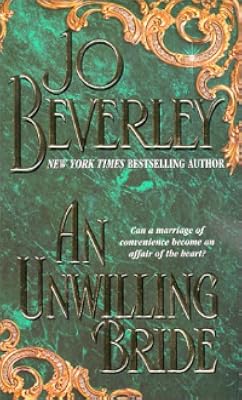
". . . what distinguishes Beverley's writing is the depth of compassion and human understanding." ~Kim E PowerThe Duchess of Belcraven committed a folly, and bore her husband another man's child. But Lucien was a third son, so all was patched over.
Then the two older boys drowned, leaving disaster.
Now, over twenty years later, the duke learns he has a legitimate daughter—Beth Armitage, a child of his blood—and he compels Lucien and Beth to marry.
Lucien, now the arrogant ducal heir, is show more devastated to learn he is not his father's child and that the only way to his fortune is through his unwilling bride: an independent schoolteacher raised in the principles of the Rights of Women.
Can there be any common ground?
From The Publisher: Author Jo Beverley is known for her consumate attention to historical detail that wisks the reader back in time to a near first-hand experience. Fans of Regency romance and historical British fiction set in the 19th century, as well as readers of Jess Michaels, Mary Balogh, Christi Caldwell, Stephanie Laurens, Madeline Hunter and Mary Jo Putney will want to read every book by Jo Beverley.
Romance Writers of America RITA Award, Winner
Best Regency Romance, Romantic Times
"...vivid and mesmerizing characters . Top notch Regency reading pleasure." ~Romantic Times
"...reading about these two intelligent, strong people was such a treat." ~All About Romance. show less
Tags
Recommendations

Member Reviews
I think this is one of Jo Beverley's best books - maybe her best. It's a very daring book, for the genre, but not because Lucien is an alpha male with a potential for violence - that description would cover most romance heroes pretty well; certainly it's nothing unique.
No, the reason why An Unwilling Bride is daring is because instead of just picking up the old cliche (alpha male, potential for violence) Beverley decides to put it on trial: what happens when the dreamy alpha male crosses the thin line that most romance authors so delicately avoid? What happens when the heroine is someone like Beth, who has strong feelings about her own independence and rights? Beth is very well contextualized, but she gives the readers the opportunity show more to ask the one big question that almost every book in this genre ought to pose us: how can you reconcile the desire to be free and respected with the desire for an alpha male?
This is essentially what the book is about. Everybody - every mother, girlfriend, and companion - offers to protect Beth and punish Lucien for his transgressions. There is no 'tolerance' for violence and the sheer number of words devoted to the topic of Lucien's potential & actual violence should show that this is not a question of a 'wife beater' - although I think that it should be obvious that the alpha male hero and wife beating jerk are not totally apples and oranges.
I think Beverley ends up arguing that the difference between the hero and the jerk isn't that one has the potential for violence and the other doesn't; rather, it's a matter of self-discipline, nobility of spirit, understanding of right and wrong. Lucien isn't perfect, but he understands those things, and that's why he's ultimately a hero.
I don't think Beverley really dealt sufficiently with Beth and Lucien's feelings; this is probably the consequence of dealing so thoroughly with their beliefs. There's almost no steam, but the way that Beverley describes Beth and Lucien when they dance, or engage in a battle of the wits, is amazingly done and incredibly erotic.
And, of course, the book is a lot of fun - plenty of other Rogues make apperances, it's excellently structured (I think Beverley sets up the quotation from the Rape of the Lock as the premise of the novel and its inclusion is really cleverly done), very smart, and Beth is a wonderful heroine - really smart and sweet. show less
No, the reason why An Unwilling Bride is daring is because instead of just picking up the old cliche (alpha male, potential for violence) Beverley decides to put it on trial: what happens when the dreamy alpha male crosses the thin line that most romance authors so delicately avoid? What happens when the heroine is someone like Beth, who has strong feelings about her own independence and rights? Beth is very well contextualized, but she gives the readers the opportunity show more to ask the one big question that almost every book in this genre ought to pose us: how can you reconcile the desire to be free and respected with the desire for an alpha male?
This is essentially what the book is about. Everybody - every mother, girlfriend, and companion - offers to protect Beth and punish Lucien for his transgressions. There is no 'tolerance' for violence and the sheer number of words devoted to the topic of Lucien's potential & actual violence should show that this is not a question of a 'wife beater' - although I think that it should be obvious that the alpha male hero and wife beating jerk are not totally apples and oranges.
I think Beverley ends up arguing that the difference between the hero and the jerk isn't that one has the potential for violence and the other doesn't; rather, it's a matter of self-discipline, nobility of spirit, understanding of right and wrong. Lucien isn't perfect, but he understands those things, and that's why he's ultimately a hero.
I don't think Beverley really dealt sufficiently with Beth and Lucien's feelings; this is probably the consequence of dealing so thoroughly with their beliefs. There's almost no steam, but the way that Beverley describes Beth and Lucien when they dance, or engage in a battle of the wits, is amazingly done and incredibly erotic.
And, of course, the book is a lot of fun - plenty of other Rogues make apperances, it's excellently structured (I think Beverley sets up the quotation from the Rape of the Lock as the premise of the novel and its inclusion is really cleverly done), very smart, and Beth is a wonderful heroine - really smart and sweet. show less
Carefree hell-raiser Lucien de Vaux is shocked to learn the real reasons behind his family's strained relationship. Rather than the legitimate son of the Duke of Belcraven, he is the product of an adulterous relationship of his mother's. And now the time has come for him to save the pride of the family bloodline - by marrying his father's illegitimate daughter or by being cut off with all but his entailed estates.
Beth Armitage never dreamed she would meet her father, and she has absolutely no desire to take him up on his offer of marriage to his rakish heir. Beth is a follower of Mary Wollstonecraft and has a strong desire for independence, right alongside a deep disdain for the aristocracy. But when he threatens the livelihood of the show more school at which she teaches, Beth agrees to the strange arrangement.
When Lucien and Beth meet, misunderstandings abound, and sniping provocation takes turns with fascinating matches of wit as the two struggle to come to terms with their abrupt marriage.
Beverley writes unique romances to say the least - here she gives handsome Lucien a dangerous temper that he doesn't seem to control very well. At times it even descends into violence. This, of course, is a very touchy subject for a romance novel - some may interpret Lucien's short rein on his temper and need to control Beth as signs of an abusive relationship. And at times, it certainly seemed that way to me as well, particularly given Beth's quick forgiveness of his actions without taking him to task further.
Beth herself also drove me up the wall. Her incessant insistence that she be free to do anything and everything she wants seems childish at times. She continues to make things difficult in their relationship even after he attempts to rub along cordially - not to say that she in any means deserved to be threatened with violence. Of course she didn't. But she truly was incredibly infuriating much of the time - he should have hit a wall (clearly not near her) or something.
As with most Beverley novels I'm on the fence about this one. I thought the climactic scenes at the end were great fun. I adored Blanche, Hal, and Sparra in particular. And honestly, I liked Lucien, too. And although I see others' points when they focus on the 'once an abuser' situation, I honestly believed that this was completely out of character and that it wouldn't happen again. Not that that was romantic by any stretch of the imagination. But that he was a decent guy.
This is definitely a romance that could go either way. Violence is a huge turn-off for me, so the very fact that I'm not immediately tossing this in the trash says something. I actually closed the book liking it - and Lucien. But the violence bit troubles me. I'm undecided until I find time for a reread. show less
Beth Armitage never dreamed she would meet her father, and she has absolutely no desire to take him up on his offer of marriage to his rakish heir. Beth is a follower of Mary Wollstonecraft and has a strong desire for independence, right alongside a deep disdain for the aristocracy. But when he threatens the livelihood of the show more school at which she teaches, Beth agrees to the strange arrangement.
When Lucien and Beth meet, misunderstandings abound, and sniping provocation takes turns with fascinating matches of wit as the two struggle to come to terms with their abrupt marriage.
Beverley writes unique romances to say the least - here she gives handsome Lucien a dangerous temper that he doesn't seem to control very well. At times it even descends into violence. This, of course, is a very touchy subject for a romance novel - some may interpret Lucien's short rein on his temper and need to control Beth as signs of an abusive relationship. And at times, it certainly seemed that way to me as well, particularly given Beth's quick forgiveness of his actions without taking him to task further.
Beth herself also drove me up the wall. Her incessant insistence that she be free to do anything and everything she wants seems childish at times. She continues to make things difficult in their relationship even after he attempts to rub along cordially - not to say that she in any means deserved to be threatened with violence. Of course she didn't. But she truly was incredibly infuriating much of the time - he should have hit a wall (clearly not near her) or something.
As with most Beverley novels I'm on the fence about this one. I thought the climactic scenes at the end were great fun. I adored Blanche, Hal, and Sparra in particular. And honestly, I liked Lucien, too. And although I see others' points when they focus on the 'once an abuser' situation, I honestly believed that this was completely out of character and that it wouldn't happen again. Not that that was romantic by any stretch of the imagination. But that he was a decent guy.
This is definitely a romance that could go either way. Violence is a huge turn-off for me, so the very fact that I'm not immediately tossing this in the trash says something. I actually closed the book liking it - and Lucien. But the violence bit troubles me. I'm undecided until I find time for a reread. show less
Now this one I like. Beth's situation was - weird, but believable. And her reactions the same, as were Lucien's. Neat meeting the other Rogues - I do want to read the rest of the series. Some of the threads started here were completed in Rogue's Return, and some weren't - and some were finished here that started in the first book. I'll keep an eye out for them. Lord Deverill showed his colors very clearly in a half-page scene, and made all the rest reasonable action against him - actually, when he showed up again he seemed to be overacting. But that didn't stop them from dealing with him. Good story - this one had me crying early on, and laughing out loud near the end, at the meeting with the duke. Lordy! Enjoyed this very much and will show more definitely be looking for more. show less
Lucien de Vaux, Marquess of Arden and heir to a dukedom, is about to offer marriage to a young lady when his father stops him. His father orders him to marry an unknown schoolmistress, Beth Armitage, for reasons that are a surprise and a shock to him. When Beth is visited by the Duke of Belcraven and forced to agree to the marriage she believes that her life is almost at an end - a woman who agrees with Mary Wollstonecraft's views on the rights of women can hardly fit well into an aristocratic household. She is afraid of the Marquess, that he could be violent towards her as well as having power over her as her husband.
Lucien and Beth have several weeks together as an engaged couple before the wedding and these are detailed in the story show more - their conversations, arguments, misunderstandings and fears about the future. And yet as time goes on Beth learns to understand a little more about the responsibilities of the Marquess and to appreciate his intelligence, learning and wit. But even after the wedding all isn't necessarily well, particularly when Beth finds herself helping one of her old school pupils and throwing herself into danger in the meantime.
There were a lot of things I liked about this book, but one major thing I didn't. The whole mistress thing. I didn't like how friendly Lucien was with his mistress, Blanche, I didn't like how after meeting his future wife, Beth, he went and had one more night with his Blanche to say goodbye and I didn't think it was very realistic that Beth would want to be friends with his Blanche, KNOWING who she was. Especially after feeling so much jealousy towards her after seeing Lucien gazing at her with a smile on his face. That whole part of the story irritated me. And I thought it was weird that his best friend fell in love with Blanche and wanted to marry her, and there were things said about her becoming his mistress until he could get her to marry him. It was just weird, she was past around between friends.
Set at the time of the battle of Waterloo and with some really interesting historical insights (particularly with regard to the running of a ducal household and the family's interaction with their servants), the story of an arrangemed marriage turning into a love match is one that works in any era. I wasn't entirely sure when the love arrived between them - it wasn't entirely clear - and the Marquess wasn't always a sympathetic character (violence towards his wife, even in extenuating circumstances, isn't very heroic). However it was well paced and interesting and the characters grew and changed through the book, and some of the side characters (like the Duke and Duchess) also having some resolution. show less
Lucien and Beth have several weeks together as an engaged couple before the wedding and these are detailed in the story show more - their conversations, arguments, misunderstandings and fears about the future. And yet as time goes on Beth learns to understand a little more about the responsibilities of the Marquess and to appreciate his intelligence, learning and wit. But even after the wedding all isn't necessarily well, particularly when Beth finds herself helping one of her old school pupils and throwing herself into danger in the meantime.
There were a lot of things I liked about this book, but one major thing I didn't. The whole mistress thing. I didn't like how friendly Lucien was with his mistress, Blanche, I didn't like how after meeting his future wife, Beth, he went and had one more night with his Blanche to say goodbye and I didn't think it was very realistic that Beth would want to be friends with his Blanche, KNOWING who she was. Especially after feeling so much jealousy towards her after seeing Lucien gazing at her with a smile on his face. That whole part of the story irritated me. And I thought it was weird that his best friend fell in love with Blanche and wanted to marry her, and there were things said about her becoming his mistress until he could get her to marry him. It was just weird, she was past around between friends.
Set at the time of the battle of Waterloo and with some really interesting historical insights (particularly with regard to the running of a ducal household and the family's interaction with their servants), the story of an arrangemed marriage turning into a love match is one that works in any era. I wasn't entirely sure when the love arrived between them - it wasn't entirely clear - and the Marquess wasn't always a sympathetic character (violence towards his wife, even in extenuating circumstances, isn't very heroic). However it was well paced and interesting and the characters grew and changed through the book, and some of the side characters (like the Duke and Duchess) also having some resolution. show less
We start the second book in the “Company of Rogues” series with Beth Armitage - a woman who is content with her life as a school teacher - finding out that the life as she knows it will change. It seems that 20 years ago the current wife of the Duke of Belcraven had an affair with an old flame while her husband was away. The result was a son - a third son - Lord Arden. When his two other sons die tragically, the Duke finds himself in the position of having another man’s son as his heir. To add to the mix, it seems that the Duke, himself, also has an illegitimate child - a daughter - Beth Armitage - who he now will force to marry his remaining son, so that the “Belcraven blood line” will continue.
This sets the scene for the show more development of the rocky relationship of “Lord Arden - a full blooded aristocratic male who is finding out for the first time that he is illegitimate and Beth Armitage - an early feminist with republican inclinations”! (as it is phrased on the book summary) As you can well imagine, this book in the series explores the area of women’s rights with Beth being a fiery follower of Mary Woolstencroft. An Unwilling Bride was the winner of: the RWA RITA award for Best Regency, the Golden Leaf Award for Best Historical and Romantic Times Best Regency Romance.
I found this book in the series to be very enjoyable! I didn’t really like Lucien, Lord Arden. At one point he actually backhands Beth. He is a pretty unlikeable character for most of the book. Even in future books, he comes off as stiff and unlikeable. I like to think about him having the label of “No Fun Zone”! I felt a great deal of empathy for Beth. It seems that women in Regency England REALLY need woman’s rights! Although I am aware that this is a fictional book, it make me thankful for the rights that I have!
That being said, experience tells me that a Jo Beverley novel is not a nice and easy read. I may not like Lucien or how he orders Beth around, but I can appreciate how Jo Beverley takes some very unlikeable characters and weaves an incredibly wonderful story around them. The Company of Rogues aspect adds a nice background to Lucien’s earlier years, provides a support system for him and also helps us understand him a bit better. Definitely a rewarding read! show less
This sets the scene for the show more development of the rocky relationship of “Lord Arden - a full blooded aristocratic male who is finding out for the first time that he is illegitimate and Beth Armitage - an early feminist with republican inclinations”! (as it is phrased on the book summary) As you can well imagine, this book in the series explores the area of women’s rights with Beth being a fiery follower of Mary Woolstencroft. An Unwilling Bride was the winner of: the RWA RITA award for Best Regency, the Golden Leaf Award for Best Historical and Romantic Times Best Regency Romance.
I found this book in the series to be very enjoyable! I didn’t really like Lucien, Lord Arden. At one point he actually backhands Beth. He is a pretty unlikeable character for most of the book. Even in future books, he comes off as stiff and unlikeable. I like to think about him having the label of “No Fun Zone”! I felt a great deal of empathy for Beth. It seems that women in Regency England REALLY need woman’s rights! Although I am aware that this is a fictional book, it make me thankful for the rights that I have!
That being said, experience tells me that a Jo Beverley novel is not a nice and easy read. I may not like Lucien or how he orders Beth around, but I can appreciate how Jo Beverley takes some very unlikeable characters and weaves an incredibly wonderful story around them. The Company of Rogues aspect adds a nice background to Lucien’s earlier years, provides a support system for him and also helps us understand him a bit better. Definitely a rewarding read! show less
An excellent sequel to the Rogues series. An unusual heroine and a fresh plot add a different slant to the traditional Regency. I kept this for a long time and then purchased the Kindle edition so definitely a favorite.
Dragged a little at the very end, but overall I liked it. Want to read more of Ms. Beverley now...
Members
- Recently Added By
Author Information

99+ Works 14,695 Members
Jo Beverley was born on September 22, 1947 in Lancashire, England. She received a degree in English history from Keele University in Staffordshire in 1970. In the mid-1970s, she moved to Canada with her husband. She wrote over 30 historical romance novels during her lifetime including Lord Wraybourne's Betrothed, The Stolen Bride, The Shattered show more Rose, Lord of Midnight, and Forbidden Magic. She also wrote several series including the Company of Rogues series and the Malloren series. She received numerous awards for her work including five RITAs, two Career Achievement Awards from Romantic Times, The Golden Leaf Award, and the Readers' Choice Award. She died from cancer on May 23, 2016. (Bowker Author Biography) show less

Jo Beverley is a LibraryThing Author, an author who lists their personal library on LibraryThing.
Some Editions
Awards and Honors
Awards
Series

Belongs to Publisher Series
Common Knowledge
- Canonical title
- An Unwilling Bride
- Original title
- An Unwilling Bride
- Alternate titles
- An Unwilling Bride: The Company of Rogues Series, Book 2
- Original publication date
- 1992-02
- People/Characters
- Lucien Phillippe Louis de Vaux, Marquess of Arden; Elizabeth Armitage 'Beth'; Nicholas Delaney; Eleanor Chivenham Delaney; Lord Darius Debenham 'Dare'; Hal Beaumont (show all 15); Clarissa Greystone; Blanche Hardcastle; Con Somerford, Viscount Amleigh; Robin Babson 'Sparra'; Lord Deveril; William de Vaux, Duke of Belcraven; Yolande de Vaux, Duchess of Belcraven; Arabel Delaney; Sir Stephen Ball, M.P.
- Important places
- England, UK; London, England, UK
- Important events
- 1815
- First words
- April, 1815
"Hell and damnation." - Last words
- (Click to show. Warning: May contain spoilers.)Clever men, said Beth softly, always will be. And clever women will appreciate a clever man when they meet one.
Classifications
Statistics
- Members
- 517
- Popularity
- 58,257
- Reviews
- 9
- Rating
- (3.65)
- Languages
- Czech, Dutch, English, Spanish
- Media
- Paper, Audiobook, Ebook
- ISBNs
- 19
- ASINs
- 5