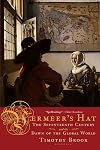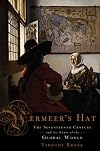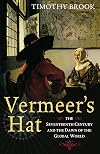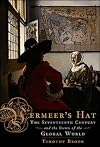
Vermeer's Hat: The Seventeenth Century and the Dawn of the Global World
by Timothy Brook
On This Page
Description
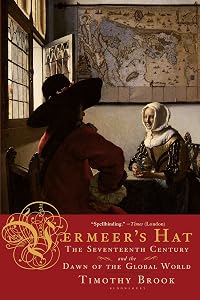
"In one painting, a Dutch military Officer Leans toward a laughing girl. In another, a woman at a window weighs pieces of silver. In a third, fruit spills from a porcelain bowl onto a Turkish carpet. Vermeer's images haunt us with their beauty and mystery - what stories lie behind these exquisitely rendered moments? As Timothy Brook shows us in Vermeer's Hat, these pictures, which seem so intimate, actually open doors onto a rapidly expanding world." "The dashing officer's hat is made of show more beaver fur, which European explorers got from Native Americans in exchange for weapons. Beaver pelts, in turn, financed the voyages of sailors seeking new routes to China. There - with silver mined in Peru - Europeans would purchase, by the thousands, the porcelains so often shown in Dutch paintings of this time." "Timothy Brook traces the rapidly growing web of trade that might bring a beaver pelt, a Turkish carpet, or a Chinese bowl to a sitting room in Delft. The wharves of Holland, wrote a French visitor, were "an inventory of the possible." Vermeer's Hat shows just how rich this inventory was, and how the urge to acquire such things was refashioning the world more thoroughly than anyone quite realized. It offers us a rich new understanding both of Vermeer's paintings and of the era they portray."--BOOK JACKET. show lessTags
Recommendations




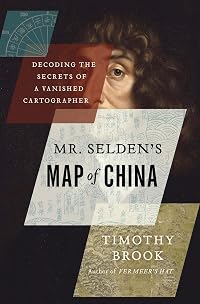

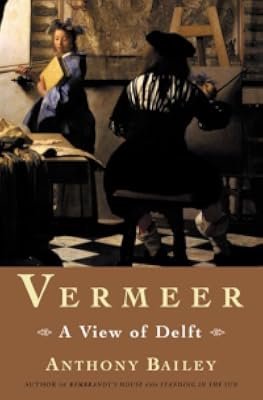
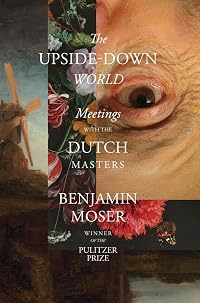
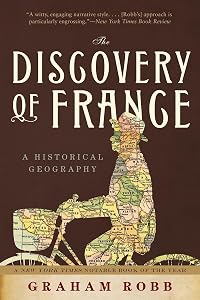





















Member Recommendations

Member Reviews
A good microhistorical study using Vermeer's paintings (and a couple other pieces of artwork) to explore the connections between Europe and Asia (mostly China). There are a few moments where it gets too far afield and the attempted connections are too tenuous, but it was an engaging read.
seniális témaválasztás! Rendkívül ollvasmányos formában kelti fel a figyelmet a világkereskedelem, globalizáció, földrajzi felfedezések, népek-nemzetek keveredése és egymásra hatása irtánt. Igazi élmény az olvasása, nagyon jó a nézőpont és hihetetlen távolságokat fog át térben, ill. emberi sorsok és nemzettörténetek alakulása kapcsán.
Brook guides us through studies of numerous, mostly Vermeer, paintings and objets d'art; and from each one chooses what he calls a 'door' to help us understand the rapidly globalizing world of the seventeenth century. A clever, imaginative, and thought-provoking book.
Brooks uses the objects and actions shown in scenes painted by Vermeer to spark an exploration of the history of European exploration and conquest. The hat in question, of the beaver felt returned to fashion because trade with North America had provided a new supply of pelt, leads to discussion of the exploration of Canada, the search for the Northwest Passage and related topics. Good for a sense of the era and some interesting details, but not a systematic work. The author is actually a specialist in Chinese history.
If you're looking for a book detailing the influence of commercial trade in China around the mid 17th century then you've found a gem. If you're looking for a book about Vermeer's paintings then I suggest you pick something else. We're treated to a wonderful depiction of life in the 17th century and the book sets a new standard by which textbooks for high school should be judged. The author uses one important principle to make the book come alive: history is not about places, facts and events. It's about people.
It's sad then to see nothing of Vermeer's personality and those of the inhabitants of Delft in this book. In fact by the end of the book the reader has gained a much better insight into the nature and lifestyle of the Chinese show more during this period. Considering that the author is an expert on Chinese history, this is not surprising. The author is definitely not an author on Dutch history. For example the name kraakporcelein, as anyone in the Netherlands would be able to guess, comes from the verb 'kraken' (to break) and not from the not even remotely similarly sounding name for the Portugese ships called Carracks. If the word has to be derived from another word then it makes more sense that it came from the word for giant monster octopus: the Kraken. That word from the Old Norse noun kraka means "to drag under the water", which is what apparently happened a lot with porcelein during the 17th century. We learn from reading the book Vermeer's Hat. Irony perhaps?
Similarly the author reliably convinces the reader that the common currency in the Netherlands around the time of Vermeer was the guilder, even though everyone in Holland knows that up until the middle of the 17th century the currency was called the Florijn or in English the Florin, from the Italian influence of Florence. Vermeer was very much active when this changeover occurs but nowhere in the book is this mentioned. The usage of Florijn was so strong and prevalent that just before the changeover to Euros the Dutch symbol for currency was and had been: 'fl'.
It is difficult to evaluate this book, or perhaps novel, because the narrative technique is superb for a history book, but the contents is confusing. One chapter even clearly mentions that that section has no connection with any of Vermeer's paintings. What then is the point? It has to be said that there is a good deal of information in the book regarding Vermeer's work, although by now I'm highly doubtful about it's accuracy. Still, it is a wonderful book to read and it definitely portrays an immersive painting of life in the 17th century in China. show less
It's sad then to see nothing of Vermeer's personality and those of the inhabitants of Delft in this book. In fact by the end of the book the reader has gained a much better insight into the nature and lifestyle of the Chinese show more during this period. Considering that the author is an expert on Chinese history, this is not surprising. The author is definitely not an author on Dutch history. For example the name kraakporcelein, as anyone in the Netherlands would be able to guess, comes from the verb 'kraken' (to break) and not from the not even remotely similarly sounding name for the Portugese ships called Carracks. If the word has to be derived from another word then it makes more sense that it came from the word for giant monster octopus: the Kraken. That word from the Old Norse noun kraka means "to drag under the water", which is what apparently happened a lot with porcelein during the 17th century. We learn from reading the book Vermeer's Hat. Irony perhaps?
Similarly the author reliably convinces the reader that the common currency in the Netherlands around the time of Vermeer was the guilder, even though everyone in Holland knows that up until the middle of the 17th century the currency was called the Florijn or in English the Florin, from the Italian influence of Florence. Vermeer was very much active when this changeover occurs but nowhere in the book is this mentioned. The usage of Florijn was so strong and prevalent that just before the changeover to Euros the Dutch symbol for currency was and had been: 'fl'.
It is difficult to evaluate this book, or perhaps novel, because the narrative technique is superb for a history book, but the contents is confusing. One chapter even clearly mentions that that section has no connection with any of Vermeer's paintings. What then is the point? It has to be said that there is a good deal of information in the book regarding Vermeer's work, although by now I'm highly doubtful about it's accuracy. Still, it is a wonderful book to read and it definitely portrays an immersive painting of life in the 17th century in China. show less
Who knew that Vermeer had revealed the wide world of seafaring global trade and incipient imperialism that led to the modern world in his paintings of domestic life in 17th-century Delft? In Vermeer's Hat: The Seventeenth Century and the Global World, Timothy Brook reveals how the small changes in daily life, brought about by what he calls the "second encounters," were harbingers of momentous change.
Brook, who holds the Shaw Chair in Chinese Studies at Oxford University, brings his wide erudition to illuminating the 17th Century. But Vermeer's Hat is a book not only for scholars, but for curious intelligent readers, whom the author woos with fascinating stories and journeys around the world. The 15th and 16th Centuries were the Age of show more Exploration in which Europeans discovered the New World and had their first meaningful encounters with the civilizations of the Orient. In the 17th Century, those encounters led to global trade, dreams of empire, new ways of thought, and disruptions of populations.
Using a half-dozen of Vermeer's paintings as touchstones, Brook illustrates how the wider world made its way into daily European life. In OFFICER AND LAUGHING GIRL, the enormous hat worn by the Cavalier is made of felt from the beaver skins that the French sent back from their trade with the Hurons in Canada. YOUNG WOMAN READING A LETTER evokes the masses of young men who shipped with the Dutch East Indies Company to make their fortunes by sending back such goods as the Oriental rug draping the table and the Chinese porcelain dish spilling fruit. WOMAN HOLDING A BALANCE is weighing a piece of silver gleaned from the rivers of silver that flowed from the silver mines in Potosi, Peru, not only back to Europe, but through Acapulco and Manila to China.
Vermeer's Hat is a fascinating, highly readable history of a period in which the world changed show less
Brook, who holds the Shaw Chair in Chinese Studies at Oxford University, brings his wide erudition to illuminating the 17th Century. But Vermeer's Hat is a book not only for scholars, but for curious intelligent readers, whom the author woos with fascinating stories and journeys around the world. The 15th and 16th Centuries were the Age of show more Exploration in which Europeans discovered the New World and had their first meaningful encounters with the civilizations of the Orient. In the 17th Century, those encounters led to global trade, dreams of empire, new ways of thought, and disruptions of populations.
Using a half-dozen of Vermeer's paintings as touchstones, Brook illustrates how the wider world made its way into daily European life. In OFFICER AND LAUGHING GIRL, the enormous hat worn by the Cavalier is made of felt from the beaver skins that the French sent back from their trade with the Hurons in Canada. YOUNG WOMAN READING A LETTER evokes the masses of young men who shipped with the Dutch East Indies Company to make their fortunes by sending back such goods as the Oriental rug draping the table and the Chinese porcelain dish spilling fruit. WOMAN HOLDING A BALANCE is weighing a piece of silver gleaned from the rivers of silver that flowed from the silver mines in Potosi, Peru, not only back to Europe, but through Acapulco and Manila to China.
Vermeer's Hat is a fascinating, highly readable history of a period in which the world changed show less
Historian Brook uses the Delft of Johannes Vermeer as the reference point for examining the expansion of globalization in the seventeenth century. Brook identifies objects or persons in 17th century Dutch artworks that link Delft with the wider world. Since Brook specializes in Chinese history, it’s not surprising that most of the paths he follows lead to China. While the term “globalization” may have entered common usage only in the late 20th century, it’s clear that its effects have been visible since at least the seventeenth century.
Members
- Recently Added By
Lists

Books recommended in the history category on FiveBooks.com
329 works; 4 members

In Our Time books
4,934 works; 2 members
Author Information

Timothy Brook is principal of St. John's College at the University of British Columbia, and holds the Shaw Chair in Chinese Studies at Oxford University.
Some Editions
Awards and Honors
Awards
Series
Belongs to Publisher Series
Common Knowledge
- Canonical title
- Vermeer's Hat: The Seventeenth Century and the Dawn of the Global World
- Original publication date
- 2008
- People/Characters
- Johannes Vermeer; Catharina Vermeer; William Bontekoe; Leonaert Bramer; Samuel Champlain; Chongzhen, emperor of China (show all 29); Angelo Cocchi; Sebastian Hurtado de Corcuera; Adriano de Las Cortes; William Shakespeare; Maria Thins; Lambert Van Meerten; Xu Guangqi (Paolo Xu); Willem Cornelisz Schouten; Jan Derickzson Lam - Dutch admiral; Huig de Groot; Wen Zhenheng; Antonie van Leeuwenhoek; Li Rihua; Lu Zhaolong; Yang Shicong; Fulgencio Orozco; Sebastian Lobo da Silveira; William Bontekoe; Jan Janszoon Weltevree; Angelo Cocchi; Leonaert Bramer; John Donne; Sebastian Corcuera
- Important places
- Delft, South Holland, Netherlands; Shanghai, China; Amsterdam, North Holland, Netherlands; Jakarta, Indonesia (as Batavia, Dutch East Indies); China; Holland (show all 22); Fujian, China; Great Lakes Region; Japan; Macao; Manila, The Philippines; Spain; St Helena; Ascension Island; Tristan da Cunha; St Lawrence River, Canada; Spanish Empire; Suzhou, Jiangsu, China; Jingdezhen, Jiangxi, China; Potosi, Peru; Jakarta, Indonesia; Korea
- Important events
- Champlain fights Mohawks - 1609; Sea battle between Dutch and Portuguese in St Helena 1613; Massacre of Chinese by Spanish in Manila 1603; Inflation in China - 1640s; Chinese / Spanish fighting in Manila 1640
- Epigraph
- Our arrivals at meaning and at value are momentary / pauses in the ongoing dialogue with others from which / meaning and value spring. - Gary Tomlinson, Music in Renaissance Magic
- Dedication
- For Fay
- First words
- The summer I was twenty, I bought a bicycle in Amsterdam and cycled southwest across the Low Countries on what would be the final leg of a journey that took me from Dubrovnik on the Adriatic to Ben Nevis in Scotland.
- Last words
- (Click to show. Warning: May contain spoilers.)The great era of Delft painting had come to an end, yet the doors that trade and travel and war had opened not just in that town, but all over the globe, remain so still.
- Blurbers
- Spence, Jonathan D.; King, Ross; Standage, Tom; Bailey, Anthony; Brotton, Jeremy; Conrad, Peter (show all 8); Barrett, T.H.; Carey, John
Classifications
Statistics
- Members
- 763
- Popularity
- 36,729
- Reviews
- 14
- Rating
- (3.84)
- Languages
- 9 — Chinese, Dutch, English, French, German, Hungarian, Italian, Portuguese, Spanish
- Media
- Paper, Audiobook, Ebook
- ISBNs
- 21
- ASINs
- 11