Everyman's Rules for Scientific Living
by Carrie Tiffany
On This Page
Description
It is 1934, the Great War is long over and the next is yet to come. It is a brief time of optimism and advancement. Billowing dust and information, the government "Better Farming Train" slides through the wheat fields and small towns of Australia, bringing city experts and advice to those already living on the land. Amongst the swaying cars full of cows, pigs and wheat, an unlikely seduction occurs between Robert Pettergree, a man with an unusual taste for soil, and Jean Finnegan, a talented show more young seamstress with a hunger for knowledge. show lessTags
Recommendations

















Member Recommendations
Member Reviews
I thoroughly enjoyed this little novel, EVERYMAN'S RULES FOR SCIENTIFIC LIVING. First of all I enjoy reading about Australia, a place I will probably never visit in person, but love to read about nonetheless. Carrie Tiffany, who doesn't look very old in her back cover photo, seems to have acquired a kind of wisdom beyond her years about human behavior and the complexities of family relationships and dynamics. Her protagonists here, Jean and Robert, are an interesting combination of ordinary and unique. Jean was orphaned at an early age and raised by an aunt, so escaped into the service of the 'sewing expert' home ec agent on the 'farm train' that criscrossed the interior of Australia. It was there that she met Robert, the soil expert, show more who we learn had a rather horrific childhood as the son of a prostitute. His uniqe talent of being able to identify where dirt comes from - what geographic locale - by actually tasting it, makes him a rather grotesque character. And yet one feels enormous symypathy for Robert, who has managed to overcome his awful beginnings.
When these two marry, it would appear to be a marriage of opposites, but then such 'opposites' really do attract. And the passion, the abrupt and near-violent couplings between this odd couple are shockingly graphic, yet without any hint of the obscene, perhaps because of their very innocence. Jean wishes they could talk about this physical side of their love, wishes for more intimacy, but doesn't know how to reach Robert, who is so very sexually repressed. Here's an example -
"I think about reaching across and touching him, but I am not sure how he would respond. I don't understand this gulf between our bodies and our minds and why it is so hard to move between the two."
Although my greatest interest here was in this couple's relationship, the book reaches far beyond them - it looks at the awful Dust Bowl years in the wheat belt of the Australian interior and the myriad hardships that the farmers of that area endured, breaking many of them both financially and emotionally. Tiffany had done her homework in depicting the grim details of drought, mice and rabbit plagues, dust storms, children undernourished and dying. It is very similar to what happened in the U.S. in the 30s. As I was reading the book, I kept thinking of another fine recent Australian novel, Goldie Goldbloom's THE PAPERBARK SHOE, although the characters in her novel were a bit further left of center, more unusual, more grotesque.
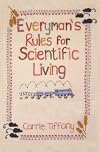
I also loved the essays that Carrie Tiffany included at the end of her story, about her real experiences as a Park Ranger in the outback and how the isolation of the job brought her closer to books as a means of escape; and also a short piece explaining the 'soil box' shown on the book's cover. I will be watching for Carrie Tiffany's next book; in the meantime I will recommend this one highly. show less
When these two marry, it would appear to be a marriage of opposites, but then such 'opposites' really do attract. And the passion, the abrupt and near-violent couplings between this odd couple are shockingly graphic, yet without any hint of the obscene, perhaps because of their very innocence. Jean wishes they could talk about this physical side of their love, wishes for more intimacy, but doesn't know how to reach Robert, who is so very sexually repressed. Here's an example -
"I think about reaching across and touching him, but I am not sure how he would respond. I don't understand this gulf between our bodies and our minds and why it is so hard to move between the two."
Although my greatest interest here was in this couple's relationship, the book reaches far beyond them - it looks at the awful Dust Bowl years in the wheat belt of the Australian interior and the myriad hardships that the farmers of that area endured, breaking many of them both financially and emotionally. Tiffany had done her homework in depicting the grim details of drought, mice and rabbit plagues, dust storms, children undernourished and dying. It is very similar to what happened in the U.S. in the 30s. As I was reading the book, I kept thinking of another fine recent Australian novel, Goldie Goldbloom's THE PAPERBARK SHOE, although the characters in her novel were a bit further left of center, more unusual, more grotesque.
I also loved the essays that Carrie Tiffany included at the end of her story, about her real experiences as a Park Ranger in the outback and how the isolation of the job brought her closer to books as a means of escape; and also a short piece explaining the 'soil box' shown on the book's cover. I will be watching for Carrie Tiffany's next book; in the meantime I will recommend this one highly. show less
A beautifully written debut novel about love and idealism set against the harsh landscape of rural Australia in the 1930's. The character of Jean has stayed with me long after I finished the last page. I think it wonderfully remarkable how this author is able, in a little over 200 pages, to sweep you into her novel's world, wrap you into her characters' lives and leave you quietly awed, both satisfied and wanting more
In the 1920s and 30s, the Better Farming Train traveled across the Australian state of Victoria, educating isolated rural communities on farming and household management practices. Jean Finnegan and Robert Pettergree met on the train; she was a specialist in sewing and household management, and he was a soil scientist. The train's close quarters stoked their passion, and soon Jean and Robert decided to marry, leave the train and start their own farmstead.
Robert adopted a highly scientific approach to wheat farming, and enlisted Jean's help to conduct experiments in bread production following each year's harvest. He is idealistic and convinced his way is the correct one; she trusts him and provides moral support. She also keeps detailed show more records for each year's crop, as if writing a laboratory report for a high school science experiment:
The sample has a low bushel weight (61 lbs). In accordance with standard sampling procedure a portion of FAQ (fair-average quality) wheat was critically examined and subjected to analysis and a milling test in the experimental flour mill.
The sample is very bright and plump, and has a generally pleasing appearance. The moisture content and the protein content are normal. (p. 78)
Jean's report continues with a description of the "experiment's" purpose, quality test results, and the measurable characteristics of 10 loaves of bread baked with flour from the year's harvest. This is repeated each year, allowing the careful reader to see for themselves the effectiveness of Robert's scientific farming methods.
When the government launches a wheat-growing scheme to stimulate the economy, Robert uses facts and figures to convince other farmers to increase wheat production by adopting his techniques. What follows is a classic example of the effects of messing with an ecosystem. As farming becomes increasingly difficult, Jean and Robert also suffer -- individually, as a couple, and as members of their community.
Everyman's Rules for Scientific Living is written in spare prose, laced with both understatement and irony. The character development is subtle; both Jean and Robert are fully formed, and yet there's so much more I wanted to know. But the style perfectly conveyed the stark landscape and the harsh life of a farm family. show less
Robert adopted a highly scientific approach to wheat farming, and enlisted Jean's help to conduct experiments in bread production following each year's harvest. He is idealistic and convinced his way is the correct one; she trusts him and provides moral support. She also keeps detailed show more records for each year's crop, as if writing a laboratory report for a high school science experiment:
The sample has a low bushel weight (61 lbs). In accordance with standard sampling procedure a portion of FAQ (fair-average quality) wheat was critically examined and subjected to analysis and a milling test in the experimental flour mill.
The sample is very bright and plump, and has a generally pleasing appearance. The moisture content and the protein content are normal. (p. 78)
Jean's report continues with a description of the "experiment's" purpose, quality test results, and the measurable characteristics of 10 loaves of bread baked with flour from the year's harvest. This is repeated each year, allowing the careful reader to see for themselves the effectiveness of Robert's scientific farming methods.
When the government launches a wheat-growing scheme to stimulate the economy, Robert uses facts and figures to convince other farmers to increase wheat production by adopting his techniques. What follows is a classic example of the effects of messing with an ecosystem. As farming becomes increasingly difficult, Jean and Robert also suffer -- individually, as a couple, and as members of their community.
Everyman's Rules for Scientific Living is written in spare prose, laced with both understatement and irony. The character development is subtle; both Jean and Robert are fully formed, and yet there's so much more I wanted to know. But the style perfectly conveyed the stark landscape and the harsh life of a farm family. show less
It was a pure fluke that I happened across this book. Carrie Tiffany has won the inaugural Stella prize in Australia for her second book, Mateship with Birds. I checked my library to see if they had that book which I thought sounded interesting. They didn't but they did have this book and when I read the description I put a hold on the book. As it happens this is a book that fits into my occupation as a chemist in the Canadian Grain Commission so perfectly that I could hardly wait to recommend it to my friends.
Jean Finnegan is a domestic science graduate who works as a textile expert on the Better Farming Train that toured Australia during the 1930s to bring information to farming families about how to improve their farms and their show more lives. Also aboard the train is Robert Pettergee, a soil scientist, who can tell by tasting a sample of soil where it comes from. Robert is the author of a short article called "Everyman's Rules for Scientific Living" and he believes science can solve any problem. After a passionate encounter Robert and Jean quickly decide to take up wheat farming in the Mallee district. Robert believes with the application of superphosphate and other additives the poor sandy soil of the Mallee can grow wheat profitably. Jean will be his assistant and in particular she will bake 10 test loaves every year from the wheat harvest.
Tiffany is an agricultural journalist so she knows the challenges that faced (and still face) farmers. But she also portrays human relations and emotions with understanding. I found the yearly reports of Jean's test loaves wrenching, more for what they didn't say than for what they did. I think anyone with a connection to farming will identify with this novel and maybe people who haven't experienced farming will learn something about the life. show less
Jean Finnegan is a domestic science graduate who works as a textile expert on the Better Farming Train that toured Australia during the 1930s to bring information to farming families about how to improve their farms and their show more lives. Also aboard the train is Robert Pettergee, a soil scientist, who can tell by tasting a sample of soil where it comes from. Robert is the author of a short article called "Everyman's Rules for Scientific Living" and he believes science can solve any problem. After a passionate encounter Robert and Jean quickly decide to take up wheat farming in the Mallee district. Robert believes with the application of superphosphate and other additives the poor sandy soil of the Mallee can grow wheat profitably. Jean will be his assistant and in particular she will bake 10 test loaves every year from the wheat harvest.
Tiffany is an agricultural journalist so she knows the challenges that faced (and still face) farmers. But she also portrays human relations and emotions with understanding. I found the yearly reports of Jean's test loaves wrenching, more for what they didn't say than for what they did. I think anyone with a connection to farming will identify with this novel and maybe people who haven't experienced farming will learn something about the life. show less
What a sad, strange, beautiful little book. It's the story of a couple who meet on a Better Farming Train that travels across Australia giving demonstrations to remote farm communities. Jean and Robert both come from tragic backgrounds and after marrying they struggle to make a go of their own farm in Australia's Mallee region. I loved it.
I have to explain why it's very difficult for me to review and rate this objectively. Just after its publication, I worked as 'cellist with an actor friend on an adaptation of this book as part of the 'One Book' programme of the Perth International Festival of Art. The process involved reading it over and over and over... and over, assessing the dramatic, and musical, possibilities of each section: basically picking it to pieces. It's almost impossible, after all that slog, to remember my initial, spontaneous reaction.
That was a fair few years ago and so I came to this book club reread with some distance, but I knew in advance how it ends, I knew the shape of the story and I found myself conflicted. There are things that are so lovely, show more so sweet, so unexpected, so moving, and yet I feel just a little dissatisfied with the whole. Perhaps that's largely due to the abrupt nature of the ending. I felt as though maybe there were a few scenes missing that would have explained things, led to it a little more elegantly. I don't know.
Still. This is really very well written in the main. I love the direct, visual style and the wicked sense of humor. I know Carrie Tiffany has recently had a second novel published and I think I ought to give it a shot and see what coming to one of her works really fresh does for me. show less
That was a fair few years ago and so I came to this book club reread with some distance, but I knew in advance how it ends, I knew the shape of the story and I found myself conflicted. There are things that are so lovely, show more so sweet, so unexpected, so moving, and yet I feel just a little dissatisfied with the whole. Perhaps that's largely due to the abrupt nature of the ending. I felt as though maybe there were a few scenes missing that would have explained things, led to it a little more elegantly. I don't know.
Still. This is really very well written in the main. I love the direct, visual style and the wicked sense of humor. I know Carrie Tiffany has recently had a second novel published and I think I ought to give it a shot and see what coming to one of her works really fresh does for me. show less
The sense of place and atmosphere is beautifully conjured, the story is compelling and the period detail is superbly woven in ... But for me it still seemed too slight, the characters not fully rounded and their actions too opaque for me to believe in them. There are moments when it all jelled perfectly (like the passages about Jean's dad), but for the most part there just seemed to be too much of the story missing, just out of reach; as if some crucial parts had been scattered by the torrid winds blasting across the Mallee.
Members
- Recently Added By
Lists

Australian Women's Writing 2003 - 2014
49 works; 3 members
Author Information

4+ Works 571 Members
Awards and Honors
Awards
Common Knowledge
- Canonical title
- Everyman's Rules for Scientific Living
- Original publication date
- 2005
- People/Characters
- Jean Finnegan; Robert Pettergree
- Important places
- Australia
- Dedication
- FOR TPS, TES & GRT AND WITH HEARTFELT THANKS TO KJS.
- First words
- There are days of slow chugging through the wheat.
- Last words
- (Click to show. Warning: May contain spoilers.)The air chills quickly. I open the door and go inside.
Classifications
Statistics
- Members
- 334
- Popularity
- 95,607
- Reviews
- 17
- Rating
- (3.37)
- Languages
- Dutch, English, German
- Media
- Paper, Audiobook, Ebook
- ISBNs
- 14
- ASINs
- 6