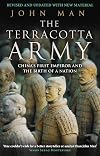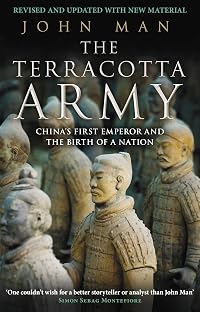
The Terracotta Army: China's First Emperor and the Birth of a Nation
by John Man
On This Page
Description
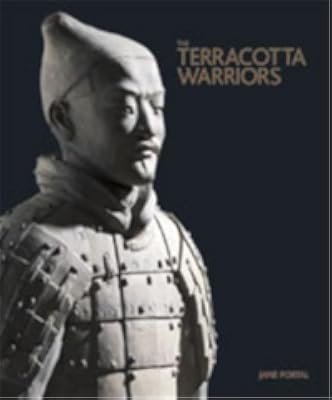
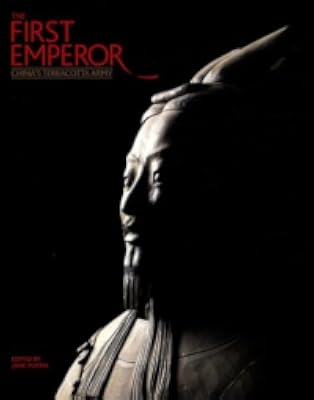
The terra cotta army is one of the greatest, and most famous, archaeological discoveries ever made. Over eight thousand life-size figures of warriors and horses were interred in the mausoleum of the first emperor of China--and each figure is individually carved, perhaps representing real members of the emperor's army. Weaving together history and a first-hand account of his experience in China, John Man tells the fascinating story of how and why these astonishing figures were created in the show more third century BC. In doing so, he gives a vivid account of early China and the formation of its unique culture.--From publisher description. show lessTags
Recommendations










Member Reviews
John Man has written a journalistic commentary on the famous clay statues, from 230-221 BC, located in an imperial burial mound near the ancient Chinese capital of Xian. I was able to read the entire book on the flight back from China to San Francisco. Don't expect a brilliant scholarly tome, just an accessible survey by an intelligent commentator. With that caveat, the book responded to several questions that bothered me after a tour of the Terracotta Warriors site. There is a dramatic story of their discovery in 1974 by humble farmers digging a well, and one of the farmers sits in the gift shop autographing the main book on the subject. He has a sign saying "No Photos." Many millions of tourists, mostly Chinese, visit the site each show more year, they swarm around the viewing platform to see the life-size clay statues which have stunningly realistic-idealized, handsome faces. The inert soldiers were equipped with working weapons presumably to protect the deceased emperor in the afterlife. The darkened room with the reconstructed chariots is even more crowded, with camera flashes and cellphone lights going off in the dark, and loud talking and jostling to see the elegant umbrella-ed chariots from the time of the "First Emperor" Qin. Just what is going on here? Man puts this puzzling tourist experience in context, without any pretense to final answers. My first question was "Why 1974?" when the Cultural Revolution was destroying cultural heritage was this site revered enough to develop as a tourist attraction? I did not want to pester my guide with this political question. Man wondered as well and has some ideas worth thinking about. Mao wrote poems praising Emperor Qin, know for brilliant engineering feats such as early work on the Great Wall, for brilliant military feats, such as uniting the 7 warring states, and for utter brutality, such as burning not just books but scholars as well. What better prototype for Mao's brand of brutal success. While precious ornate Manchu monuments were callously destroyed in the 1970s by Mao's Red Guards, these clay images served both an aesthetic and political purpose and were saved. Today the political emphasis seems to be shifting from Qin himself, who may still be buried there someplace in the half-way excavated mound, to the grandeur of the ordinary rank and file soldiers. Clearly the Chinese tourists were thrilled to see some kind of personal validation in those attractive faces. As far as Man can determine, those statures were intended to stand on guard for eternity but were not intended in 200 BC to be seen by humans at all. Qin's empire rapidly fell apart after his death, and within a few years the roof of the mound collapsed and all but one clay soldier was broken, and the pieces consigned to underground oblivion. There are several theories as to the destruction of the statues: marauding warlord tomb robbers, looking for working weapons, set the roofing poles on fire with their torches. Now the magnificent fragments are being reassembled in public view, the ones on view for decades (some since 1979) have now had a longer reassembled existence than they did in their original state that lasted just a few years. The subtext here has national significance for a re-emergent China. Nearly every tourist experience we had emphasized the importance of building stability and putting the pieces of Chinese history and culture back together, this time permanently. Another aspect of the discovery story that puzzled me was how could this huge burial mound, clearly a human construction, be lost for 2,000 years? It was "discovered" rather like America was discovered by Columbus. Man clarifies this one right away.There were people who knew about it, and several statues had been extracted and placed in museums over the years. The political context had to be right to begin archeological work. Our guide told us there were mercury oceans in the mound. I wondered what that was all about. It seems there is just one ancient account of the burial, written about a century after the fact. Man critically reviews this manuscript by Sima Qian,who was probably writing the history of the Qin emperor and his inept successors to settle indirectly some more recent scores of his own. Sima Qian does not mention the terracotta warriors, but he does describe in detail a recreation of the world with quick silver rivers and oceans. Archeologist have done some probes that found unusually high levels of mercury in the unexcavated portion of the site. There is a general expectation that the future will reveal even greater marvels here. That is another metaphor for modern China being mined from this ancient cultural site. Man's book is well worth reading if you are interested in modern China's uses of the past. Don't expect a polished and finished explanation of the Terra Cotta Army, because the story isn't over yet. show less
Fascinating book - loved learning about the archaeology; finding the treasures, restoring them, the replica industry and tourism, some of the history about the First Emporer's need for a spirit army and the yet to excavated tomb ( possibly with mercury streams and a preserved body.
Enjoyed the bit about a fellow dressing up as a warrior and standing in line with them until the guards noticed and squeezed himt o see if he was real, with TV crew filming!
Enjoyed the bit about a fellow dressing up as a warrior and standing in line with them until the guards noticed and squeezed himt o see if he was real, with TV crew filming!
Great topic, horribly presented as meandering history and travelogue.
Ratings
Members
- Recently Added By
Author Information

60+ Works 4,953 Members
John Man is a historian specializing in the nature of leadership. John's books have been published in over twenty languages around the world and include histories of the Great Wall of China and the Mongolian Empire. He lives in England.
Common Knowledge
- Canonical title
- The Terracotta Army: China's First Emperor and the Birth of a Nation
- Original publication date
- 2007
- Important places
- Xian, China; China
- Important events
- Qin Dynasty (221 BCE | 206 BCE)
- First words
- Approaching the terracotta army from Xian, China's one-time capital, feels like a movement towards something of immense significance: the throne room in a palace, perhaps, or the altar of a great cathedral.
- Last words
- (Click to show. Warning: May contain spoilers.)And what an astonishing outcome for an emperor aiming to live for ever in the spirit wrld by burying himself and an Army in eternal darkness - to gain immortality of a different sort, in the light of day and the eyes of the world.
Classifications
Statistics
- Members
- 246
- Popularity
- 131,620
- Reviews
- 3
- Rating
- (3.48)
- Languages
- Dutch, English, Finnish, Italian
- Media
- Paper, Ebook
- ISBNs
- 11
- ASINs
- 4