On This Page
Description
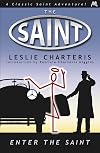
Simon Templar tangles with the notorious "Snake" Ganning, tracks down a stash of stolen jewels, and busts a drug-smuggling racket. He may not always stay on the right side of the law, but with his swashbuckling charm and Robin Hood morality, he is clearly on the side of the angels.Tags
Recommendations





















Member Reviews
Togliamoci dai piedi gli equivoci: qui non parliamo di un giallo classico né di un noir, tanto meno di un hard-boiled. Abbiamo tra le mani qualcosa di raro, in grado di miscelare trame da thriller con elementi intrisi di humor, personaggi tanto svitati quanto onesti e leali, e una buona dose di inventiva.
Entra il Santo è il secondo libro della serie dedicata a Simon Templar, personaggio che nell'immaginario comune ha l'eleganza di Lupin e l'etica di Robin Hood, e dosi d'ingegno e destrezza fisica che a volte verrebbe quasi da accostarlo a Sherlock Holmes. Brillante e irriverente nei modi di fare, lo ritroviamo in tre deliziose avventure, racconti che, nelle edizioni italiane, introducono al personaggio forse più celebre del genio di show more Leslie Charteris.
In questo libro c'è un po' di tutto: trame e intrighi tipiche dei gialli - ma di quelli briosi che non sconfinino nei rompicapi deduttivi o si sdilinquiscano nelle vertigini della psiche - e l'azione tipica dei polizieschi, perché sempre di giustizia sociale si tratta, quando il Santo entra in azione, anche se le forze dell'ordine non sempre sono dello stesso avviso.
Il racconto è perfettamente godibile. Lo stile rievoca i ritmi dei polizieschi, innestandoci però personaggi non privi di umorismo. In una parola: divertente. show less
Entra il Santo è il secondo libro della serie dedicata a Simon Templar, personaggio che nell'immaginario comune ha l'eleganza di Lupin e l'etica di Robin Hood, e dosi d'ingegno e destrezza fisica che a volte verrebbe quasi da accostarlo a Sherlock Holmes. Brillante e irriverente nei modi di fare, lo ritroviamo in tre deliziose avventure, racconti che, nelle edizioni italiane, introducono al personaggio forse più celebre del genio di show more Leslie Charteris.
In questo libro c'è un po' di tutto: trame e intrighi tipiche dei gialli - ma di quelli briosi che non sconfinino nei rompicapi deduttivi o si sdilinquiscano nelle vertigini della psiche - e l'azione tipica dei polizieschi, perché sempre di giustizia sociale si tratta, quando il Santo entra in azione, anche se le forze dell'ordine non sempre sono dello stesso avviso.
Il racconto è perfettamente godibile. Lo stile rievoca i ritmi dei polizieschi, innestandoci però personaggi non privi di umorismo. In una parola: divertente. show less
Not bad, but I'm not in the right mood for the Saint's smart-assery. The first story is just annoying - interesting, as the standard elements of a Saint story begin to show, but annoying. The second is somewhat less annoying, aside from when the Saint is playing drunk - I feel for the "manageress", though I'd have been less offended and more furious. The third story is better - and, amusingly, it's so mostly because the Saint is not the primary POV character - that's Dicky Tremayne. I like him - and I like his struggle with honor. The only thing is - the Saint had four assistants, he said. Roger got married in the second story; in the third, Archie is mentioned as married and Dicky pairs off by the end. There's still Norman, and show more Patricia Holm...but the Saint is getting closer to running solo. As he does in fact do, in most of the later books - but it's interesting how Charteris started out with a team and disposed of them all so quickly. As a story (or set of stories), it's not that good; as an intro to the Saint and the quick development of his style, it's excellent. Sometime when I'm in a Saintly mood, I'll have to read this and the next few in sequence. But not now. show less
I'm not really sure how to characterize this. The Saint is something like a superhero. He can take down any bad guy and get out of any impossible situation. With his ragtag band of associates he works to take down London's most notorious crime syndicates. His methods are not exactly orthodox, and the police (particularly one Inspector Teal) find him aggravating rather than helpful.
I'm of mixed feelings. On the one hand, Charteris can be very funny, and there's some real humor here. On the other hand, this is so over the top that I expected to see comic book style exclamations like BAM! and POW! every time the Saint went into action. It's basically a mix of witty comedy and ridiculous adventure. I'd prefer a bit more puzzle, a bit more show more mystery, a bit less ka-pow. show less
I'm of mixed feelings. On the one hand, Charteris can be very funny, and there's some real humor here. On the other hand, this is so over the top that I expected to see comic book style exclamations like BAM! and POW! every time the Saint went into action. It's basically a mix of witty comedy and ridiculous adventure. I'd prefer a bit more puzzle, a bit more show more mystery, a bit less ka-pow. show less
Known as "the Robin Hood of Modern Crime," Simon Templar, aka The Saint, is a moral criminal who steals from immoral criminals and donates all their ill-gotten wealth to charity, minus a 10% collector's fee for him and his compatriots. He is stylish, witty, smart, and very good at driving fast cars in a dare-devil fashion through the countryside. He calls everyone baby, sweetheart, angel, or love. He is just and moral and righteous, but he also drinks a lot, has a sexy and smart girlfriend, and knows how to crack a joke.
In this book, Charteris gives us three novellas starting The Saint and his gang as they outwit criminals and simultaneously help and avoid the great Inspector Teal of Scotland Yard. I get the feeling that the same thing show more happens in all the other books too, but I can't imagine getting tired of it. I'd never read any Leslie Charteris before, but I'd love to read more.
[full review here: http://spacebeer.blogspot.com/2009/11/enter-saint-by-leslie-charteris-1931.html ] show less
In this book, Charteris gives us three novellas starting The Saint and his gang as they outwit criminals and simultaneously help and avoid the great Inspector Teal of Scotland Yard. I get the feeling that the same thing show more happens in all the other books too, but I can't imagine getting tired of it. I'd never read any Leslie Charteris before, but I'd love to read more.
[full review here: http://spacebeer.blogspot.com/2009/11/enter-saint-by-leslie-charteris-1931.html ] show less
Surprisingly fun. Like Fleming crossed with Wodehouse. Dated, but then so are Fleming and Wodehouse.
Pulp Adventures
A review of the Thomas & Mercer eBook (March 18, 2014) of the Hodder & Stoughton hardcover original (1930) containing stories/novellas revised from those originally published in The Thriller magazine (1929).
Recently, the old show more Roger Moore TV-Series The Saint (1962-69) showed up on one of my streaming channels and I enjoyed revisiting a few episodes right away. I realized that I had never read any of the original Leslie Charteris books and selected an early one to try out.
See title card image at https://upload.wikimedia.org/wikipedia/en/a/a0/The_Saint_titlecard.jpg
Title card of The Saint TV-series. Image sourced from programme screen shot, Fair use, Link
Almost a century later these are very dated, but are still fun examples of pulp fiction adventures with the seemingly infallible anti-hero Simon Templar who used the alias of The Saint in committing his Robin Hood-like heists. It was steal from criminals though, with 90% of the proceeds going to charity and 10% for expenses. His modus operandi does not include the use of guns, but did have various James Bond-like gadgetry like exploding cigarettes, sword canes and throwing knives.
This 3rd Saint book is actually 3 stories/novellas which have been retitled and edited from earlier versions published in The Thriller magazine in 1929. In each of them, the Saint and various associates go up against crime gangs, getting away with the loot and turning the villains over to the authorities. The Saint has a somewhat friendly association with Scotland Yard Detective Inspector Claud Eustace Teal, although the latter does hope to catch him with ill gotten goods at times.
The so-called comic relief was provided by The Saint regularly using the Edwardian-era sexual innuendo of "as the Bishop said to the actress" and/or "as the actress said to the Bishop" several times, which grew a bit tiresome, but was probably considered quite risque at the time. I actually researched that phrase and though it likely came from common public usage, Charteris was apparently one of the first to ever use it in a published work. Read more at Wikipedia.
Soundtrack
See Roger Moore as Simon Templar aka The Saint at https://scontent-yyz1-1.xx.fbcdn.net/v/t39.30808-6/483486597_29783531861245549_8...
The opening of The Saint TV-series always had a scene which ended with Roger Moore being introduced as Simon Templar at which point a halo would appear over his head and the theme music would play. You can watch a clip on YouTube here.
Trivia and Links
See Leslie Charteris photo at https://images.gr-assets.com/authors/1403033553p8/36260.jpg
Leslie Charteris (1907-1993) was born Leslie Charles Bowyer-Yin in Singapore to an English mother and a Chinese father. He legally changed his name to Charteris in 1926, presumably to have a more anglo-saxon identity for his writing career which started quite early. Although he wrote several other novels, he is best remembered for The Saint series and its various adaptations in radio, TV and film. show less
A review of the Thomas & Mercer eBook (March 18, 2014) of the Hodder & Stoughton hardcover original (1930) containing stories/novellas revised from those originally published in The Thriller magazine (1929).
I’m mad enough to believe in romance. And I’m sick and tired of this age—tired of the miserable little mildewed things that people racked their brains about, and wrote books about, and called life. I wanted something more elementary and honest—battle, murder, sudden death, with plenty of good beer and damsels in distress, and a complete callousness about blipping the ungodly over the beezer. It mayn’t be life as we know it, but it ought to be. - Leslie Charteris in a 1935 BBC radio interview.
Recently, the old show more Roger Moore TV-Series The Saint (1962-69) showed up on one of my streaming channels and I enjoyed revisiting a few episodes right away. I realized that I had never read any of the original Leslie Charteris books and selected an early one to try out.
See title card image at https://upload.wikimedia.org/wikipedia/en/a/a0/The_Saint_titlecard.jpg
Title card of The Saint TV-series. Image sourced from programme screen shot, Fair use, Link
Almost a century later these are very dated, but are still fun examples of pulp fiction adventures with the seemingly infallible anti-hero Simon Templar who used the alias of The Saint in committing his Robin Hood-like heists. It was steal from criminals though, with 90% of the proceeds going to charity and 10% for expenses. His modus operandi does not include the use of guns, but did have various James Bond-like gadgetry like exploding cigarettes, sword canes and throwing knives.
This 3rd Saint book is actually 3 stories/novellas which have been retitled and edited from earlier versions published in The Thriller magazine in 1929. In each of them, the Saint and various associates go up against crime gangs, getting away with the loot and turning the villains over to the authorities. The Saint has a somewhat friendly association with Scotland Yard Detective Inspector Claud Eustace Teal, although the latter does hope to catch him with ill gotten goods at times.
The so-called comic relief was provided by The Saint regularly using the Edwardian-era sexual innuendo of "as the Bishop said to the actress" and/or "as the actress said to the Bishop" several times, which grew a bit tiresome, but was probably considered quite risque at the time. I actually researched that phrase and though it likely came from common public usage, Charteris was apparently one of the first to ever use it in a published work. Read more at Wikipedia.
Soundtrack
See Roger Moore as Simon Templar aka The Saint at https://scontent-yyz1-1.xx.fbcdn.net/v/t39.30808-6/483486597_29783531861245549_8...
The opening of The Saint TV-series always had a scene which ended with Roger Moore being introduced as Simon Templar at which point a halo would appear over his head and the theme music would play. You can watch a clip on YouTube here.
Trivia and Links
See Leslie Charteris photo at https://images.gr-assets.com/authors/1403033553p8/36260.jpg
Leslie Charteris (1907-1993) was born Leslie Charles Bowyer-Yin in Singapore to an English mother and a Chinese father. He legally changed his name to Charteris in 1926, presumably to have a more anglo-saxon identity for his writing career which started quite early. Although he wrote several other novels, he is best remembered for The Saint series and its various adaptations in radio, TV and film. show less
These are 3 novella about the Saint: The Man Who Was Clever, The Policeman With Wings and The Lawless Lady.
I've come to realize that while I like the TV show with Roger Moore and I like the movie with George Saunders (both of whom are very debonaire) I don't particularly like Charteris' writing. In these stores, The Saint is anything but debonaire...rich maybe but not a 'gentleman' as in the TV and movie versions. Oh well.
It is still classic pulp mysteries.
I've come to realize that while I like the TV show with Roger Moore and I like the movie with George Saunders (both of whom are very debonaire) I don't particularly like Charteris' writing. In these stores, The Saint is anything but debonaire...rich maybe but not a 'gentleman' as in the TV and movie versions. Oh well.
It is still classic pulp mysteries.
Members
- Recently Added By
Lists

Books Read in 2021
5,361 works; 114 members
Author Information

401+ Works 9,846 Members
Some Editions
Awards and Honors
Notable Lists
Series


Belongs to Publisher Series
Doubleday Crime Club (1931.08)
Work Relationships
Common Knowledge
- Canonical title
- Enter The Saint
- Original title
- Enter The Saint
- Original publication date
- 1930
- People/Characters
- Simon Templar; Patricia Holm; Roger Conway; Dicky Tremayne; Audrey Perowne; Claud Eustace Teal (Chief Inspector)
- Important places
- London, England, UK
- Dedication
- To P. M. Haydon because he liked the Saint
- First words
- Mr 'Snake' Ganning was neither a great criminal nor a pleasant character, but he is interesting because he was the first victim of the organisation led by the man known as the Saint, which was destined in the course of a few ... (show all)months to spread terror through the underworld of London - that ruthless association of reckless young men, brilliantly led, who worked on the side of the Law and who were yet outside the Law.
- Last words
- (Click to show. Warning: May contain spoilers.)"A little Dicky bird," he answered musically, "a little Dicky bird told me so this morning."
- Original language
- English
- Disambiguation notice
- Television tie-in: "AND NOW ... The SAINT is on TV ... The only first-run one-hour adventure series with Roger Moore who formerly starred in "Maverick" now portraying "The SAINT."
Classifications
Statistics
- Members
- 349
- Popularity
- 90,740
- Reviews
- 12
- Rating
- (3.48)
- Languages
- English, French, Spanish
- Media
- Paper, Audiobook, Ebook
- ISBNs
- 15
- UPCs
- 1
- ASINs
- 32