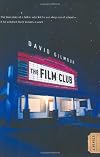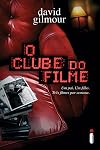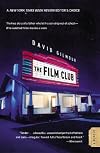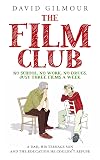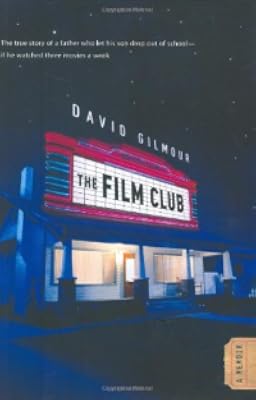
The Film Club: A Memoir
by David Gilmour
On This Page
Description
Documents the author's efforts to impart key life lessons to his high-school-dropout son by showing him three movies every week, in an account that describes how such films as True Romance and Rosemary's Baby enabled father-and-son dialogues about a range of life issues, from relationships and work to drugs and culture.Tags
Recommendations












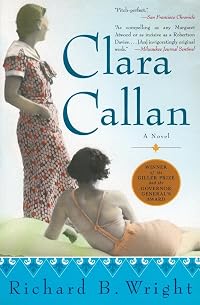
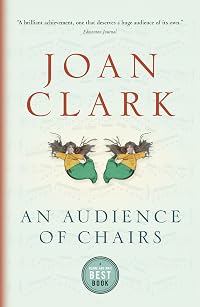
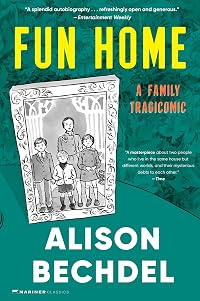
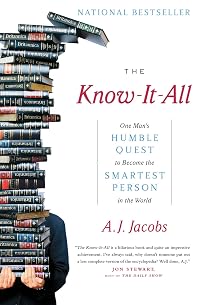


Member Recommendations
Cecilturtle Parenting theory - how parents should dedicate as much quality time to their children, whatever their age, to keep them away from peer pressure
Member Reviews
The book deserves a lot of the criticism I'm seeing on Goodreads. People who like it seem less compelled to say why than those who don't.
I'll take a minute to tell you why I like it. It's an examination of a desperate father having a second (or in this author's case, maybe a 4th or 5th) mid-life crisis. He's overly involved in his son's post-adolescent coming of age, and clinging to it in an unhealthy way - in fact, he's likely making it much harder on his son... all while seemingly, genuinely, seeking to be a good dad. He comes across as a sort of youth and masculinity vampire. It's desperate and a thing to behold. This is a man with some serious difficulty with women and feeling comfortable in his own skin... but you know what? show more That's a LOT of men - and he's at least willing to examine it and confess to the trouble (to some degree - a lot of his failings are only under examination when you read between the lines). It's a struggle that kills guys all the time - we should look at it more closely, or we'll continue seeing guys kill themselves mid-life, like salmon who have finished spawning.
While David congratulates himself for leaving certain interaction to Jesse and his peers... he does so while fostering the most iron clad dependence I've ever seen described between a parent and child. Dependence that the son only succeeds in escaping from when he abandons the entire experiment the book is describing (without abandoning his gains - namely, specialist knowledge to be an informed critic, a job his father is grooming him for in a transparent attempt to hijack his son's interests and imprint himself on the boy as hard as possible in the last remaining years of the son's reliance on his parents).
But I like the book.
You don't have to like characters to like a book. You can learn a lot from someone who's living very differently than yourself, and who has glaring flaws (this author has a troubling view of women, beyond understandably taking his son's side when things go wrong with his relationships).
When you confess to the fact that your boy turns to you, fearful that his feelings emasculate him - and you dispel that fear while reinforcing it with everything else you do... it paints a picture of the condition of masculinity in our culture, and the microcosm of the family. A framework that is fraught with hypocrisy and ugliness. A propping up of male ego at the expense of women.
Career, education, and aspiration are all described pejoratively against women, while these attributes are being sought for his son. Everything he wants for his son, he rejects in his son's female peers. It's stark. That doesn't make the examination invalid.
I hope David and Jesse can escape the prisons they've inherited. They're said to almost kill the kid repeatedly through the book... and yet are never recognized (by the characters) as hazardous constructions of their own making. An honest look at a tragic state of being.
edit to add:
I'm downgrading the book to 3 stars (from 4). Much of the work's value as layered revelation about the faults of it's author are too subtle to accurately characterize him - and I don't want to imply that the book's virtue is in the face-value content of the book itself. show less
I'll take a minute to tell you why I like it. It's an examination of a desperate father having a second (or in this author's case, maybe a 4th or 5th) mid-life crisis. He's overly involved in his son's post-adolescent coming of age, and clinging to it in an unhealthy way - in fact, he's likely making it much harder on his son... all while seemingly, genuinely, seeking to be a good dad. He comes across as a sort of youth and masculinity vampire. It's desperate and a thing to behold. This is a man with some serious difficulty with women and feeling comfortable in his own skin... but you know what? show more That's a LOT of men - and he's at least willing to examine it and confess to the trouble (to some degree - a lot of his failings are only under examination when you read between the lines). It's a struggle that kills guys all the time - we should look at it more closely, or we'll continue seeing guys kill themselves mid-life, like salmon who have finished spawning.
While David congratulates himself for leaving certain interaction to Jesse and his peers... he does so while fostering the most iron clad dependence I've ever seen described between a parent and child. Dependence that the son only succeeds in escaping from when he abandons the entire experiment the book is describing (without abandoning his gains - namely, specialist knowledge to be an informed critic, a job his father is grooming him for in a transparent attempt to hijack his son's interests and imprint himself on the boy as hard as possible in the last remaining years of the son's reliance on his parents).
But I like the book.
You don't have to like characters to like a book. You can learn a lot from someone who's living very differently than yourself, and who has glaring flaws (this author has a troubling view of women, beyond understandably taking his son's side when things go wrong with his relationships).
When you confess to the fact that your boy turns to you, fearful that his feelings emasculate him - and you dispel that fear while reinforcing it with everything else you do... it paints a picture of the condition of masculinity in our culture, and the microcosm of the family. A framework that is fraught with hypocrisy and ugliness. A propping up of male ego at the expense of women.
Career, education, and aspiration are all described pejoratively against women, while these attributes are being sought for his son. Everything he wants for his son, he rejects in his son's female peers. It's stark. That doesn't make the examination invalid.
I hope David and Jesse can escape the prisons they've inherited. They're said to almost kill the kid repeatedly through the book... and yet are never recognized (by the characters) as hazardous constructions of their own making. An honest look at a tragic state of being.
edit to add:
I'm downgrading the book to 3 stars (from 4). Much of the work's value as layered revelation about the faults of it's author are too subtle to accurately characterize him - and I don't want to imply that the book's virtue is in the face-value content of the book itself. show less
The beginning was interesting, the ending poignant. The middle seriously dragged. I get that the book's about a father staying close to his son during his launch from the "nest", but do we really need every single detail of the son's teenage love affairs? Also, there was one tidbit that got under my skin. Father and Son denigrate one of the girlfriends for being so terribly career-oriented, yet the author mentions several times that his wife' 9-to-5 job kept the bills paid while his film-reviewer career stalled. Did Gilmore not see the irony, or did he inadvertently reveal an unflattering aspect of his own character?
I found David Gilmour's story of his son's unconventional education sickly-sweet, almost poignant, and somewhat pointless. I don't feel Gilmour ever gets to the "meat" of the story, but just touches the surface here and there. It almost felt as if Gilmour wanted to write a book extrapolating his favorite films, but didn't want it to be gratuitous, so made it into a "schooling affair" with his son. This book could have been much more.
A near-perfect exhibition of the impotence of the Boomer ideal of tolerant love—especially when cast against the raunchy pop culture of the modern youth. The memoir starts with a 16th century quote identifying the mysterious challenge of educating youth. It was an encouraging start. Then it became apparent that the author took the quote as evidence of the inability for a father to raise his son well, instead of a as a challenge to courageously lead his son against ancient forces of youthful apathy, libido, and purposelessness.
On behalf of film lovers, I commend his premise to teach through film. Though when thinking of parents who may uncritically admire Gilmour, I shutter. On behalf of those who take education seriously, I'm show more offended. Home schooling is hard, noble work. I applaud Gilmour for his willingness to look outside the box of contemporary education which is killing our youth, but rather than fight for his son, he sits back and hopes that conversation without leadership or inspiration will stop the malaise that is slowly draining his teen's soul.
Sadly, there is little to admire contained in its pages. show less
On behalf of film lovers, I commend his premise to teach through film. Though when thinking of parents who may uncritically admire Gilmour, I shutter. On behalf of those who take education seriously, I'm show more offended. Home schooling is hard, noble work. I applaud Gilmour for his willingness to look outside the box of contemporary education which is killing our youth, but rather than fight for his son, he sits back and hopes that conversation without leadership or inspiration will stop the malaise that is slowly draining his teen's soul.
Sadly, there is little to admire contained in its pages. show less
This book is interesting in that there are at least two different levels of things going on here. On one level, there are funny, insightful, and intelligent comments on a multitude of films - why they are significant, and even scenes to watch for. On another level, there is a dad seeking to figure out how to maintain a relationship with his son who has given up on school - not only keep a relationship, but somehow help steer this child in a direction that doesn't doom him forever to "driving a taxicab" (the author's words, not mine). On yet another level, this is the story of a boy becoming a man, seen from the viewpoint of an older, more experienced man. I like books that offer so much! Things that were mildly offensive - a liberal use show more of profanity, and casual reference to the son's drinking, sex, and very occasional drug use. I admire the author's son for letting his father put so much of himself out there for the readers - very brave. And as a parent, I found the care with which the author negotiated his relationship with his son very touching. show less
A memoir of Canadian novelist (NOT Pink Floyd guitarist and vocalist) David Gilmour, who lets his 15yo son Jesse drop out of school if he agrees to watch three movies a week together. So begins a wild adventure in parenting. Gilmour's unconventional, anti-film-snob approach to movies that probably helped their film club to work for the next few years. More than a movie memoir, it’s one of parenting, as Gilmour coaxes Jesse through some typically disastrous adolescent romances. Gilmour won’t be nominated for parent of the year anytime, but he’s got the critical basics down: empathy, honesty, and the ability to apologize, all of which he relates with humor and self-effacement in this winning book.
Loved it, and had no qualms about the "best father in the world" scorn heaped upon it by others. I didn't feel it was about the "destination" (the films), but rather the "journey" of life happening around them. And if you're not reading ANY autobiography with "unreliable narrator" glasses on, well, you're doing it wrong.
Members
- Recently Added By
Author Information

11+ Works 1,224 Members
Some Editions
Awards and Honors
Series
Belongs to Publisher Series
Fischer Taschenbuch (18224)
Work Relationships
Common Knowledge
- Original title
- The Film Club
- Alternate titles
- The Film Club: A True Story of a Father and a Son
- Original publication date
- 2007-09-13
- Epigraph
- I know nothing about education except this: that the greatest and most important difficulty known to human beings seems to lie in an area which deals with how to bring up children and how to educate them. - Michel de Montaign... (show all)e (1533-92)
- Dedication
- To Patrick Crean
- First words
- I was stopped at a red light the other day when I saw my son coming out of a movie theatre.
- Quotations
- . . . the second time you see something is really the first time. You have to know how it ends before you can appreciate how beautifully it's put together from the beginning.
- Last words
- (Click to show. Warning: May contain spoilers.)I'm not sure why I was weeping - at him, I suppose, at the fact of him, at the unrecapturable nature of time; and all the while those words from 'True Romance' repeated themselves over and over in my head, "You're so cool, you're so cool, you're so cool!"
- Blurbers
- Russo, Richard; Young, Toby; Wilsey, Sean
Classifications
Statistics
- Members
- 882
- Popularity
- 30,744
- Reviews
- 55
- Rating
- (3.26)
- Languages
- 10 — Dutch, English, French, German, Greek, Hungarian, Italian, Portuguese, Spanish, Swedish
- Media
- Paper, Ebook
- ISBNs
- 38
- ASINs
- 10