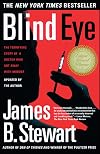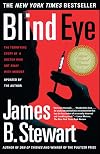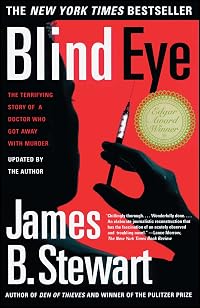
Blind Eye: The Terrifying Story of a Doctor Who Got Away With Murder
by James B. Stewart
On This Page
Description
Pulitzer Prize-winning journalist James B. Stewart cracked the New York Times best-seller list with this riveting true crime book. Blind Eye is the shocking story of Michael Swango, a physician who may be the most prolific serial killer in American history. From the moment he began medical school, people thought Swango was peculiar. He seemed woefully incompetent in classwork, showed no empathy for patients, and was obsessed with violent death. When he interned at Ohio State, patients show more started dying mysteriously. Then, Swango was jailed for poisoning several co-workers. Incredibly, after his release from prison, he secured hospital positions in South Dakota and New York--and the body count continued to rise. Although suspected by the FBI of possibly 60 murders, Swango has never been convicted of anything worse than fraud. Stewart's remarkable reporting is a horrifying, yet fascinating and incredibly important look at flaws in the medical profession that possibly allowed dozens of murders to go unpunished. Richard Poe's narration captures the urgency of this book's alarming message. show lessTags
Recommendations











Member Reviews
In this alarming and well written true story, James B. Stewart tells the tale of a psychopathic homicidal doctor and the bafflingly lax professional medical establishment that failed to properly monitor and halt his transgressions.
Using a clear and engaging narrative style, Stewart presents a frightening portrait of Dr. Michael Swango’s trail of deceit and murder from Illinois to Ohio to Virginia, through South Dakota and New York, and ultimately to Africa. In the process, Stewart reveals the inherent—and ultimately dangerous—arrogance that permeates the medical profession. Throughout Swango’s career of poisoning and killing co-workers, girlfriends, and patients, concerns were raised about his behavior. Since many of these show more concerns came from female nurses and patients, the male-dominated bureaucracy of the American medical established all too readily dismissed—or even worse, excused—the allegations against Swango, a white Midwestern male. While Stewart himself merely implies the impact of institutionalized sexism (and, in the case of the murders in Zimbabwe, racism), it’s impossible to read this book without recognizing its fatal consequences.
Both devoted and casual fans of true crime will enjoy (if that’s even the right word) this gripping book. show less
Using a clear and engaging narrative style, Stewart presents a frightening portrait of Dr. Michael Swango’s trail of deceit and murder from Illinois to Ohio to Virginia, through South Dakota and New York, and ultimately to Africa. In the process, Stewart reveals the inherent—and ultimately dangerous—arrogance that permeates the medical profession. Throughout Swango’s career of poisoning and killing co-workers, girlfriends, and patients, concerns were raised about his behavior. Since many of these show more concerns came from female nurses and patients, the male-dominated bureaucracy of the American medical established all too readily dismissed—or even worse, excused—the allegations against Swango, a white Midwestern male. While Stewart himself merely implies the impact of institutionalized sexism (and, in the case of the murders in Zimbabwe, racism), it’s impossible to read this book without recognizing its fatal consequences.
Both devoted and casual fans of true crime will enjoy (if that’s even the right word) this gripping book. show less
As one might expect, the medical establishment has not been happy with this book. A quick look at Amazon.com reveals more than 70 customer reviews. Those with apparent ties to medicine look askance; those without medical affiliation loved the book although it terrified most readers, including me. Forget traditional vampire and slasher books; this is the real horror Story.
Michael Swango is a charming, debonair, handsome, and intelligent young man. He’s also a psychopath and a very convincing liar. He has a sterling academic record, scoring in the top of his class in high school, and at Millikin University, finally graduating summa cum laude from Quincy College. He entered SIU’s relatively new medical school in 1979, and was rather show more odd even then. His classmates remember him as bizarre, indulging in militaristic and antisocial activities, and he kept mostly to himself. He had been a Marine for a while -- his father had served in Vietnam, but even after his two tours of duty remained distant from his children -- and would often drop to the floor and do hundreds of pushups. No one could understand when he found time to study, but he claimed he never slept, and he seemed to have an obsession with death and traumatic accidents. He commuted miles to Springfield, Illinois where he worked as an ambulance attendant. He even gave his name to a peculiar method of cramming for exams. On Saturdays at SIU, exams were given in assorted modules, and Swango would run out of the room after each one and quickly reread the material the next test was to cover. Soon his classmates referred to this as “Swangoing,” a practice they viewed as close to cheating; in fact when it became more generally popular, the administration finally prohibited it. His behavior during his final rotation concerned many fellow students and he came within one vote of expulsion, but he managed to flummox the faculty and graduated late, moving on to a residency in neurosurgery. There, one of his student colleagues noticed that an unusual number of patients went “code,” or died, following seemingly normal or routine visits for histories and physicals by Swango. It even became something of a joke among the students that if you wanted to get rid of someone, “send them to Swango.” He was unable to graduate with his class because he butchered his obstetrics rotation so badly, but graduate he finally did. He was matched to a residency at Ohio State University, where a highly unusual string of deaths took place.
The nurses -- the relationship between nurses and doctors at OSU was one of master and slave and the nurses were rarely listened to -- were the first to notice weird things, and finally a woman who saw Swango administering an injection to her, whereupon she became almost instantly paralyzed, managed to rattle her bed to get the attention of others and she survived. The investigation that followed is detailed by Stewart, and it’s what I found most disturbing. I can understand how medical schools might not investigate the history of the residents or doctors thoroughly. After all, one tends to be rather trusting, and it’s often difficult not to want to believe what people say, but OSU repeatedly refused to believe the patients’ and nurses’ reports of disturbing events. When the OSU police force and state licensing board later tried to investigate, they were repeatedly stonewalled by a very tight-knit old-boy network. Swango returned to Illinois following his suspension from the OSU program (because of the stonewalling, police were unable to collect evidence related to the deaths) and was hired as an emergency medical technician. He loved working extra hours and regaling everyone with the gory details of traffic accidents and other tragedies. His co-workers noticed that whenever Swango treated any of them to food, he would never eat any, and they became violently ill. They reported their suspicions of attempted poisoning to the police, and Swango was convicted of non fatally attempting to poison his colleagues. A search of his lodgings revealed recipes for poisons, stores of arsenic, and hoards of paralytic agents that were often difficult to trace. Swango served a term in prison, but, after his release, he managed to be matched to a medical residency program in South Dakota. Suspicious deaths again began to occur. This was to be repeated at several locations, Swango always managing to cajole his way into a new position through creative lying and disingenuousness. He eventually wound up in Africa at several missionary hospitals where he was more quickly found out due to a closer working relationship between police and hospital officials.
The FBI had meanwhile begun an investigation, motivated especially by the death of Swango’s wife before he left for Africa, and they arrested him on his return at O’Hare, managing only to charge him with falsification of records on his medical applications. He was due to be released from prison July 15, 2000, and according to an update in a review of Stewart’s book in the New England Journal of Medicine, he may be charged with murder. Stewart estimates that Swango may have been responsible for killing some sixty people. Dr. Richard Ratzan, NEJM’s reviewer, takes a more responsible position in his reaction to the book than most reviewers with medical ties, who are extremely defensive. Dr. Ratzan notes that, in his 13 years on the Connecticut medical examining board, he could not “think of one case brought to us by another physician. It should be the standard of practice to try to segregate any colleague who we think may be likely to hurt an unsuspecting but trusting person who comes to us sick and asking for help.” Unfortunately, as this book shows, failure to responsibly evaluate colleagues can have tragic results. show less
Michael Swango is a charming, debonair, handsome, and intelligent young man. He’s also a psychopath and a very convincing liar. He has a sterling academic record, scoring in the top of his class in high school, and at Millikin University, finally graduating summa cum laude from Quincy College. He entered SIU’s relatively new medical school in 1979, and was rather show more odd even then. His classmates remember him as bizarre, indulging in militaristic and antisocial activities, and he kept mostly to himself. He had been a Marine for a while -- his father had served in Vietnam, but even after his two tours of duty remained distant from his children -- and would often drop to the floor and do hundreds of pushups. No one could understand when he found time to study, but he claimed he never slept, and he seemed to have an obsession with death and traumatic accidents. He commuted miles to Springfield, Illinois where he worked as an ambulance attendant. He even gave his name to a peculiar method of cramming for exams. On Saturdays at SIU, exams were given in assorted modules, and Swango would run out of the room after each one and quickly reread the material the next test was to cover. Soon his classmates referred to this as “Swangoing,” a practice they viewed as close to cheating; in fact when it became more generally popular, the administration finally prohibited it. His behavior during his final rotation concerned many fellow students and he came within one vote of expulsion, but he managed to flummox the faculty and graduated late, moving on to a residency in neurosurgery. There, one of his student colleagues noticed that an unusual number of patients went “code,” or died, following seemingly normal or routine visits for histories and physicals by Swango. It even became something of a joke among the students that if you wanted to get rid of someone, “send them to Swango.” He was unable to graduate with his class because he butchered his obstetrics rotation so badly, but graduate he finally did. He was matched to a residency at Ohio State University, where a highly unusual string of deaths took place.
The nurses -- the relationship between nurses and doctors at OSU was one of master and slave and the nurses were rarely listened to -- were the first to notice weird things, and finally a woman who saw Swango administering an injection to her, whereupon she became almost instantly paralyzed, managed to rattle her bed to get the attention of others and she survived. The investigation that followed is detailed by Stewart, and it’s what I found most disturbing. I can understand how medical schools might not investigate the history of the residents or doctors thoroughly. After all, one tends to be rather trusting, and it’s often difficult not to want to believe what people say, but OSU repeatedly refused to believe the patients’ and nurses’ reports of disturbing events. When the OSU police force and state licensing board later tried to investigate, they were repeatedly stonewalled by a very tight-knit old-boy network. Swango returned to Illinois following his suspension from the OSU program (because of the stonewalling, police were unable to collect evidence related to the deaths) and was hired as an emergency medical technician. He loved working extra hours and regaling everyone with the gory details of traffic accidents and other tragedies. His co-workers noticed that whenever Swango treated any of them to food, he would never eat any, and they became violently ill. They reported their suspicions of attempted poisoning to the police, and Swango was convicted of non fatally attempting to poison his colleagues. A search of his lodgings revealed recipes for poisons, stores of arsenic, and hoards of paralytic agents that were often difficult to trace. Swango served a term in prison, but, after his release, he managed to be matched to a medical residency program in South Dakota. Suspicious deaths again began to occur. This was to be repeated at several locations, Swango always managing to cajole his way into a new position through creative lying and disingenuousness. He eventually wound up in Africa at several missionary hospitals where he was more quickly found out due to a closer working relationship between police and hospital officials.
The FBI had meanwhile begun an investigation, motivated especially by the death of Swango’s wife before he left for Africa, and they arrested him on his return at O’Hare, managing only to charge him with falsification of records on his medical applications. He was due to be released from prison July 15, 2000, and according to an update in a review of Stewart’s book in the New England Journal of Medicine, he may be charged with murder. Stewart estimates that Swango may have been responsible for killing some sixty people. Dr. Richard Ratzan, NEJM’s reviewer, takes a more responsible position in his reaction to the book than most reviewers with medical ties, who are extremely defensive. Dr. Ratzan notes that, in his 13 years on the Connecticut medical examining board, he could not “think of one case brought to us by another physician. It should be the standard of practice to try to segregate any colleague who we think may be likely to hurt an unsuspecting but trusting person who comes to us sick and asking for help.” Unfortunately, as this book shows, failure to responsibly evaluate colleagues can have tragic results. show less
In 1985, a young, handsome doctor named Michael Swango was convicted of poisoning five co-workers in Illinois. He was sentenced to five years, but was paroled in 1987, able to continue killing within the medical establishment for a further ten years until Michael was caught lying on a job application in Long Island. I really enjoyed this book although the crimes and Michael's ability to get away with murder infuriated me enough to want to throw the book across the room in anger. I give it an A+!
The book was interesting to me at the time. I read this several years ago. The man was smart but obviously used his smarts for ill.
I am intrigued in what makes this type person function. They think they are normal yet take steps to try and hide what they have done. In some capacity, they know they are wrong but don't stop. Instead they either deny their actions or go on the run.
Is it hormonal, chromosonal, or something more? How can we investigate it & stop their negative activity?
If we could learn, it would be better to be proactive rather than reactive.
I am intrigued in what makes this type person function. They think they are normal yet take steps to try and hide what they have done. In some capacity, they know they are wrong but don't stop. Instead they either deny their actions or go on the run.
Is it hormonal, chromosonal, or something more? How can we investigate it & stop their negative activity?
If we could learn, it would be better to be proactive rather than reactive.
3333. Blind Eye: How the Medical Establishment Let a Doctor Get Away with Murder, by James B. Stewart (read Aug. 5, 2000) This is the story of Michael Swango, M.D.,and is scary and fairly well-written. I found it quite interesting.
Frightening story of a doctor serial killer who poisoned girl friends, colleagues and patients at 5 different hospital and was essentially protected by the medical profession.
Ratings
Members
- Recently Added By
Lists

Edgar Award
418 works; 15 members
Author Information

Awards and Honors
Awards
Distinctions
Common Knowledge
- Canonical title
- Blind Eye: The Terrifying Story of a Doctor Who Got Away With Murder
- Original title
- Blind Eye
- Original publication date
- 1999
Classifications
- Genres
- Nonfiction, General Nonfiction, Biography & Memoir
- DDC/MDS
- 364.15230973 — Society, government, & culture Social problems and social services Crime Criminal offenses Offenses against the person Homicide Murder History, geographic treatment, biography North America United States
- LCC
- HV6248 .S76 .S78 — Social sciences Social pathology. Social and public welfare. Criminology Social pathology. Social and public welfare. Criminology Criminal classes
- BISAC
Statistics
- Members
- 373
- Popularity
- 83,879
- Reviews
- 6
- Rating
- (3.80)
- Languages
- English, Indonesian
- Media
- Paper, Audiobook, Ebook
- ISBNs
- 13
- ASINs
- 6