On This Page
Description
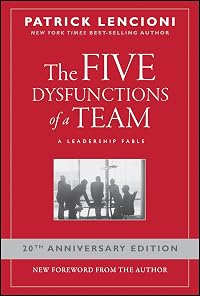
Business. Education. Nonfiction. HTML:After her first two weeks observing the problems at DecisionTech, Kathryn Petersen, its new CEO, had more than a few moments when she wondered if she should have taken the job. But Kathryn knew there was little chance she would have turned it down. After all, retirement had made her antsy, and nothing excited her more than a challenge. what she could not have known when she accepted the job, however, was just how dysfunctional her team was, and how team show more members could challenge her in ways that no one ever had before.In The Five Dysfunctions of a Team, Patrick Lencioni once again offers a leadership fable that is as enthralling and instructive as his first two best-selling books, The Five Temptations of a CEO and The Four Obsessions of an Extraordinary Executive. This time, he turns his keen intellect and storytelling power to the fascinating, complex world of teams. show less
Tags
Recommendations








Member Reviews
I thought the fictional company was a genius move, a way of incorporating business theory and applying it to a situation that we can easily understand, and be invested in. I've known nearly every type of personality that Lencioni constructs and I couldn't believe how interested in the story I was. It forced me to look back at all the successful teams I've been apart of, and all the terrible teams I've been a part of and it's remarkable how true the book's lessons are and how they apply to all types of organizations in real life. Terrific!
Rated: A
Lencioni is a master. Love his parable style. Get's to real world relevance. Great insight into what causes dysfunctional behavior within a group trying to be a team. Absence of trust leads to destructive conflict is foundational. Helpful ideas to change team behaviors. Highly recommended.
Lencioni is a master. Love his parable style. Get's to real world relevance. Great insight into what causes dysfunctional behavior within a group trying to be a team. Absence of trust leads to destructive conflict is foundational. Helpful ideas to change team behaviors. Highly recommended.
A look at the five dysfunctions that can derail teamwork.
We were given this book at my work place to read as a team building exercise and I was very surprised at what a quick, easy and pleasant read it turned out to be, I read it in less than two days.
The first part is written like a story and deals with a promising company that is not living up to its potential and a new CEO’s efforts to find out what is holding the company back and how to fix it. The second section, a very short section, breaks down the five basic dysfunctions that can prevent teamwork and gave examples and exercises to help work on them.
We’ve only had one meeting so far where we discussed and started to use it’s techniques but it’s already shown some show more promising benefits and I am looking forward to seeing if we can continue to build on that.
I would recommend this book for anyone looking to work on teamwork for their business but really, these techniques could easily be applied in the personal sector as well. show less
We were given this book at my work place to read as a team building exercise and I was very surprised at what a quick, easy and pleasant read it turned out to be, I read it in less than two days.
The first part is written like a story and deals with a promising company that is not living up to its potential and a new CEO’s efforts to find out what is holding the company back and how to fix it. The second section, a very short section, breaks down the five basic dysfunctions that can prevent teamwork and gave examples and exercises to help work on them.
We’ve only had one meeting so far where we discussed and started to use it’s techniques but it’s already shown some show more promising benefits and I am looking forward to seeing if we can continue to build on that.
I would recommend this book for anyone looking to work on teamwork for their business but really, these techniques could easily be applied in the personal sector as well. show less
3.5 stars.
This is a remarkably well written book (with regards to structure, not necessarily language). Many management/business books are written so dry, with anecdotal examples or pages of statistics and studies... this book starts with a fictional account of someone creating a team and working on the 5 eponymous dysfunctions. The story is painfully simplistic, but there is no way to include every facet of a problem (or more than a handful of problems).
After the instructive "fable,", the book then lists out each dysfunction, what happens or what a team looks like when a team is functional or dysfunctional with regards to that specific trait, what a team member can do to help, and how the team leader can help.
It's nice that the book show more discusses, in detail, each of the five problem areas and how people in different functions can work on it.
Some of the book is common sense, but then again, common sense isn't as common as it should be, and people could all use a primer on things they may not be seeing.
Unfortunately, I think the book is not suited to every type of team. The team best suited to this type of system/suggestions in the book would have to be middle-management and above (therefore better for an upper management that is managing people with a little more drive and maybe more intellectual). I say this because it feels like it needs the team members to be more intellectually inclined than a middle-manager's (possibly) entry level minions, and it also assumes that the manager has a pretty substantial amount of power (with regards to promotion/demotion/firing) that you don't necessarily see a lot of.
With all of that in mind, I can see why it is that the HR trainer I have taken classes with recommends this book, and this book is not a total waste of time (which is a better standing than I can give most management books I've read). show less
This is a remarkably well written book (with regards to structure, not necessarily language). Many management/business books are written so dry, with anecdotal examples or pages of statistics and studies... this book starts with a fictional account of someone creating a team and working on the 5 eponymous dysfunctions. The story is painfully simplistic, but there is no way to include every facet of a problem (or more than a handful of problems).
After the instructive "fable,", the book then lists out each dysfunction, what happens or what a team looks like when a team is functional or dysfunctional with regards to that specific trait, what a team member can do to help, and how the team leader can help.
It's nice that the book show more discusses, in detail, each of the five problem areas and how people in different functions can work on it.
Some of the book is common sense, but then again, common sense isn't as common as it should be, and people could all use a primer on things they may not be seeing.
Unfortunately, I think the book is not suited to every type of team. The team best suited to this type of system/suggestions in the book would have to be middle-management and above (therefore better for an upper management that is managing people with a little more drive and maybe more intellectual). I say this because it feels like it needs the team members to be more intellectually inclined than a middle-manager's (possibly) entry level minions, and it also assumes that the manager has a pretty substantial amount of power (with regards to promotion/demotion/firing) that you don't necessarily see a lot of.
With all of that in mind, I can see why it is that the HR trainer I have taken classes with recommends this book, and this book is not a total waste of time (which is a better standing than I can give most management books I've read). show less
Published in 2002, this book is still totally relevant in 2019. Every leader in every organization I’ve ever worked for needs to read this book. Heck, every person in every organization I’ve ever worked for needs to read this book whether you are a leader or not. I promise you will see yourself in the examples represented.
What I liked most about this book was that 90% of the book was a story. You were reading what to do or what not to do in the form of a story. You were seeing in the story the model of what to do. So, it read like a fiction novel. The leader of the company in the story was a woman. For me, that made it easier to “see it in action” per se. The last 10% of the book was actually more of the typical leadership show more business book.
Some reviewers said the characters in the book were cartoonish and full of childish melodrama. But, to me, it was accurate as I work with people like this daily and always have no matter the company. An easy read as I read it in a few hours. show less
What I liked most about this book was that 90% of the book was a story. You were reading what to do or what not to do in the form of a story. You were seeing in the story the model of what to do. So, it read like a fiction novel. The leader of the company in the story was a woman. For me, that made it easier to “see it in action” per se. The last 10% of the book was actually more of the typical leadership show more business book.
Some reviewers said the characters in the book were cartoonish and full of childish melodrama. But, to me, it was accurate as I work with people like this daily and always have no matter the company. An easy read as I read it in a few hours. show less
This was an excellent leadership book. Lencioni discusses the factors needed for team success. The principles seem like common sense but are easily neglected in the day to day activity of business. The principles are introduced as a fictional story of a dysfunctional team.
Often, the little anecdotes that are sprinkled into business books are annoying, so I want to look more closely at the difference here. The stories in a standard book are anecdata, hand selected scenes which illustrate a particular point. This can be done well, but often it's a shallow look at how if you apply this principle, poof! everything works as advertised. When used well, stories can illustrate a point, but they have to feel authentic. Authenticity doesn't show more necessarily mean true, but it can't be a perfectly packaged example of a miraculous change. The fable that makes up the bulk of this book is full of setbacks and there are no magical turnarounds.
The strength of this book is the memorable presentation which helps the ideas resonate. It's worth noting that the model itself seems to be based on just the author's experience. In my mental ranking of [(model data) > just model > just data >> anecdote >> opinion] that still makes it pretty good, but it's not as well founded as, for example, the model of successful Google teams. Probably, if there wasn't a fairly clear mapping of Lencioni's model onto elements of that model, I would have been somewhat more critical of the lack of foundation.
It's worth noting the model itself, although I'm sure that summaries can be found all over the internet. The model expresses what teams need for success as a series of dysfunctions and symptoms. This helps counter the tendency to see the positive and say, "We get along fine. We get things done. Nothing needs to change." Lencioni uses a pyramid model; the lower level dysfunctions make the higher more likely and need to be fixed first.
The fundamental dysfunction is an absence of trust. The main symptom of this is team members projecting attitudes of invulnerability. They aren't willing to do or say things which may let others perceive them as less talented or capable than others.
Without trust, a team will experience a fear of conflict, which often shows up as an artificial sense of harmony. It's clear this harmony is artificial when there is little disagreement in the team even though people disagree in the privacy of their thoughts or with the people they do trust. This dysfunction is a natural consequence of a lack of trust, because disagreement requires making yourself open to being wrong, a type of invulnerability.
Without active discussion of disagreement, members of a team won't commit to decisions; the decision will always be someone else's responsibility. This is signaled by a sense of ambiguity where people wonder what they've really decided on and committed to. Even though it may seem like people can commit without having first had conflict, the conflict is necessary for two reasons. First, without voicing disagreements, better ideas may not be considered and flaws in the idea under discussion not worked out. Voicing disagreement also helps people commit because it allows them to understand why their preferred outcome was not chosen. They may not agree with the reasoning, but at least they understand that there was a thoughtful process which led to the outcome. The phrase "Disagree and commit" is often used to express this concisely.
When there's a lack of commitment, then people avoid holding each other and themselves accountable for the decisions that were made, resulting in low standards when those goals are not met. It's hard to hold others or yourself accountable to decisions that they did not really commit to in the first place, especially when there was ambiguity on what the commitment was.
In a business setting, perhaps none of this would matter if the team were still getting results, but this lack of accountability and commitment feed directly into the fifth dysfunction: inattention to results. The symptoms of this one are people taking actions which advance their status or stroke their ego instead of working to achieve the group's goals. Achieving ambitious goals requires full commitment and everyone working toward the same end, but if teams aren't holding each other accountable and if the members are not committed to the goals they've set as the best way to advance the good of the organization, then people will fall back to optimizing for what they think is best, whether that is pursuing an idea that they think is better which may undermine the broader goals or explicitly focusing on their own advancement because they think that the whole effort is going to fail anyway.
Lencioni's presentation of these ideas is much more memorable than mine, so just go read the book. It's a quick read -- it probably won't take you much longer to read than my summary :-P show less
Often, the little anecdotes that are sprinkled into business books are annoying, so I want to look more closely at the difference here. The stories in a standard book are anecdata, hand selected scenes which illustrate a particular point. This can be done well, but often it's a shallow look at how if you apply this principle, poof! everything works as advertised. When used well, stories can illustrate a point, but they have to feel authentic. Authenticity doesn't show more necessarily mean true, but it can't be a perfectly packaged example of a miraculous change. The fable that makes up the bulk of this book is full of setbacks and there are no magical turnarounds.
The strength of this book is the memorable presentation which helps the ideas resonate. It's worth noting that the model itself seems to be based on just the author's experience. In my mental ranking of [(model data) > just model > just data >> anecdote >> opinion] that still makes it pretty good, but it's not as well founded as, for example, the model of successful Google teams. Probably, if there wasn't a fairly clear mapping of Lencioni's model onto elements of that model, I would have been somewhat more critical of the lack of foundation.
It's worth noting the model itself, although I'm sure that summaries can be found all over the internet. The model expresses what teams need for success as a series of dysfunctions and symptoms. This helps counter the tendency to see the positive and say, "We get along fine. We get things done. Nothing needs to change." Lencioni uses a pyramid model; the lower level dysfunctions make the higher more likely and need to be fixed first.
The fundamental dysfunction is an absence of trust. The main symptom of this is team members projecting attitudes of invulnerability. They aren't willing to do or say things which may let others perceive them as less talented or capable than others.
Without trust, a team will experience a fear of conflict, which often shows up as an artificial sense of harmony. It's clear this harmony is artificial when there is little disagreement in the team even though people disagree in the privacy of their thoughts or with the people they do trust. This dysfunction is a natural consequence of a lack of trust, because disagreement requires making yourself open to being wrong, a type of invulnerability.
Without active discussion of disagreement, members of a team won't commit to decisions; the decision will always be someone else's responsibility. This is signaled by a sense of ambiguity where people wonder what they've really decided on and committed to. Even though it may seem like people can commit without having first had conflict, the conflict is necessary for two reasons. First, without voicing disagreements, better ideas may not be considered and flaws in the idea under discussion not worked out. Voicing disagreement also helps people commit because it allows them to understand why their preferred outcome was not chosen. They may not agree with the reasoning, but at least they understand that there was a thoughtful process which led to the outcome. The phrase "Disagree and commit" is often used to express this concisely.
When there's a lack of commitment, then people avoid holding each other and themselves accountable for the decisions that were made, resulting in low standards when those goals are not met. It's hard to hold others or yourself accountable to decisions that they did not really commit to in the first place, especially when there was ambiguity on what the commitment was.
In a business setting, perhaps none of this would matter if the team were still getting results, but this lack of accountability and commitment feed directly into the fifth dysfunction: inattention to results. The symptoms of this one are people taking actions which advance their status or stroke their ego instead of working to achieve the group's goals. Achieving ambitious goals requires full commitment and everyone working toward the same end, but if teams aren't holding each other accountable and if the members are not committed to the goals they've set as the best way to advance the good of the organization, then people will fall back to optimizing for what they think is best, whether that is pursuing an idea that they think is better which may undermine the broader goals or explicitly focusing on their own advancement because they think that the whole effort is going to fail anyway.
Lencioni's presentation of these ideas is much more memorable than mine, so just go read the book. It's a quick read -- it probably won't take you much longer to read than my summary :-P show less
For all the attention that it has received over the years from scholars, coaches, teachers, and the media, teamwork is as elusive as it has ever been within most organizations. The fact remains that teams, because they are made up of imperfect human beings, are inherently dysfunctional.
This was not bad, and I really thought it was going to be when I realized three quarters of the book was a fictional story about a CEO implementing the model of team dynamics the book espouses. The above quote from the introduction made me feel much better; it's rare for a management book to begin with a frank recognition of the darkness of the human heart. However, the model boils that down to only five main dysfunctions, and I question whether the show more treatments offered for them are really all that effective (although just walking the talk and becoming effective at discipline are a world of good medicine, there can be no doubt). That said, it's a quick read and the concepts (which take about twenty pages to actually lay out) may be made marginally more memorable by the 'fable,' but you could also go straight to page 187 (in the edition I read) and finish the book from there. I will say that it is refreshing to read a management book that has one simple, straightforward model, giving it a chance of actually being used. Also, it is not a baloney bunch of corporate speak; it is good sense. (If good sense were practiced by any significant population of leadership out there, we could dispense with this whole genre, but it isn't, so maybe a few folks will read this and improve.)
**Edited 6/30/15 to fix typo** show less
This was not bad, and I really thought it was going to be when I realized three quarters of the book was a fictional story about a CEO implementing the model of team dynamics the book espouses. The above quote from the introduction made me feel much better; it's rare for a management book to begin with a frank recognition of the darkness of the human heart. However, the model boils that down to only five main dysfunctions, and I question whether the show more treatments offered for them are really all that effective (although just walking the talk and becoming effective at discipline are a world of good medicine, there can be no doubt). That said, it's a quick read and the concepts (which take about twenty pages to actually lay out) may be made marginally more memorable by the 'fable,' but you could also go straight to page 187 (in the edition I read) and finish the book from there. I will say that it is refreshing to read a management book that has one simple, straightforward model, giving it a chance of actually being used. Also, it is not a baloney bunch of corporate speak; it is good sense. (If good sense were practiced by any significant population of leadership out there, we could dispense with this whole genre, but it isn't, so maybe a few folks will read this and improve.)
**Edited 6/30/15 to fix typo** show less
Members
- Recently Added By
Lists

Top Five Books of 2017
757 works; 230 members

Books Read in 2016
4,666 works; 199 members

Applied Systems Agile Library
18 works; 2 members

My List
302 works; 1 member

Best Self Help Books
87 works; 18 members
Author Information

54+ Works 13,683 Members
Patrick Lencioni has written numerous business books including The Five Dysfunctions of a Team, The Three Signs of a Miserable Job, The Three Big Questions for a Frantic Family, and The Ideal Team Player: How to Recognize and Cultivate the Three Essential Virtues. As president and founder of The Table Group, he has consulted to CEOs and leadership show more teams in organizations ranging from Fortune 500 companies and professional sports teams to universities and non-profits. In addition to his books, his work has been featured in numerous publications including Harvard Business Review, The Wall Street Journal, Fortune, and USA Today. (Bowker Author Biography) show less
Some Editions
Series

Work Relationships
Is contained in
Has the adaptation
Has as a reference guide/companion
Common Knowledge
- Canonical title
- The Five Dysfunctions of a Team: A Leadership Fable
- Original title
- The Five Dysfunctions of a Team: A Leadership Fable
- Original publication date
- 2002
- People/Characters
- Jeff Shanley; Mikey Bebe; Michele Bebe
- Important places
- Half Moon Bay, California, USA; Napa Valley, California, USA
- Dedication
- To Dad, for teaching me the value of work.
And to Mom, for encouraging me to write.
Classifications
- Genres
- Business, Nonfiction, General Nonfiction
- DDC/MDS
- 658.4036 — Applied science & technology Management & public relations General management Executive Decision-making And Knowledge Management
- LCC
- HD66 .L456 — Social sciences Industries. Land use. Labor Industries. Land use. Labor Work groups. Team work in industry.
- BISAC
Statistics
- Members
- 4,703
- Popularity
- 3,068
- Reviews
- 69
- Rating
- (3.96)
- Languages
- 19 — Chinese, Danish, Dutch, English, Estonian, Finnish, French, German, Italian, Norwegian (Bokmål), Norwegian, Polish, Portuguese, Romanian, Russian, Serbian, Spanish, Swedish, Turkish
- Media
- Paper, Audiobook, Ebook
- ISBNs
- 61
- UPCs
- 1
- ASINs
- 22