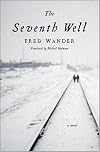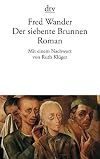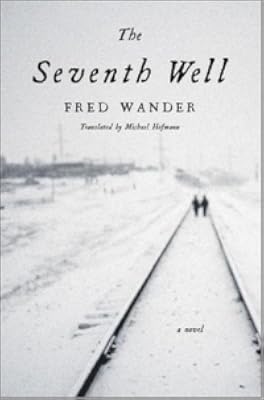
The Seventh Well: A Novel
by Fred Wander
On This Page
Description
He grew up on the street, a high school dropout. In 1938 he left his mother and sister behind in Vienna and fled on foot to France, where later he was put on a train to Auschwitz. Transported from camp to camp, Fred Wander was haunted for twenty-five years by the crystalline, episodic stories that chronicle the plight of his fellow inmates. Only after the tragic death of his little daughter did these voices pour forth. The result was this novel, published in East Germany in 1970. Finally it show more appears in English in this masterful translation, its haunting cadences evoking Levi and Celan, its backstory as heartrending as Suite Française. Wander demonstrates that the survival of a single man is a collaborative enterprise. The Seventh Well, named after the well of truth, recalls Dante's Inferno with its mesmerizing descent into evil. Its existence is a miracle. show lessTags
Recommendations






























Member Reviews
Fred Wander, born to Jewish Galician parents in Vienna in 1917, he was deported as a young man to a series of French work camps and survived the death march from Auschwitz to Buchenwald. After the war he eventually settled in East Germany, where he made a new life as a reporter and photographer. It was only in the late 1960s, after his 10-year-old daughter died in an accident, that he began to revisit his past.
The result was The Seventh Well, a novel narrated by a young man who attempts to maintain his own sanity in the death camps by immersing himself in the lives of his fellow prisoners. The anonymous narrator undergoes a sort of spiritual education as he studies the doomed men and boys around him. The result is an indirect portrait show more of a man trying to grasp an unthinkable trauma.
This a powerful and harrowing collection of memories from Fred Wander's life spent in 20 different Nazi camps in France, Poland and Germany from 1942 to 1945.
Wander himself said, "It's not possible to say anything about so many millions of dead. But three or four individuals, it might be possible to tell a story about." He has done this and it is a powerful work of art.
Something in him is driven to yell out: I am human! I have known respect! he wants to cry out. I was loved, I had a home, a wife and children, friends. I have performed kindnesses and not asked for reward. I have seen marvellous things, I know the smell of old cities. I could have done anything, achieved everything, and if I didn’t do or achieve, then it was only because I didn’t know, I couldn’t sense…
Did you know my Zikmund?” I heard a Jew ask the man in the next bunk to him. “No, you didn’t know my Zikmund, because he was not himself when he came with me to the camp. Because he lost his mind when he saw them killing his mother. A heart like a glass bell, a light crack, and it doesn’t ring anymore… show less
The result was The Seventh Well, a novel narrated by a young man who attempts to maintain his own sanity in the death camps by immersing himself in the lives of his fellow prisoners. The anonymous narrator undergoes a sort of spiritual education as he studies the doomed men and boys around him. The result is an indirect portrait show more of a man trying to grasp an unthinkable trauma.
This a powerful and harrowing collection of memories from Fred Wander's life spent in 20 different Nazi camps in France, Poland and Germany from 1942 to 1945.
Wander himself said, "It's not possible to say anything about so many millions of dead. But three or four individuals, it might be possible to tell a story about." He has done this and it is a powerful work of art.
Something in him is driven to yell out: I am human! I have known respect! he wants to cry out. I was loved, I had a home, a wife and children, friends. I have performed kindnesses and not asked for reward. I have seen marvellous things, I know the smell of old cities. I could have done anything, achieved everything, and if I didn’t do or achieve, then it was only because I didn’t know, I couldn’t sense…
Did you know my Zikmund?” I heard a Jew ask the man in the next bunk to him. “No, you didn’t know my Zikmund, because he was not himself when he came with me to the camp. Because he lost his mind when he saw them killing his mother. A heart like a glass bell, a light crack, and it doesn’t ring anymore… show less
"Fred Wander, who died in Vienna in 2006 at the age of ninety, was a survivor of some twenty concentration camps, but is was not until the death of his only daughter in 1970 that his recollections finally poured forth in the form of this harrowing work of fictions, first published in East Germany. In fevered cadences evoking Primo Levi and Paul Celan, Wander ultimately demonstrates that the survival of a single man is a collaborative enterprise, and in so doing he exalts the lives of the departed with this transcendent novel." From back cover of the book.
Ratings
Members
- Recently Added By
Lists

Holocaust
100 works; 13 members
Author Information

Some Editions
Awards and Honors
Series
Belongs to Publisher Series
Classifications
- Genres
- Fiction and Literature, General Fiction, Historical Fiction
- DDC/MDS
- 833.914 — Literature & rhetoric German & related literatures German fiction 1900- 1900-1990 1945-1990
- LCC
- PT2647 .A75 .S513 — Language and Literature German, Dutch and Scandinavian literatures German literature Individual authors or works 1860/70-1960
- BISAC
Statistics
- Members
- 146
- Popularity
- 224,864
- Reviews
- 3
- Rating
- (4.10)
- Languages
- 8 — Dutch, English, Finnish, German, Italian, Norwegian (Nynorsk), Norwegian, Spanish
- Media
- Paper, Audiobook
- ISBNs
- 19
- ASINs
- 3