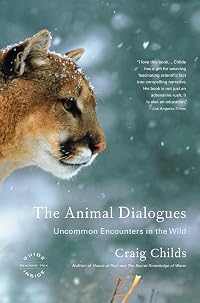
The Animal Dialogues: Uncommon Encounters in the Wild
by Craig Childs
On This Page
Description
From one of the finest nature writers at work in America today-a lyrical, dramatic, illuminating tour of the hidden domain of wild animals. Whether recalling the experience of being chased through the Grand Canyon by a bighorn sheep, swimming with sharks off the coast of British Columbia, watching a peregrine falcon perform acrobatic stunts at 200 miles per hour, or engaging in a tense face-off with a mountain lion near a desert waterhole, Craig Childs captures the moment so vividly that he show more puts the reader in his boots. Each of the forty brief, compelling narratives in The Animal Dialogs focuses on the author's own encounter with a particular species and is replete with astonishing facts about the species' behavior, habitat, breeding, and lifespan. But the glory of each essay lies in Childs's ability to portray the sometimes brutal beauty of the wilderness, to capture the individual essence of wild creatures, to transport the reader beyond the human realm and deep inside the animal kingdom show lessTags
Recommendations
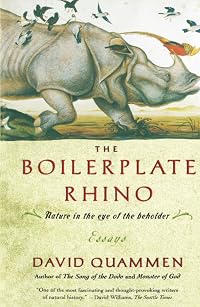

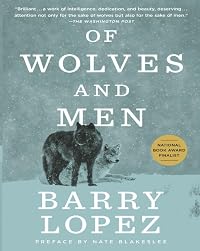
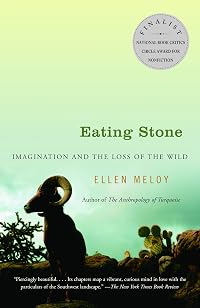
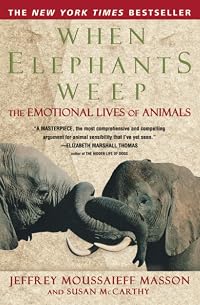
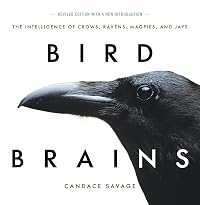
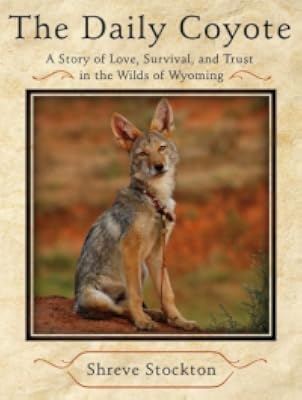
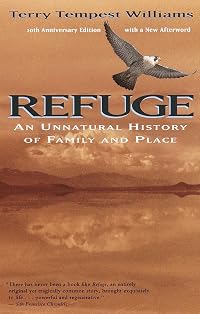
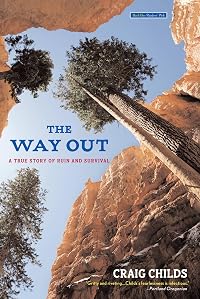
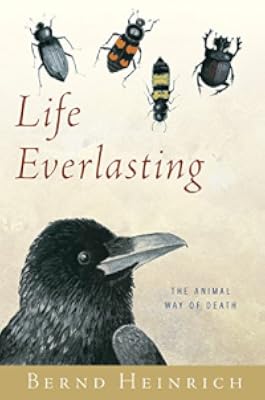
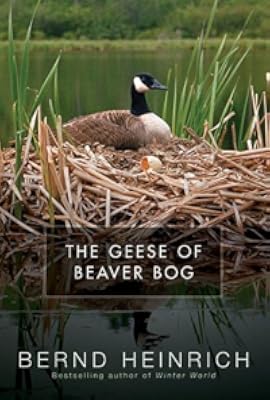
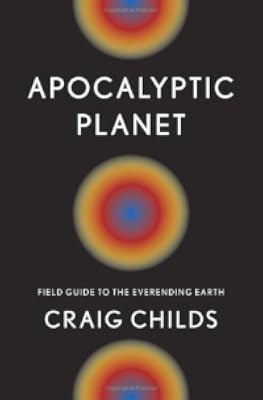
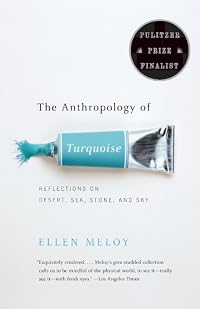




Member Reviews
I just loved this book - the writing was fantastic; it was absolutely lyrical.
This far north the sun was still up, although very low, riding through the mountains as if looking for something it lost on the ground. (p24)
The author shares his experiences with various animals in the wilderness (or even in his backyard). The book is divided into chapters based on each different animal, including everything from a mountain lion, to a raven, down to a praying mantis. I could imagine the scenes as I read, picture them happening in front of my eyes. During the mountain lion chapter, I felt like I was there, waiting to see if the cat would come out and attack me.
The writing was just very poignant and if you are a nature or animal lover, I think show more you would really appreciate it. For example, the dog chapter, though short, was perfect, just the right blend of poignant and practical, and I love how he connected it with the nature of humans at the end.
I imagined this was not an easy life for a dog in such isolated country, working alongside a grouchy caballero, ever aware of the presence of large wild animals lurking in the woods beyond. I tried to look away and hear what the caballero had to tell us, but the mutt was staring right at me, insisting I address her, damn near scratching a secret SOS into the dirt with her paw. We were a ray of hope for her, strangers with welcoming smiles, but there was nothing I could do for her. I looked away. (p70)
Overall, I just love the respect and appreciation that he gives to animals and to nature.
The elk that you glimpse in the summer, those at the forest edge, are survivors of winter, only the strongest. You see one just before dusk that summer, standing at the perimeter of the meadow so it can step back to the forest and vanish. You can't help imagining the still, frozen nights behind it, so cold that the slightest motion is monumental. I have found their bodies, half drifted over in snow, no sign of animal attack or injury. Just toppled over one night with ice working into their lungs. You wouldn't want to stand outside for more than a few minutes in that kind of weather. If you lived through only one of those winters the way this elk has, you would write books about it. You would become a shaman. You would be forever changed. That elk from the winter stands there on the summer evening, watching from beside the forest. It keeps its story to itself. (p183)
I loved this one description he gave:
This is not wilderness for designation or for a park. Not a scenic wilderness and not one good for fishing or the viewing of wildlife. It is wilderness that gets into your nostrils, that runs with your sweat. It is the core of everything living, wilderness like molten iron. (p156)
Even though this is a place I would never go to, that I could not survive in, I just loved reading about it. It reminds me that nature was not made for us. It exists, indifferent to us and our needs. It's good to be reminded.
He talks about having his camera with him on some of his adventures so I wish there were pictures. But that's just a small want on my part.
The one thing that got to me, that made stop reading and almost discount everything I'd read up to then (which was pretty much the whole book since I was near the end), was when he talks about squids. He says, "The largest animal on the planet is a squid, a rubbery predator that lurks in deep sea trenches." (p296) He even goes on to mention that some "reach lengths of sixty feet" - but that's still not as large as a blue whale, which can be 100 feet. So what the hell? Is there some nuance of writing I missed there? I tried to google the error but didn't come up with anything.
Okay, but other than that (glaring!) error, I did love this book!
Some of my other favorite quotes:
Most animals show themselves sparingly. The grizzly bear is six to eight hundred pounds of smugness. It has no need to hide. If it were a person, it would laugh loudly in quiet restaurants, boastfully wear the wrong clothes for special occasions, and probably play hockey. (p24)
Hilarious, on coyotes migrating East:
Some suggest that they hitched on ice floes of the Northeast coast, and I imagine all the ice floes that missed land, coyotes going out to sea, never heard from again. (p39)
Coyotes move within a landscape of attentiveness. I have seen their eyes in the creosote bushes and among mesquite trees. They have watched me. And all the times that I saw no eyes, that I kept walking and never knew, there were still coyotes. When I have seen them trot away, when I have stepped from the floorboard of my truck, leaned on the door, and watched them as they watched me over their shoulders, I have been aware for that moment of how much more there is. Of how I have only seen only an instant of a broad and rich life. (p39) show less
This far north the sun was still up, although very low, riding through the mountains as if looking for something it lost on the ground. (p24)
The author shares his experiences with various animals in the wilderness (or even in his backyard). The book is divided into chapters based on each different animal, including everything from a mountain lion, to a raven, down to a praying mantis. I could imagine the scenes as I read, picture them happening in front of my eyes. During the mountain lion chapter, I felt like I was there, waiting to see if the cat would come out and attack me.
The writing was just very poignant and if you are a nature or animal lover, I think show more you would really appreciate it. For example, the dog chapter, though short, was perfect, just the right blend of poignant and practical, and I love how he connected it with the nature of humans at the end.
I imagined this was not an easy life for a dog in such isolated country, working alongside a grouchy caballero, ever aware of the presence of large wild animals lurking in the woods beyond. I tried to look away and hear what the caballero had to tell us, but the mutt was staring right at me, insisting I address her, damn near scratching a secret SOS into the dirt with her paw. We were a ray of hope for her, strangers with welcoming smiles, but there was nothing I could do for her. I looked away. (p70)
Overall, I just love the respect and appreciation that he gives to animals and to nature.
The elk that you glimpse in the summer, those at the forest edge, are survivors of winter, only the strongest. You see one just before dusk that summer, standing at the perimeter of the meadow so it can step back to the forest and vanish. You can't help imagining the still, frozen nights behind it, so cold that the slightest motion is monumental. I have found their bodies, half drifted over in snow, no sign of animal attack or injury. Just toppled over one night with ice working into their lungs. You wouldn't want to stand outside for more than a few minutes in that kind of weather. If you lived through only one of those winters the way this elk has, you would write books about it. You would become a shaman. You would be forever changed. That elk from the winter stands there on the summer evening, watching from beside the forest. It keeps its story to itself. (p183)
I loved this one description he gave:
This is not wilderness for designation or for a park. Not a scenic wilderness and not one good for fishing or the viewing of wildlife. It is wilderness that gets into your nostrils, that runs with your sweat. It is the core of everything living, wilderness like molten iron. (p156)
Even though this is a place I would never go to, that I could not survive in, I just loved reading about it. It reminds me that nature was not made for us. It exists, indifferent to us and our needs. It's good to be reminded.
He talks about having his camera with him on some of his adventures so I wish there were pictures. But that's just a small want on my part.
The one thing that got to me, that made stop reading and almost discount everything I'd read up to then (which was pretty much the whole book since I was near the end), was when he talks about squids. He says, "The largest animal on the planet is a squid, a rubbery predator that lurks in deep sea trenches." (p296) He even goes on to mention that some "reach lengths of sixty feet" - but that's still not as large as a blue whale, which can be 100 feet. So what the hell? Is there some nuance of writing I missed there? I tried to google the error but didn't come up with anything.
Okay, but other than that (glaring!) error, I did love this book!
Some of my other favorite quotes:
Most animals show themselves sparingly. The grizzly bear is six to eight hundred pounds of smugness. It has no need to hide. If it were a person, it would laugh loudly in quiet restaurants, boastfully wear the wrong clothes for special occasions, and probably play hockey. (p24)
Hilarious, on coyotes migrating East:
Some suggest that they hitched on ice floes of the Northeast coast, and I imagine all the ice floes that missed land, coyotes going out to sea, never heard from again. (p39)
Coyotes move within a landscape of attentiveness. I have seen their eyes in the creosote bushes and among mesquite trees. They have watched me. And all the times that I saw no eyes, that I kept walking and never knew, there were still coyotes. When I have seen them trot away, when I have stepped from the floorboard of my truck, leaned on the door, and watched them as they watched me over their shoulders, I have been aware for that moment of how much more there is. Of how I have only seen only an instant of a broad and rich life. (p39) show less
"From one of the finest nature writers at work in America today -- a lyrical, dramatic, illuminating tour of the hidden domain of wild animals
"Whether recalling the experience of being chased through the Grand Canyon by a bighorn sheep, of swimming with sharks off the coast of British Columbia, of watching a peregrine falcon perform acrobatic stunts at two hundred miles per hours, or of engaging in a tense face-off with a mountain lion near a desert water hole, Craig Childs captures the moment so vividly that he puts the reader in his boots.
"Each of the compelling narratives in The Animal Dialogues focuses on the author's own encounter with a particular species and is replete with astonishing facts about the species' behavior, habitat, show more breeding, and life span. The glory of each essay, however, lies in Childs's ability to portray the sometimes brutal beauty of the wilderness, to capture the individual essence of wild creatures, to transport the reader beyond the human realm and deep inside the animal kingdom."
~~front flap
This is an amazing book! Each essay is a perfect little jewel, leading the reader into the life of a wild animal, bird, raptor, insect or fish. You see with the animal's eyes, smell with its nose, feel the rush of cascading hormones during the rut, tremble and cower in fear as a predator draws near ...
Childs must have spent the better part of his adult life in the wilderness, to have had so many astonishing encounters. Most people are lucky to have two or maybe three -- he's survived hundreds. To experience the beauty of the remote wilderness, to walk in the boots of a consummate naturalist, to be transported into the body of an animal or bird and experience life through their eyes and senses ... read this book. You won't be able to put it dow show less
"Whether recalling the experience of being chased through the Grand Canyon by a bighorn sheep, of swimming with sharks off the coast of British Columbia, of watching a peregrine falcon perform acrobatic stunts at two hundred miles per hours, or of engaging in a tense face-off with a mountain lion near a desert water hole, Craig Childs captures the moment so vividly that he puts the reader in his boots.
"Each of the compelling narratives in The Animal Dialogues focuses on the author's own encounter with a particular species and is replete with astonishing facts about the species' behavior, habitat, show more breeding, and life span. The glory of each essay, however, lies in Childs's ability to portray the sometimes brutal beauty of the wilderness, to capture the individual essence of wild creatures, to transport the reader beyond the human realm and deep inside the animal kingdom."
~~front flap
This is an amazing book! Each essay is a perfect little jewel, leading the reader into the life of a wild animal, bird, raptor, insect or fish. You see with the animal's eyes, smell with its nose, feel the rush of cascading hormones during the rut, tremble and cower in fear as a predator draws near ...
Childs must have spent the better part of his adult life in the wilderness, to have had so many astonishing encounters. Most people are lucky to have two or maybe three -- he's survived hundreds. To experience the beauty of the remote wilderness, to walk in the boots of a consummate naturalist, to be transported into the body of an animal or bird and experience life through their eyes and senses ... read this book. You won't be able to put it dow show less
An amazing writer. Really brings the natural world to life. I'm so grateful that Craig Childs chose to share his experiences. These are stunning tales of things I will never experience. The beauty of his prose is amazing. Some stories will make you laugh and others will startle you. All will open your eyes to another world.
The writing here doesn't always approach the author at his best (some of the content is taken from an earlier book), but the essays are interesting, and the fact that he's actually right there, nose to nose with whatever he's writing about, gives the book a huge lift. If you're not familiar with the author this would be a good place to start, as you can dip into the book anywhere. This is the fourth book I've read of his, and they were all excellent, but Soul of Nowhere reveals him as a prose stylist of the first order. He seems to have gone everywhere and had several lifetimes worth of adventures, and I want to read about all of them.
Magnificent recollections of close encounters of the best kind--with amazing wild animals in their natural habitats. Childs has to be one of the best hiking companions ever. It was pure joy to re-experience the American Southwest through his words and I learned something interesting in just about every essay. Recommending this one to every backcountry hiker I know.
Although the author has just a couple of moments where he wanders off 'my page' so to speak, the book overall is a wonderful look at the psychology of animal encounters in the wild.
The piece on the cougar is mesmerizing--one can almost feel oneself right there.
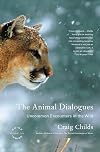
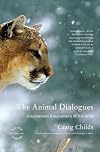
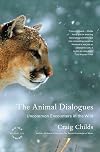
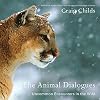
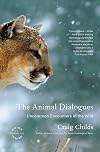
Has nothing to do with the book, but this is one of my all time favourite dust covers. Love the photo of the cougar in the snow.
The piece on the cougar is mesmerizing--one can almost feel oneself right there.
Has nothing to do with the book, but this is one of my all time favourite dust covers. Love the photo of the cougar in the snow.
Finally managed to finish this. Childs has an occasionally tedious tendency to waft off into very purple prose descriptions that was putting me right off picking this back up. In the last sections it moves more into creatures of the sea which I really enjoyed. The section on meeting the mountain lion was likewise really well written. The structure is 35 or so small stories from 3 - 20 pages describing his meeting animals in the wild. I have not seen/ read any of his books before but it seems he is also somewhat of an adventurer/ wanderer by habit as well as deeply interested in some depth in the animals that he meets there. I prefered when he gets really into details about the specifics of the animal behaviour or habit although when his show more stories more onto topics such as people getting lost in blizzards he can keep the interest. Although it took so long, I think I would recommend this to anyone that likes outdoorsy pursuits. show less
Members
- Recently Added By
Lists

Recommended Nature Writing
346 works; 180 members

Books about Animals
86 works; 4 members
Author Information

22 Works 2,431 Members
Craig Childs is a river guide, a field instructor in natural history, an adventurer, & a writer. His other books include "Crossing Paths: Uncommon Encounters with Animals in the Wild" (Sasquatch). He camps in the backcountry of the American West at least nine months of the year, usually living in the back of his truck, out of a river vessel, or show more from his backpack. He hasn't had a phone in ten years. (Bowker Author Biography) show less
Awards and Honors
Awards
Common Knowledge
- Original publication date
- 2007
Classifications
- Genres
- Science & Nature, Nonfiction, General Nonfiction
- DDC/MDS
- 590 — Natural sciences & mathematics Animals Animals
- LCC
- QL151 .C45 — Science Zoology Zoology General
- BISAC
Statistics
- Members
- 390
- Popularity
- 80,014
- Reviews
- 12
- Rating
- (4.17)
- Languages
- English
- Media
- Paper, Audiobook, Ebook
- ISBNs
- 10
- ASINs
- 5