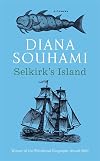
Selkirk's Island: The True and Strange Adventures of the Real Robinson Crusoe
by Diana Souhami
On This Page
Description
Winner of the Whitbread Biography Award: The true story of the shipwrecked Scottish buccaneer who inspired Daniel Defoe's novel. This action-filled biography follows Alexander Selkirk, an eighteenth-century Scottish buccaneer who sailed the South Seas plundering for gold. But an ill-fated expedition in 1703 led to shipwreck on remote Juan Fernández Island off the coast of Chile. Selkirk, the ship's master, was accused of inciting mutiny and abandoned on the uninhabited island with nothing show more but his clothing, his pistol, a knife, and a Bible. Each day he searched the sea for a ship that would rescue him and prayed for help that seemed never to come. In solitude and silence Selkirk gradually learned to adapt. He killed seals and goats for food and used their skin for clothing. He learned how to build a house, forage for food, create stores, plant seeds, light a fire, and tame cats. Then one day, a ship with wooden sails appeared on the horizon. The crew was greeted by a bearded savage, incoherent and fierce. Selkirk had been marooned for four years and four months. Now he was about to return to the world of men. The story of a verdant, mysterious archipelago and its famous castaway is both a parable about nature and a remarkable account of the survival of a man cut off from civilization. show lessTags
Recommendations














Member Recommendations


Member Reviews
Remarkable historical account of alexander Selkirk, the prototype for Defoe's Robinson Crusoe - the true story of how he survived being marooned for 52 months, is an impressive work and an astonishing true story. The author places the facts in the contest of the age - 300 years ago, making the very best of the necessarily sparse source material, to weave a believable and highly enjoyable story line. Selkirk was a flawed character for sure, prone to violence, but he displayed an outstanding survival instinct in the face of a daunting challenge - managing to thrive in the wild rather than succumbing to the pressures and stress of his situation.
A fascinating account of piracy, betrayal, and raw survival on the high seas and dry land, "Selkirk's Island" rediscovers the amazing tale of an eighteenth-century legend. Born a poor Scotsman, Alexander Selkirk signed with William Dampier, a pirate who was as famous for his self-promotion as for his naval success, on an ill-fated quest to pillage the famous Manila galleon. After a series of scuffles with the captain, Selkirk was put ashore on an island three hundred miles west of South America. Alone and with little more than the clothes on his back, Selkirk spent four long years learning to survive. Drawing on Selkirk's own testimony, that of his rescuers and fellow crewmen, and petitions from two women who each claimed to be his show more wife, celebrated biographer Diana Souhami uncovers the truth behind the strangeness and wonder of a forgotten man and his unforgettable experience. show less
A thought-provoking read - the biography of a Scotsman whose unusual story became eclipsed by its use in fiction - a study of the role of privateering in Europe's remorseless colonial expansion - an exemplar of the catestrophic impact of humans on fragile island ecology.
As others have noticed, she seems to be somewhat fixated on how many goats he had sex with. Got pretty dull once he got home. Story itself was fascinating, but, to me, writing got more dull once he was saved.
Interesting, yet depressing. I definitely should have finished Robinson Crusoe first (inter-library loan sure on Selkirk) because once I read the historical basis the fictional tale was no longer just a lark. Well-written, if spare.
This was very interesting, and fairly amusing in parts. Alexander Selkirk was marooned off the coast of Chile in 1704 and spent nearly four and a half years alone on an uninhabited island. This book tells his life story and also includes details of his contemporaries in the world of privateering. Obviously, there is a limit to how much can be written about a man marooned in isolation, so this period of Selkirk's life is covered in probably less than a third of the book. Although the novel Robinson Crusoe is based on what happened to Selkirk, they share little in common apart from being alone in the middle of the ocean.
The vast majority of the book tells of the disasterous voyages made by groups of men in the early 18th century, sailing show more the southern seas, searching for Spanish merchant ships to plunder. Mutiny, drunkeness and scurvy are recurring themes and I found it to be a very readable, well referenced historic account. show less
The vast majority of the book tells of the disasterous voyages made by groups of men in the early 18th century, sailing show more the southern seas, searching for Spanish merchant ships to plunder. Mutiny, drunkeness and scurvy are recurring themes and I found it to be a very readable, well referenced historic account. show less
Really cool story, poorly written. You can pretty much stop reading about 60% of the way through, the rest of the story is really really boring and could have been summed up in a few pages.
Members
- Recently Added By
Author Information

15+ Works 1,912 Members
Awards and Honors
Awards
Common Knowledge
- Original title
- Selkirk's Island: The True and Strange Adventures of the Real Robinson Crusoe
- Original publication date
- 2001
- People/Characters
- Alexander Selkirk
- Important places
- Robinson Crusoe Island
- Epigraph
- The scarlet shafts of sunrise-- but no sail
Alferd,Lord Tennyson, Enoch Arden - Dedication
- To My Mother
To Peter Campbell 1937-2011 - First words
- Defined by the vast South Sea, The Island from a wooden craft, far out was a destination, a place of refuge.
- Last words
- (Click to show. Warning: May contain spoilers.)There is deference to The Island's grace and to a marooned man's heart.
Classifications
- Genres
- Nonfiction, History, General Nonfiction, Biography & Memoir, Travel
- DDC/MDS
- 996.18 — History & geography Oceania & Polar Regions Polynesia Southwest central Pacific, and isolated islands of southeast Pacific Isolated islands of southeast Pacific
- LCC
- G530 .S42 .S68 — Geography, Anthropology and Recreation Geography (General) Adventures, shipwrecks, buried treasure, etc.
- BISAC
Statistics
- Members
- 378
- Popularity
- 82,801
- Reviews
- 10
- Rating
- (3.66)
- Languages
- 6 — Dutch, English, French, German, Italian, Spanish
- Media
- Paper, Ebook
- ISBNs
- 15
- ASINs
- 4